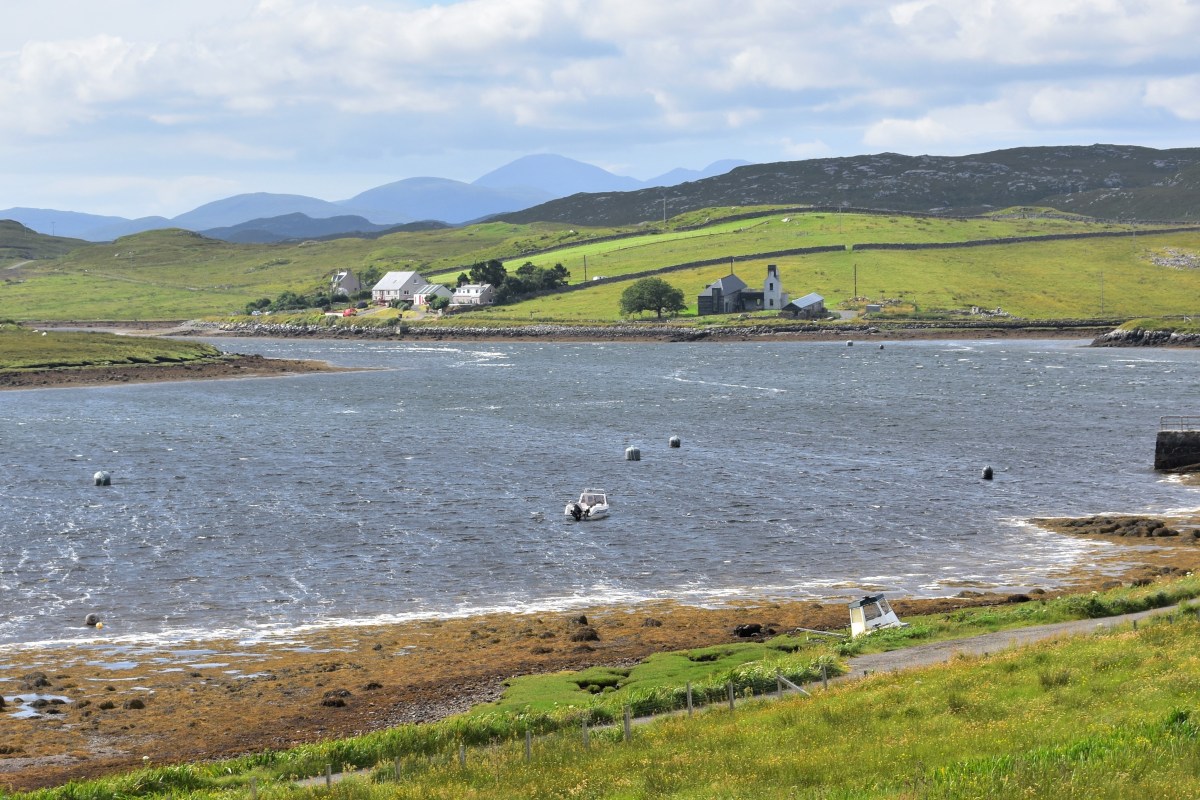
The Isle of Lewis is the northern part of the Hebridean island commonly referred to as Lewis and Harris. The reasons for the split between the Isles of Lewis and the Isles of Harris are now lost in history but may be due to rivalry within the dominant local clan, the Macleod clan. Even as recent as 1975, Lewis was a separate administrative region, a part of the mainland county of Ross and Cromarty. Harris was an administrative region of Inverness Shire. Now, both Harris and Lewis are a part of the Western Isles Council.
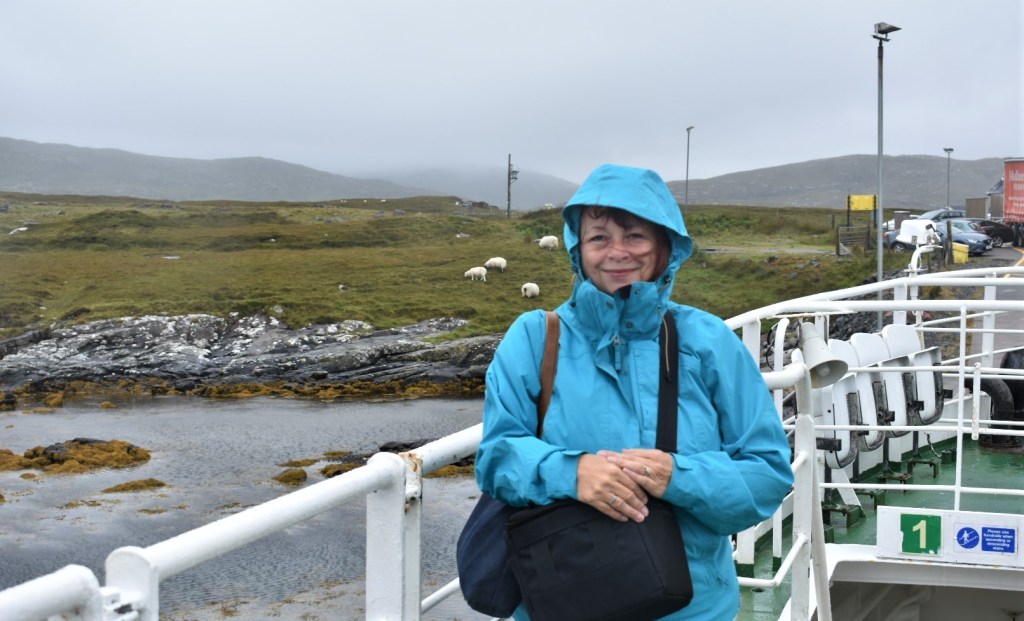
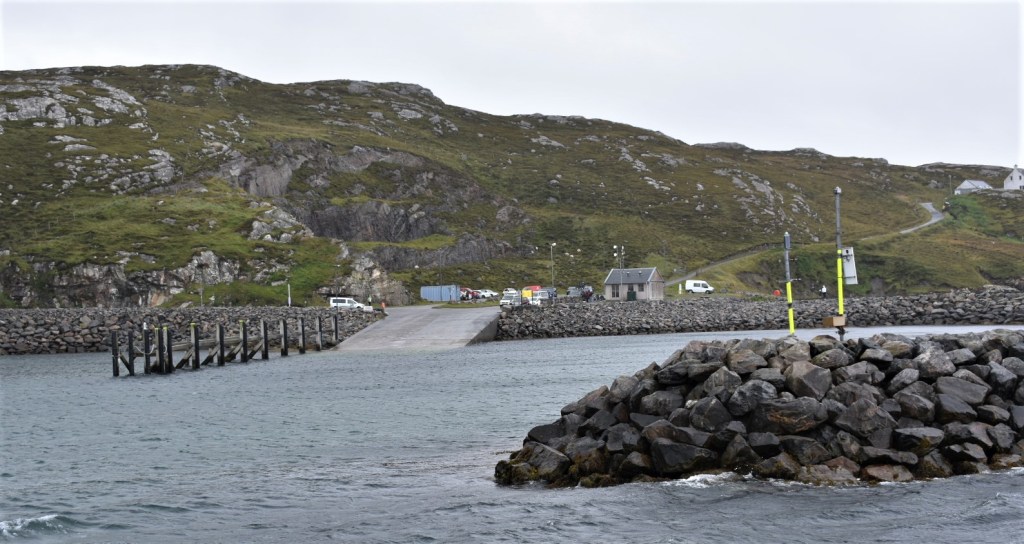
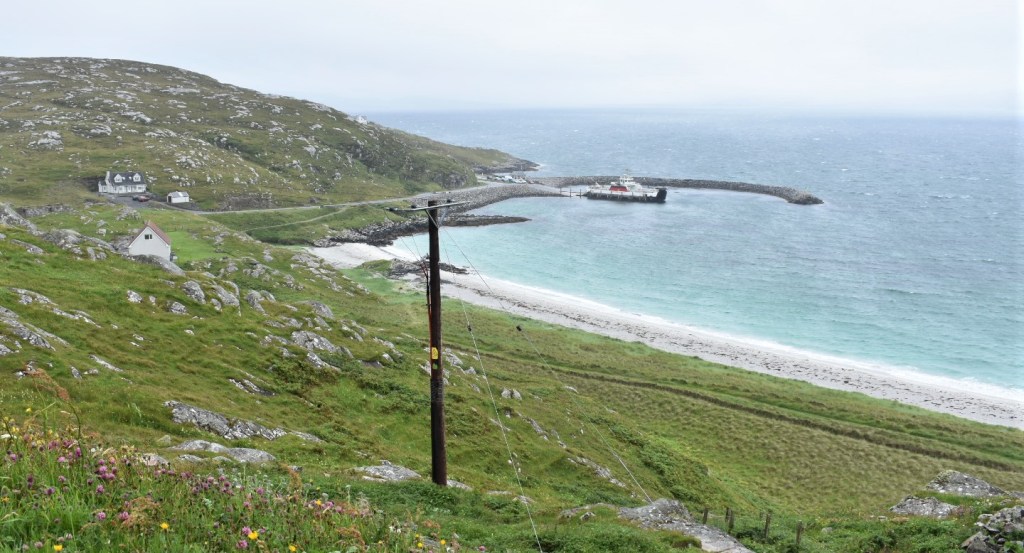
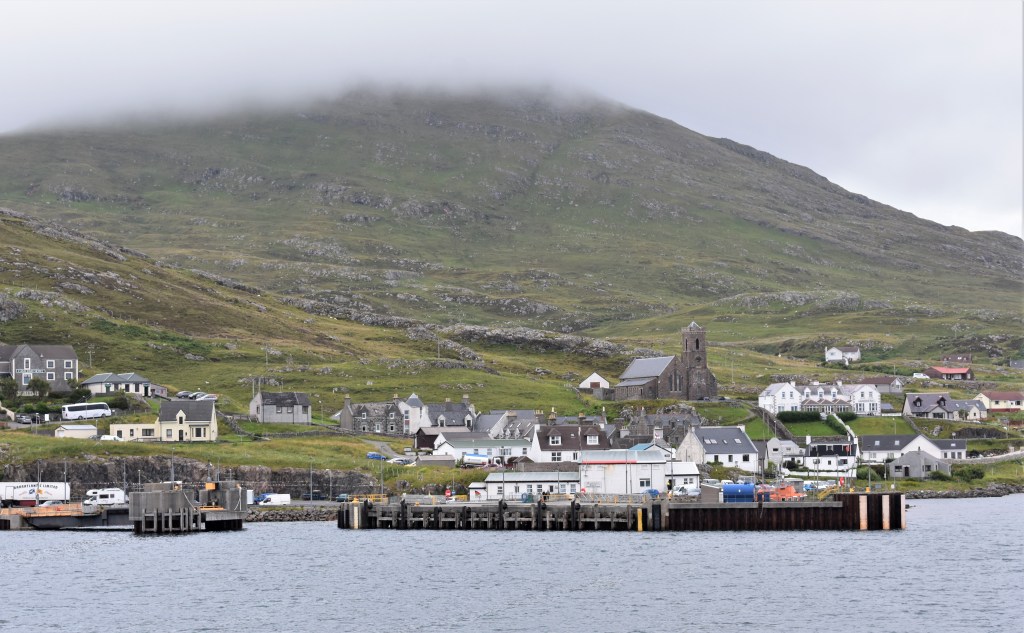
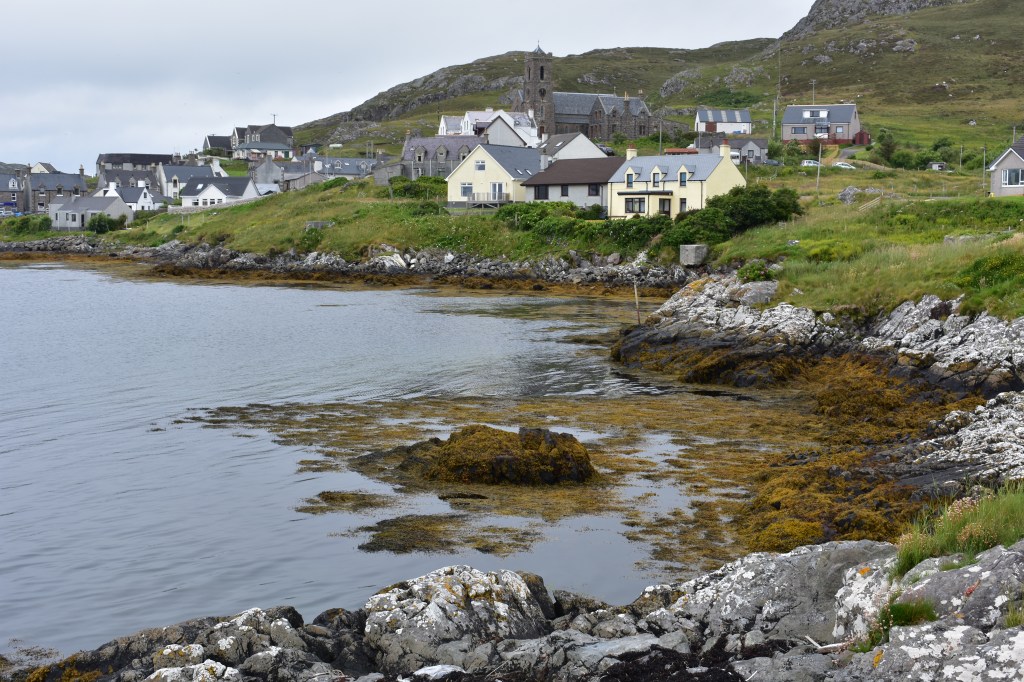
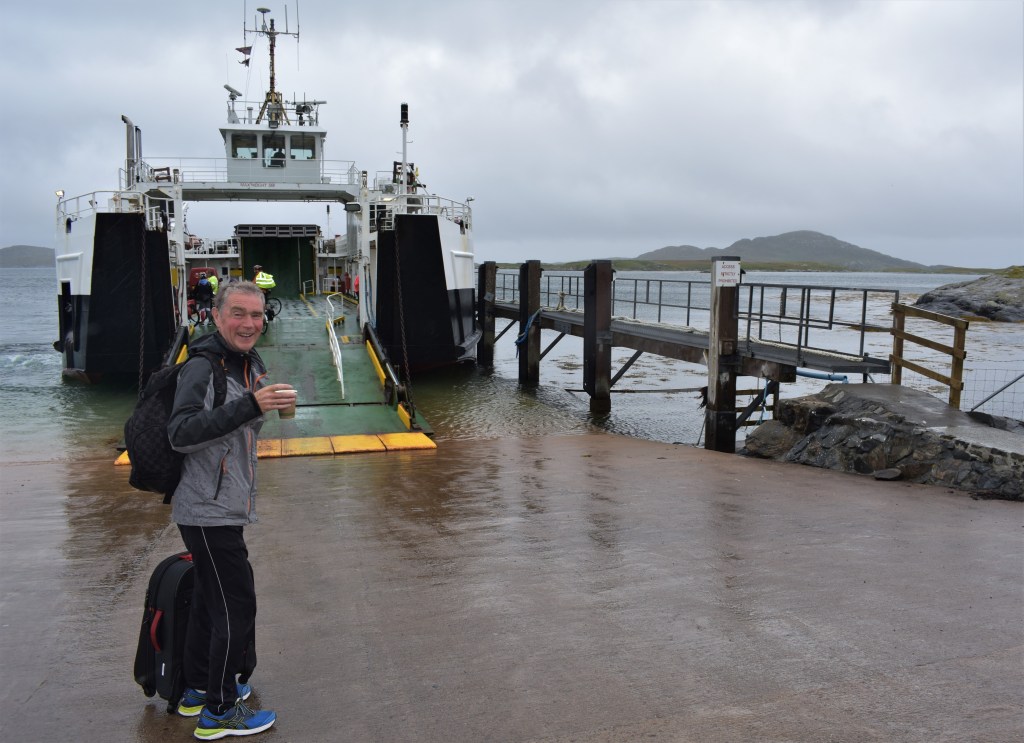
We took the short ferry crossing from Berneray and arrived at Tarbert on the Isle of Harris. Calmac Ferries have a great value passenger ticket called the Hopscotch 23. We used this ticket for all our ferry journeys between the islands and we would recommend it.
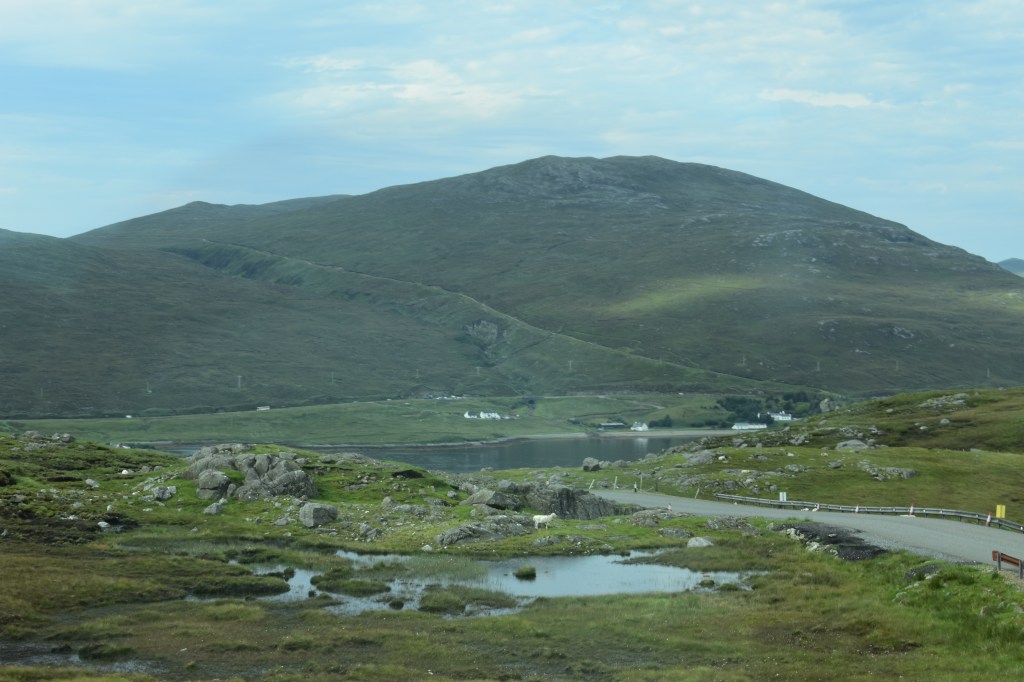
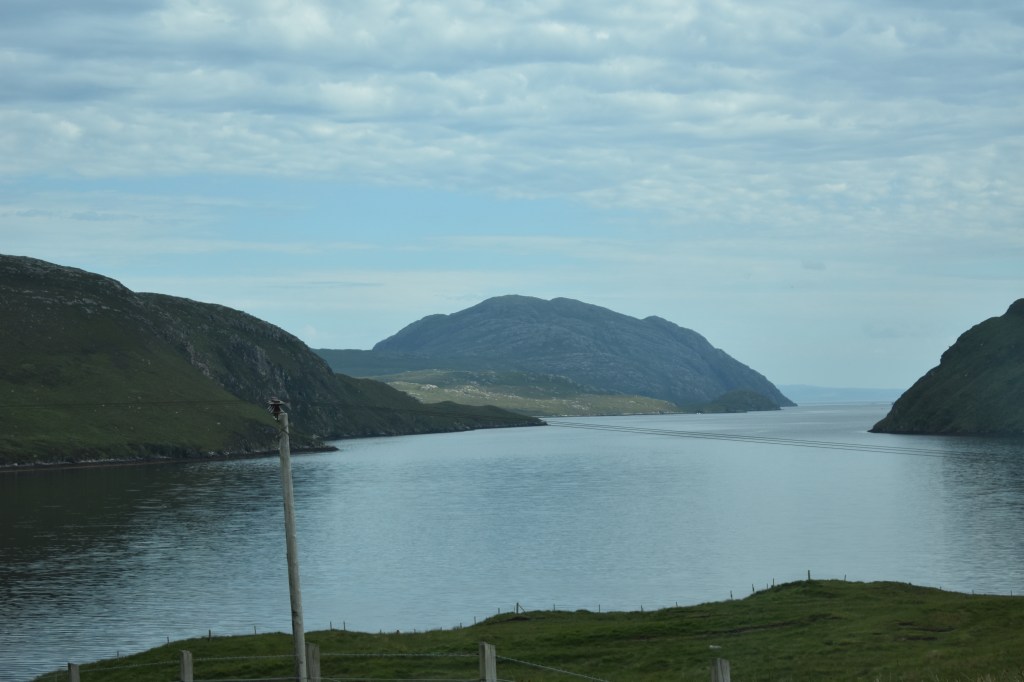
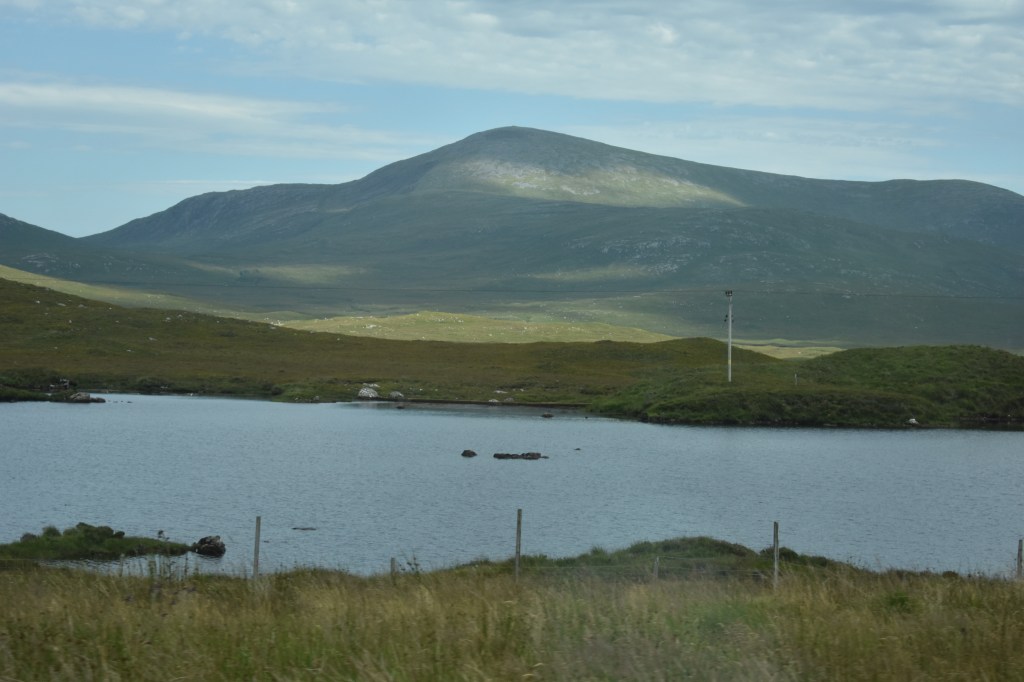
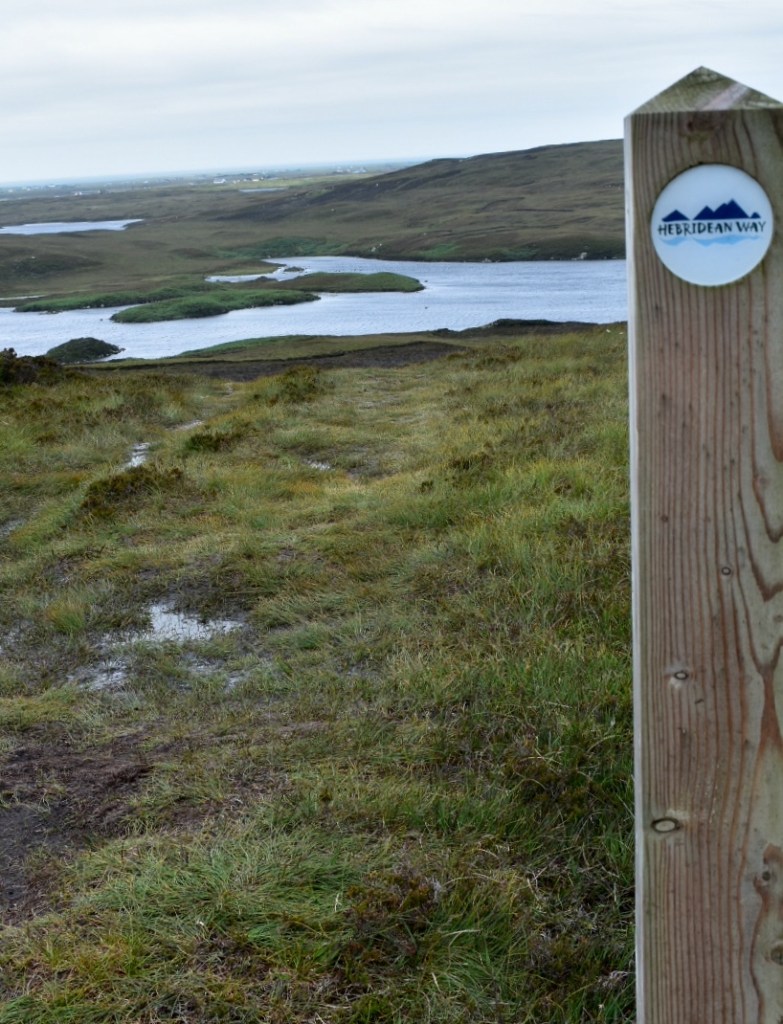
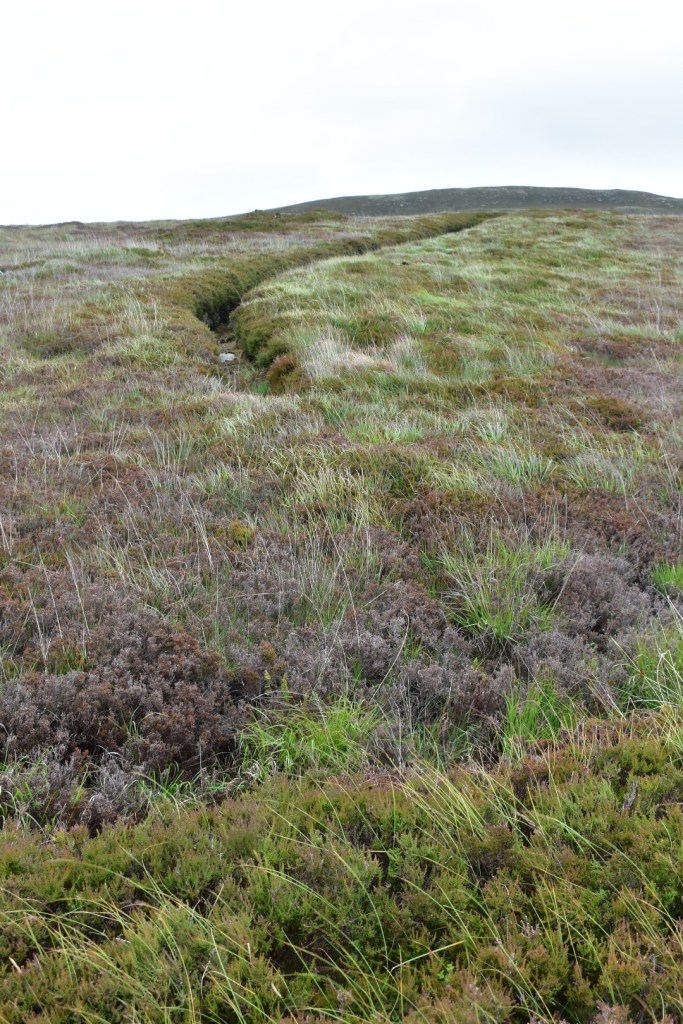
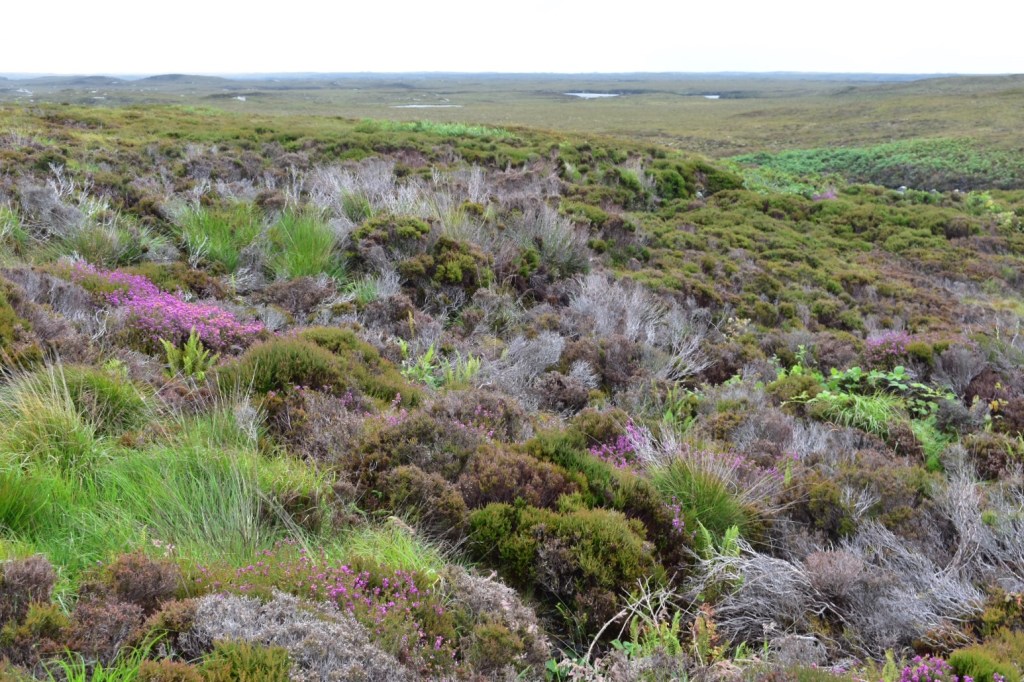
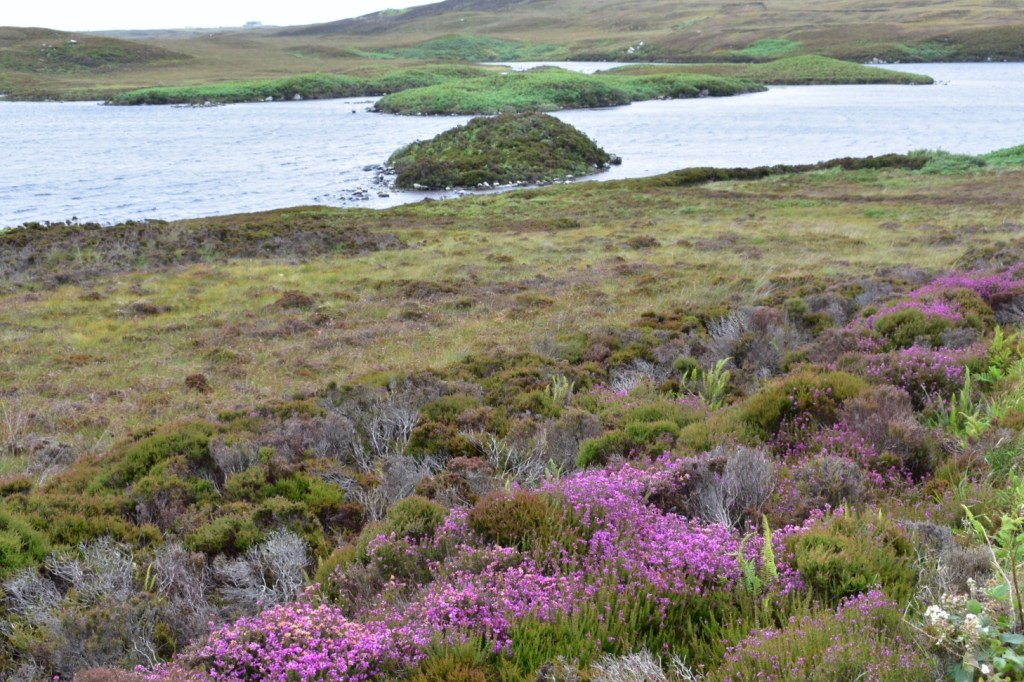
Harris and Lewis are connected by a short isthmus just north of Tarbert. The official boundary between the two isles is a few miles north of Tarbert and crosses the rugged terrain of Harris. There is a scenic walk that follows the boundary. We never did the walk but details can be found at this website for anyone who wishes to enjoy the challenge of doing it.
https://marccalhoun.blogspot.com/2018/03/lewisharris-border.html
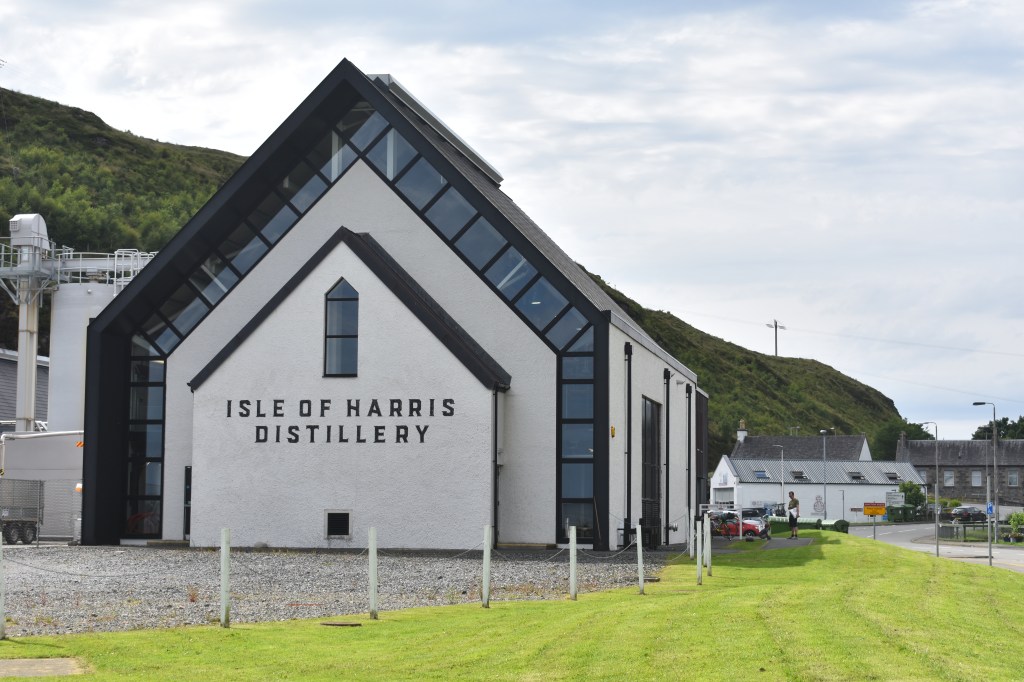
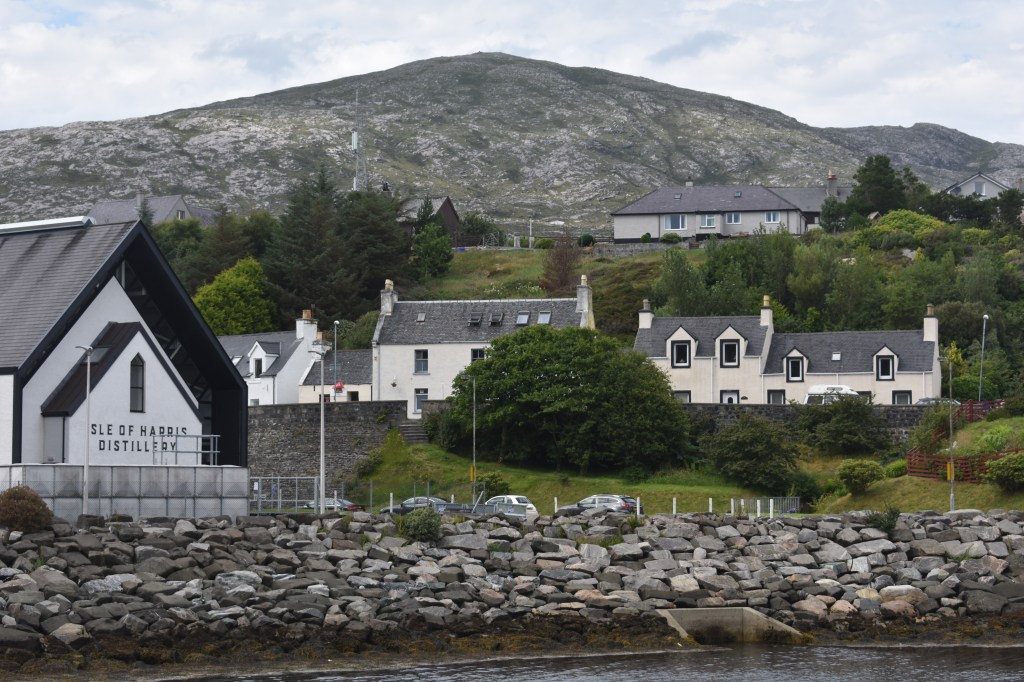
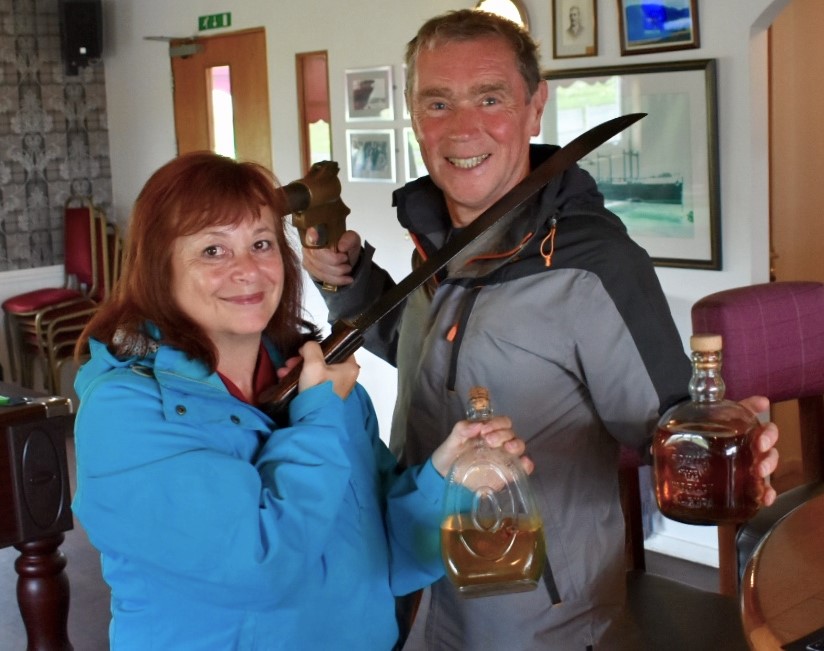
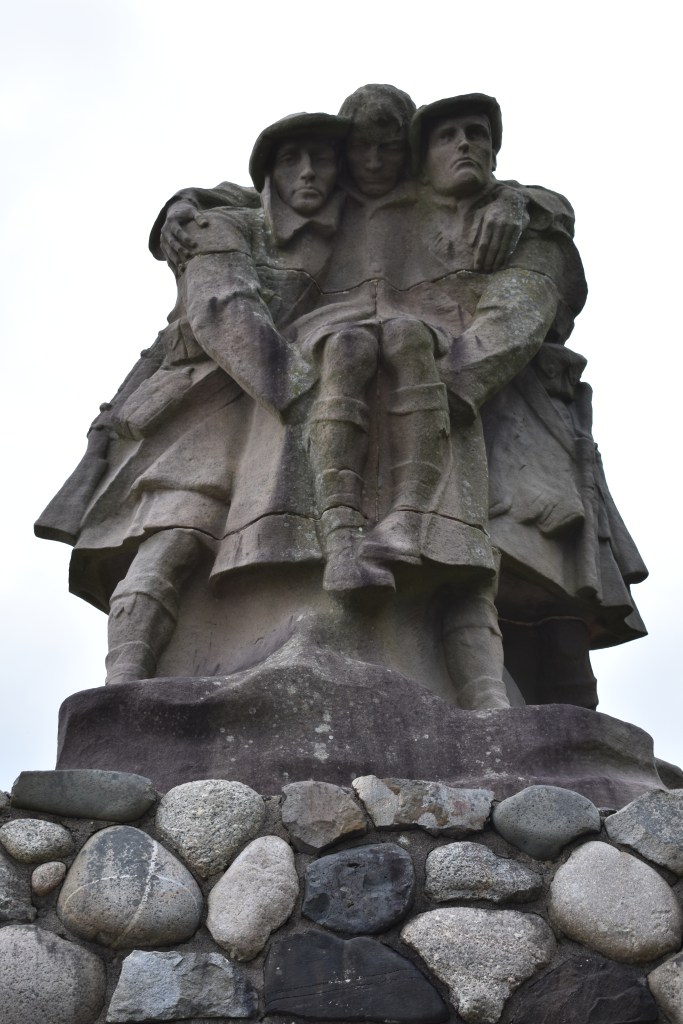
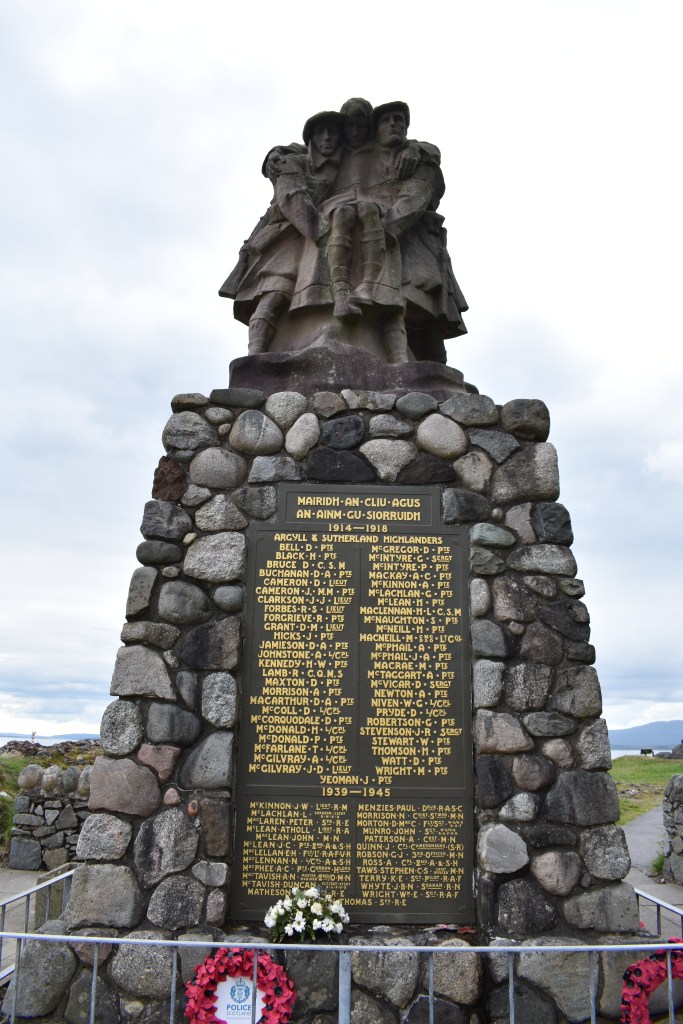
Though only a small town of less than a thousand people, Tarbert boasts its own Harris Distillery, set in a modern building. The distillery has a wide selection of both whiskeys and gins to be sampled. It is definitely worth a visit. Tarbert also boast an impressive War Memorial which has pride of place in the centre of the town. Again, worth a visit.
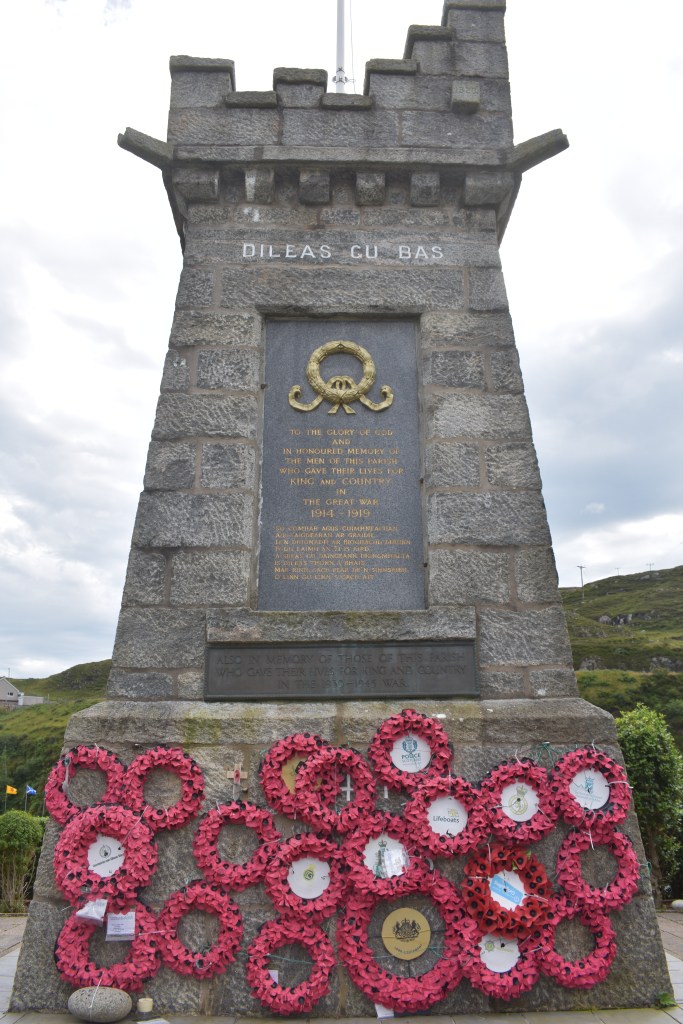
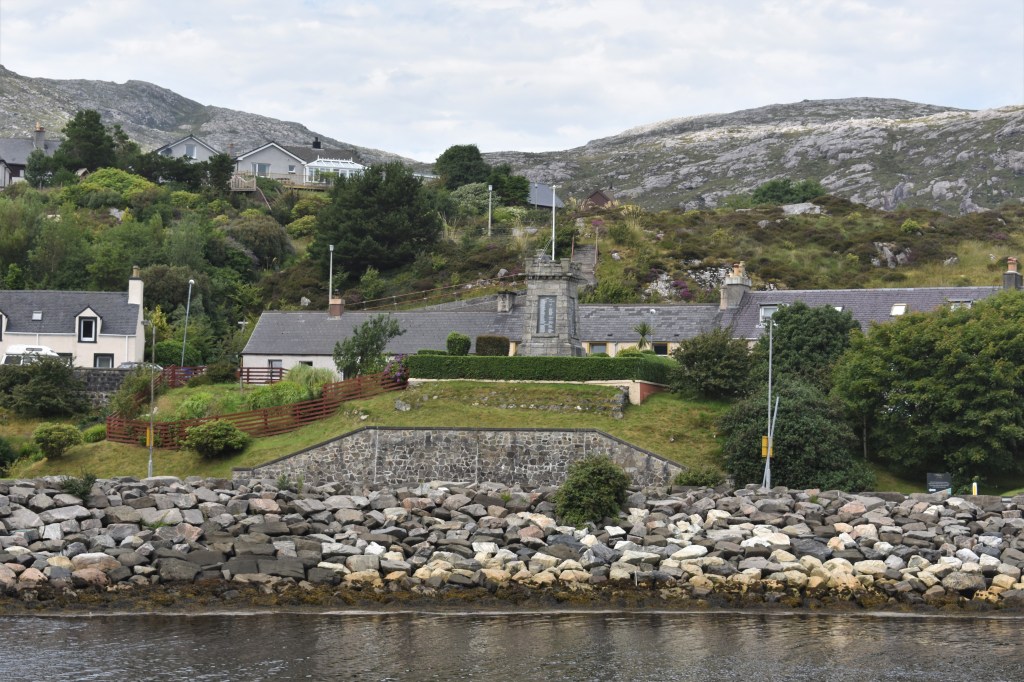
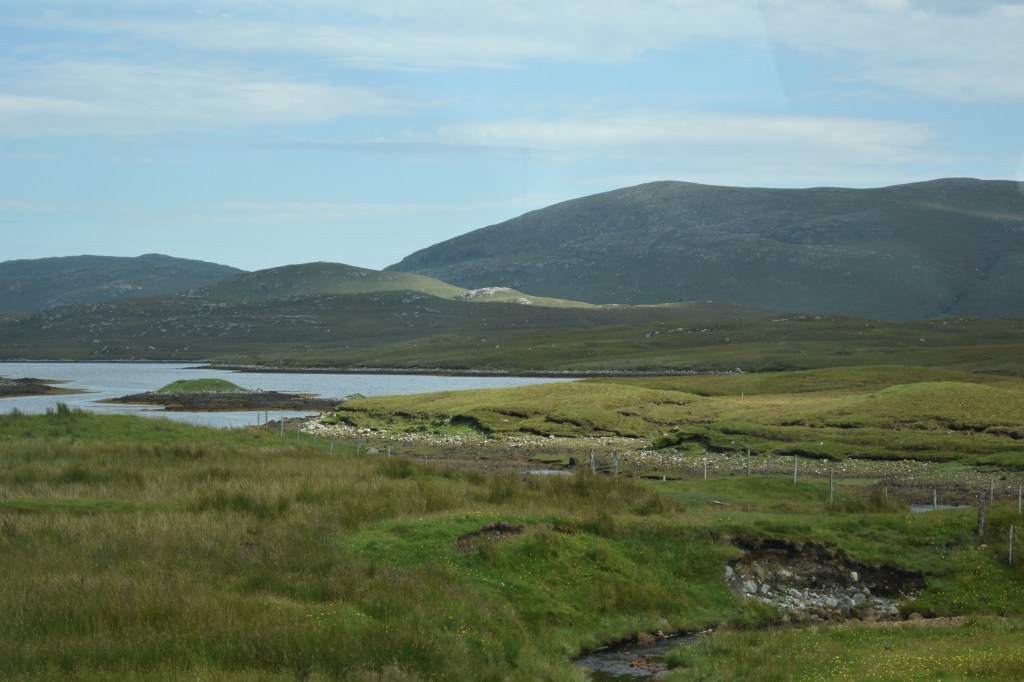
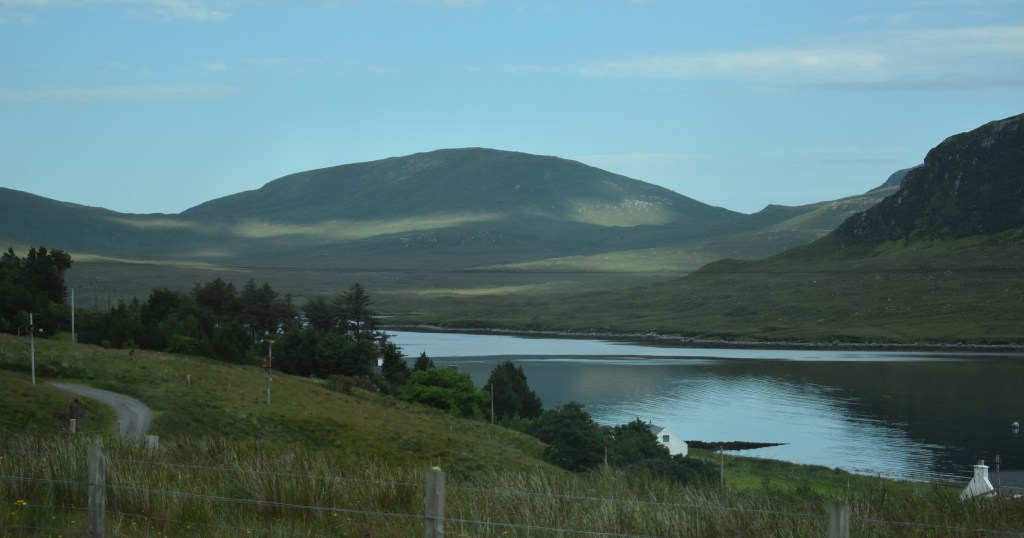
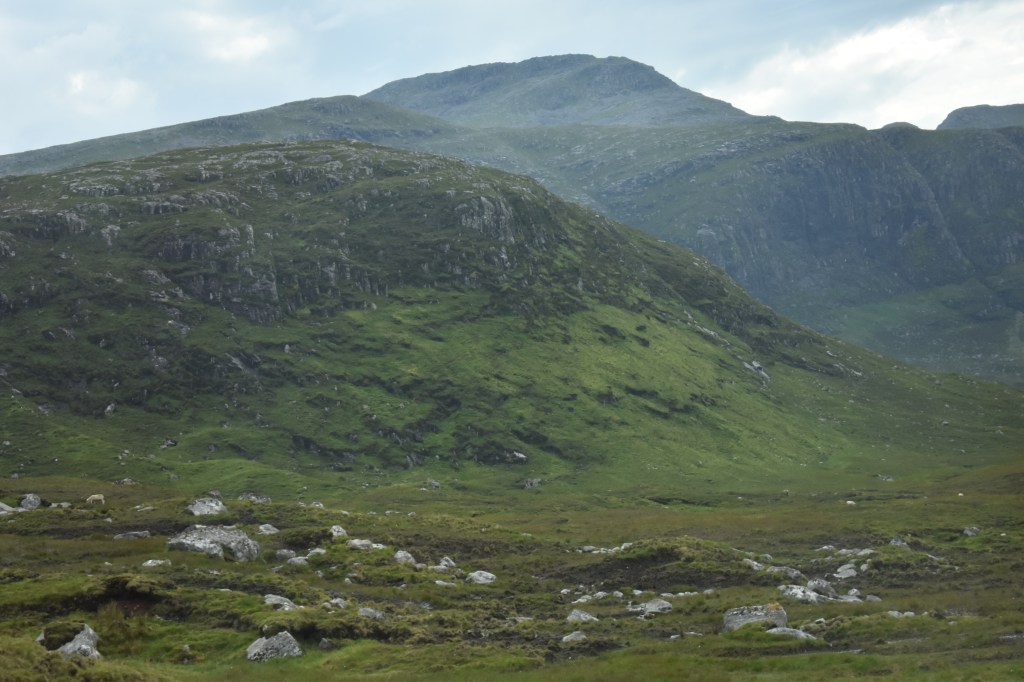
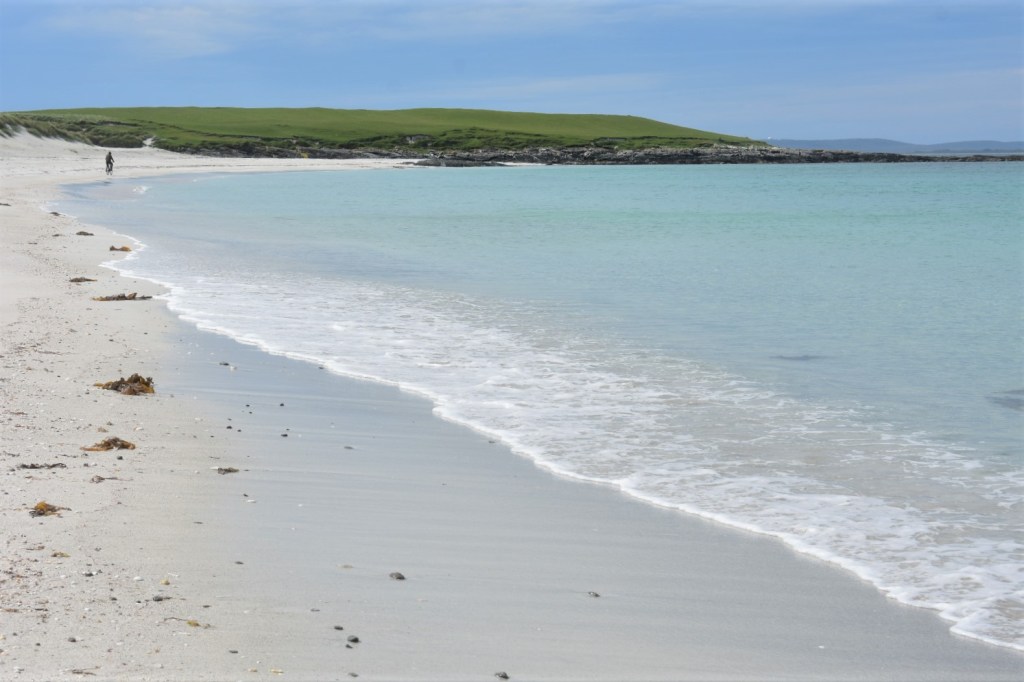
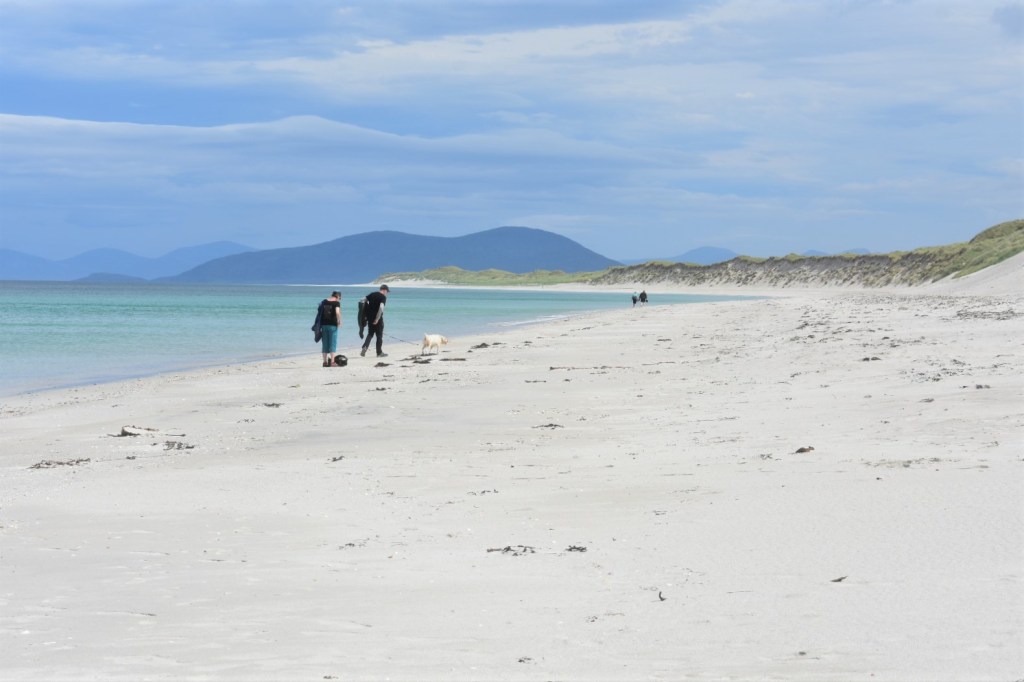
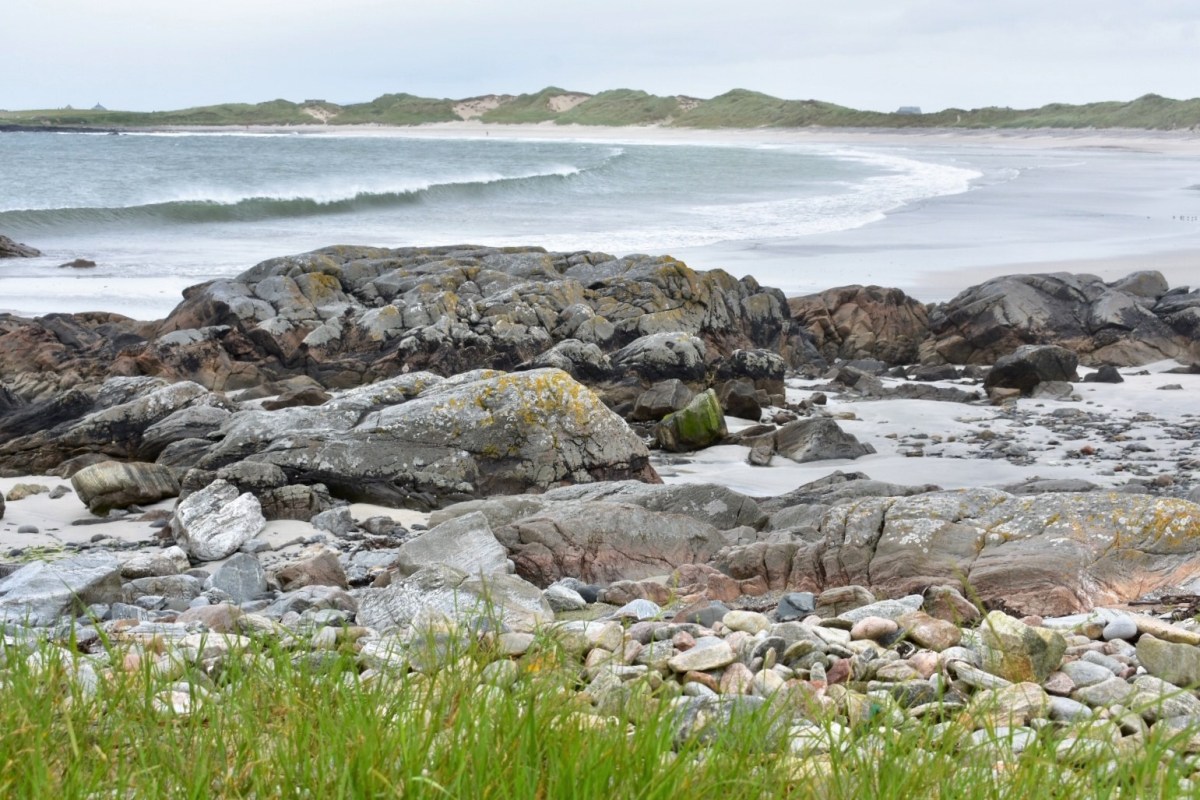
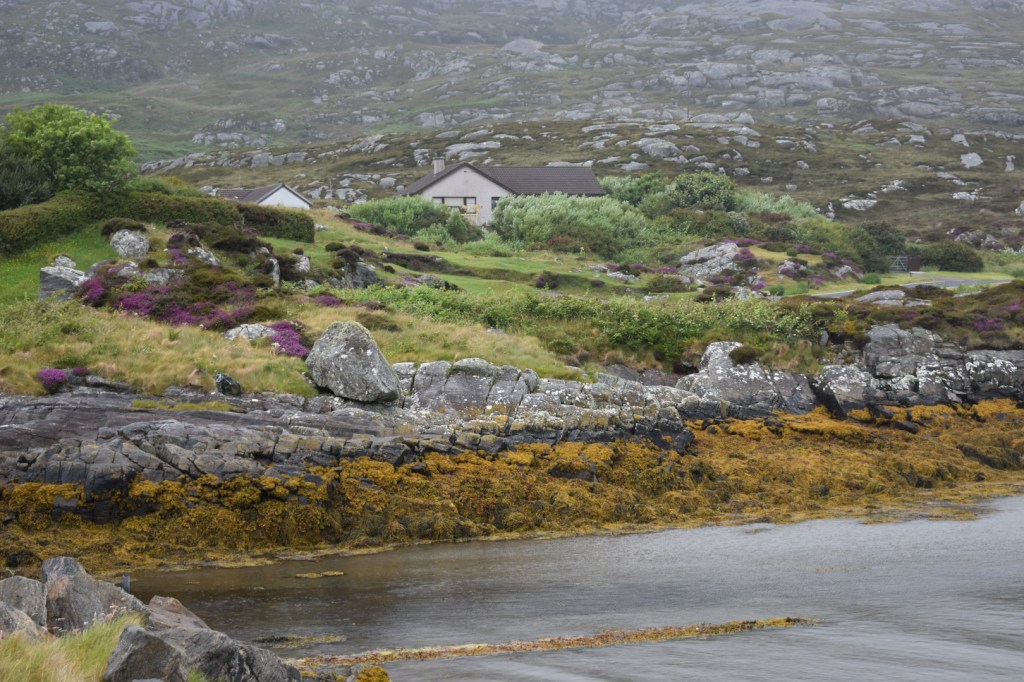
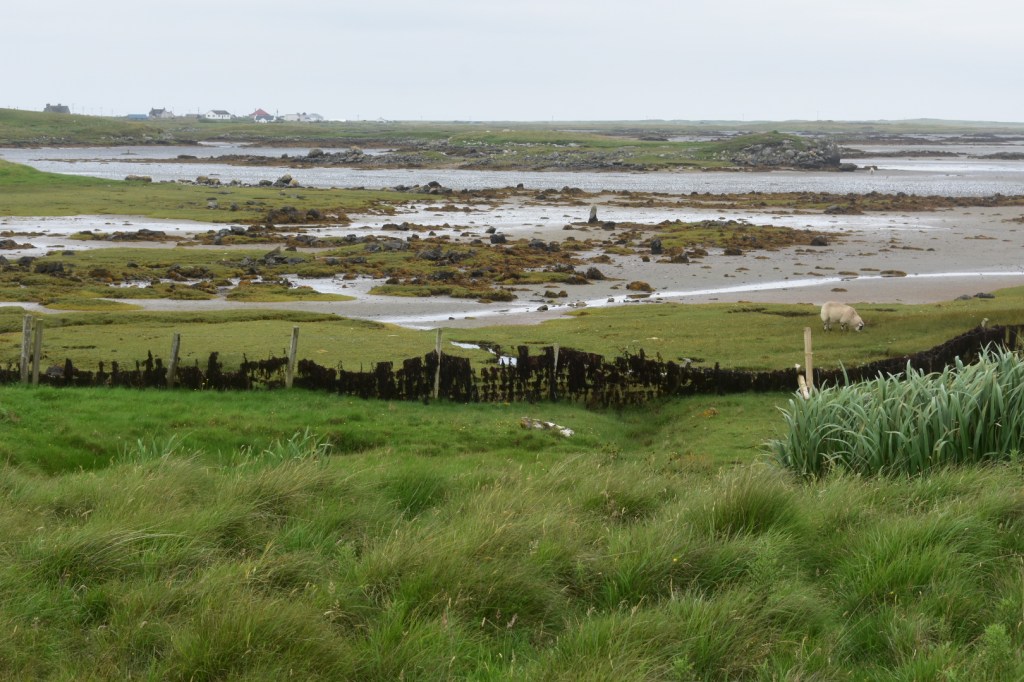
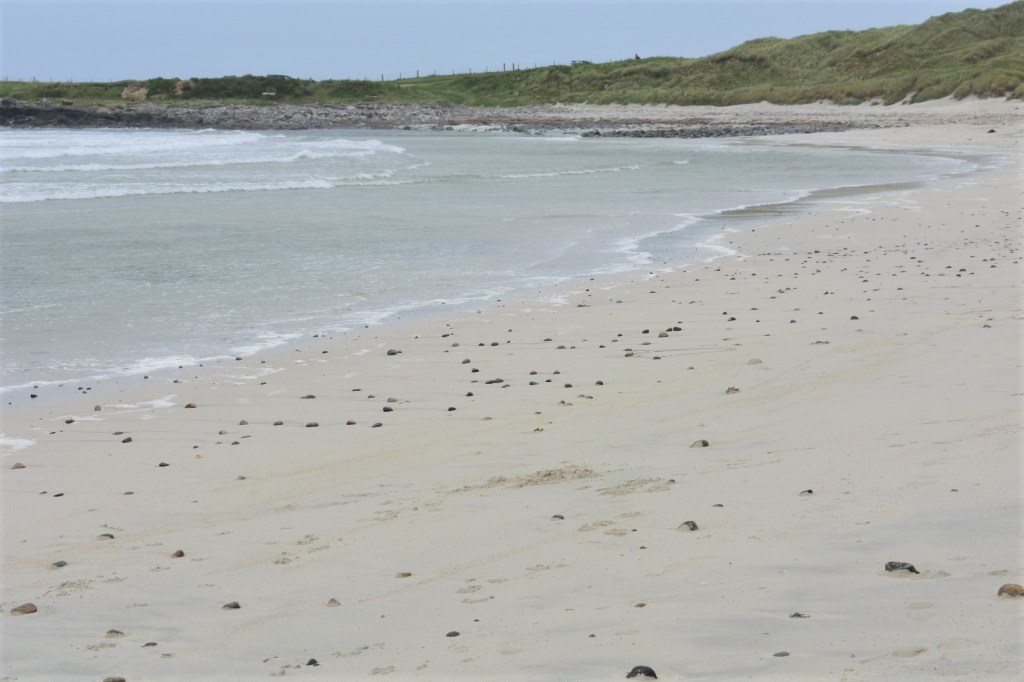
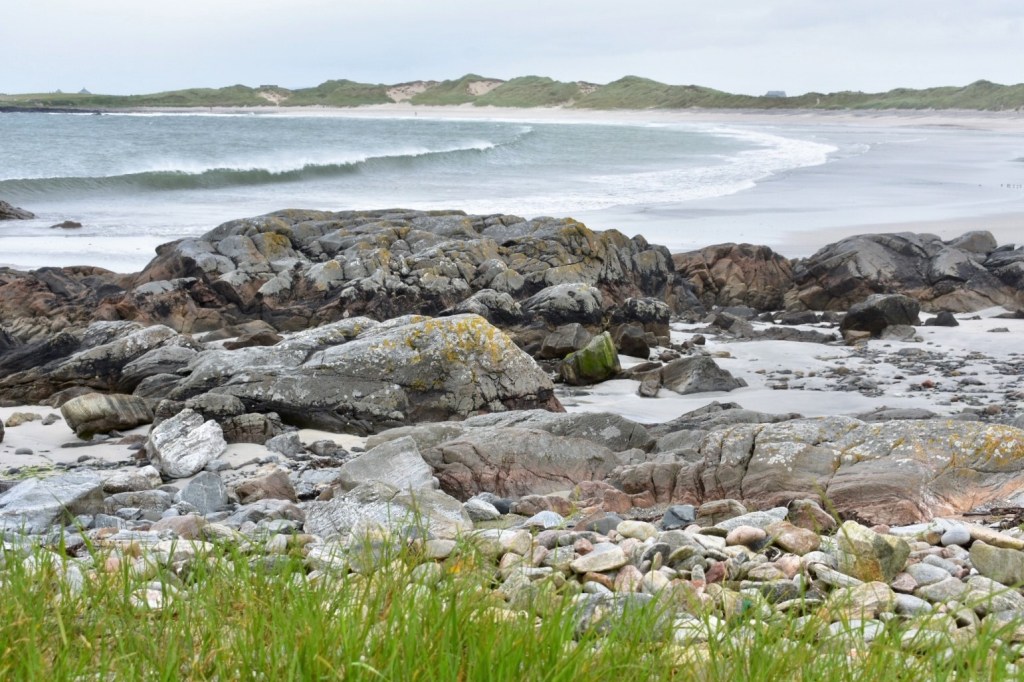
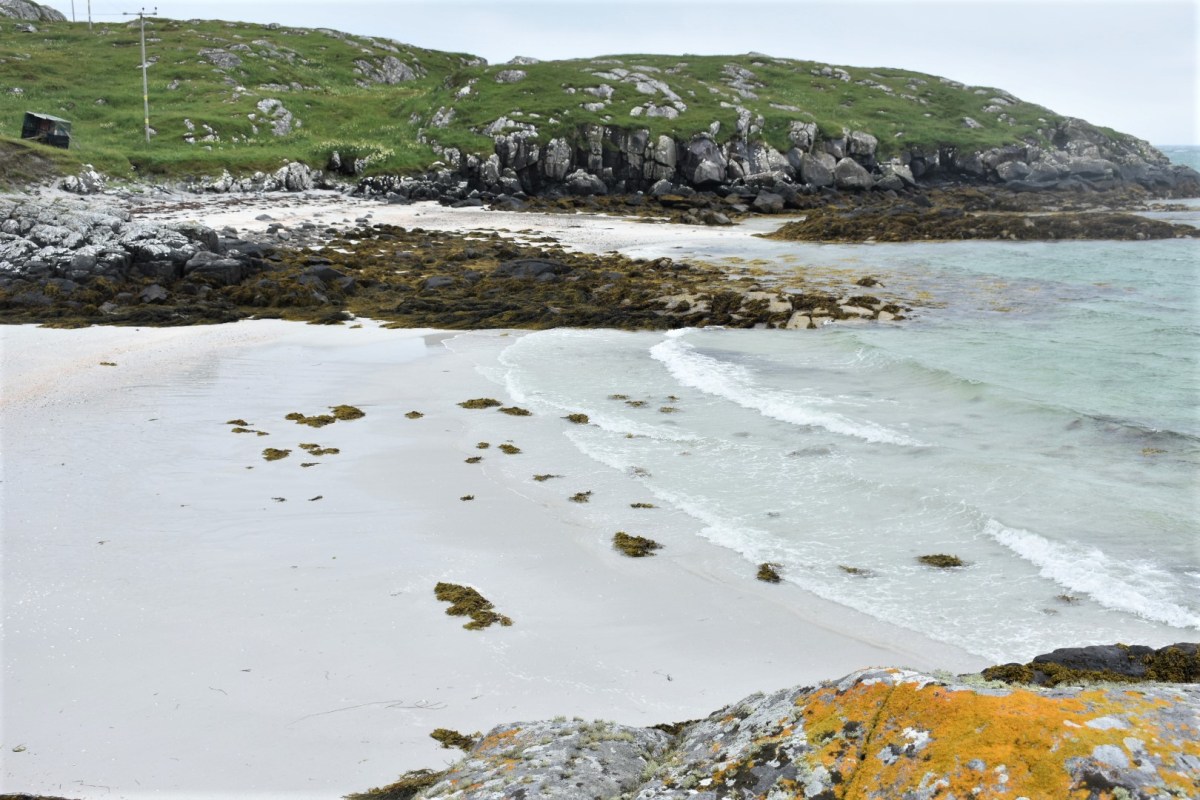
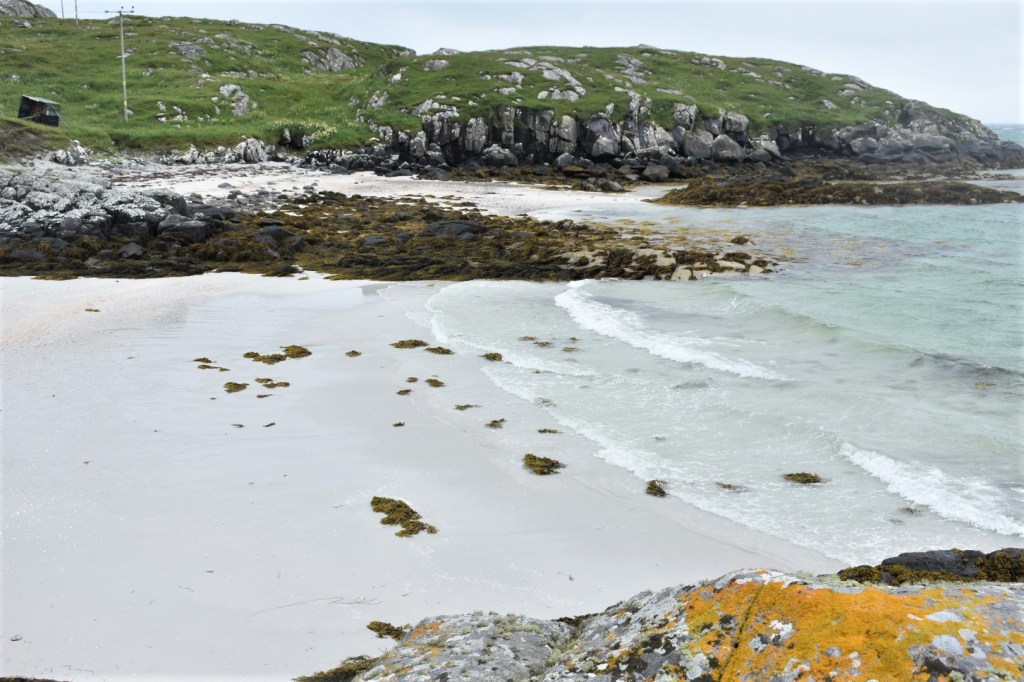
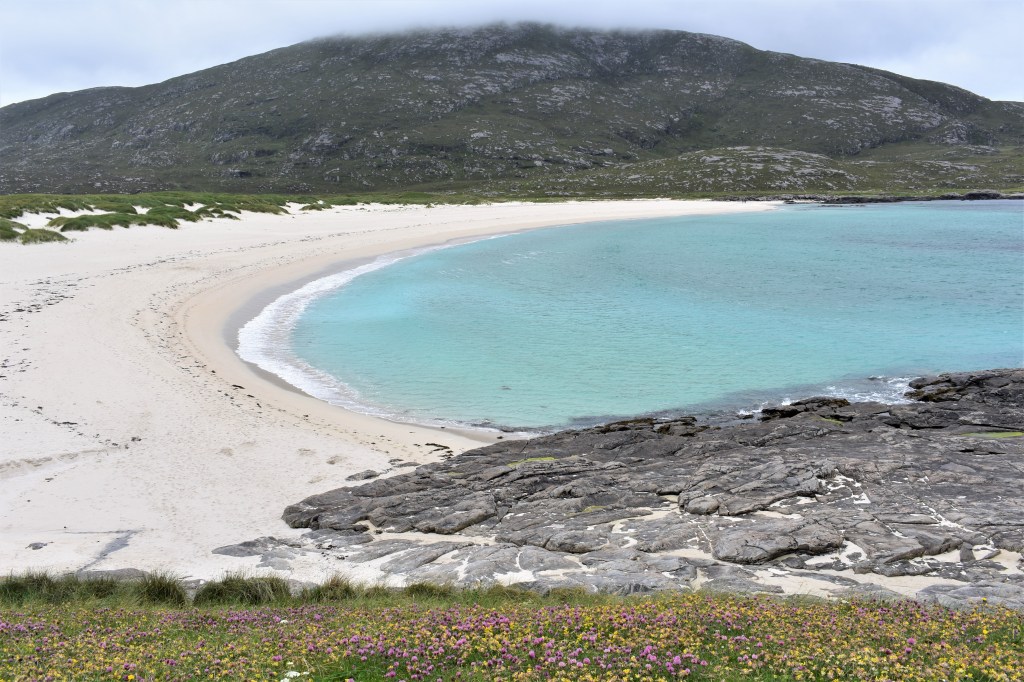
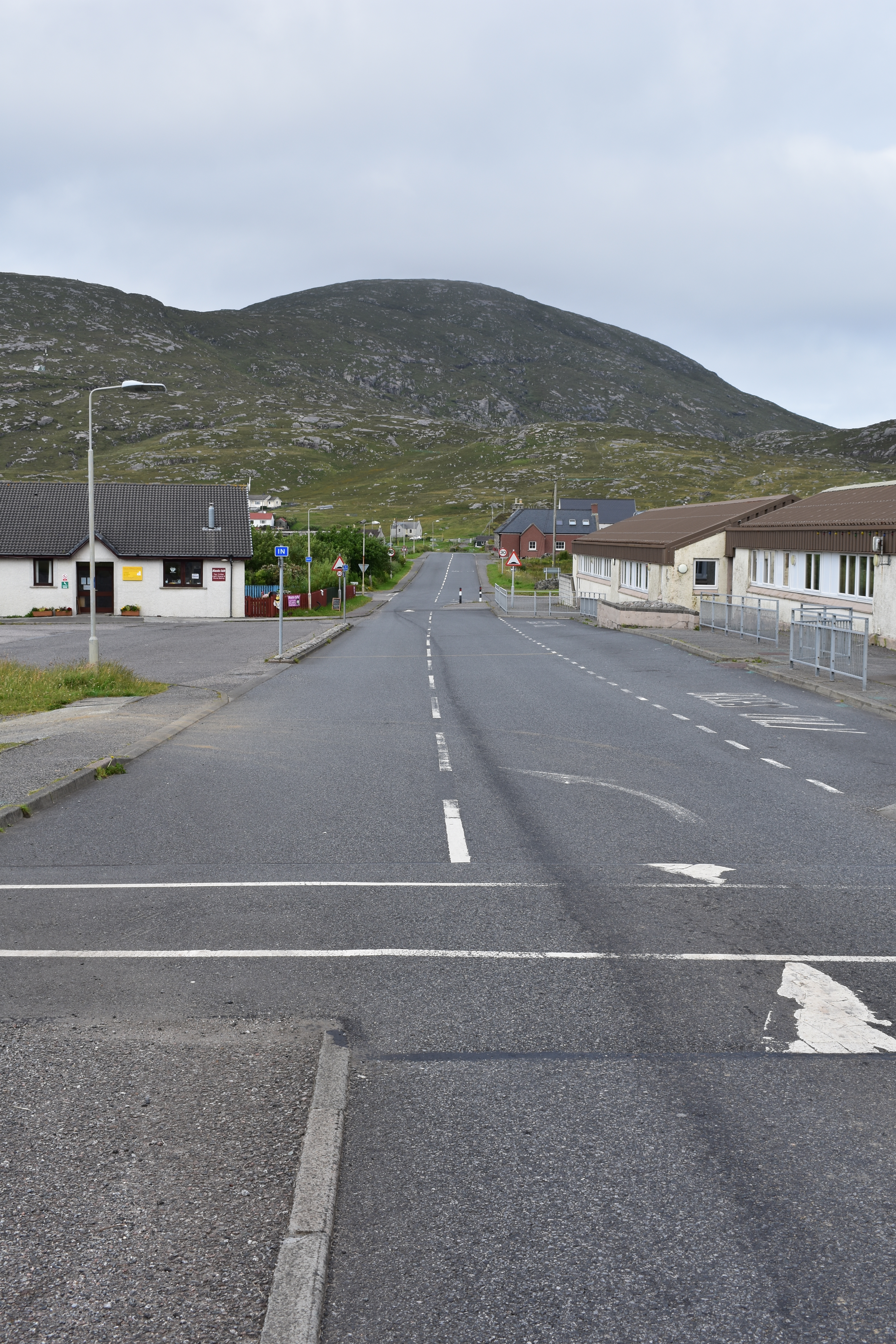
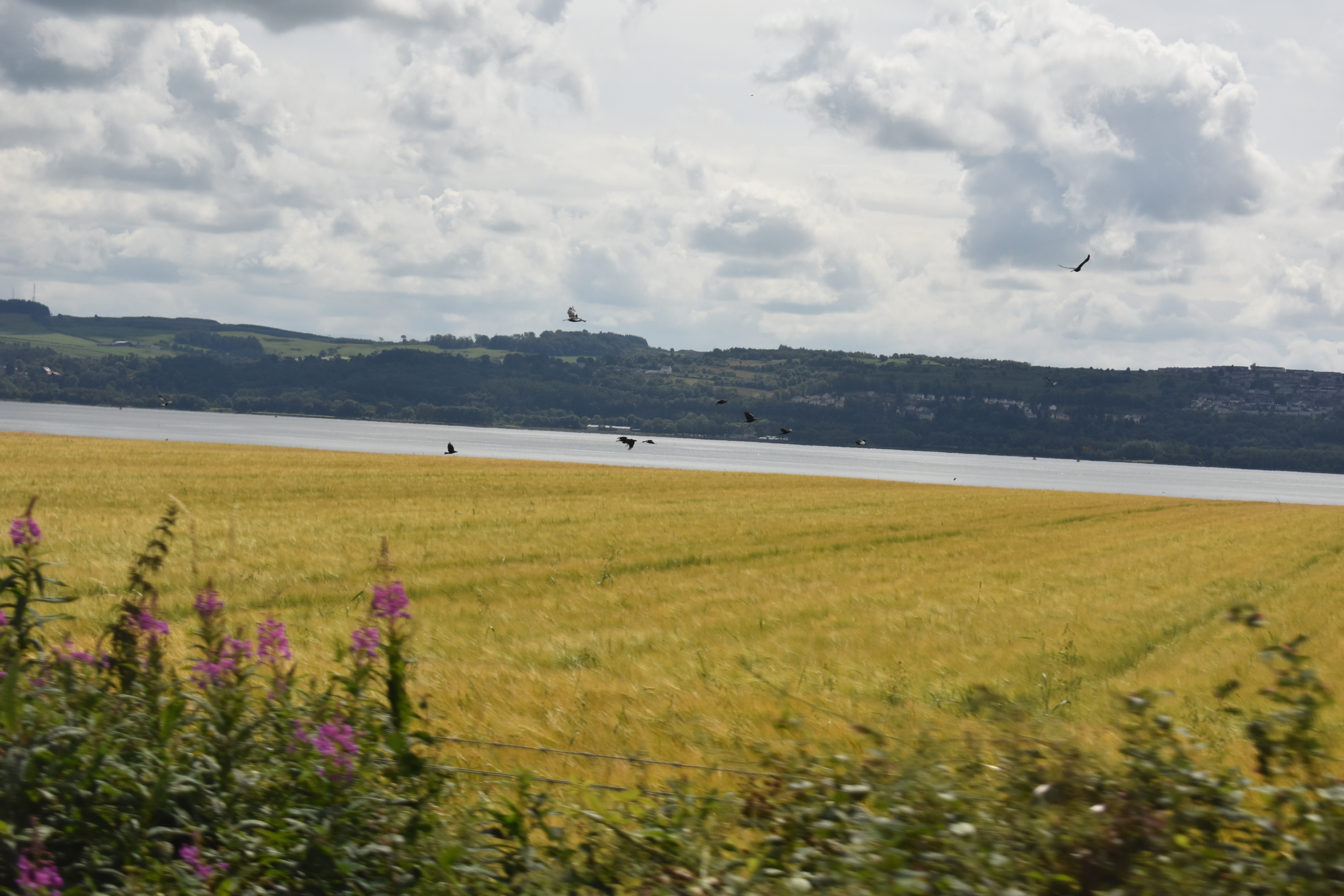
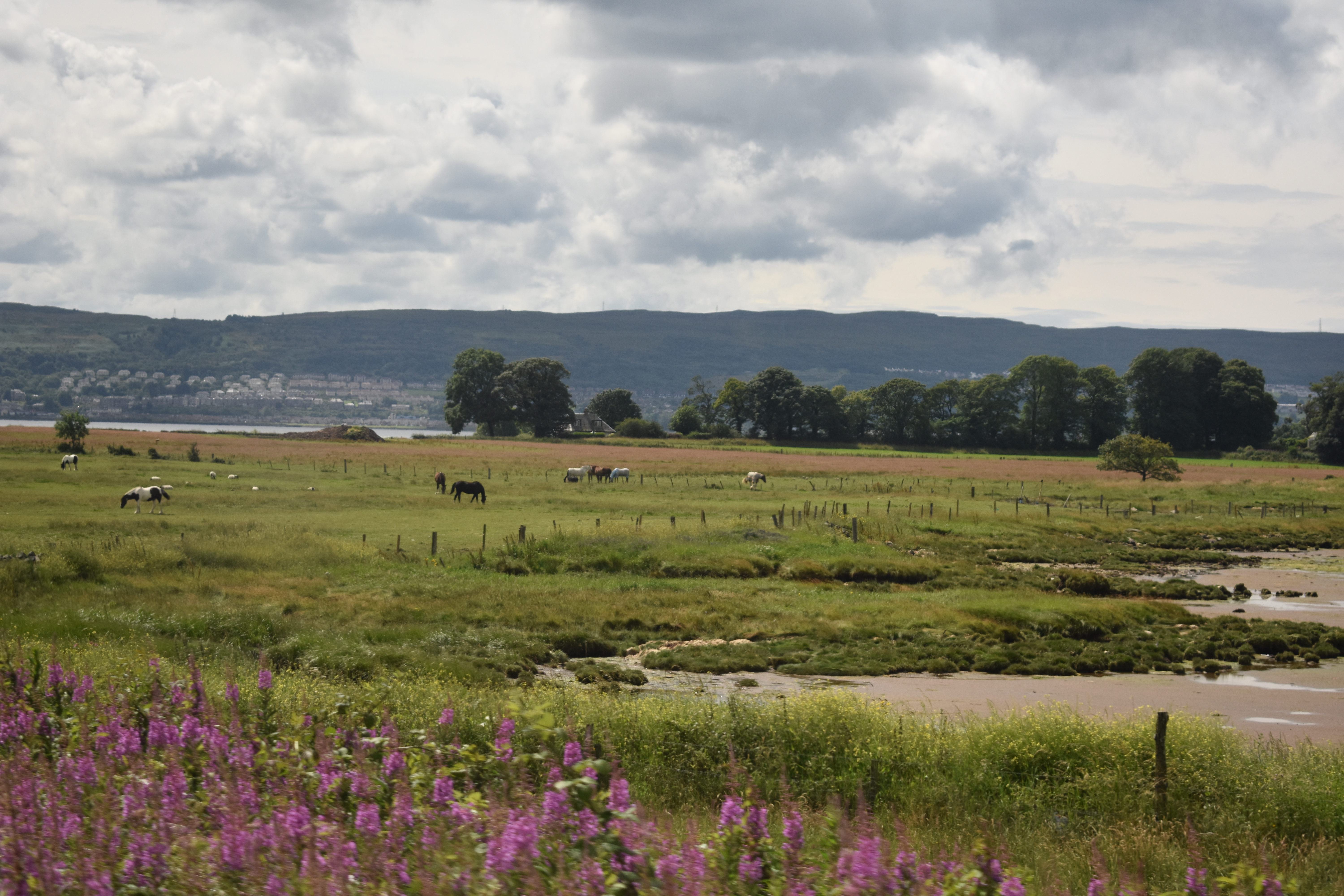
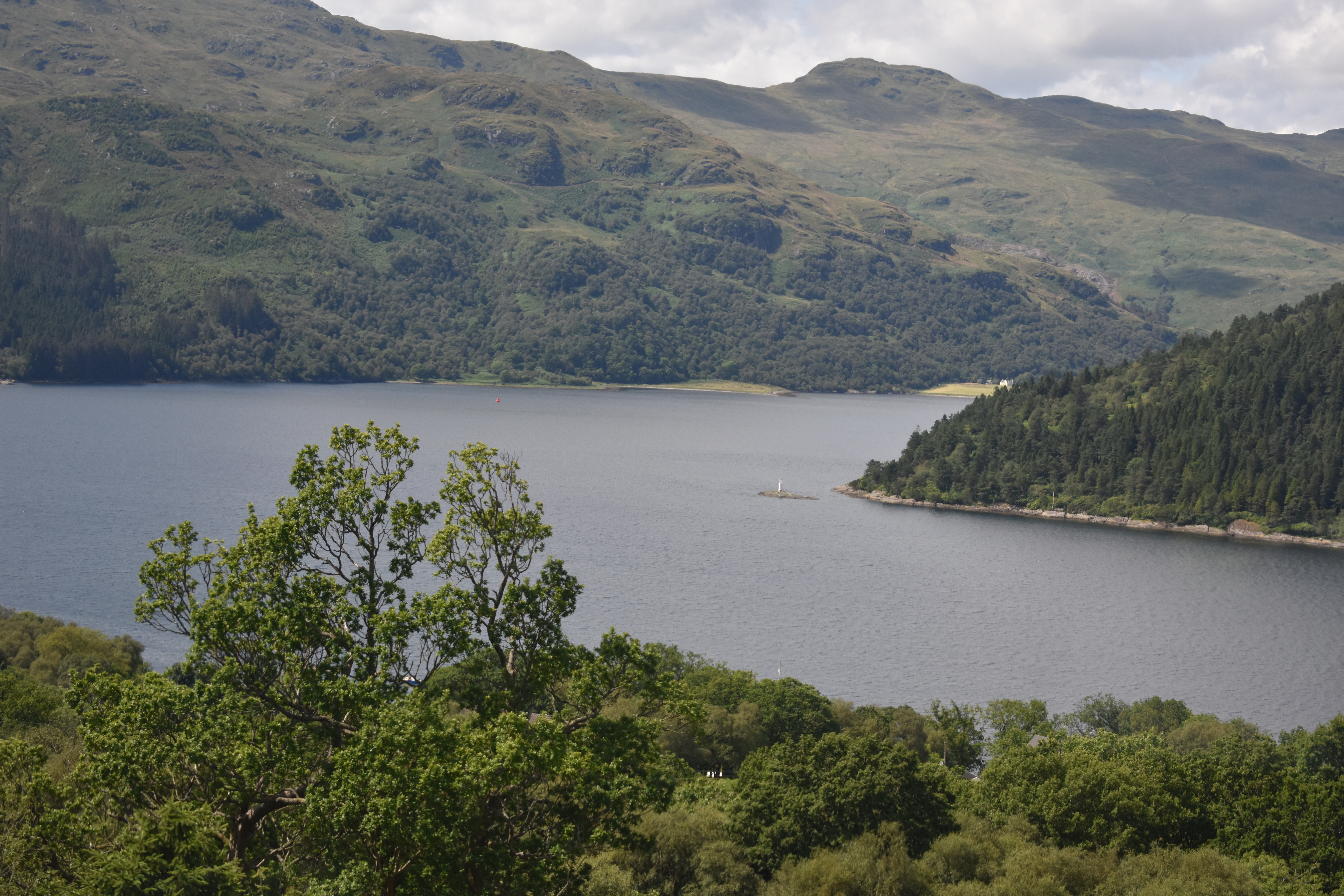
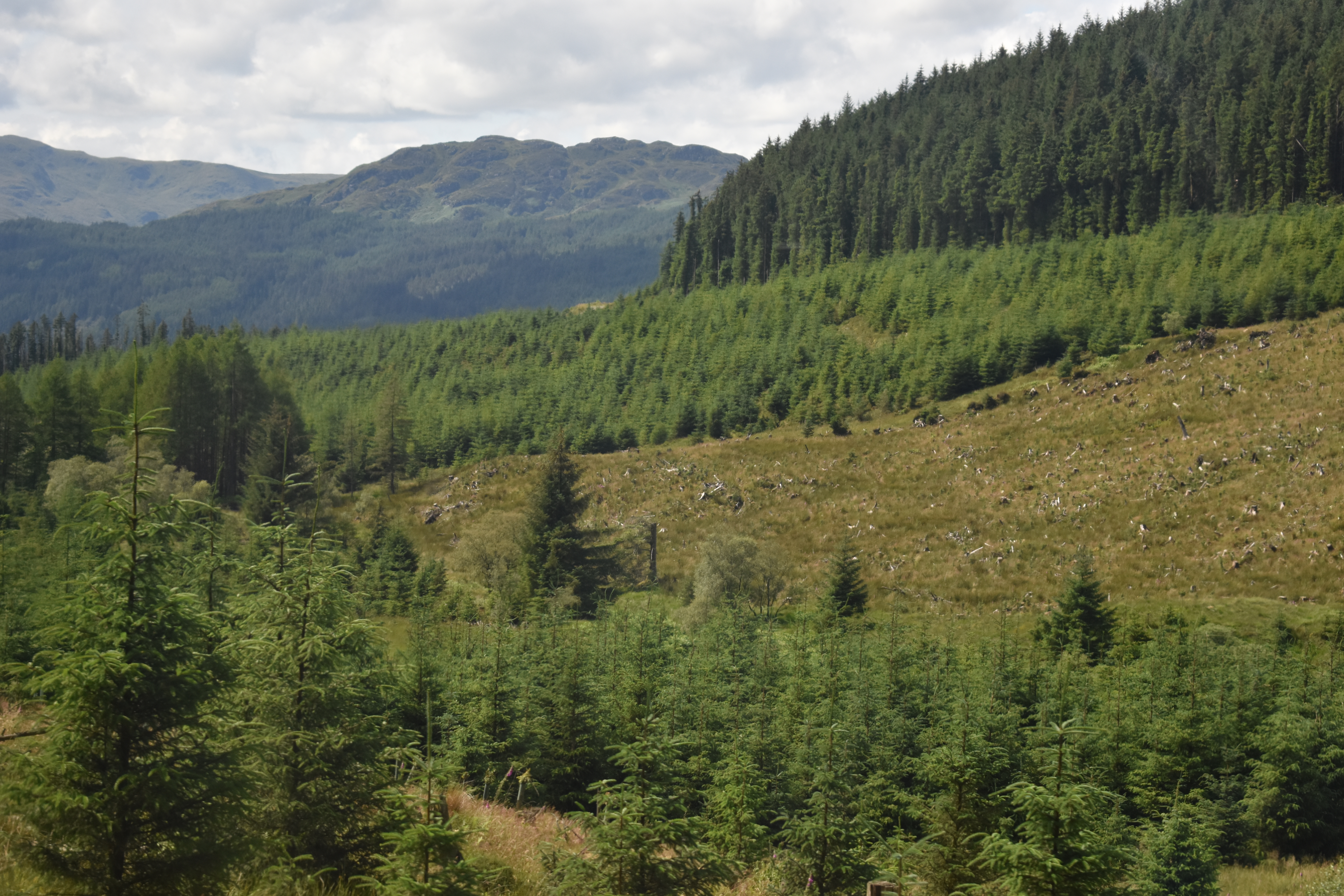
Our time in Tarbert was too short. When our bus arrived we set off on the next part of our journey, across the island to arrive in Stornoway, on the north east side of Lewis. The scenery was quite brilliant and we took scores of pictures through the bus window as we travelled through Harris on our way up to Lewis. Some of the beaches we passed were just stunning. When we come again, we will have to spend more time in Harris.
Stornoway
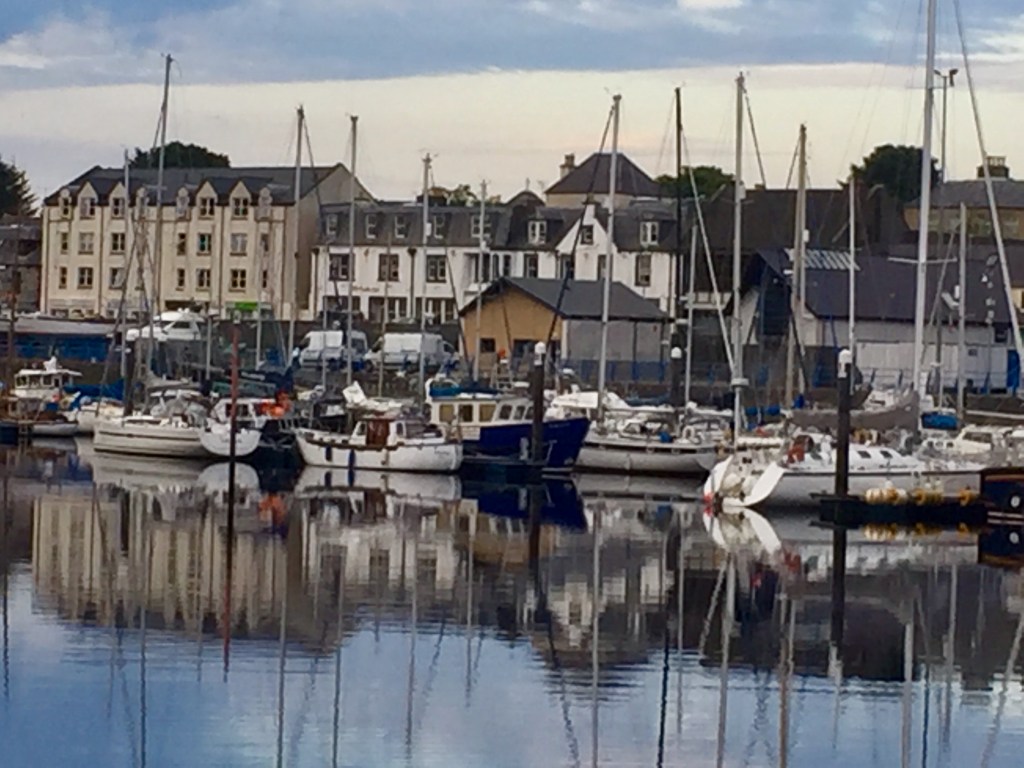
Though Stornoway has a population of less than 10,000, it has a big town feel with plenty of shops, restaurants and pubs. The town is successful and has ambitious plans for the future. Tourists now come to visit the town from all over Britain and beyond. When a cruise ship pulls into the harbour, a thousand or more people can disembark crowding the shops in their quest for souvenirs. Tasty food treats can be found in Stornoway. You can buy Hebridean mustard, smoked fish from the Stornoway Smokehouse or try one of the many flavoured teas from the Hebridean tea store in the town centre. Non food gifts and treats can also be found. Looking through the shop windows may tempt you to buy some beautiful local pottery, paintings, wooden toys or Harris tweed. At weekends, visitors fly in from Glasgow and Edinburgh to enjoy a stay on yachts which are moored in the harbour. A new marina is being constructed to cater for this growing luxury market.
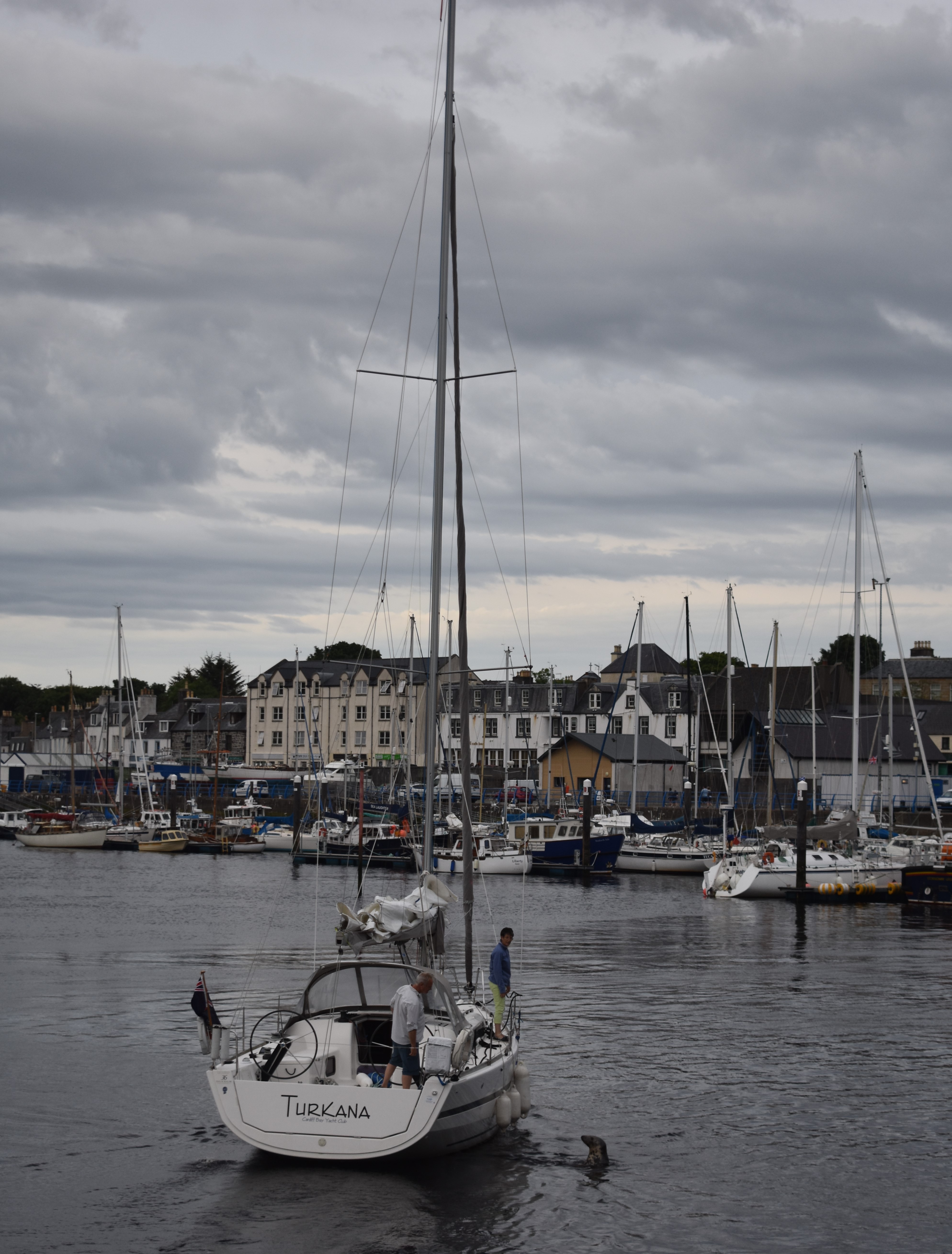
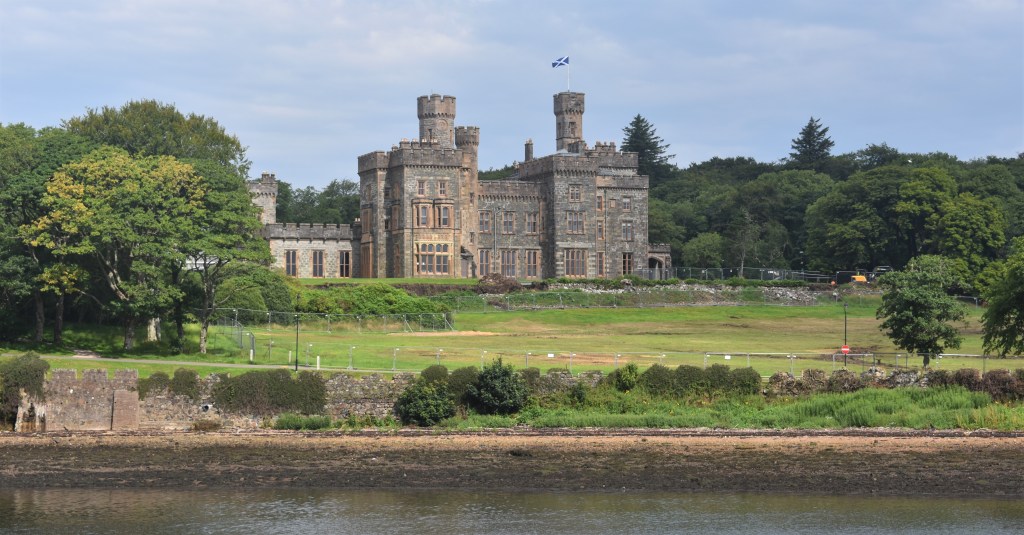
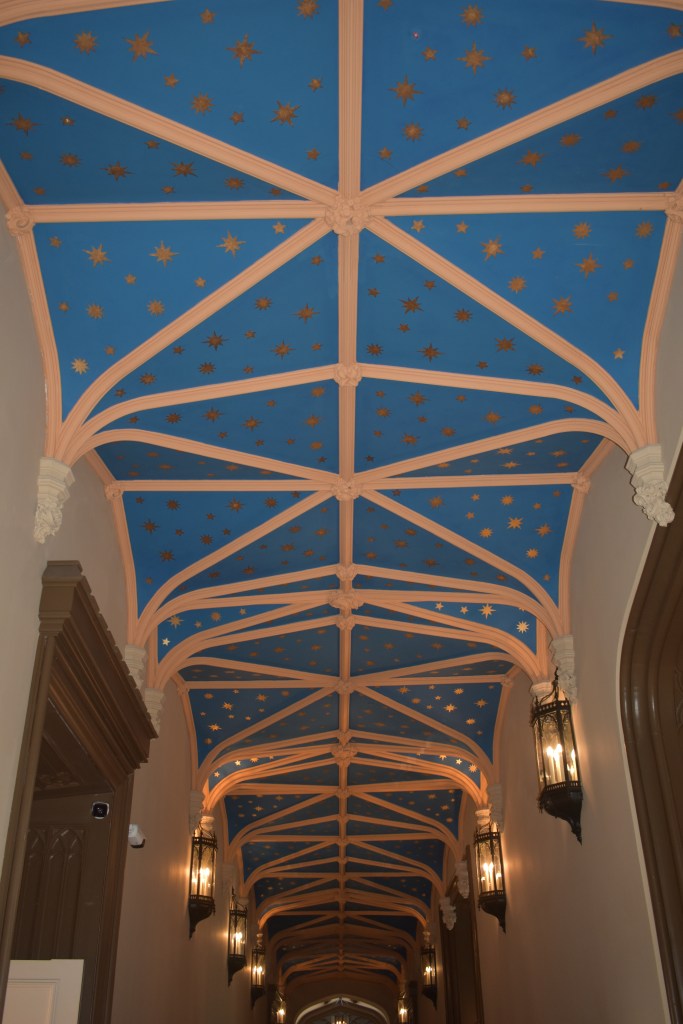
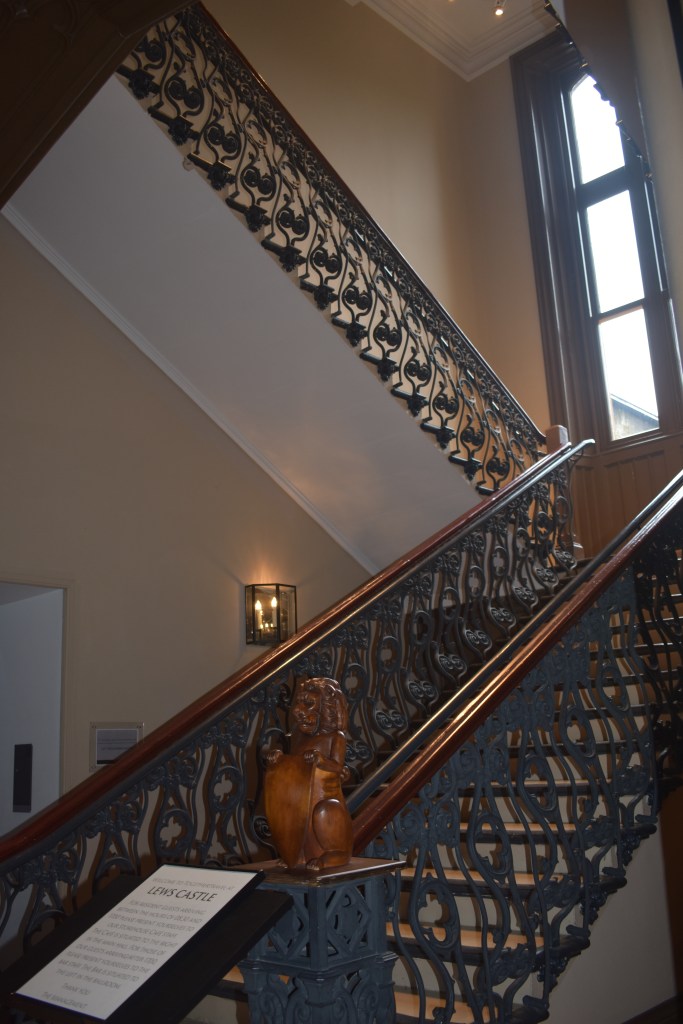
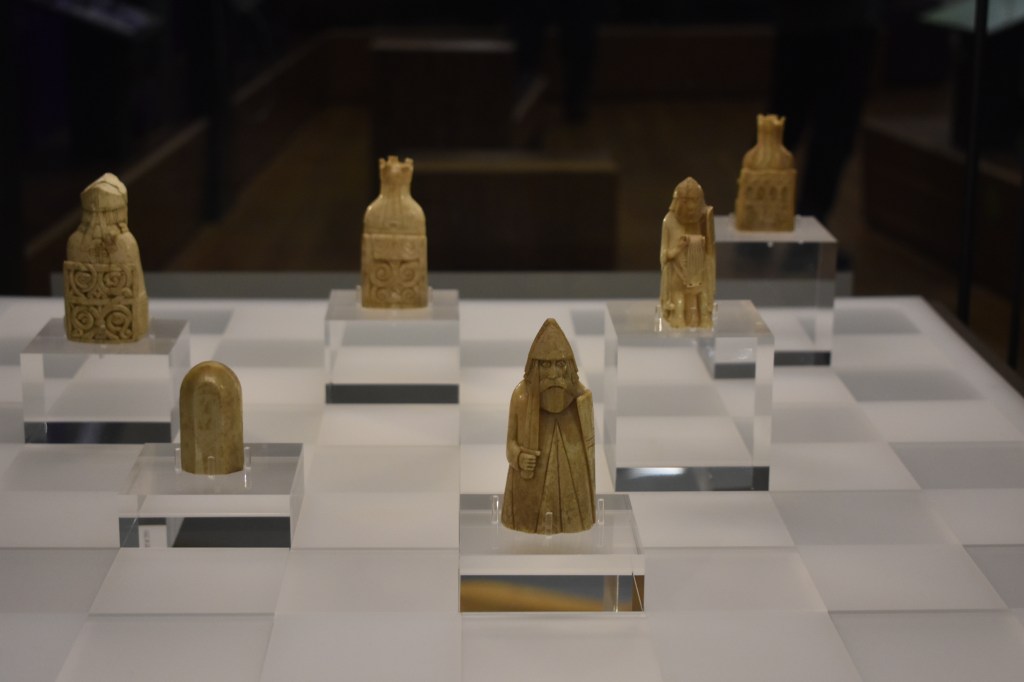
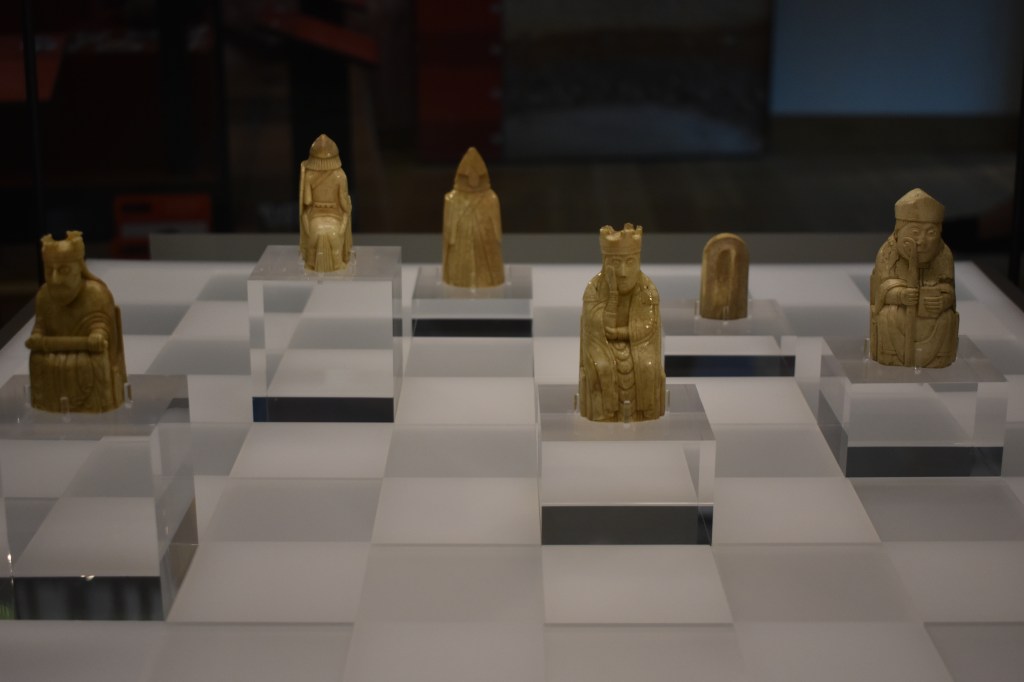
Yet despite this bustle, Stornoway is still a remarkably relaxed town which holds onto its traditions fiercely. In accordance with its strict Protestant outlook, Sunday in Stornoway remains the Sabbath day and many shops are closed as a mark of respect. Buses do not run on Sunday. Sunday in Stornoway is a day of quiet relaxation. It is a day to walk down to the harbour and watch the resident seals as they play in the water. It is the day to stroll through the manicured gardens of the splendid Lews castle. The castle is home to 6 of the famous Lewis Chessmen. The castle is worth a visit just to see these exquisitely crafted works of art.
Sunday is the day to contemplate the Iolaire memorial which now rests in the harbour shore. On 1 January 1919, the SS Iolaire hit rocks just a few hundred metres from the safety of Stornoway harbour. Two hundred and five servicemen were drowned on that cruel New Year day. They had survived the Great War only to have life taken from them when so close to home. The tragedy of that day is still remembered in Stornoway and a wooden outline of the ship has been constructed in the harbour as the new memorial. Every wooden post represents a life lost. At night the outline is lit-up. It is a poignant and dignified tribute to the servicemen that died that day so close to home. A stay in Stornoway is not complete without visiting it.
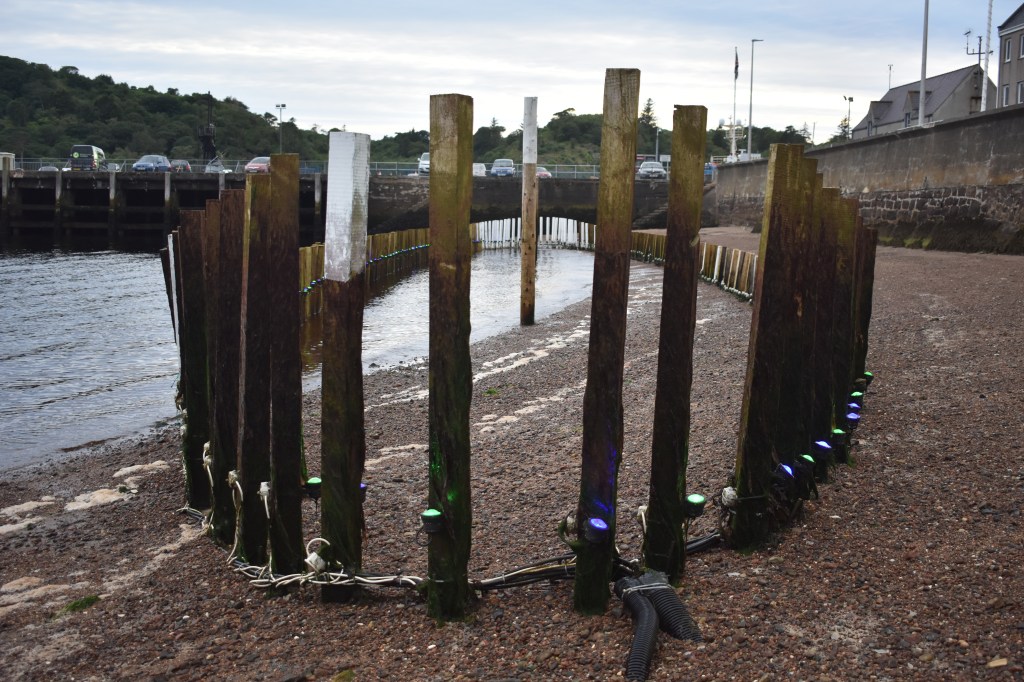
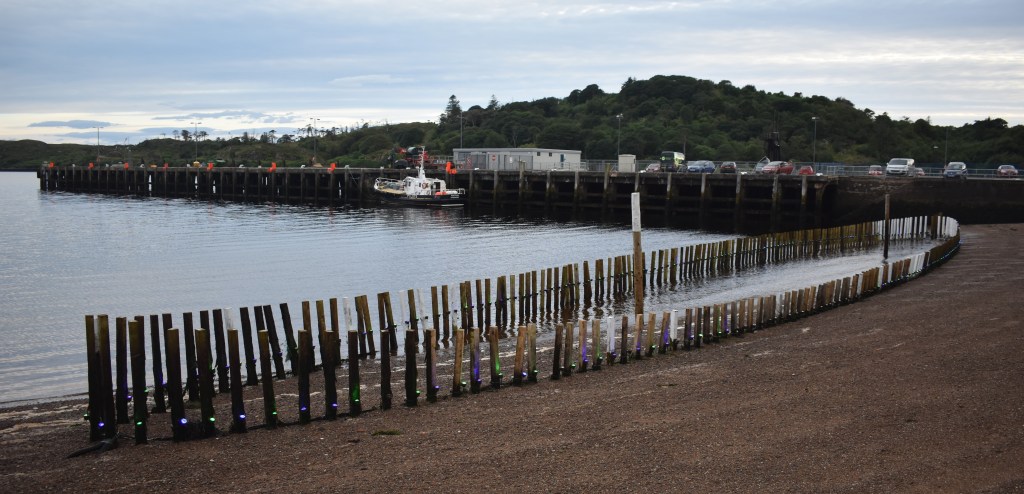
Iolaire Memorial 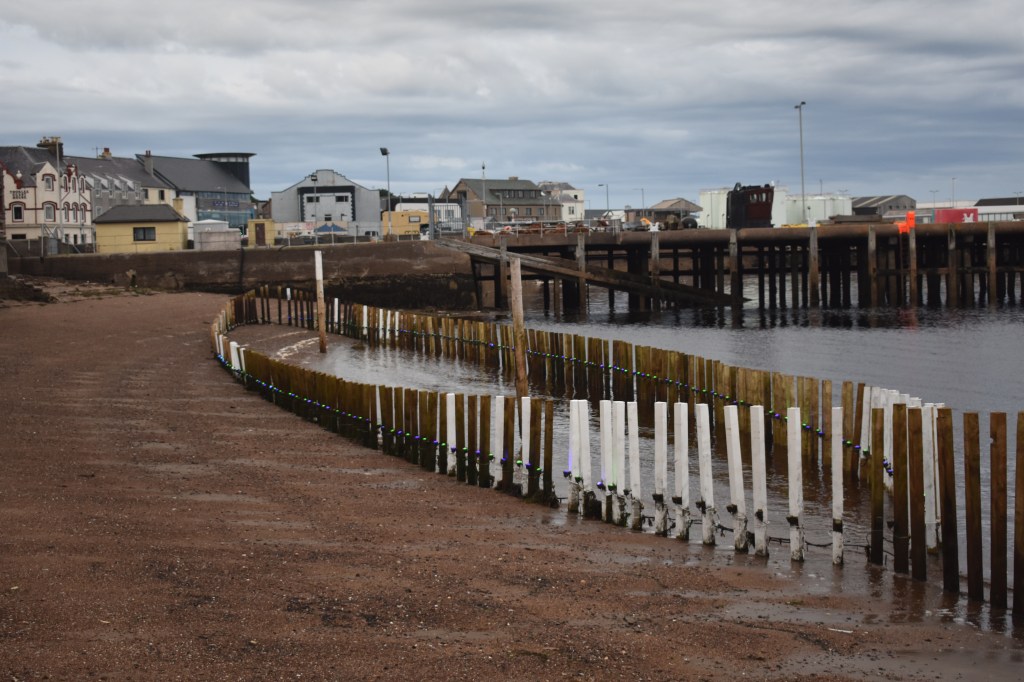
About a mile outside the town on the headland is a more traditional stone memorial to the SS Iolaire. Looking over the sea and the rocks where the disaster struck, this memorial is also worth a visit.
Herring Fishing and Stornoway
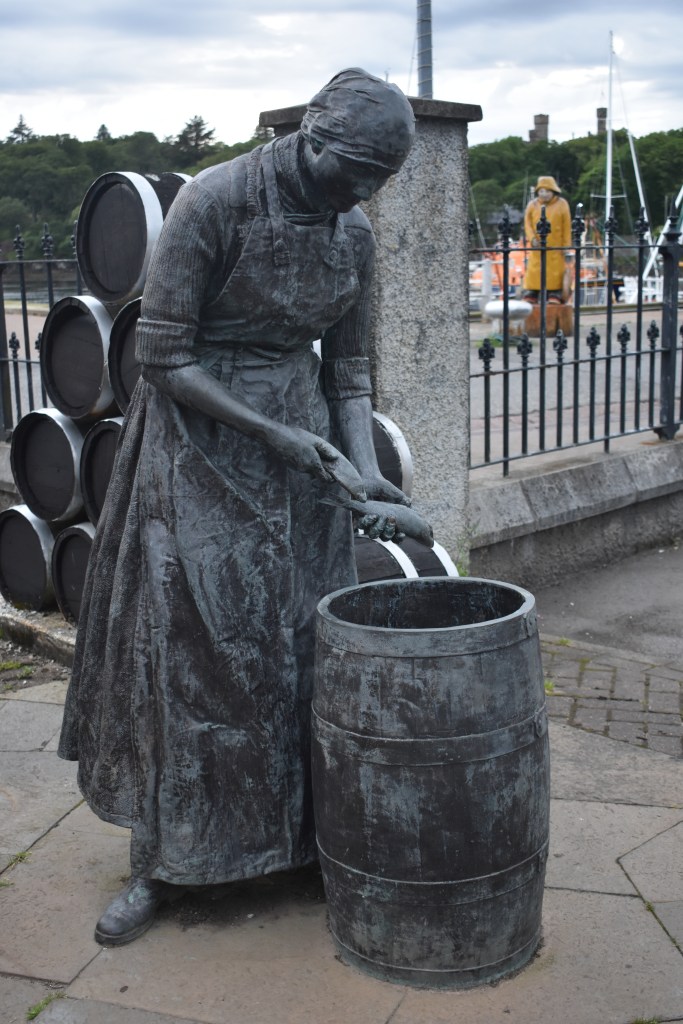
Herring fishing was the main industry of Stornoway up to the First World War. Fishing boats still operate out of the harbour but the modern industry is a shadow of its past when it was claimed you could run from one side of the harbour to the other going from fishing boat to fishing boat. Sadly, the Herring fishing industry collapsed in the post war depression. Throughout the town you can see statues which commemorate the Herring Girls who played a vital part in the industry, gutting and boxing the fish when they were landed. Local historian Donald Murray has written an excellent account of the Herring industry in his book: Herring Tales. If you want to understand the character of Stornoway you must understand the important role that Herring fishing played in developing that character. I’d recommend Murray’s book as a good read.

Lewis’s Bus Service, the Callanish Stones and other Attractions
Stornoway is a great base to discover the many attractions on the Isle of Lewis. Sunday apart, there are good, regular bus services to the major tourist destinations on the island. Travelling by bus is also a relaxed way to see the island, and a great way to meet local people. The bus service doubles up as a local courier service delivering and collecting parcels from outlying settlements. Travelling by bus makes you feel a part of the island community and we enjoyed it so much that we’d recommend leaving the car at home and going by bus.
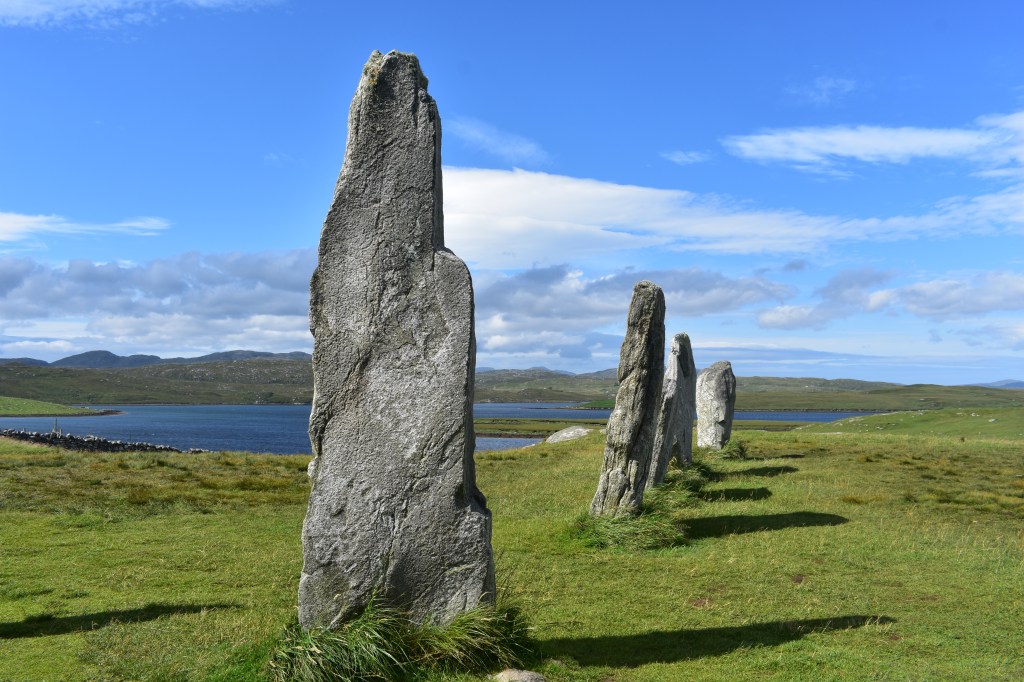
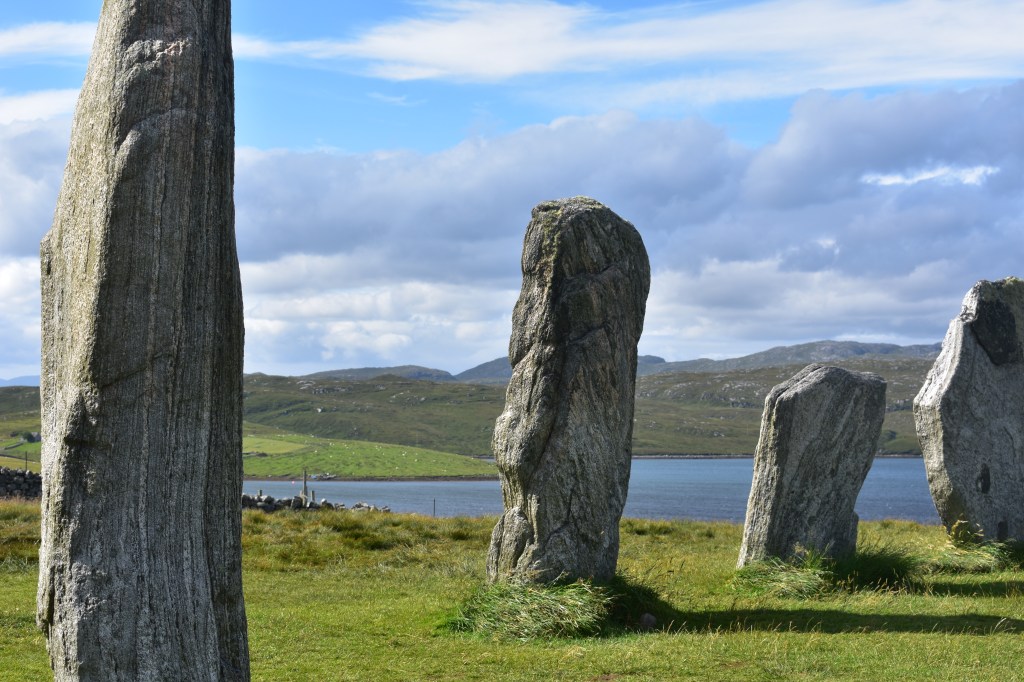
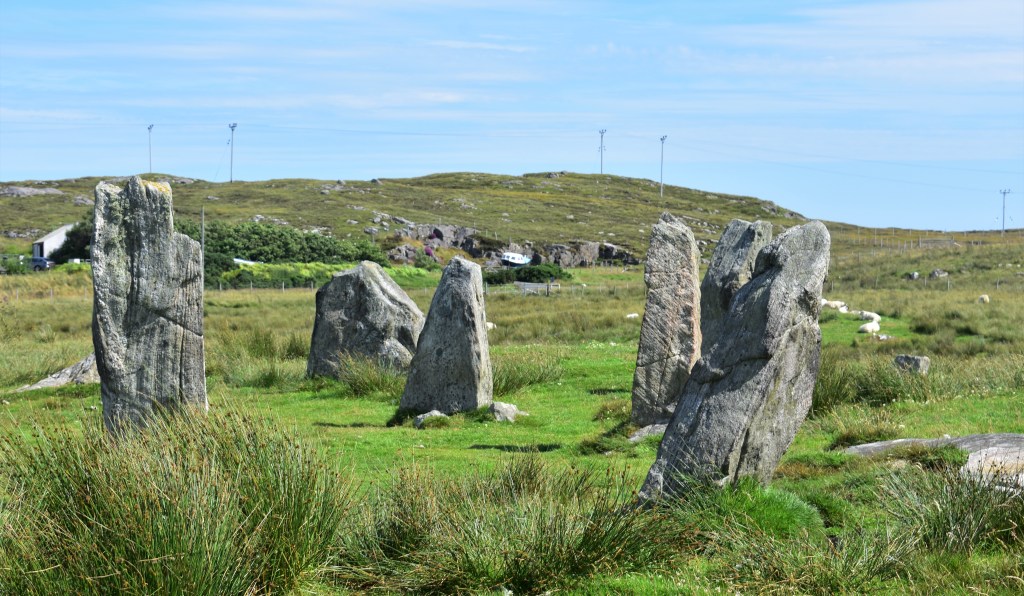
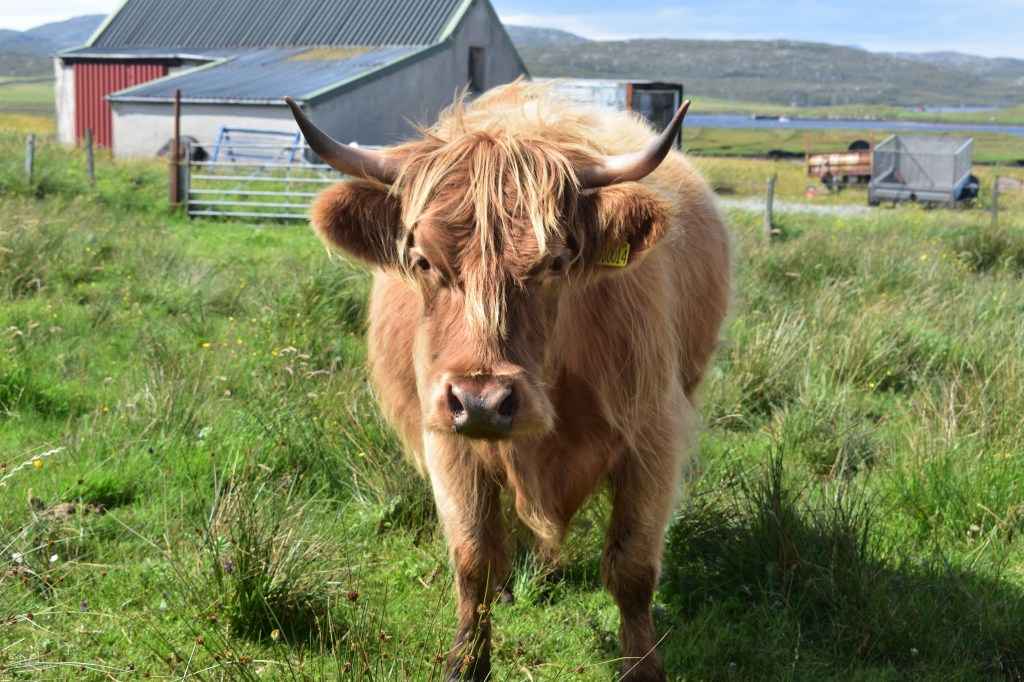
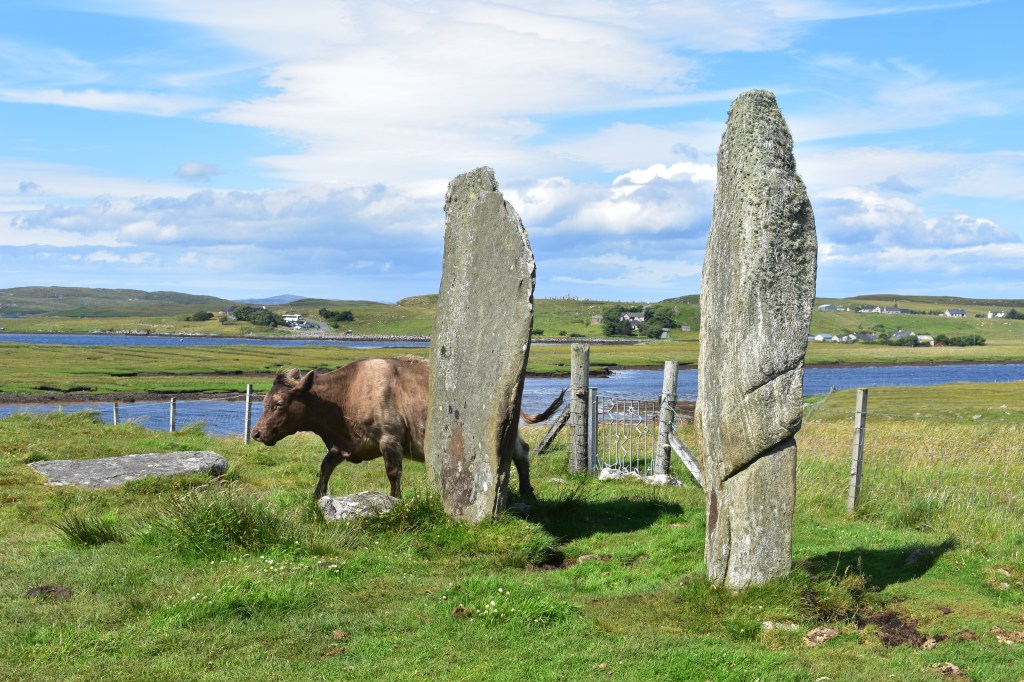
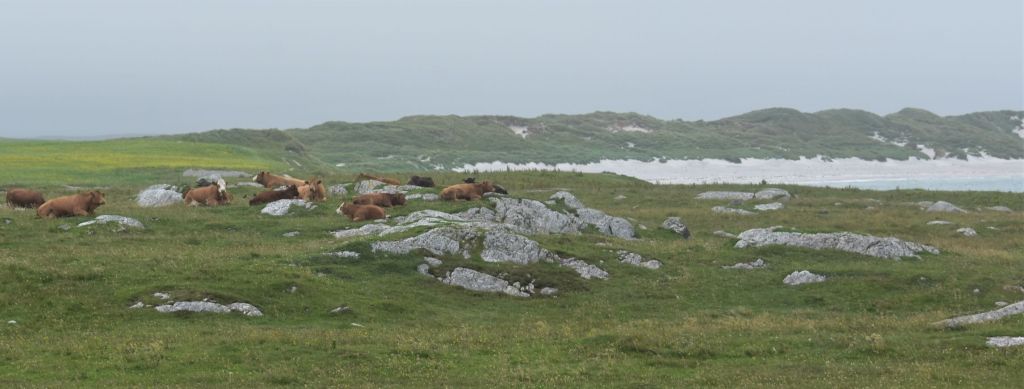
We were blessed with dry, warm weather when we took the bus to the Callanish Stones. Perhaps not as famous as Stonehenge, there are three neolithic stone circles that can be visited in the Callanish area. Unlike Stonehenge, they are easily accessible and there are not hordes of visitors queuing up to see the Stones. There is a visitor centre which includes a shop and cafe with lots of information on the site. You can walk from one of the stone sites to another and there is no cost for visiting them. We found it so funny seeing cows grazing on the grass by the standing stones. Cows have been grazing here for the 5000 years since the stones were first erected. I hope they continue to do so for the next 5000 years.

The Blackhouse Village
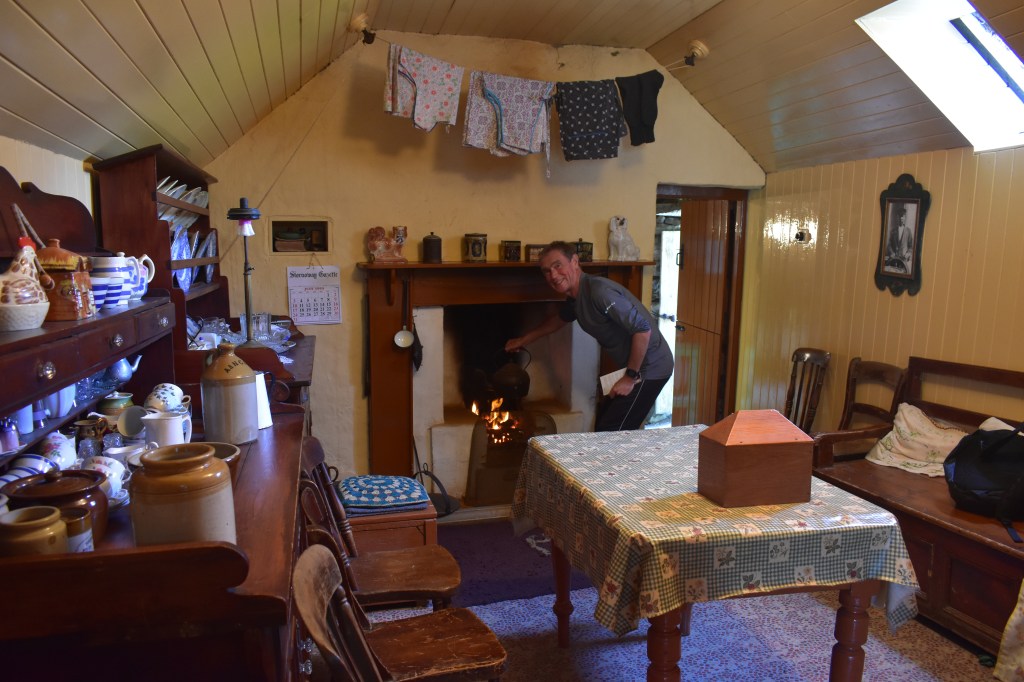
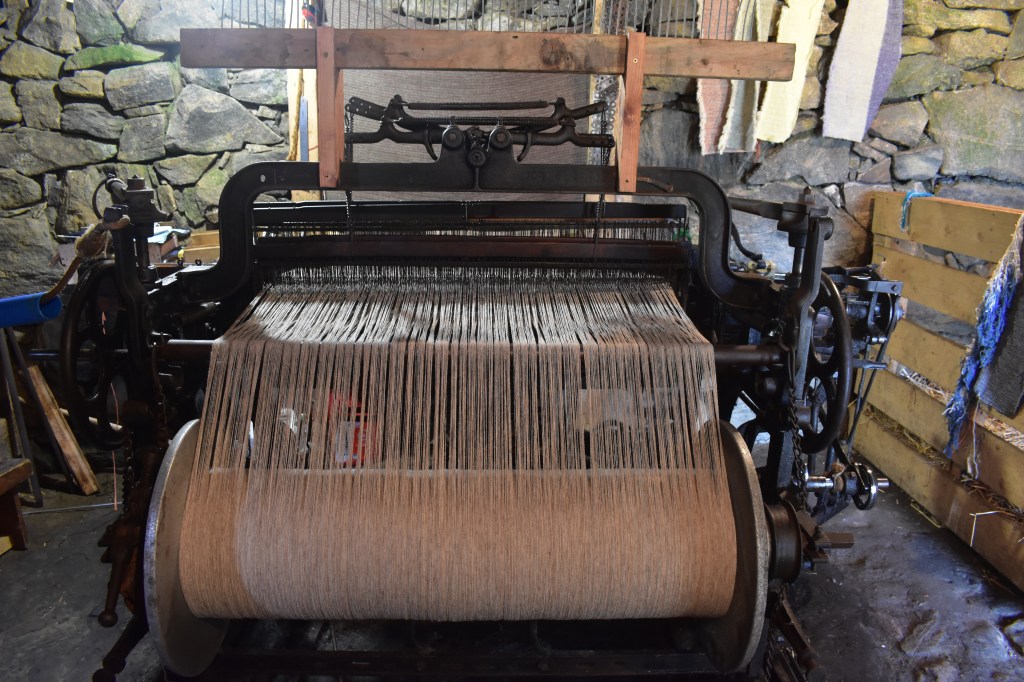
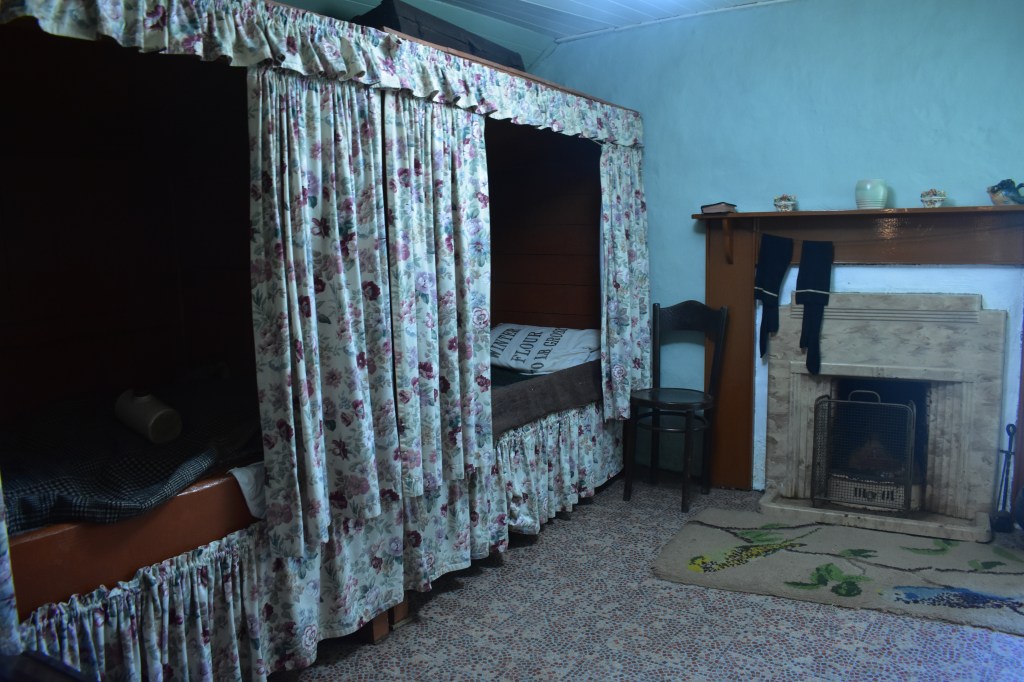
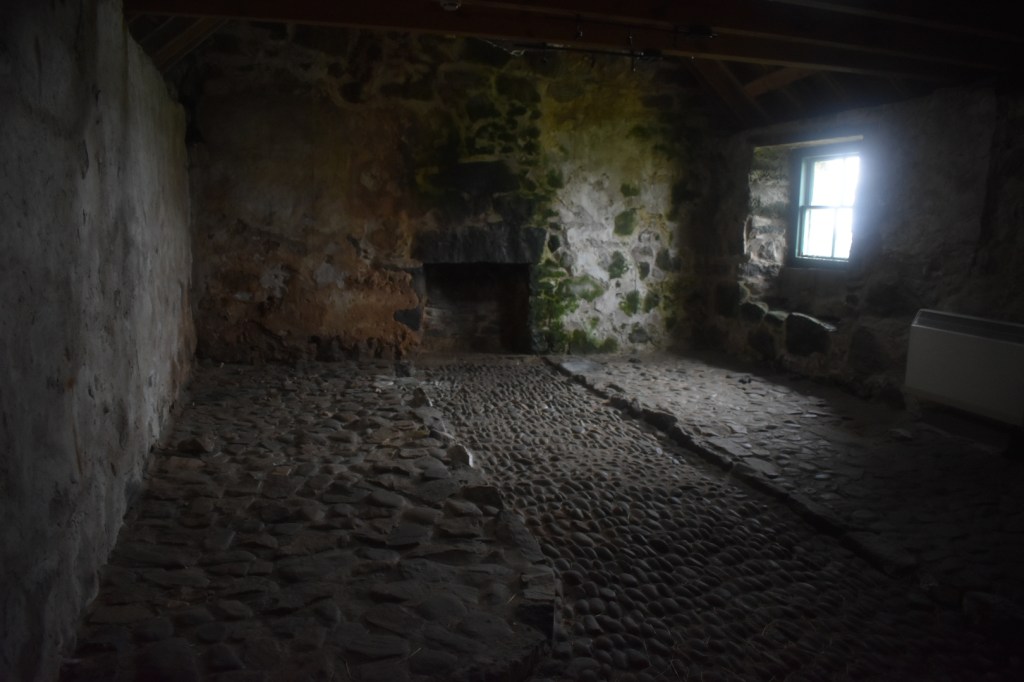
Our second stop on the bus was to visit the Blackhouse Village. The Village is a cluster of restored crofts and they represent the type of crofts islanders lived in from the 17th century to the 1970’s. There is a small fee to enter the village which is manned by volunteers who explain how local people lived and worked in these crofts. I did enjoy the scent of peat burning on the range. Some of the crofts can now be rented out for short stay visits though I was told you may have to book long in advance to get a letting in the popular Summer months. The village has majestic views over the sea and the coast paths provide great walking trails nearby.
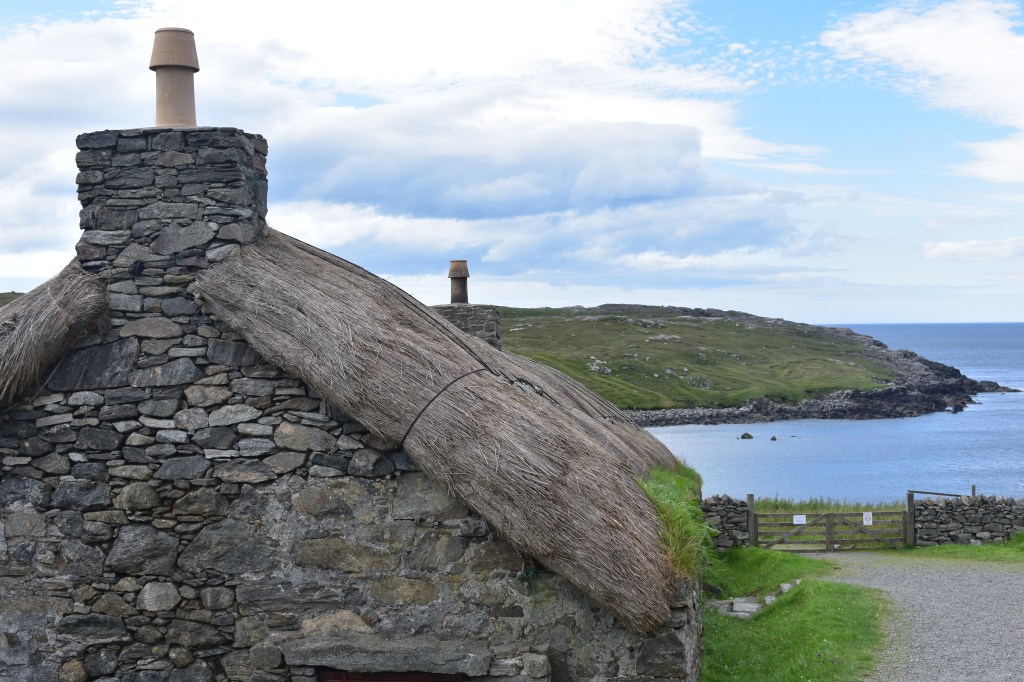
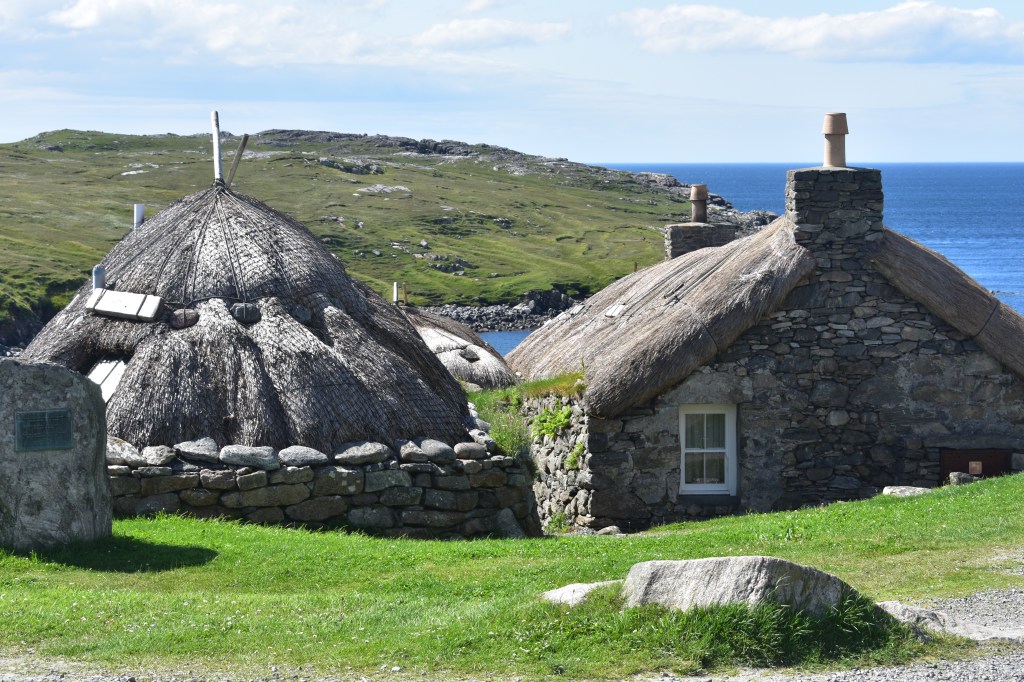
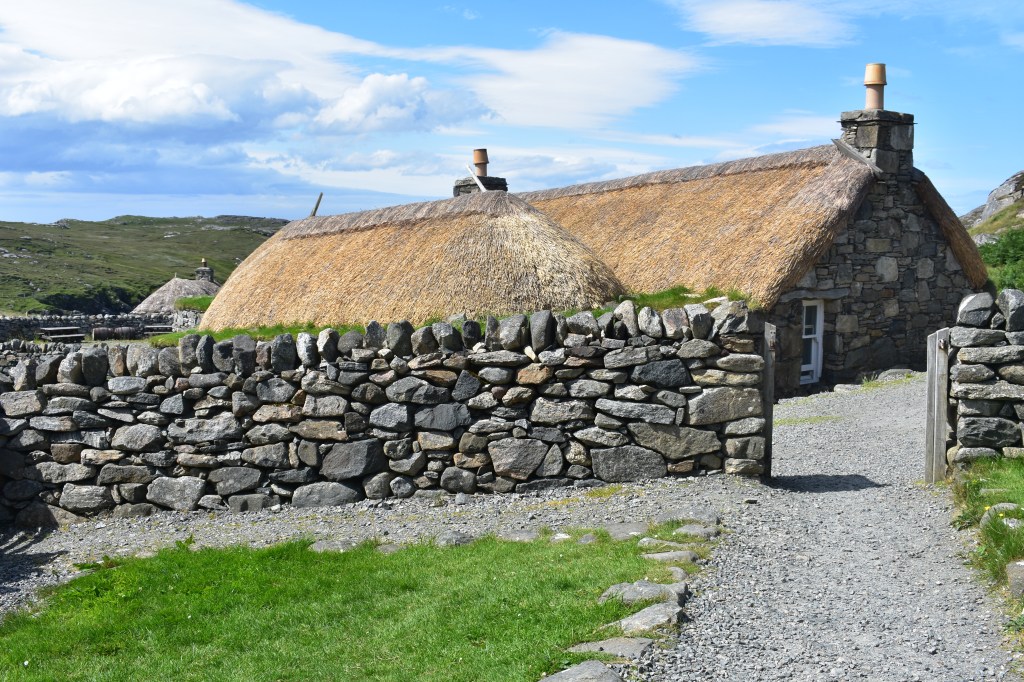
A visit to the Blackhouse Village is a great day out and we recommend it.
Shawbost Norse Mill and Kiln
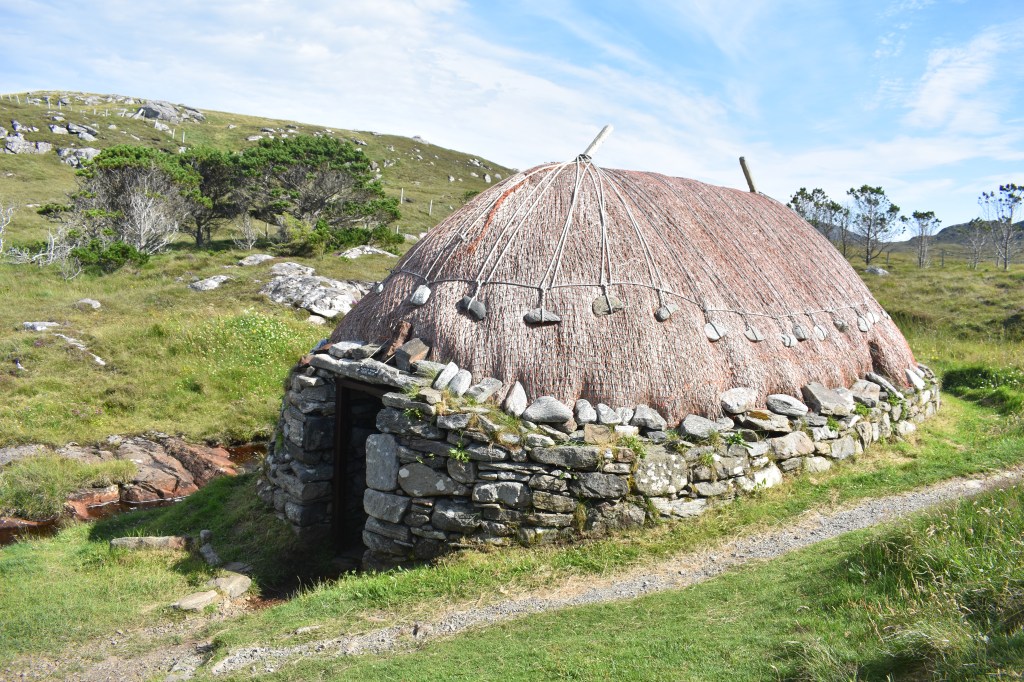
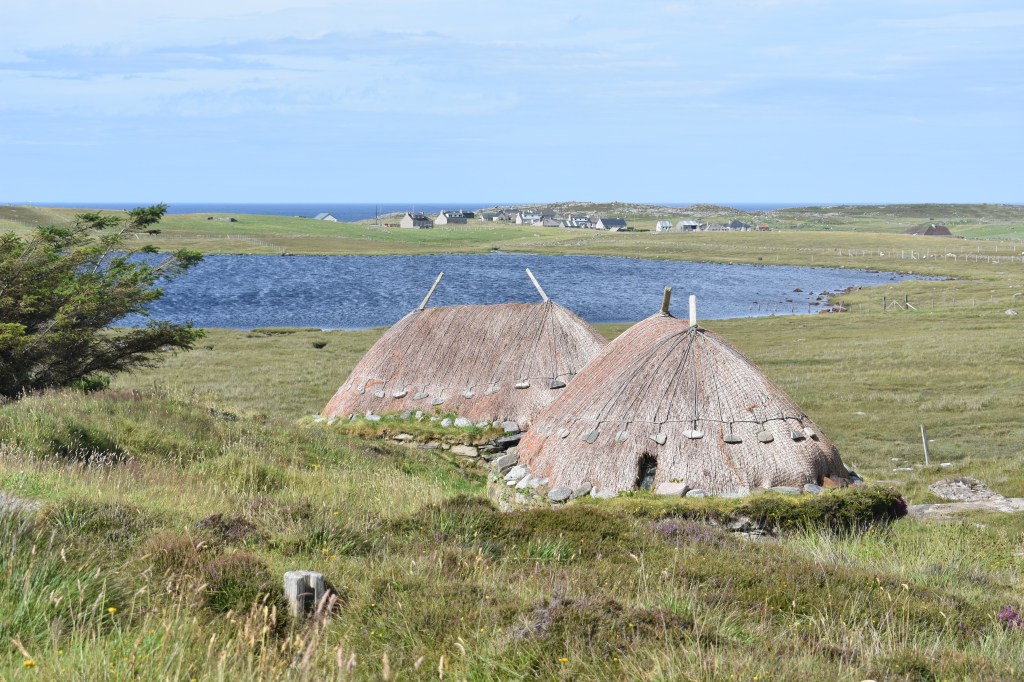
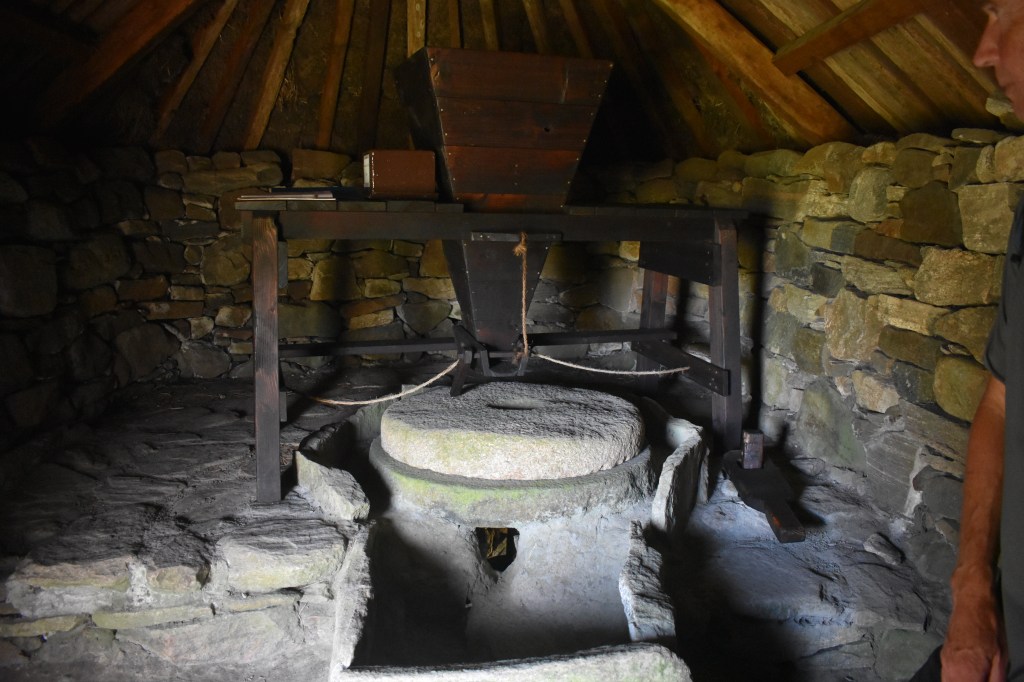
Our third stop on the bus tour was to another historic site worth a visit: the Norse Mill and Kiln. This is the remains of a long past mill and kiln which is open to the public. The mill is accessible via a short, though occasionally boggy walk from the road. A notice board gives a short explanation of the history and how the mill and kiln operated. Though not the most spectacular of Lewis’s attractions, the mill is worth a visit, particularly if you have an interest in history.
Running in Stornoway and Lewis
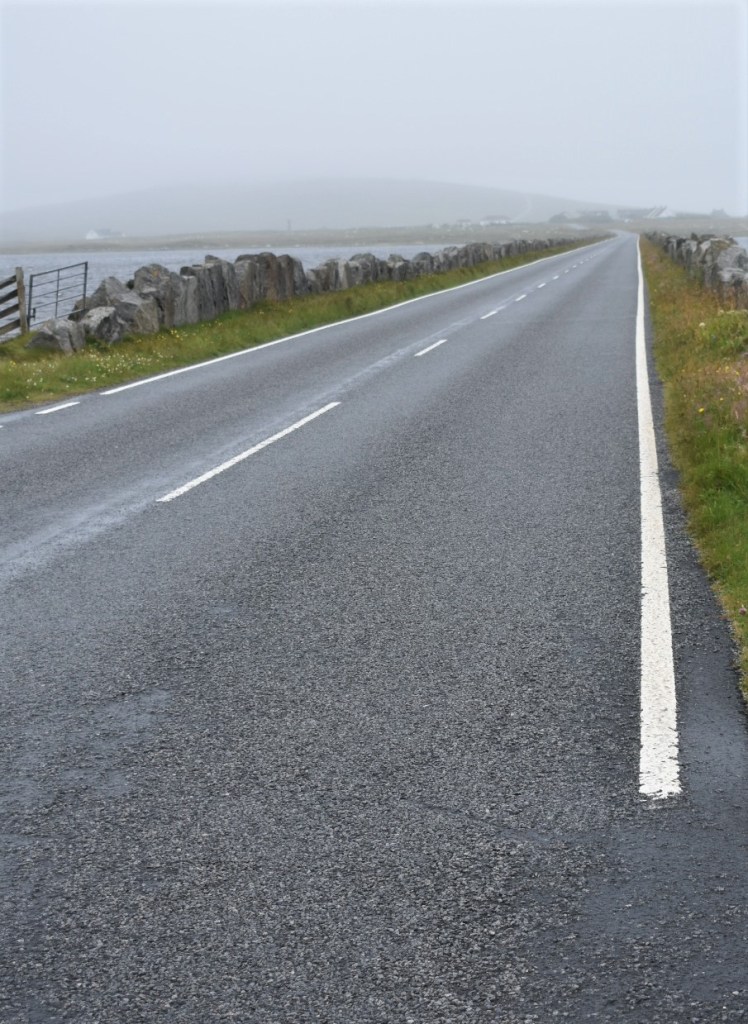
The quiet roads of Lewis offer ample opportunity for training runs. We stayed in Stornoway and I enjoyed running out of the town towards the Iolaire Memorial. It was peaceful, safe running and a great way to see the coastal views.
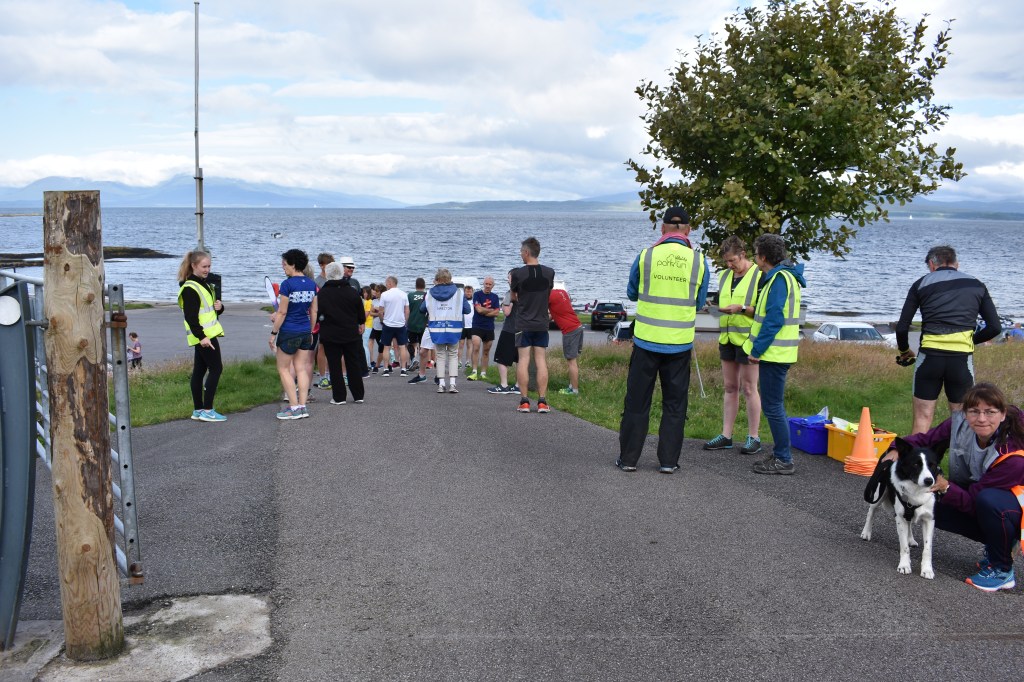
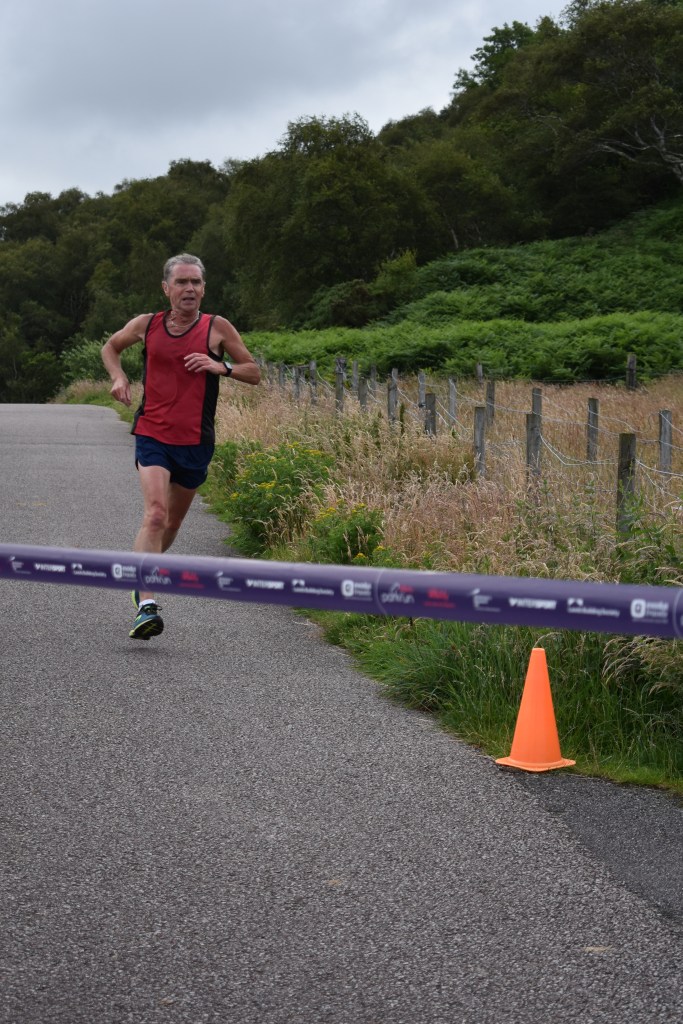
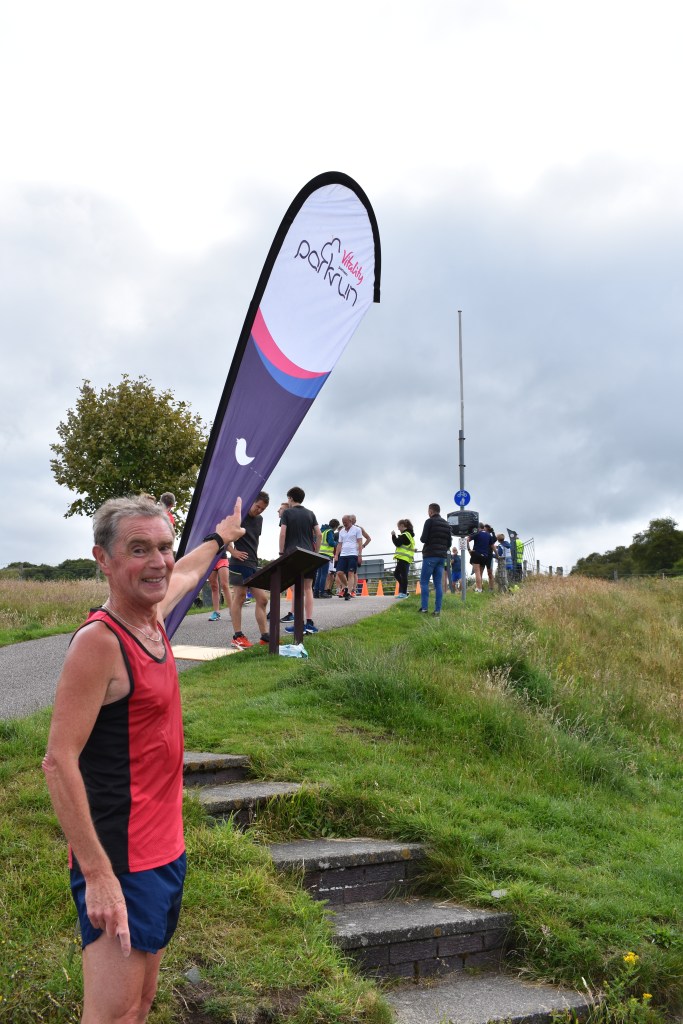
The grounds of Lews Castle also offer great running routes and local runners can often be seen on the paths around the castle. At the time of writing there is no Parkrun in Stornoway. I was told by local runners that plans are being made to stage a parkrun in the grounds of Lews Castle. Watch this space …
Half-Marathon and 10K
The Stornoway Running and Athletics club organise a Half-Marathon and 10K race usually in the late Spring. Details can be found here: https://srac.org.uk/half/
History of the Isle of Lewis
The island has had a long tumultuous history which has seen Irish, Norse and Lowland Scottish families dominate the politics of the island. The island was a part of the kingdom of Norway until 1266 when it became the possession of the Scottish crown in Edinburgh. The clan MacLeod dominated local politics till the early years of the Stuarts when the MacKenzies clan took control of the island. In 1844 the MacKenzies sold the island to Sir James Matheson who had made his fortune trading in China. It was he who co-founded the Jardine-Matheson conglomerate.
Matheson’s ownership of the island is one of the most controversial periods of the island’s history. Many crofters were dispossessed of their lands to make way for sheep farming and hunting. Poverty and emigration gripped the island. There were land riots in the 1880s. Though conditions improved towards the end of the century the bitterness between the Mathesons and the islanders remained.
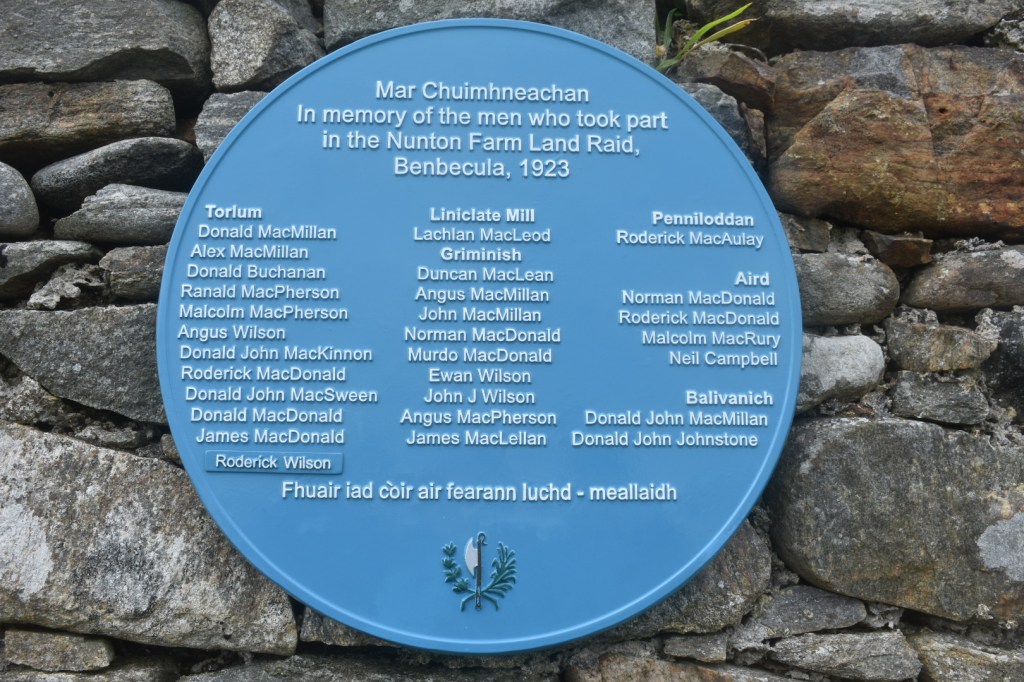
In 1918 the industrialist Lord Leverhulme bought the island with the intention of re-industrialising the Herring industry in the Stornoway area. A large part of the population did not trust Leverhulme or his plans for new industry. Land ownership rights again became a fractious political issue amongst islanders. Some returning servicemen from the Great War took matters into their own hands and organised “Land Raids”. Leverhulme saw his plans would not work and faced with failure he gave Stornoway back to its people in 1923. The Stornoway Trust now administers the town on behalf of its people. This political arrangement may be unique in the UK.
Lews Castle regularly has exhibitions on the Isle of Lewis and Stornoway’s fascinating history. You may be lucky and be able to visit such an exhibition whilst on your stay on the island.
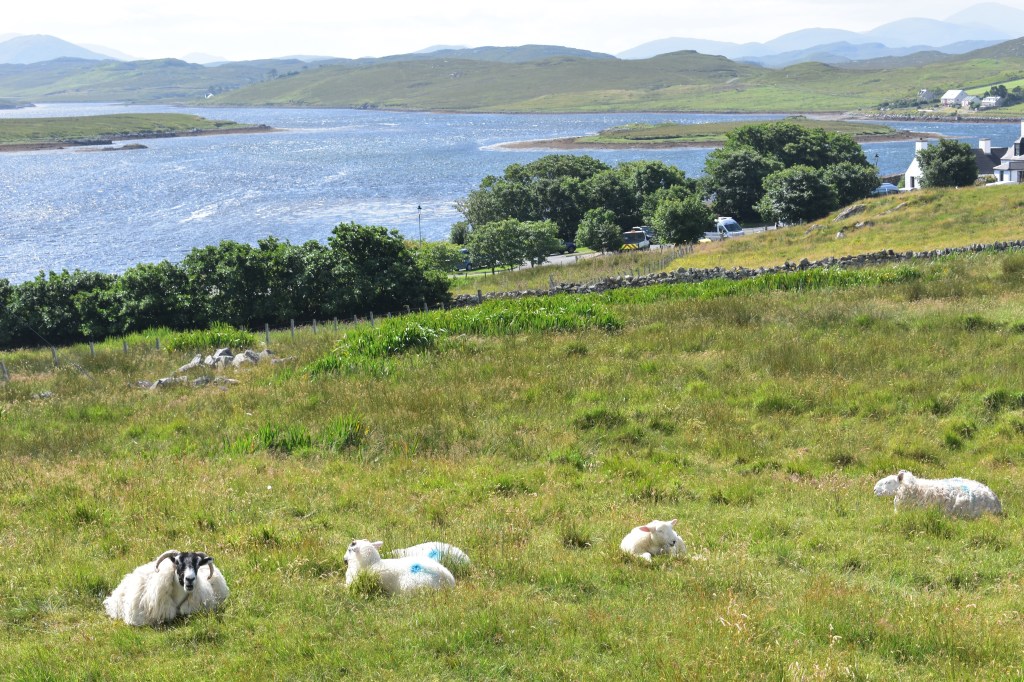
We travelled back to Tarbert in Harris after our short stay in Lewis. We then caught the ferry on our Hopscotch 23 route over the sea to the Isle of Skye.
We would love to hear your thoughts in the comments section below. Please follow and share with anyone you think may be interested. See you again soon!




 Godiva Travellers