Stow-on-the-Wold is a picture-book market town in the heart of the English countryside. The town’s medieval houses, built with distinct Cotswold stone, attract visitors from all over the world. The town can get crowded during the day but many visitors depart by early evening leaving the town a peaceful delight to stroll around. We would recommend a late afternoon/early evening visit to enjoy the sights at their best. A bonus is the town’s main car is free after 3.00 pm!
St Edward’s Church
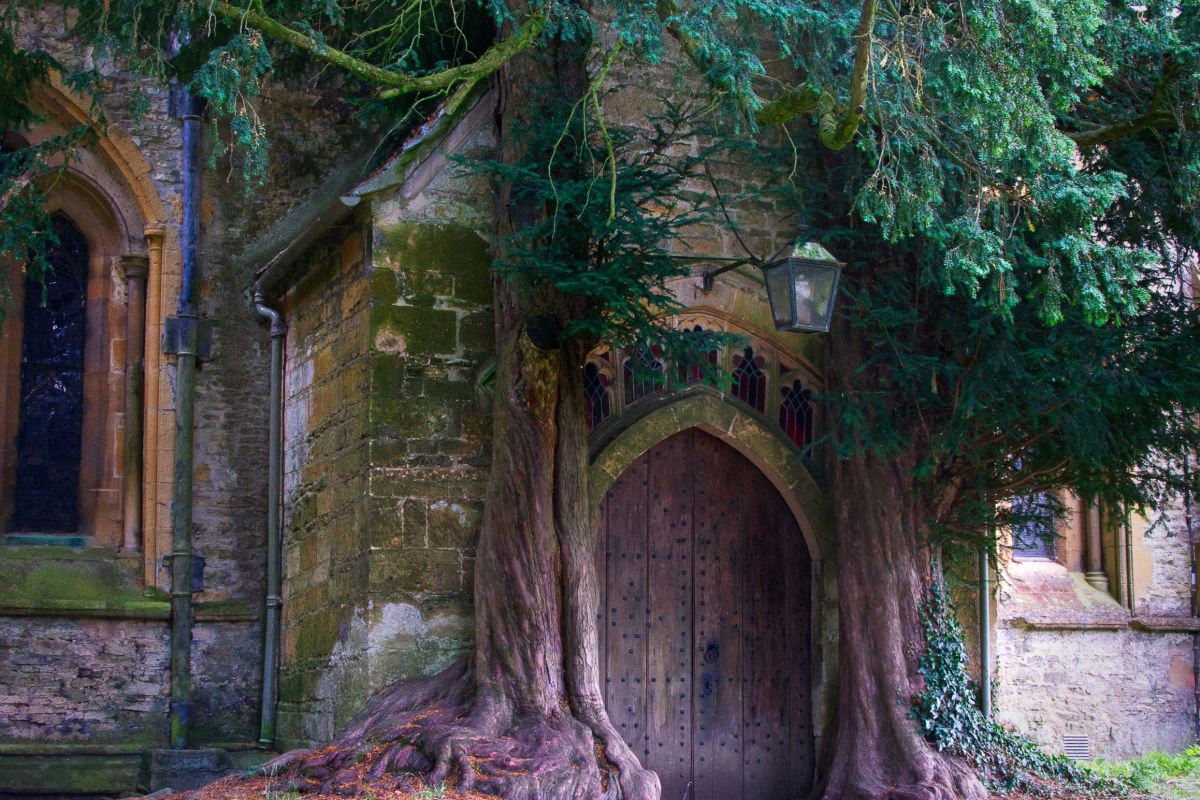
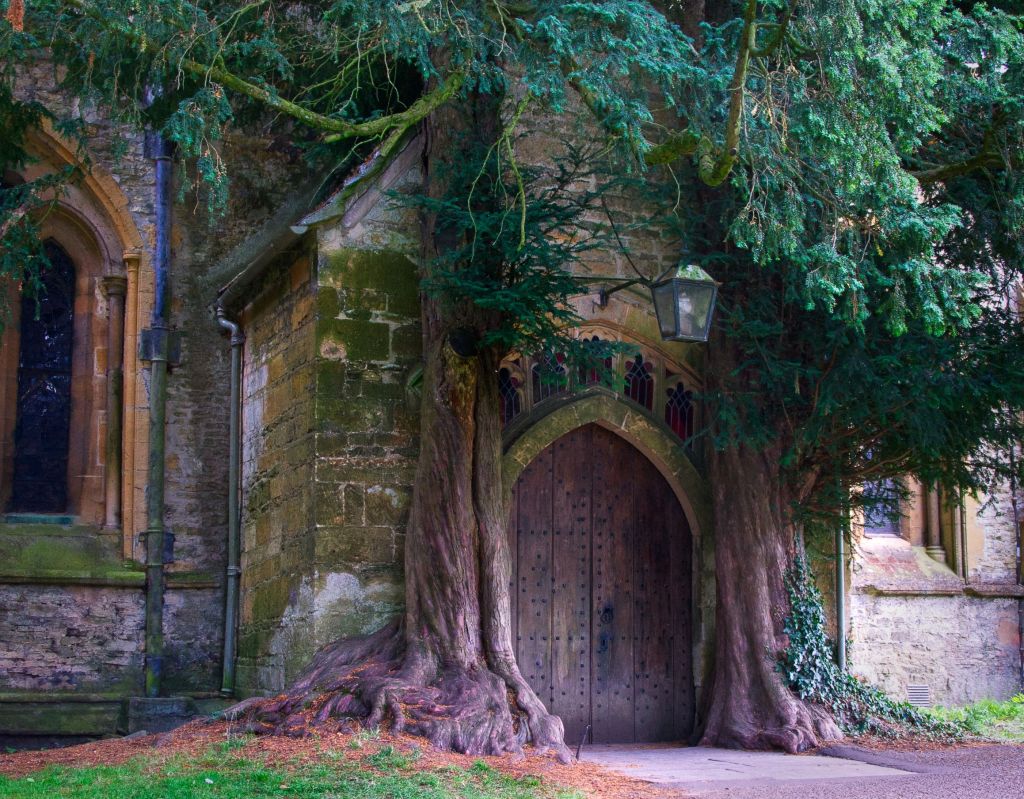
Visitors must go to St Edward’s Church which may have the country’s most photographed church doorway. Two yew trees straddle the entrance giving the church its unique magical appearance. It has been suggested that the doorway influenced the author Tolkien in his writing of: Lord of the Rings. Just like the doors of St Edward’s, Tolkein’s, the Doors of Durin are flanked by trees. Was the doorway of St Edward’s Tolkein’s inspiration? Locals say they were but we shall never know.
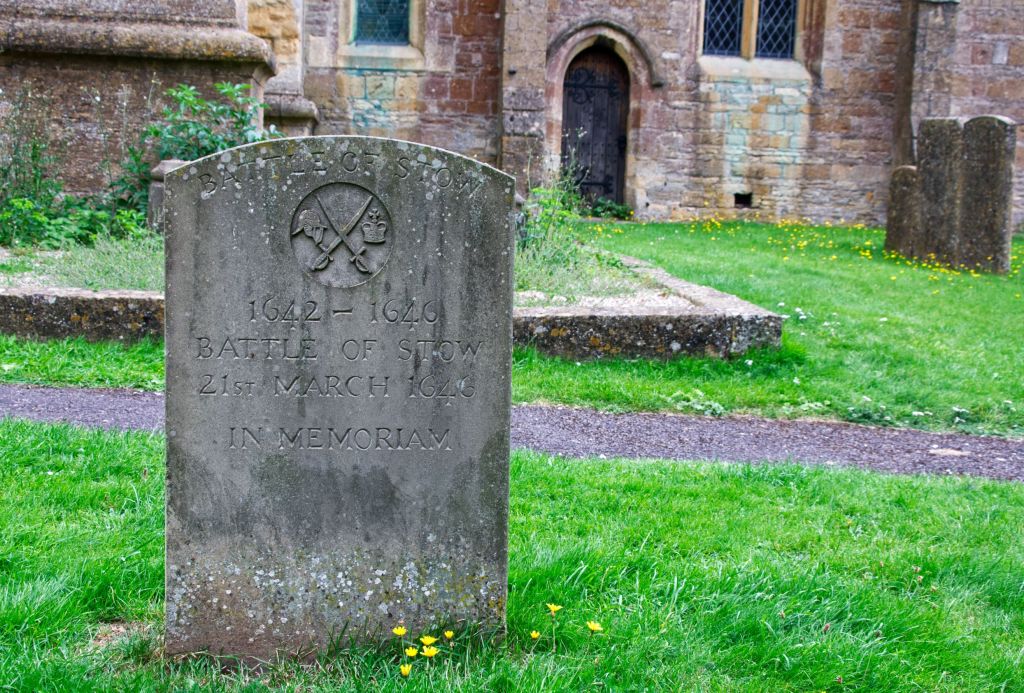
In the churchyard, there is a small headstone dedicated to those who fought in the English Civil War, 1642-1646. The Battle of Stow, 21 March 1646, was the last pitched battle of the war in England. The defeat of the Royalist forces in the battle sealed the fate of Charles the First who was under siege in nearby Oxford. With the defeat of the Royalists’ forces at Stow, Charles’ last hope was gone and in May he surrendered. Britain has many First and Second World War and even Boer War memorials but few memorials to the 17th Century Civil War. This is one of the few.
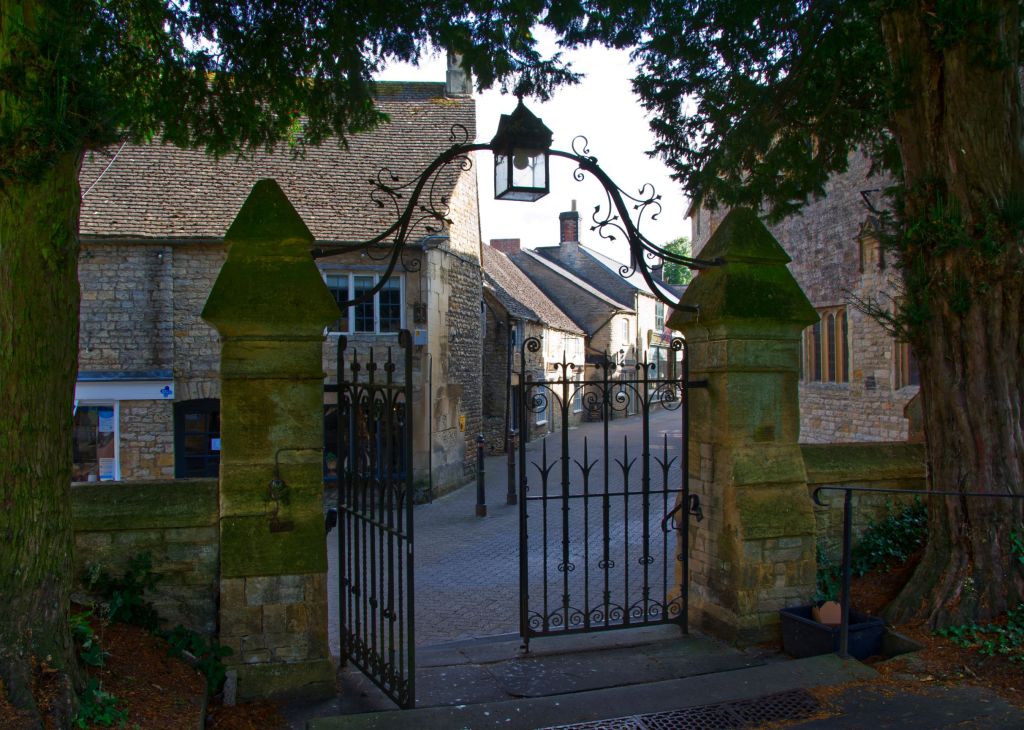
The pathway through the church yard takes you to the centre of the town.
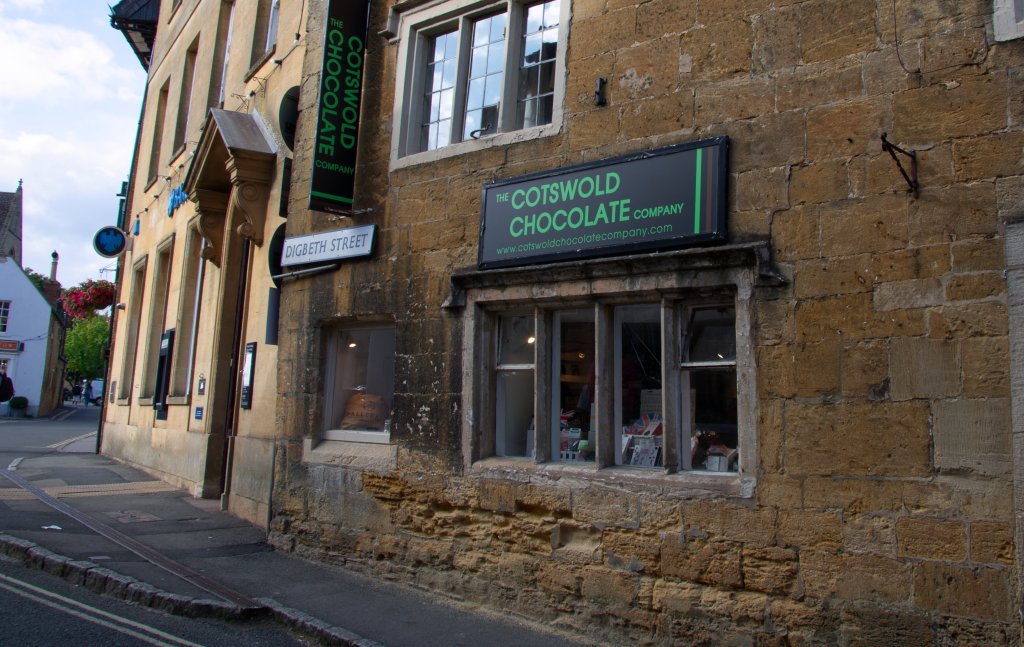
There are many independent shops and businesses in the town to explore. We enjoyed visiting the Cotswold chocolate shop which has a great variety of delicious chocolate to tempt you. If you have a savoury tooth then the Cotswold Cheese shop is the place for you. There are art shops, antique shops, fashion shops, shops for every taste and occasion. Even if you do not purchase anything, it is a simple pleasure just window shopping them all.
Then there are so many excellent places to stop for a bite to eat and drink. The pubs are dog friendly and are popular with ramblers and walkers after walks in the beautiful Cotswold countryside.
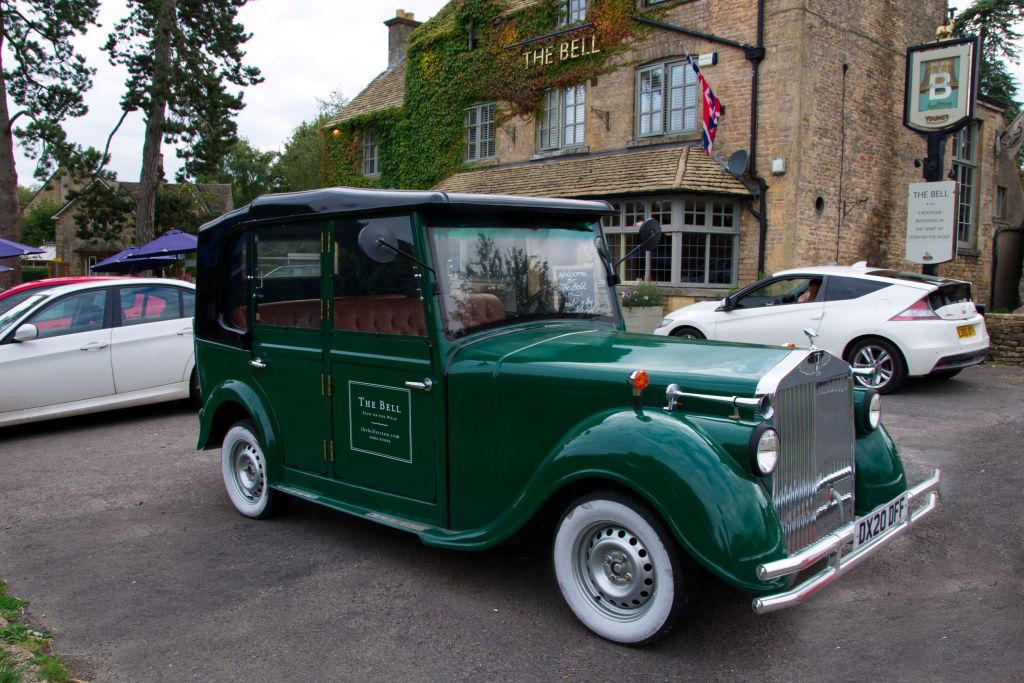
The Bell pub pictured here has a good menu and also has accommodation for visitors to the area. Some of their accommodation is a short walk up from the pub. If you don’t want to walk to your accommodation, the landlord will give you a lift in this lovely car. What a way to start your holiday!
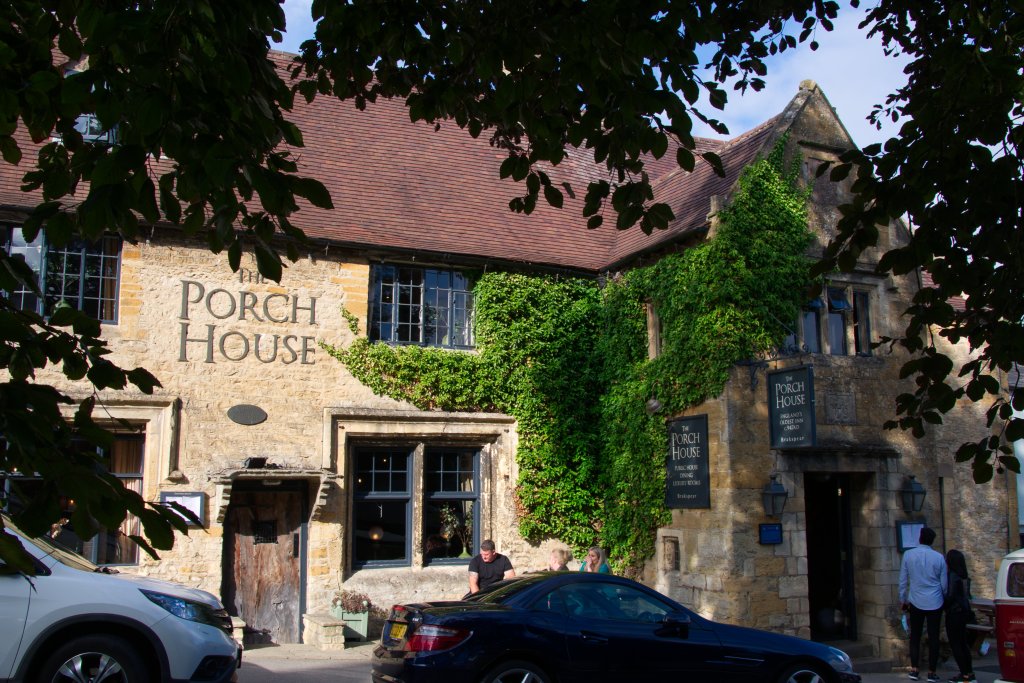
The Porch House is another picturesque pub in the town centre. It claims it is the oldest inn in England!
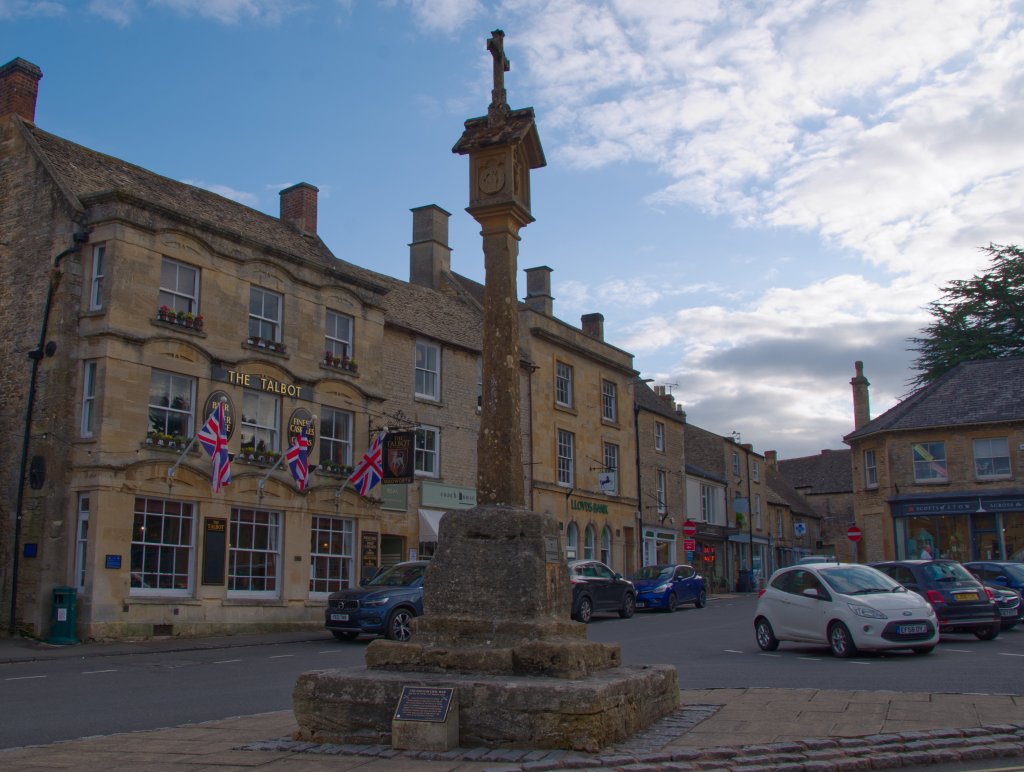
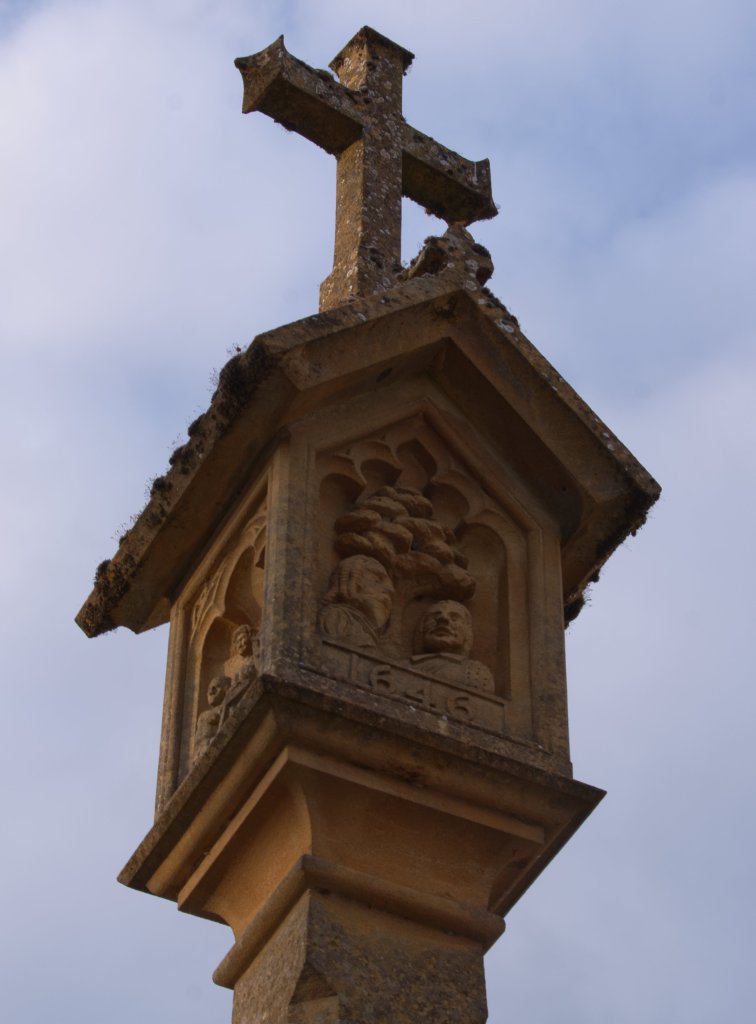
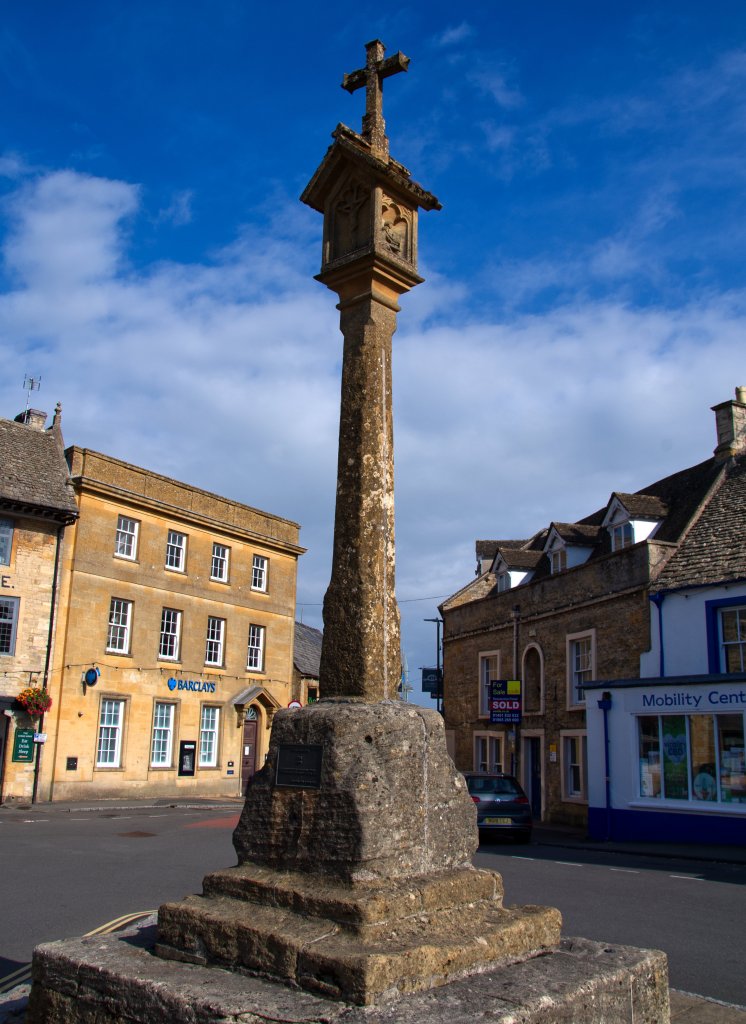
If you visit Stow on the second Thursday of the month, you will be able to shop at the local farmers’ market which takes place in the pretty market square. The Cotswolds is now home to many specialist food and craft ware producers. All can be sampled at the market. The cross shown in the photograph below is in the market square where the market takes place.
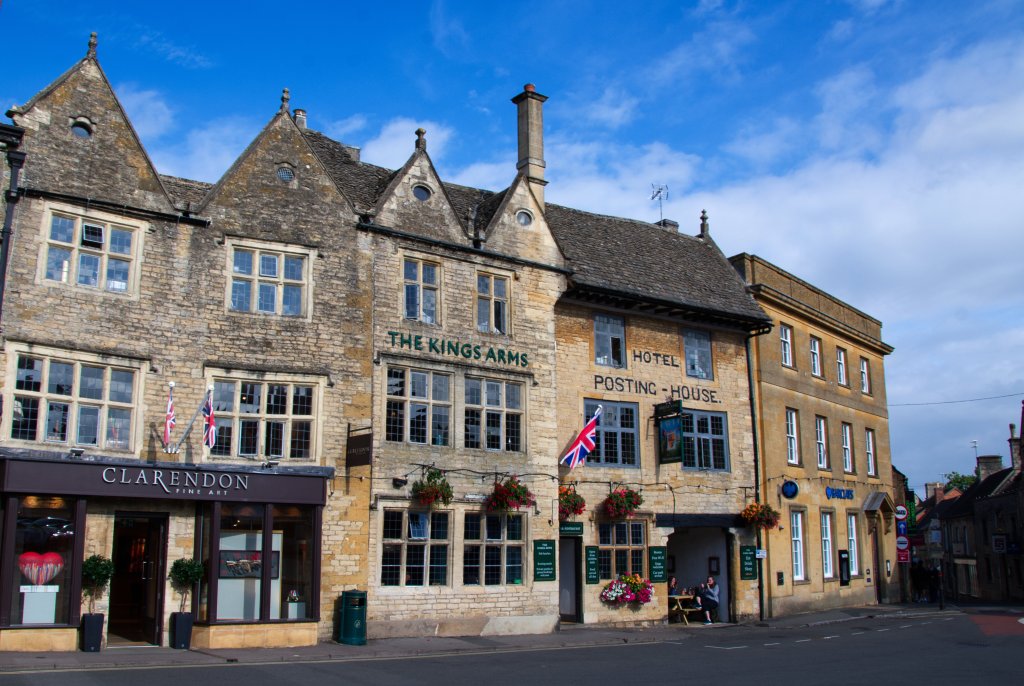
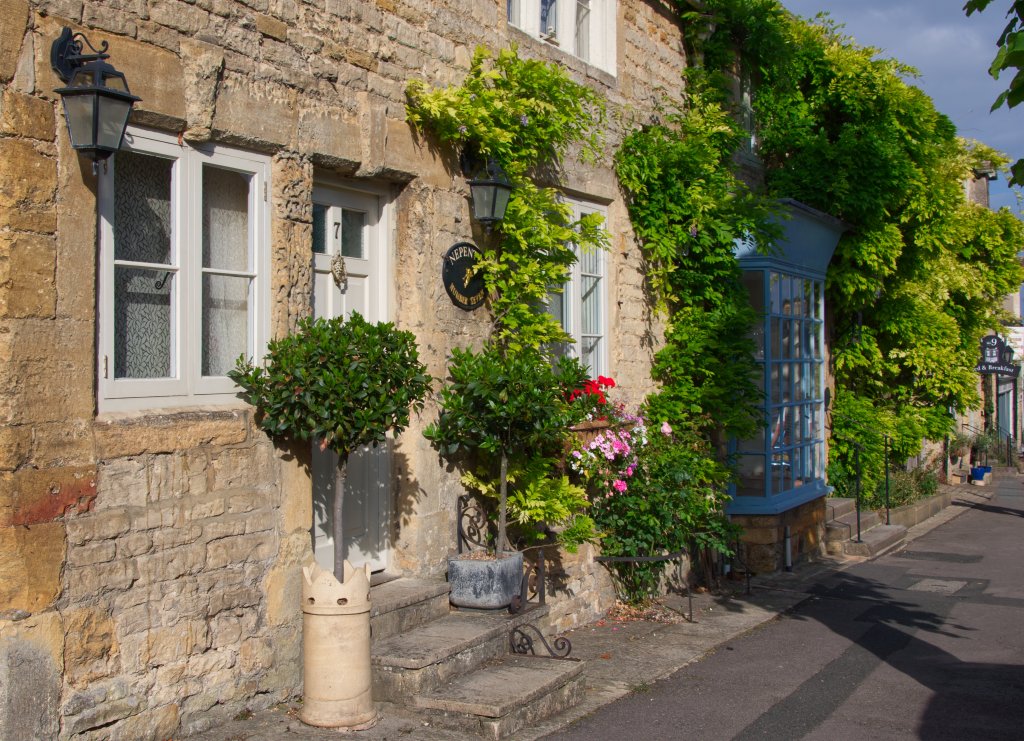
The Cotswolds is well known for its special Cotswolds stone buildings. Each building has that unique appearance which makes towns like Stow such a wonderful place to visit. Here are just a few photographs showing some of those buildings.
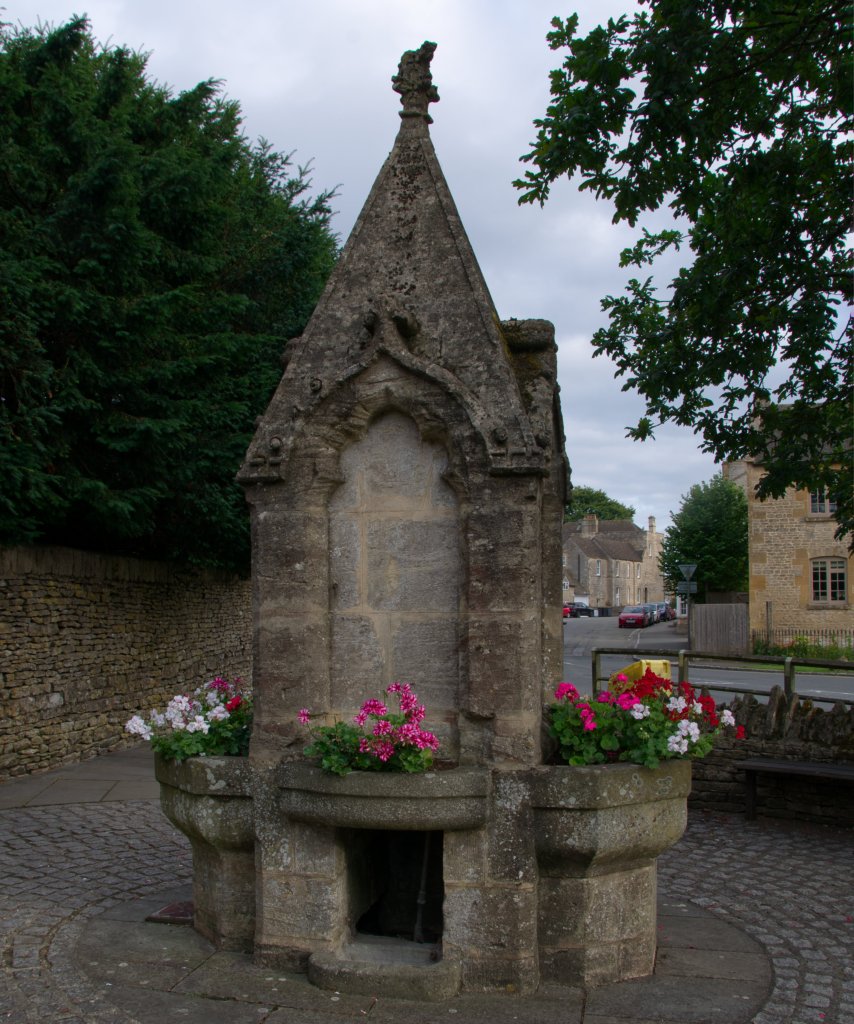
This Grade II listed building was once a drinking water fountain and horse trough. It now decorates the entrance to the town with a display of flowers.
Parking in Stow-on-the-Wold
The main car park and public toilets (20p entry) are situated opposite the Bell Pub. As mentioned above, parking is free after 3.00 pm. Parking in the rest of the town could prove difficult as it is a very popular place to visit. There is some parking at the Tesco superstore a few hundred metres walk from the town centre. However, there may be some restrictions, especially during the busy weekends.
Stow-on-the-Wold is a great place to visit and a great base from which to explore the other beautiful Cotswolds villages and countryside. We enjoyed our visit: we are sure you will enjoy yours.
We would love to hear your thoughts in the comments section below. Please share with anyone you think may be interested. See you again soon!
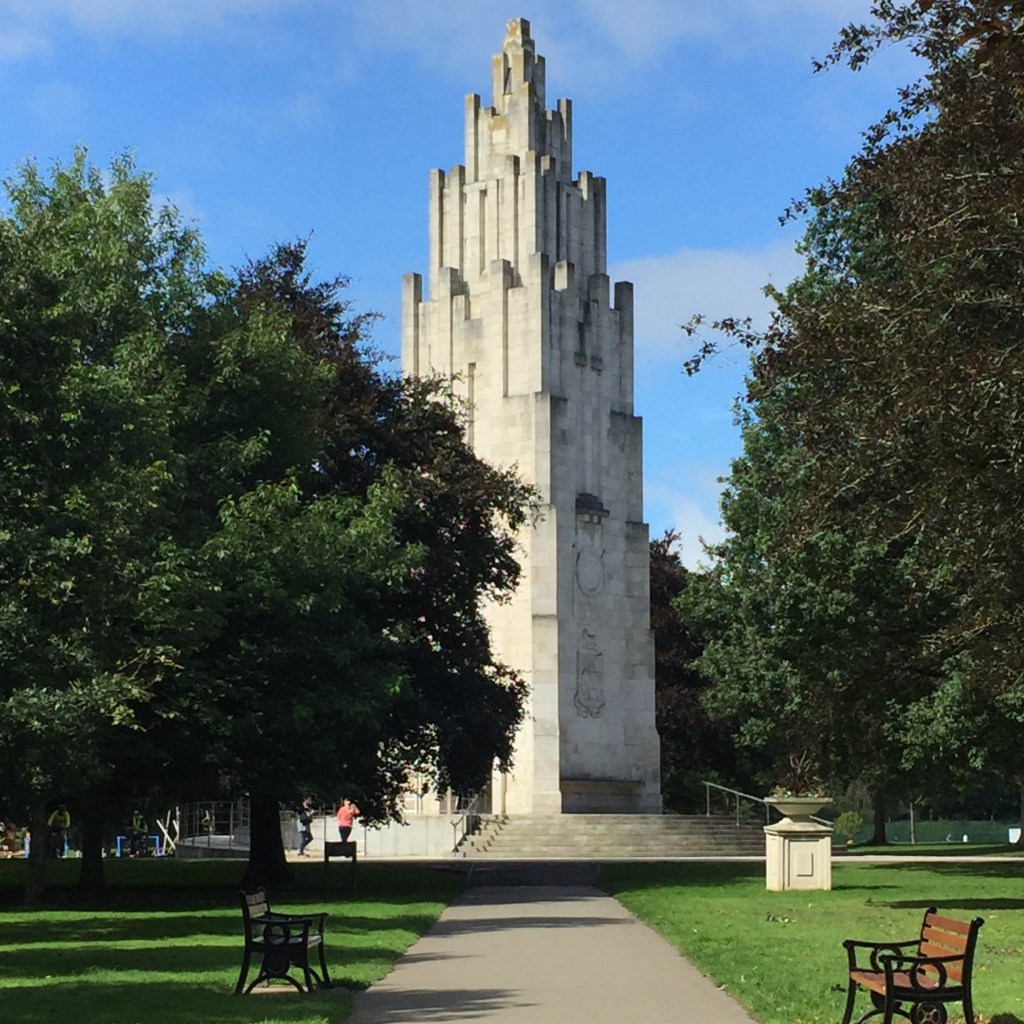
Coventry’s War Memorial Park is the city’s most popular leisure facility and one of the country’s most successful local parks. As a living memorial to the fallen of Britain’s 20th century wars, the park is up there amongst the best. The 48 acre park was opened in July 1921, originally, as a tribute to the 2,587 Coventrians who died between 1914 and 1918 fighting in the First World War. Memorials have since been added to commemorate the fallen of other conflicts in the twentieth century. 2021 will be the centenary of the park’s opening.
The park is a triumph of a 100 years of green space just a 15 minute walk from the city centre. Any visitor to Coventry should make the time to visit the park to enjoy its many features.
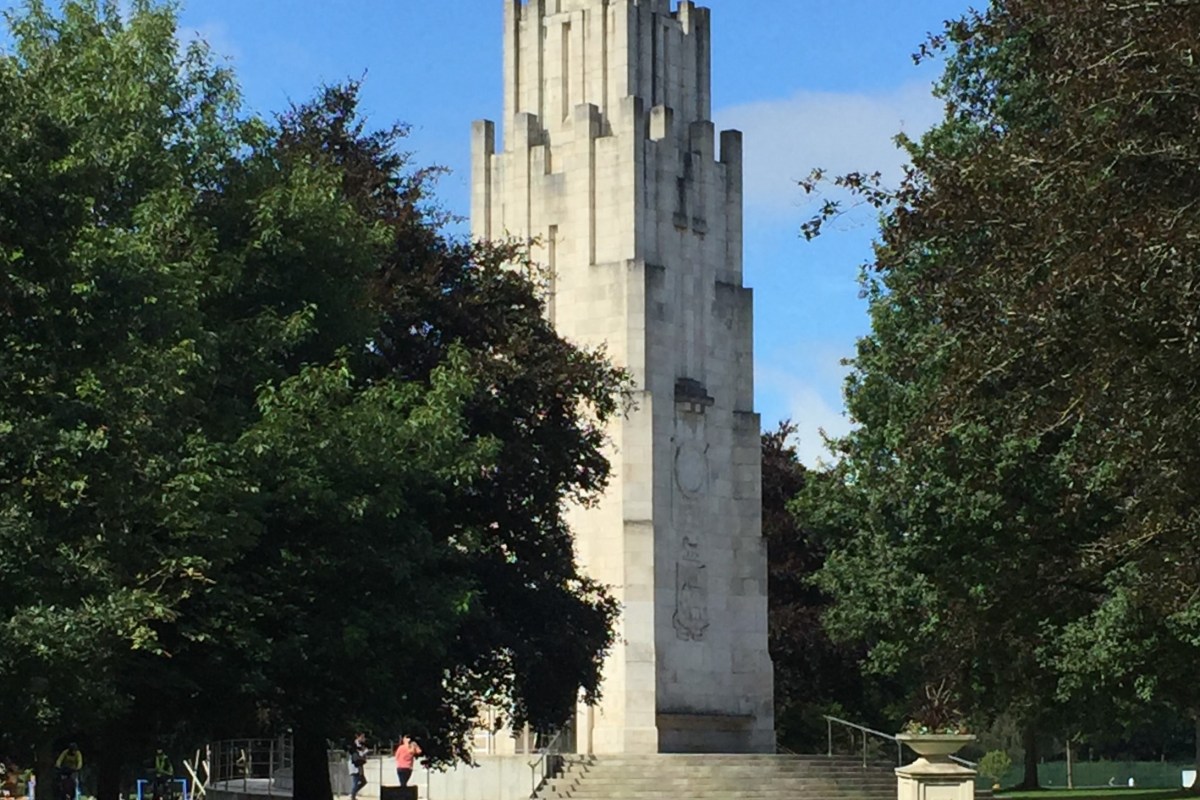
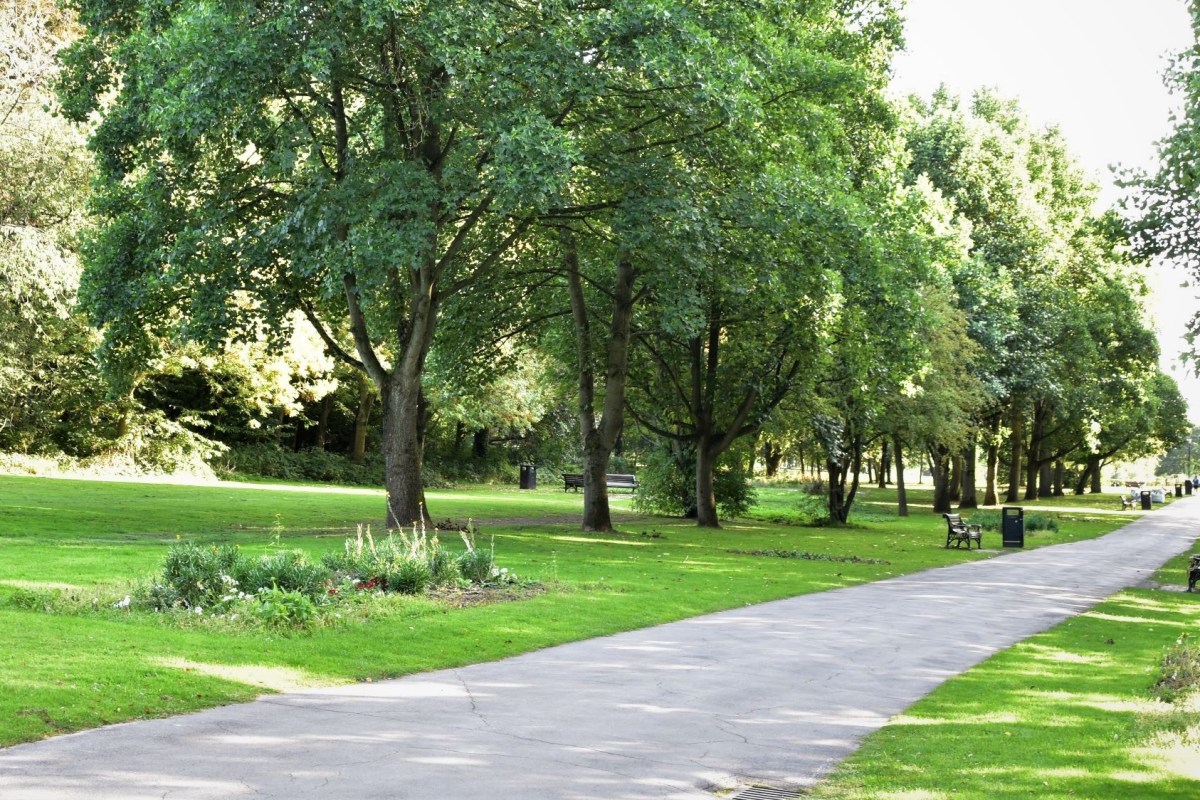
The park’s principal feature is the towering memorial monument. This imposing monument greets the visitor who enters the park from Kenilworth/Leamington Road entrance. Standing at the top of an avenue of trees, the memorial dominates the landscape by its silent, dignified presence. An eternal flame flickers at the top of the tower as a reminder of that Great War of a hundred years ago.
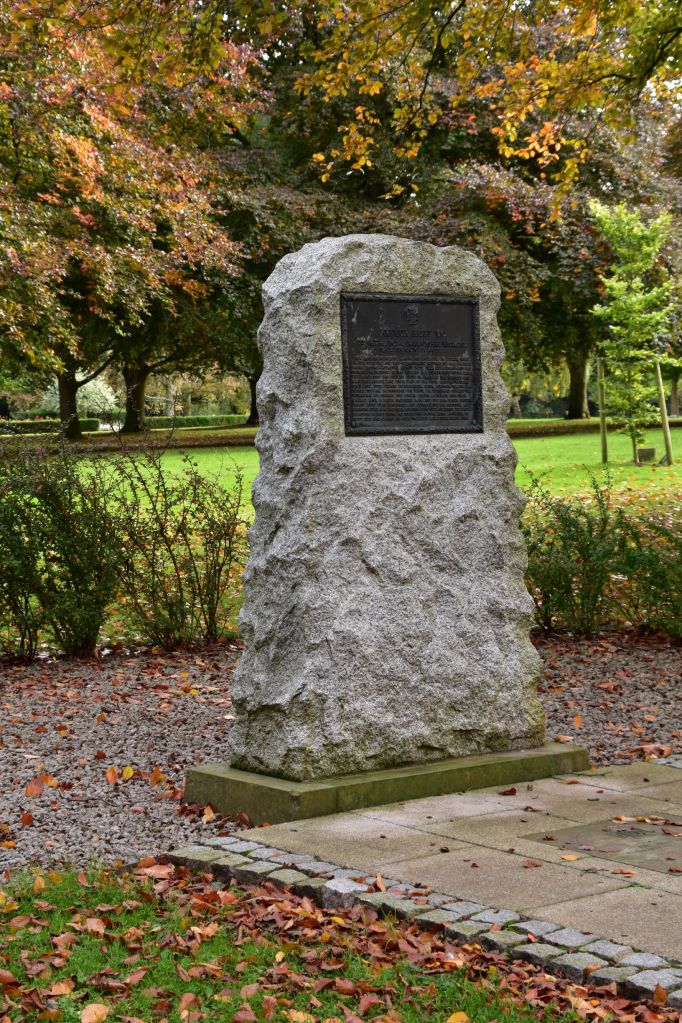
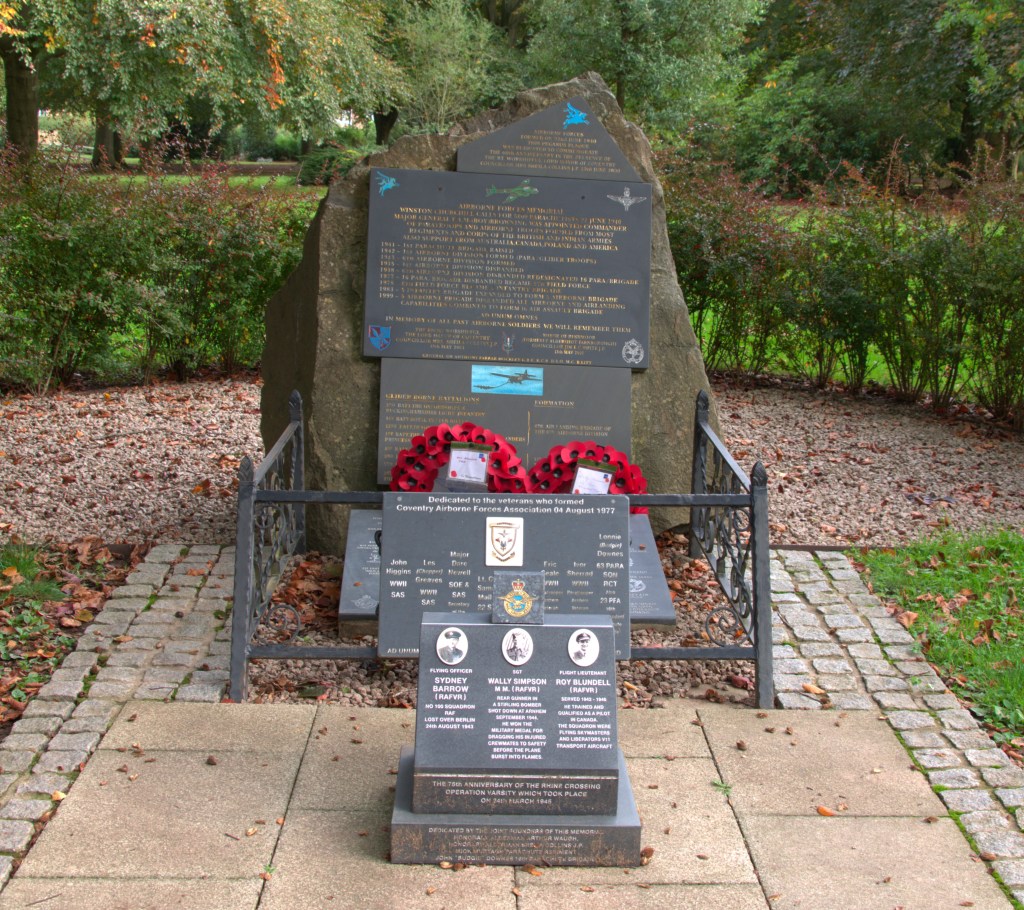
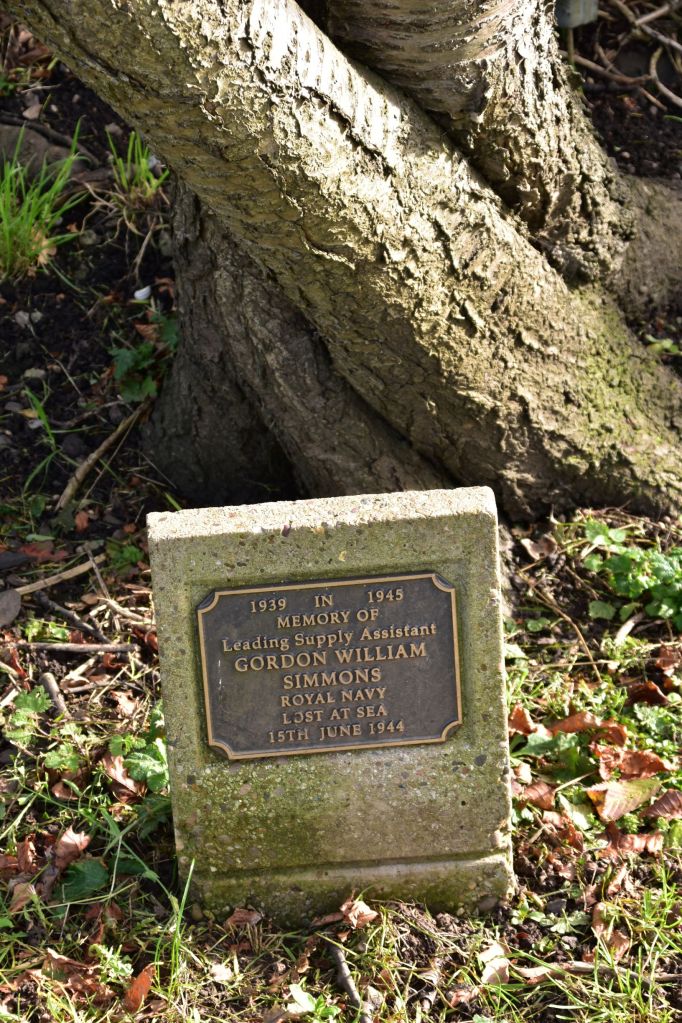
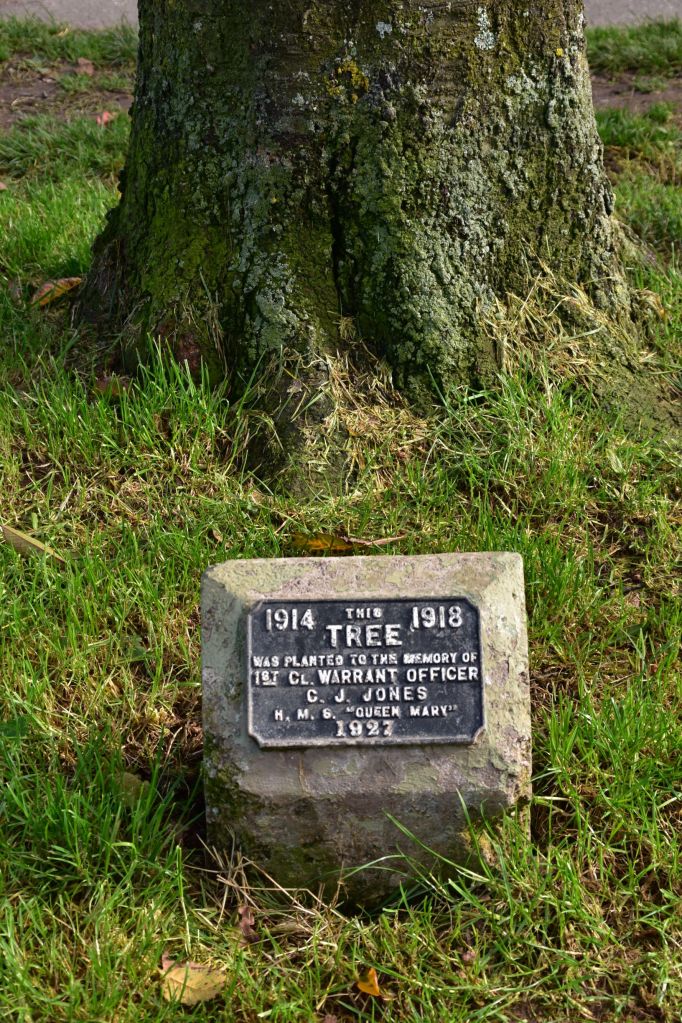
Alongside the avenue is a moving memorial to Athur Hutt, a Coventry born serviceman who was awarded the Victoria Cross. A few metres further on there is a memorial to the men and women of the WW2 airborne services. Trees throughout the park are dedicated to individual service men and women who died for their country. Plaques at the base of the trees commemorate their deaths. At the north end of the park are the concrete remains of a barrage balloon station. These barage balloons were used to protect the city against enemy air attack. Sadly, they did not prevent the city suffering from severe enemy air attacks in WW2.
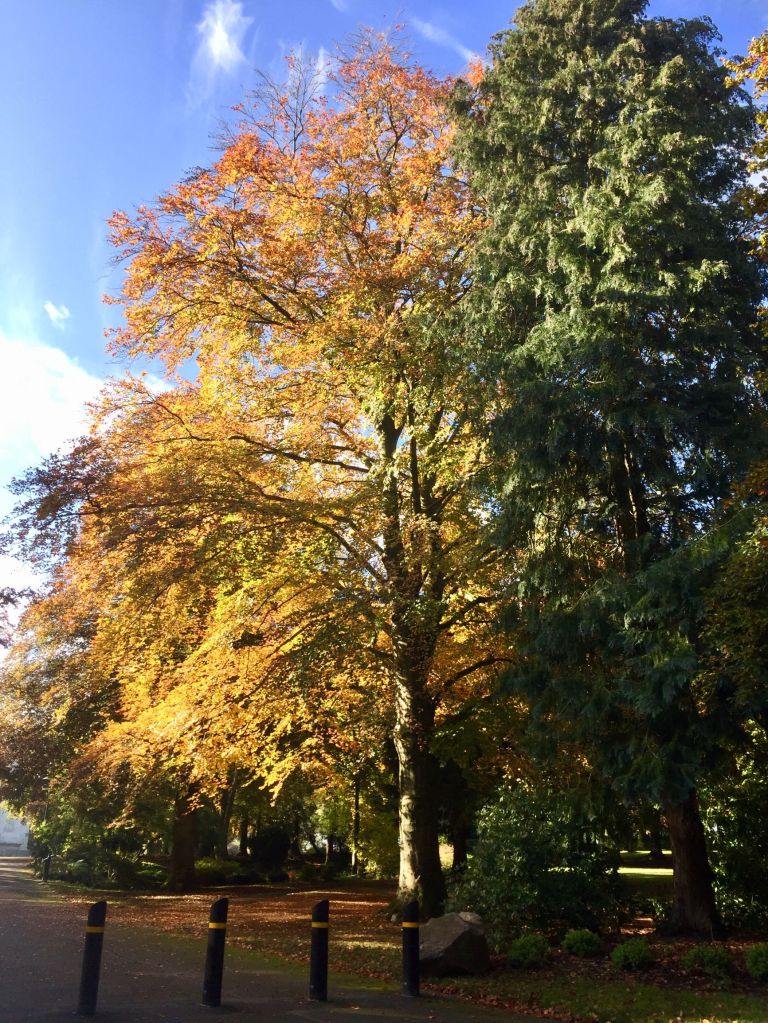
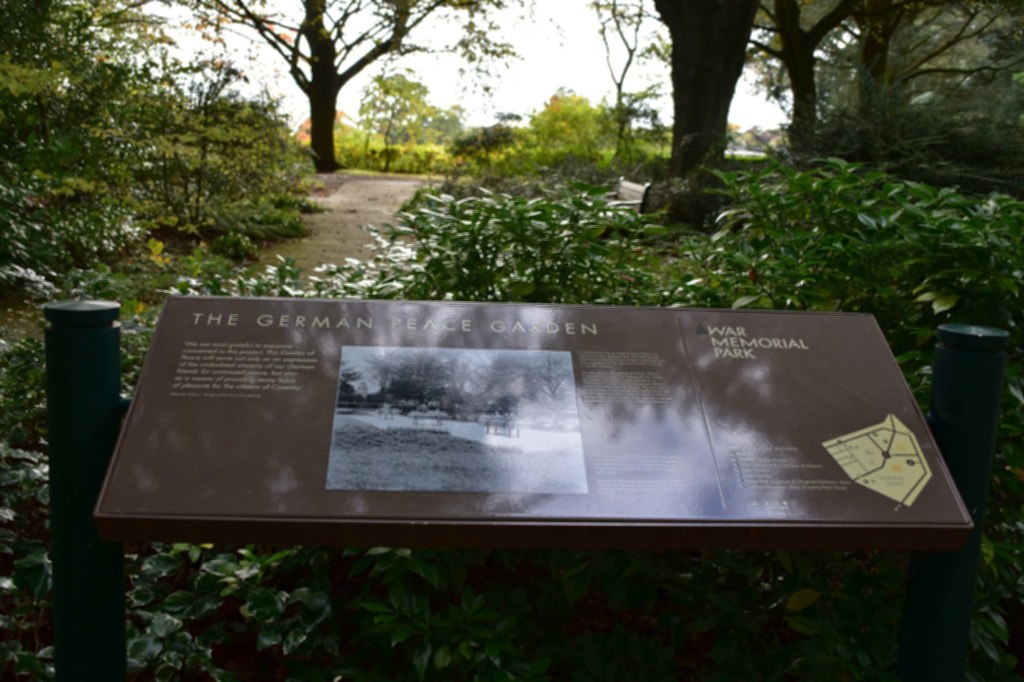
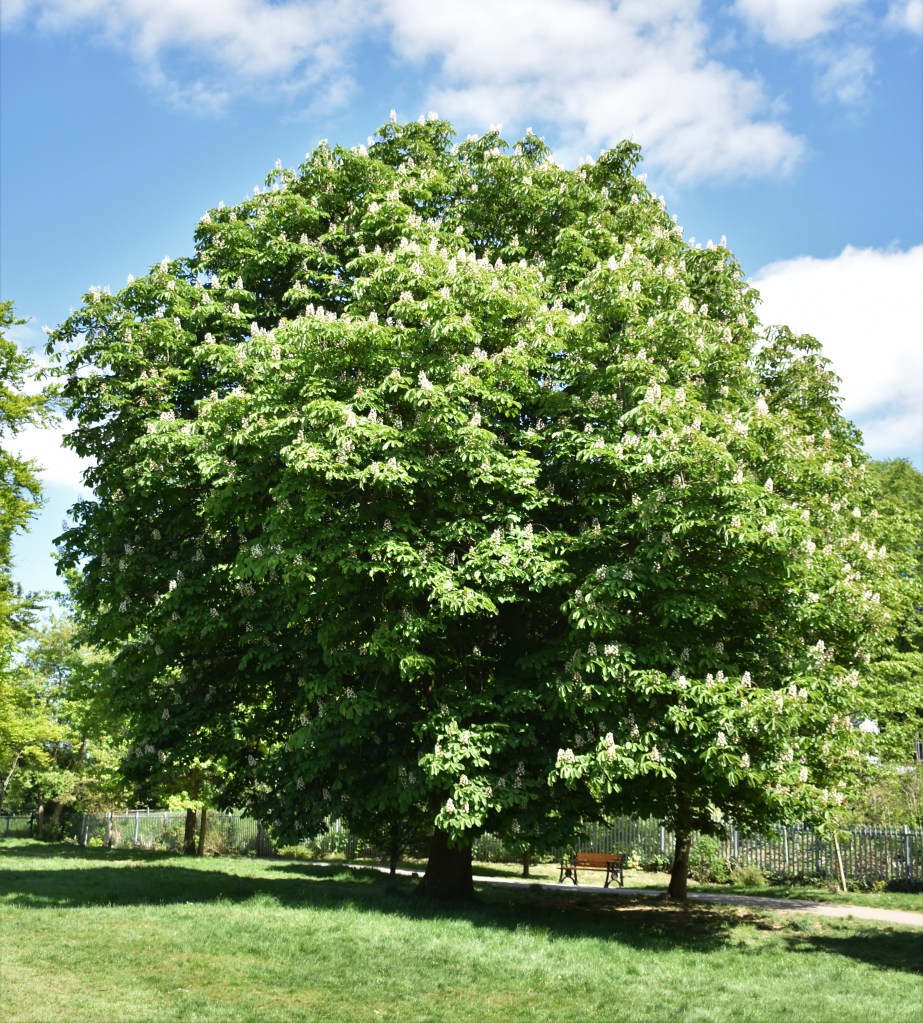
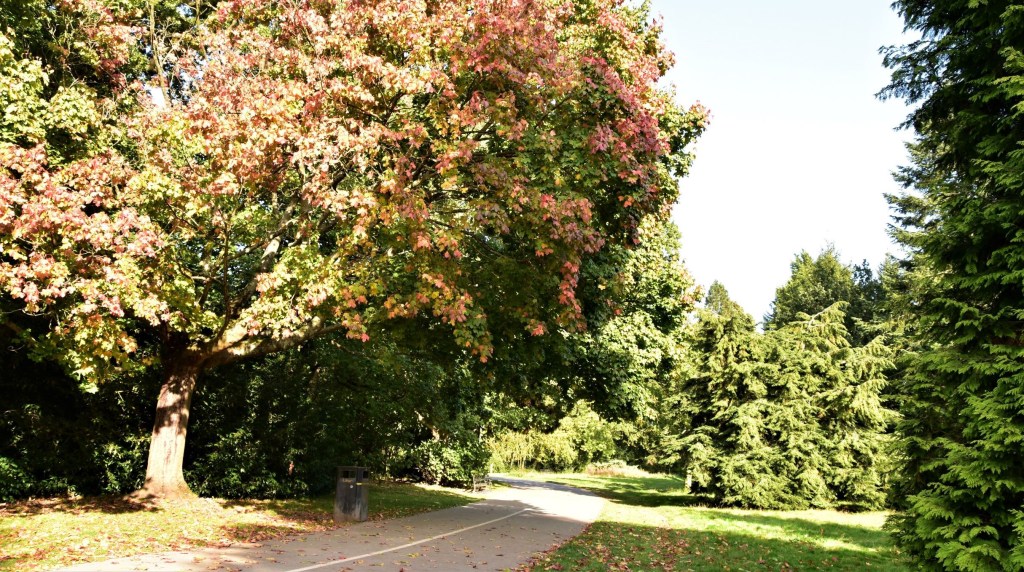
The theme of the park is now reconciliation and a beautiful German garden has been constructed as a symbol of that reconciliation. A Japanese garden is in the process of being created and it should be complete by early 2021. The German and Japanese gardens are but two of many stunning gardens that decorate the park. Regardless of the season a walk through the park gives the eyes a spectacle of colour. Then there are trees cleverly spaced around the park adding to the park’s natural beauty. The park really is a nature lover’s delight.
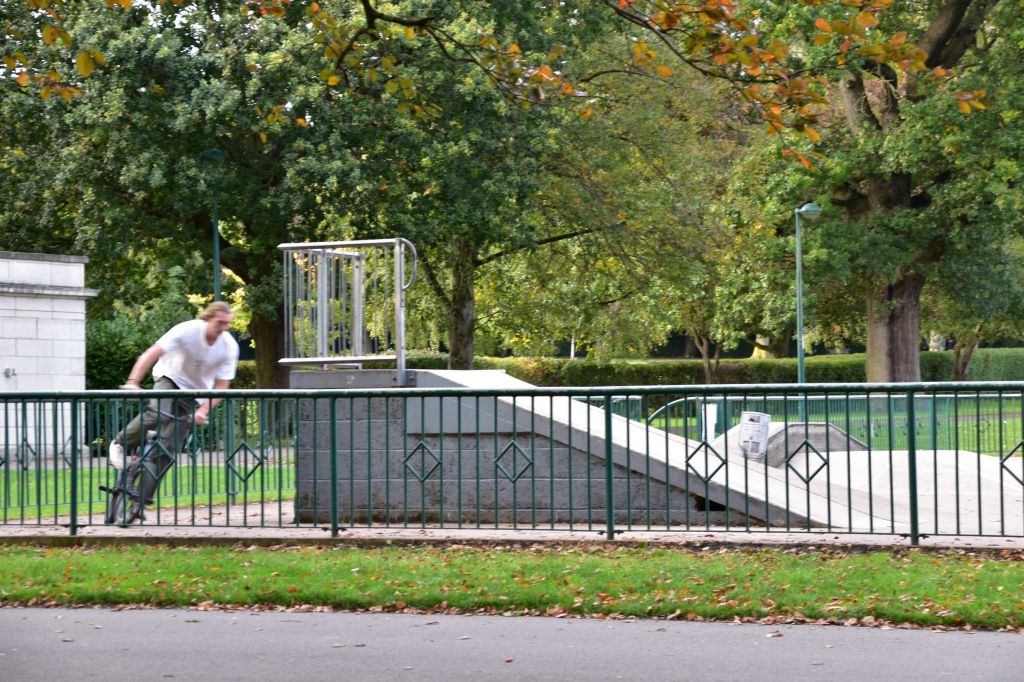
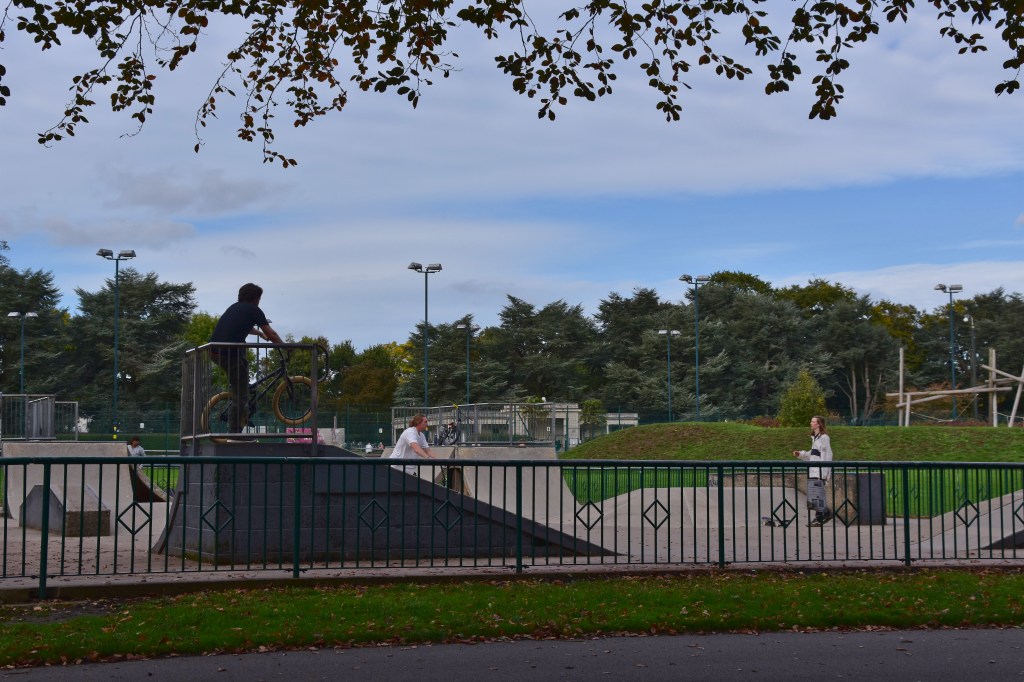
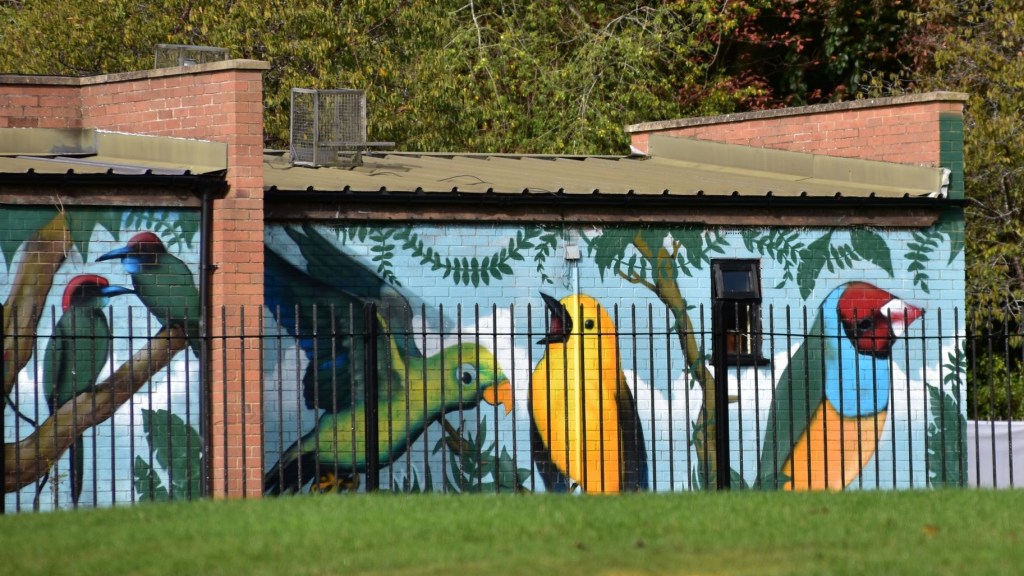
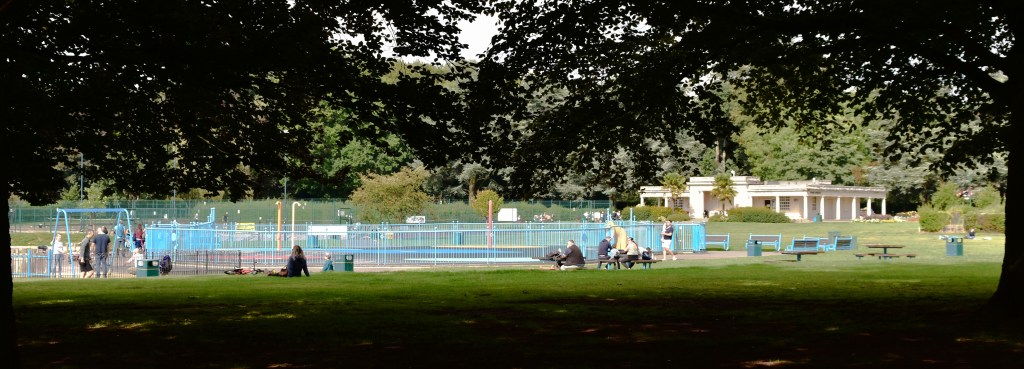
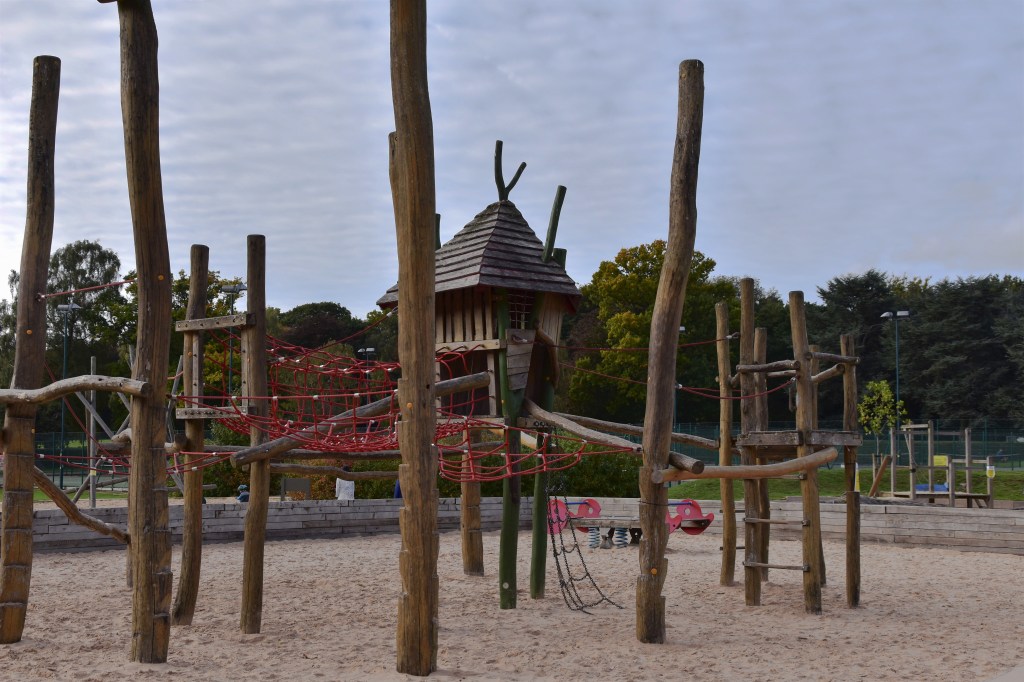
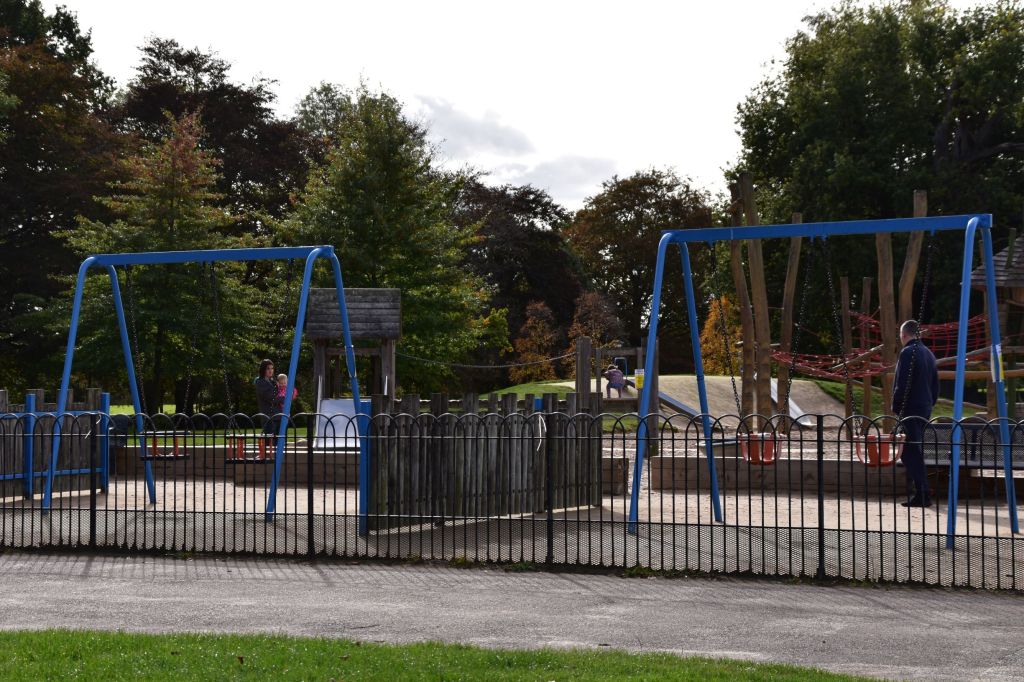
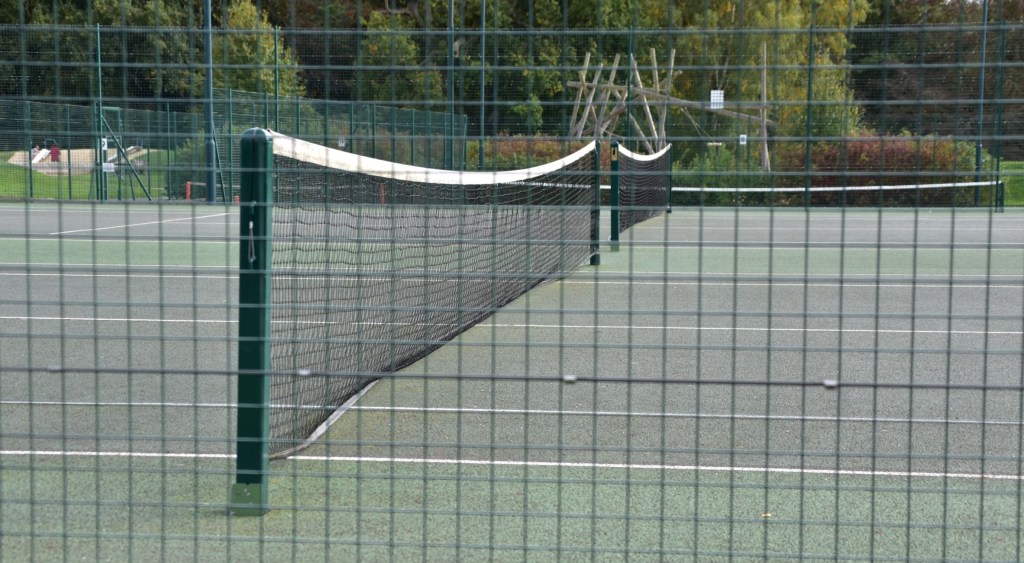
Sport is not forgotten in the park. There are football pitches, tennis courts, a bowling green and a recently developed “Footgolf” course. A cross between football and golf, Footgolf is one of those novel features which makes the park so special. The park has a skate board area, swings, climbing area, an aviary and water play area. This makes it a great place to take the children.
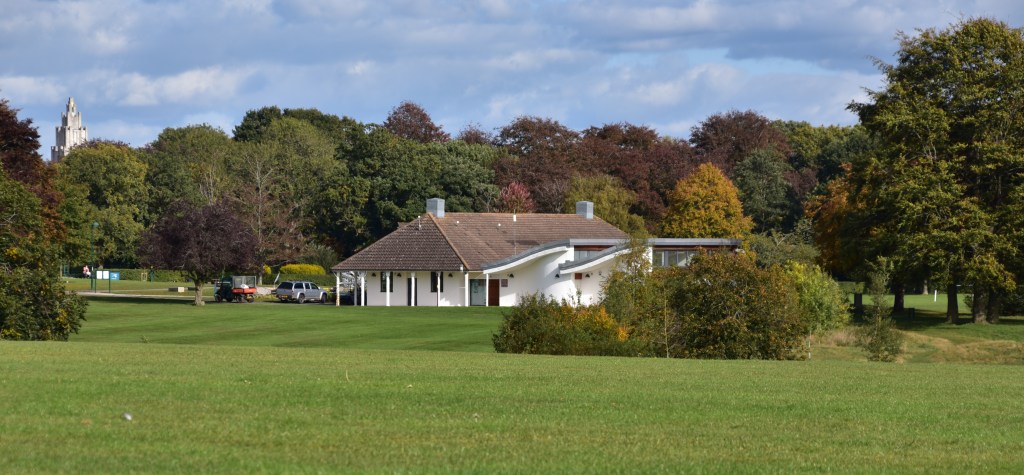
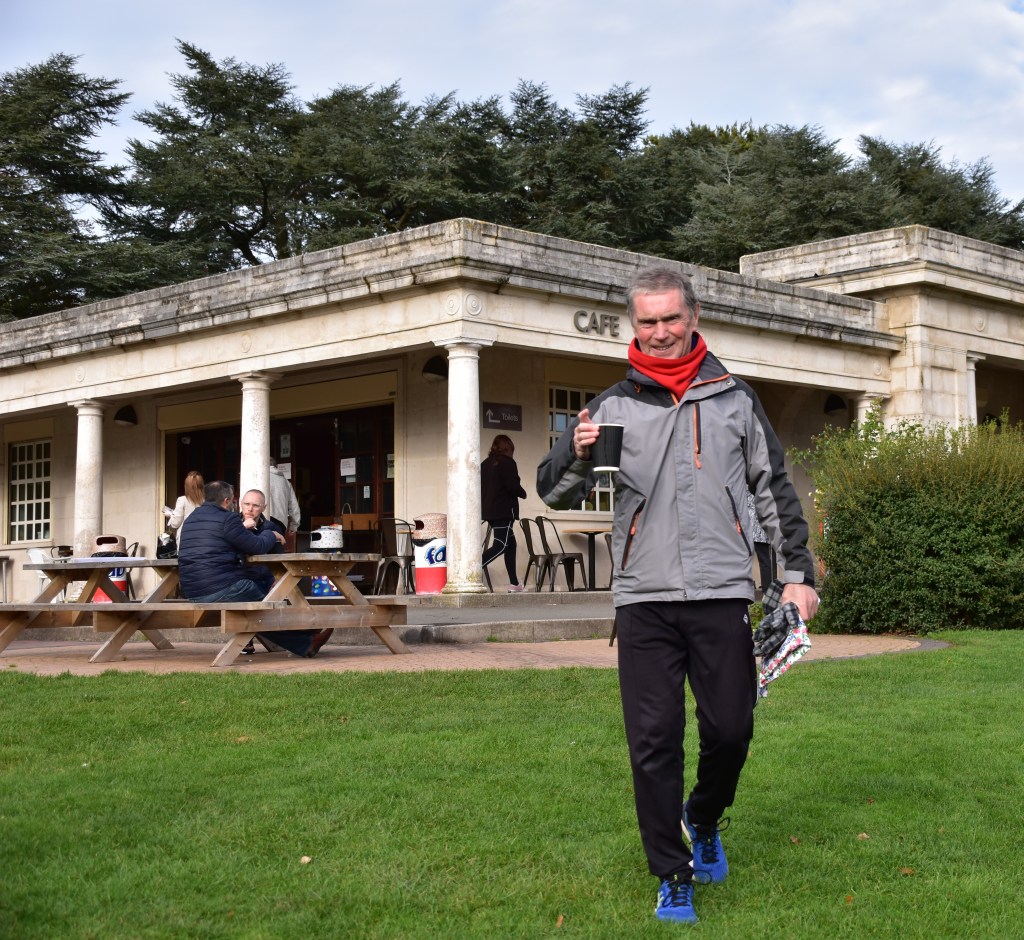
The park has two cafes. One of the cafes is housed in the visitor centre which has a small picture history of the park.
The park is home to one of the country’s best attended Saturday morning 5K parkruns and a friendly welcome is given to all parkrun tourists. The park’s other cafe is a meeting place for these runners. Manageress Kim has a special smile on her face on Saturday mornings when she greets runners who come to her cafe for a post run cup of tea and a bacon batch. A bacon batch is a Coventry speciality and Kim makes one of the best. Sadly, the parkrun is temporarily postponed due to Covid-19.
The park hosts the annual Godiva Music Festival. The festival attracts musicians from around the country and from around the world. As an affordable alternative to Glastonbury, the Godiva Festival is a must for music lovers. See our blog post on the Godiva Festival for more information.
Coventry’s War Memorial Park has so much to offer and it is so much more than just another city park. The only way you can discover Coventry’s War Memorial park is to visit it. You will be pleased if you do.
We would love to hear your thoughts in the comments section below. Please share with anyone you think may be interested. See you again soon!
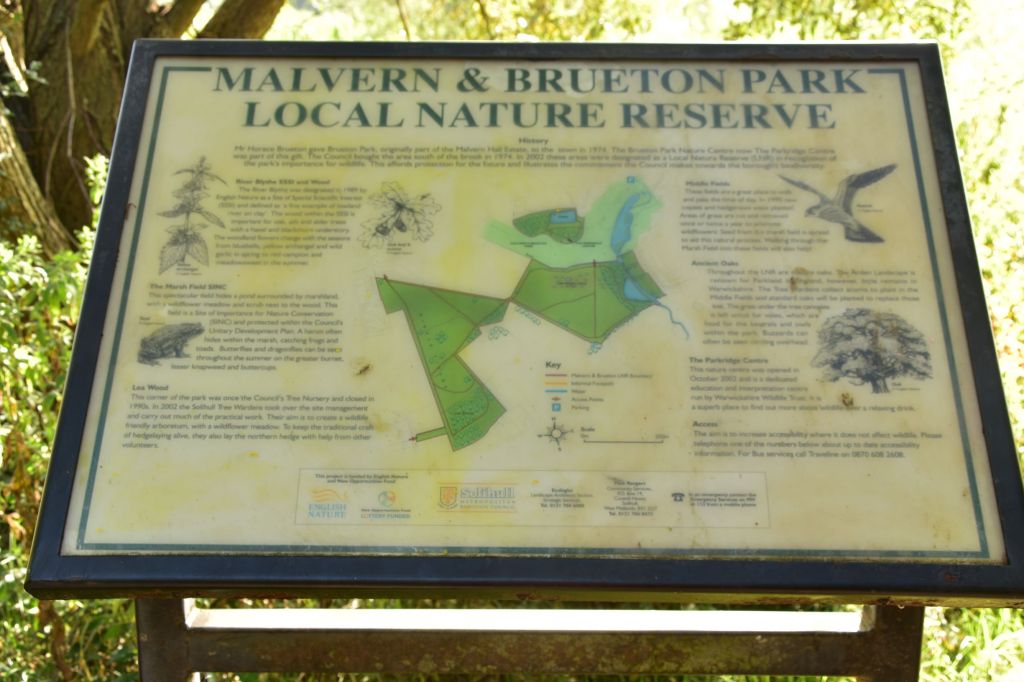
Brueton Park in Solihull is one of the country’s best kept secrets. With nearly 130 acres of open space, the park is an oasis of calm surrounded by the bustling West Midlands conurbation. Walking through its wonderful, peaceful gardens, it is hard to believe that one is so close to Britain’s second largest city and that one of the country’s busiest motorways, the M42, skirts the park’s perimeter. A visit to the park is really a pleasure.
The park comprises three separate areas: Malvern Park, Brueton Park and the Parkridge nature reserve. Malvern Park was laid out by the local council in 1926 on land which was originally part of the Malvern Hall estate. Entrance to the park is a short walk from Solihull town centre. Brueton Park was kindly given to Solihull council in 1944 by Ernest Brueton and the two parks were formally linked in 1963.
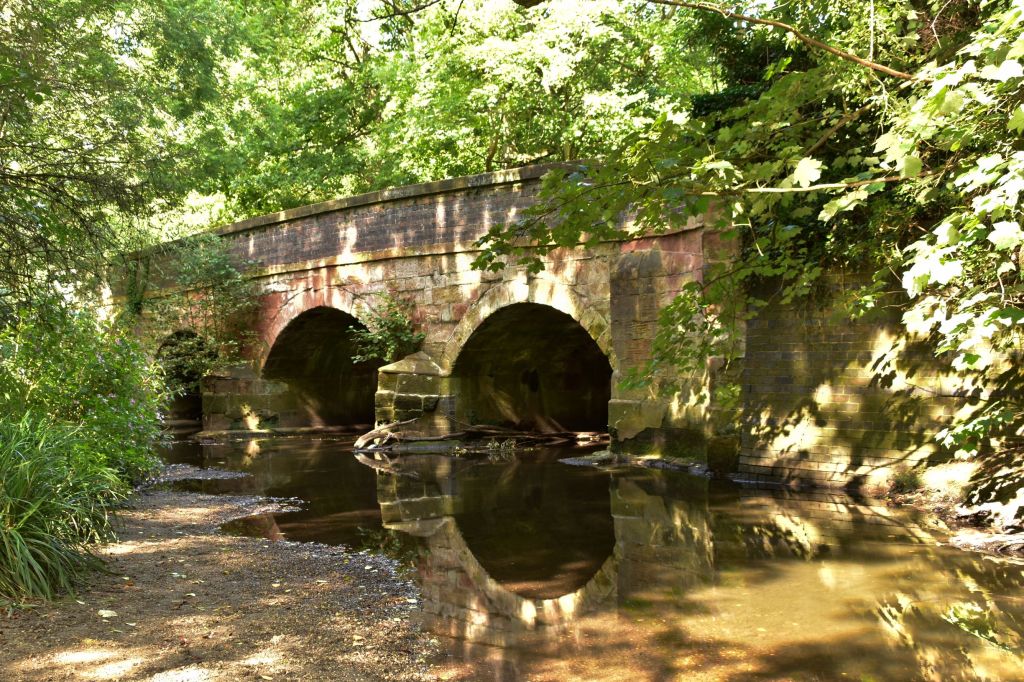
The river Blythe runs through the southern part of the park and this area is quite marshy and prone to flooding. The area became a haven for wildlife and it achieved Local Nature Reserve status in 2002 in recognition of its importance to wildlife. The reserve is now managed by the Warwickshire Wildlife Trust as the Parkridge nature reserve.
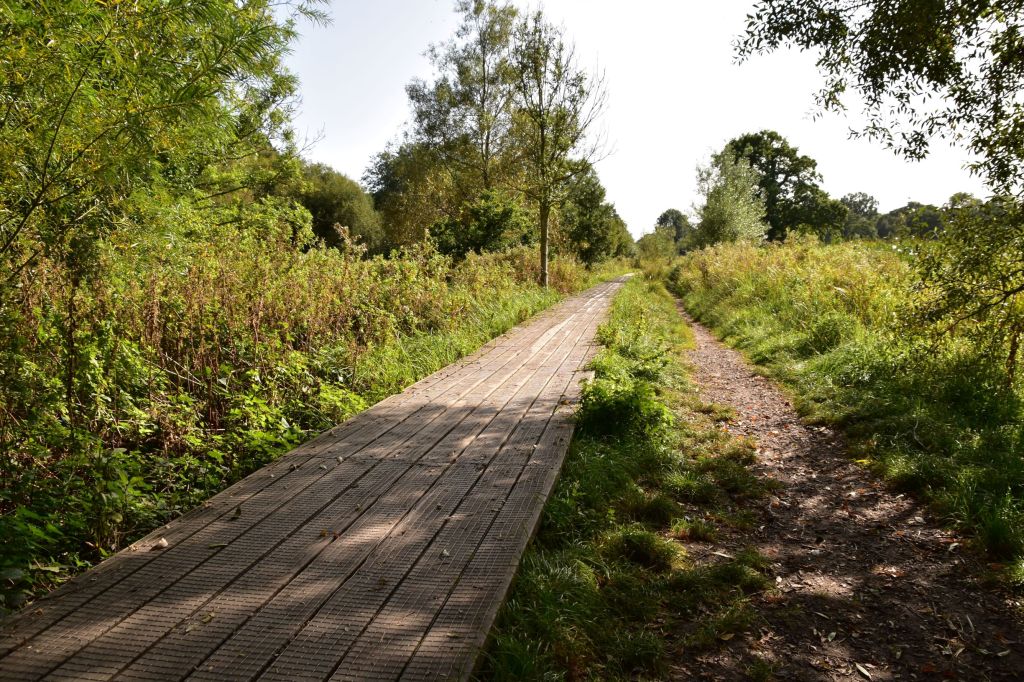
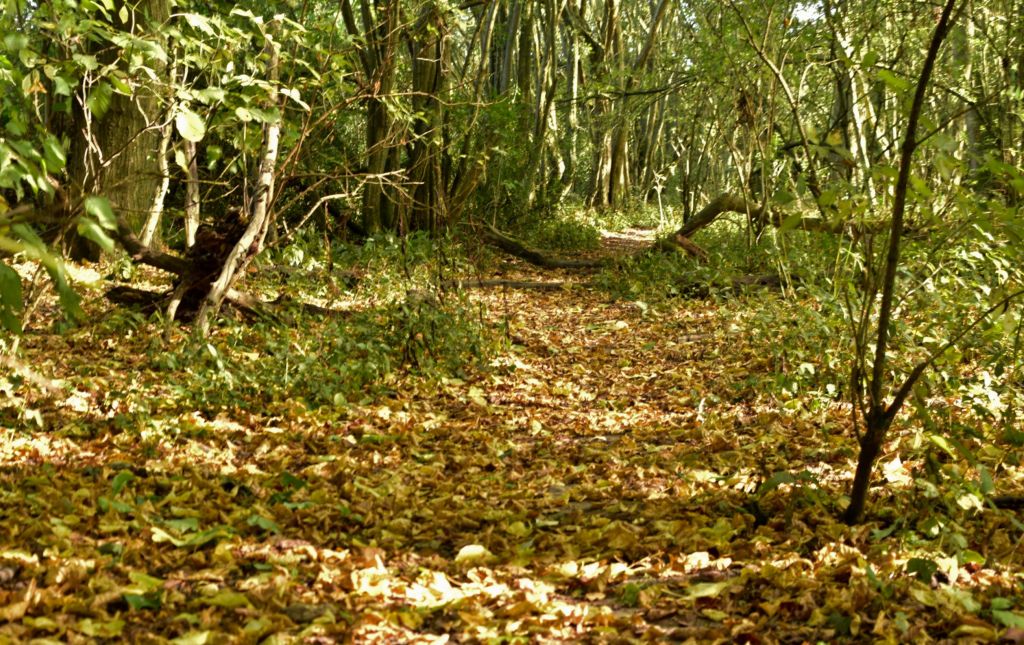
The park has traditional sports facilities such as tennis for visitors to enjoy but the truly special feature of the park is the nature reserve. There are paths through the nature reserves and safe wooden walkways where the ground is marshy.
One can follow the river Blythe as it flows idly by or one can simply sit by the side of the lake and enjoy the sight of ducks, geese and swans as they glide across the water.
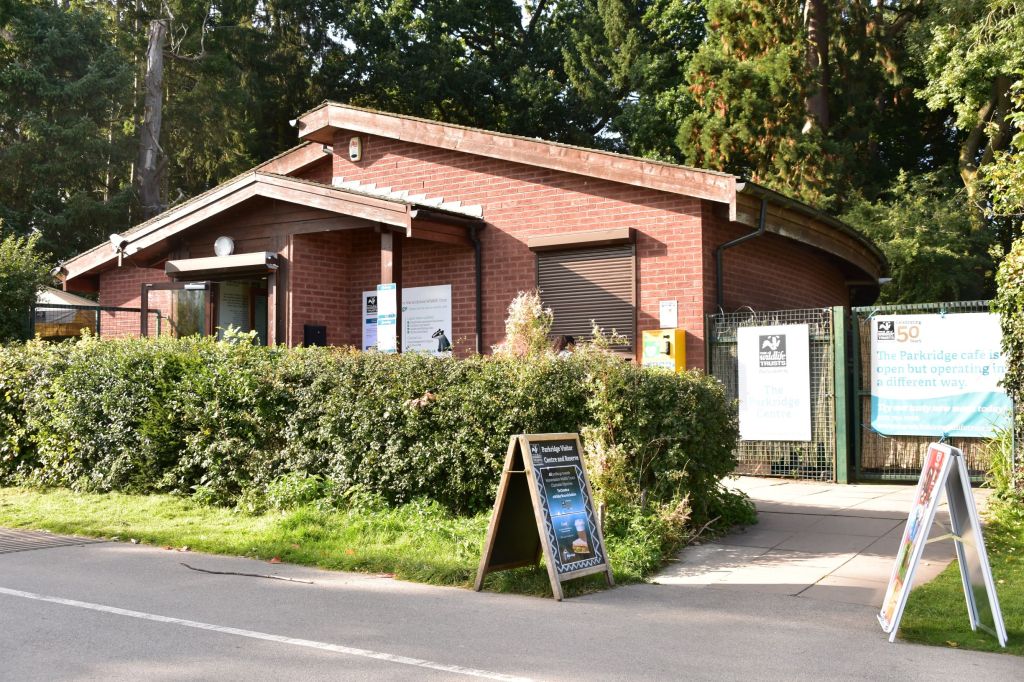
A walk through the reserve could then be followed by a well earned tea and cake at the excellent Parkridge visitor centre. There was a delicious carrot cake on offer when we last visited!
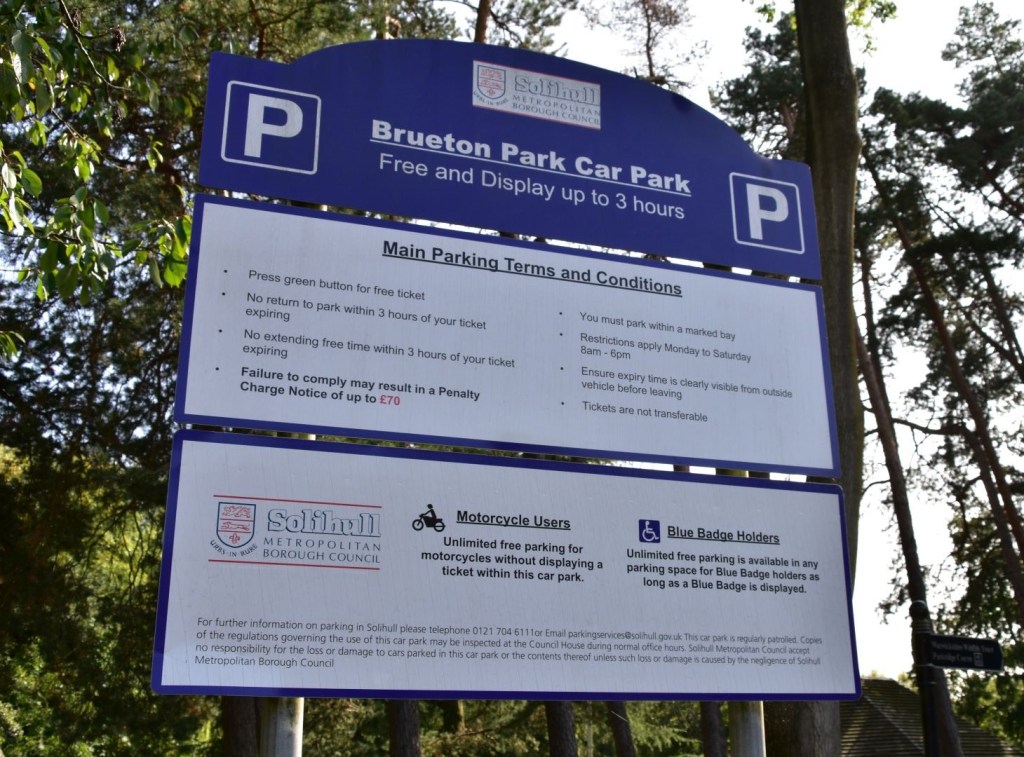
Access to the park is easy as it is so close to Solihull town centre. As mentioned, the M42 runs close by so making the park an easy driving destination for non-local travellers. The park has car parks but they are limited in space and tend to fill early. There is ample parking close by in Solihull town centre.
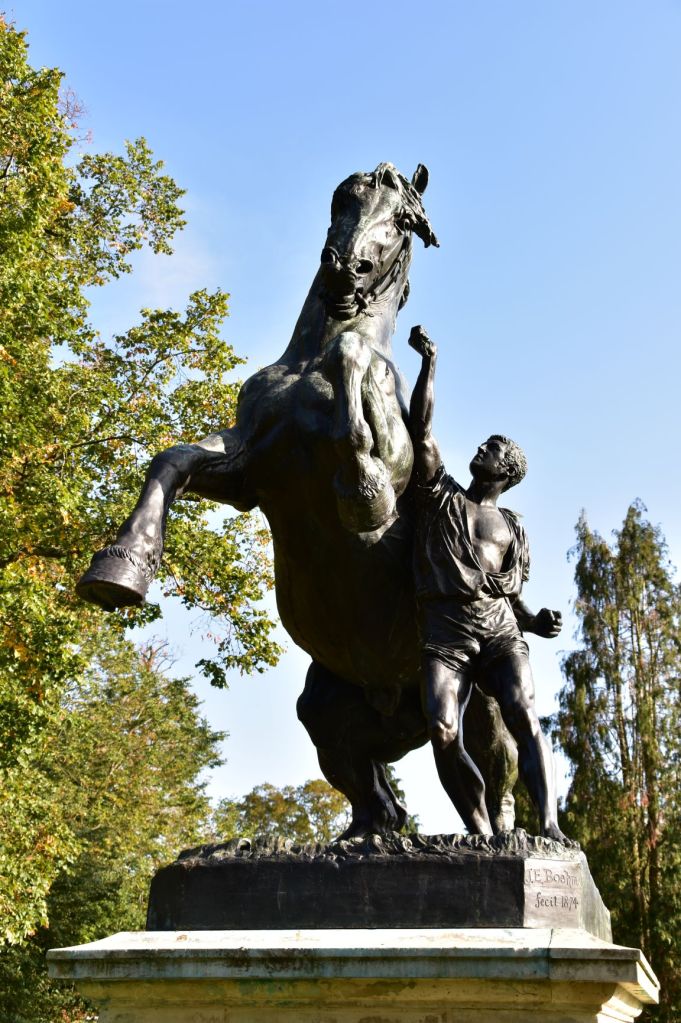
The park has many attractions for the visitor. The “Prancing Horse and Man” is a Victorian work of art which has greeted park visitors since 1944. It was donated by Oliver Bird of Bird’s Custard fame and created by the eminent Victorian sculptor, Sir Joseph Edgar Boehm.
The park is popular with joggers and runners as it is flat and has plenty of wide paths to run along. The park hosts a Saturday morning 5K Parkrun though this has been postponed till Covid 19 restrictions are lifted.
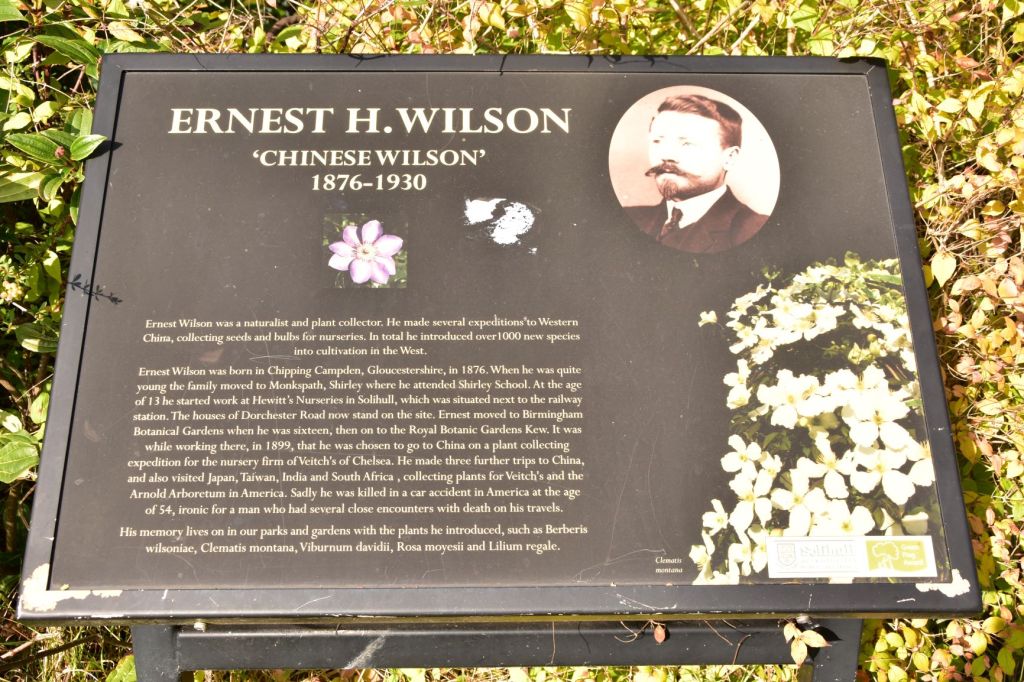
The park is home to colourful plants from around the world. Thanks for this diversity can be given to Ernest Wilson who travelled the world in a quest for exotic flora which he then brought back to decorate the park. The park has a small monument to “Chinese Wison”.
Brueton is a little gem . We have always enjoyed our visits. We hope you do too.
We would love to hear your thoughts in the comments section below. Please share with anyone you think may be interested. See you again soon!
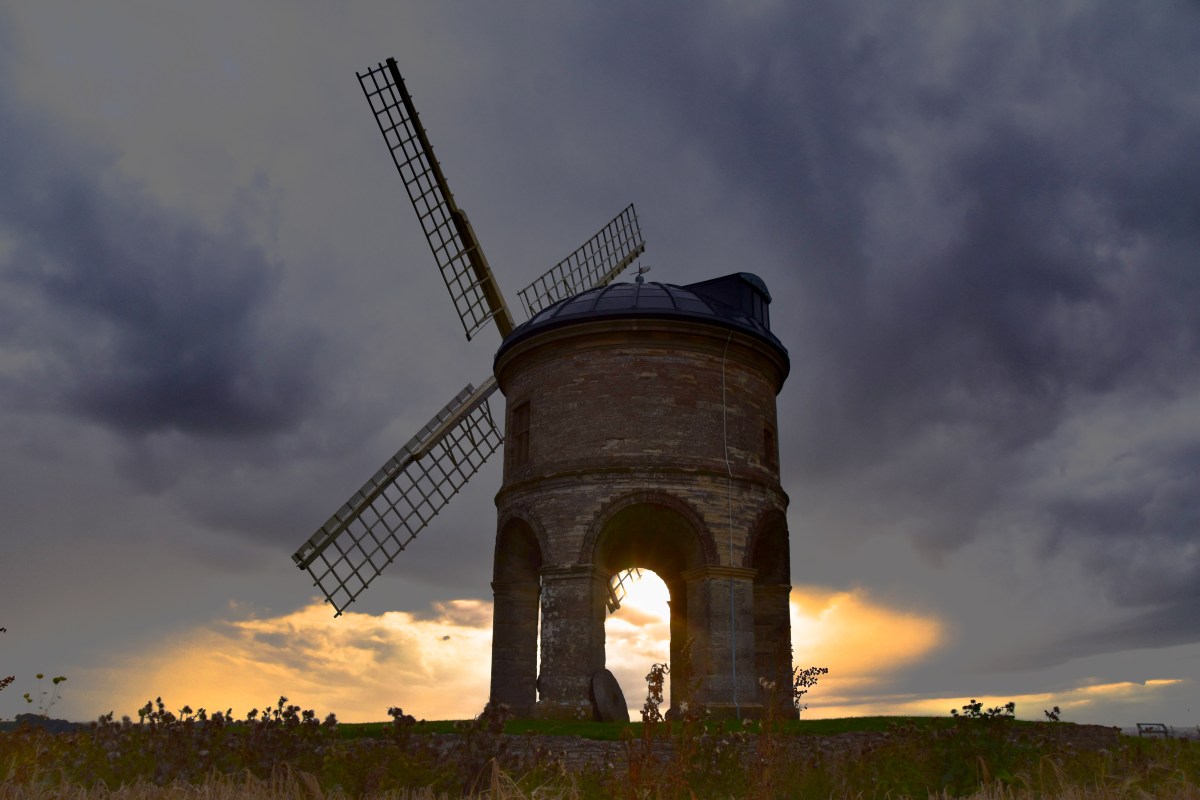
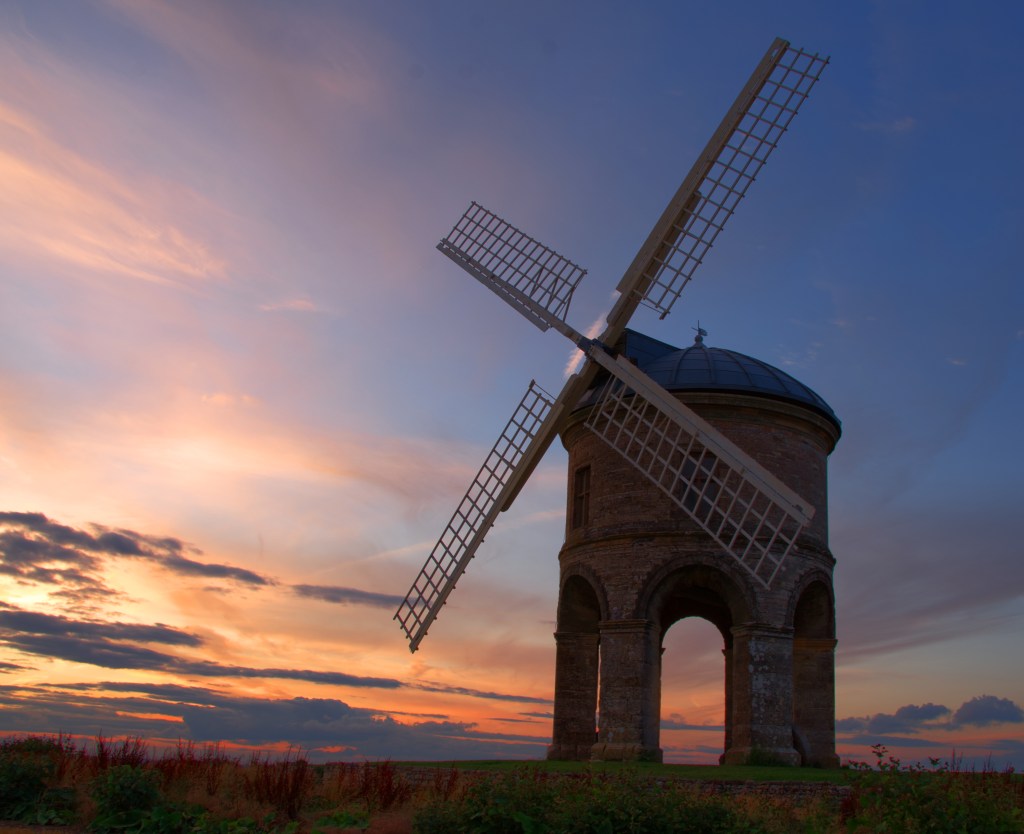
Chesterton Windmill is a stunning 17th century windmill which sits on a hilltop just a few miles outside the Warwickshire towns of Royal Leamington Spa and Warwick. The windmill was restored to its original splendour in the 1970’s and is now a preserved monument. Any visitor will be treated to wonderful views of the surrounding Warwickshire countryside and the nearby Roman town of Chesterton.
In the distance the Fosse way, the Roman road that connected Chester with Lincoln can be seen. The site is both a place of natural beauty and ancient history. The windmill is definitely worth making a detour to visit especially if you are a photographer. Sunset shots are amongst the best in the country.
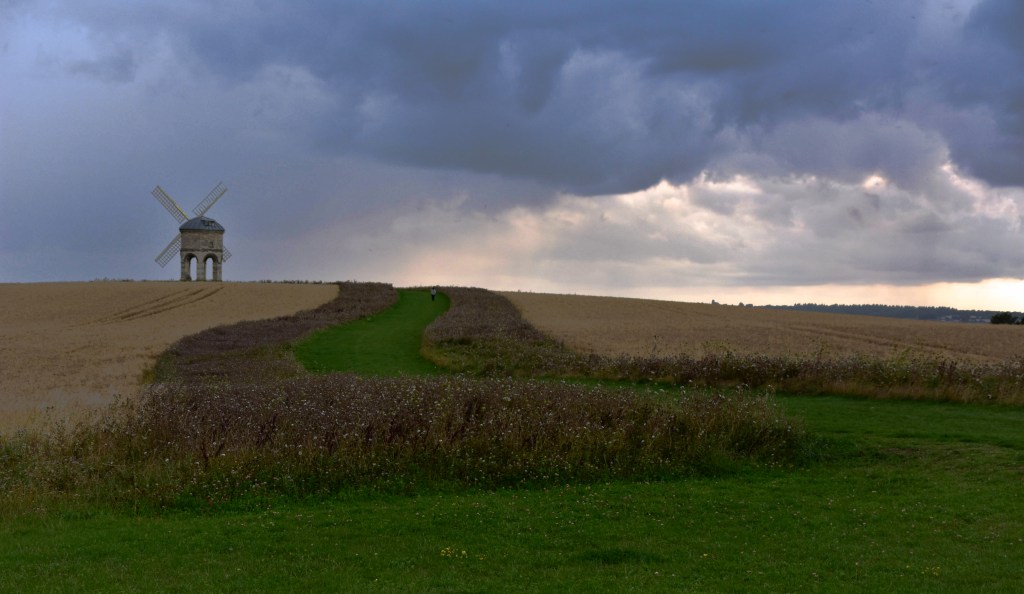
There is an excellent 100 metre grass path from the layby to the monument.
The windmill is easily accessible from a layby on the Windmill Hill Lane. The site is popular so the layby may be full when you arrive. Many people park further down the road and walk the extra distance to the windmill. Please be considerate to others if you do this. For those that wish to do a little more walking, there are some pleasant walks to be enjoyed close to the windmill.
The Stag at Offchurch is one of the closest local pubs, just a 10 minute drive away. The pub has real character and has a reputation for good food. The regency spa town of Leamington is just a few minutes further drive away and it has numerous excellent restaurants and shops. The town of Warwick is equi-distant away and it too, has a wide range of excellent restaurants to tempt the hungry traveller as well as its famous castle to visit. The towns are attractions in their own right and a must see for anyone new to the area. Allow a long time for any visit as a short trip would not do the towns’ justice.
The British Motor Museum resides a 15 minute drive away at Gaydon. The museum is a car enthusiast’s Mecca. It would be a sin not to find the time to visit it.
South Warwickshire is one of the most attractive, yet under-rated parts of the country. Chesterton Windmill is perhaps the county’s best kept secret. We recommend you visit Chesterton and the lovely countryside around it. We know you’ll enjoy it.
We would love to hear your thoughts in the comments section below. Please follow and share with anyone you think may be interested. See you again soon!
You will not forget your visit to the Isle of Skye. The superlatives, the adjectives, all the flowing words of praise that have been written about the island, are correct. If anything, they do not do it justice. It really is an island travellers should visit. Skye really is something special.
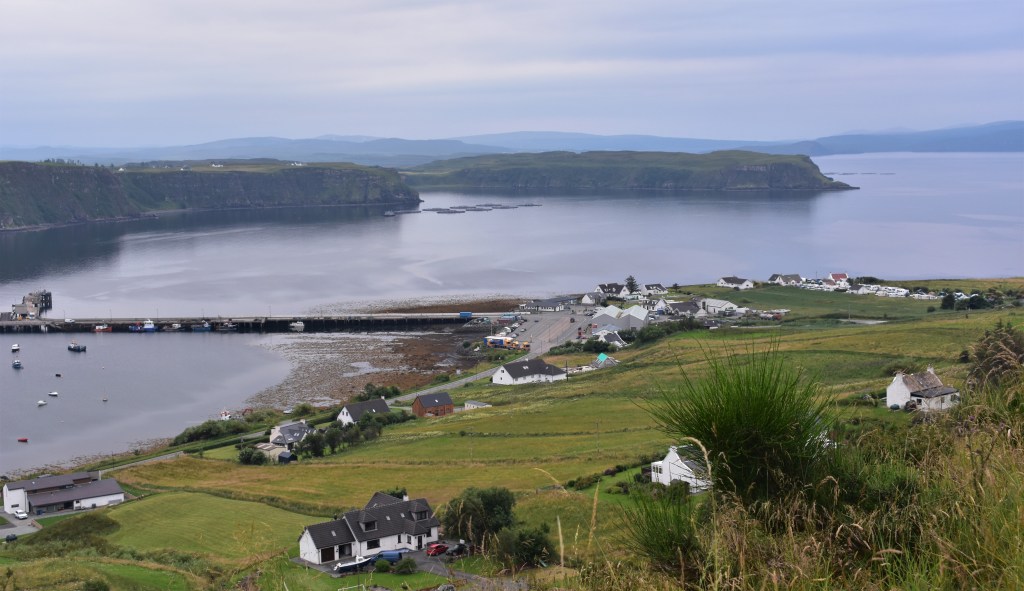
We took the Calmac ferry from Tarbert on the Isle of Harris to dock in Uig, the small port which resides in a sheltered bay on the north-west coast of Skye. It was a lovely sea crossing which had the added bonus of giving us superb views of the other islands that lie off the Scottish mainland. Of course, we think the best way to see Skye, is to go over the sea to it!
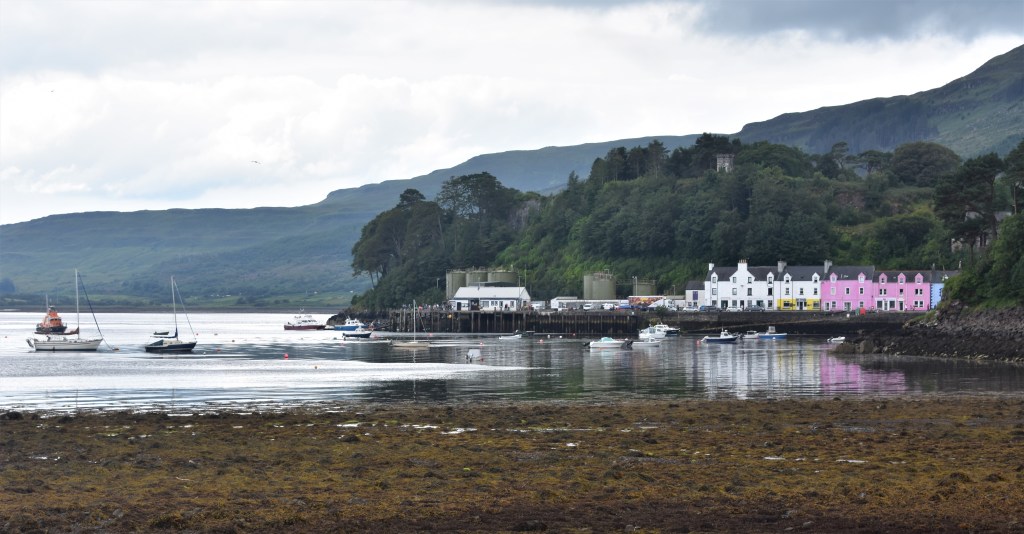
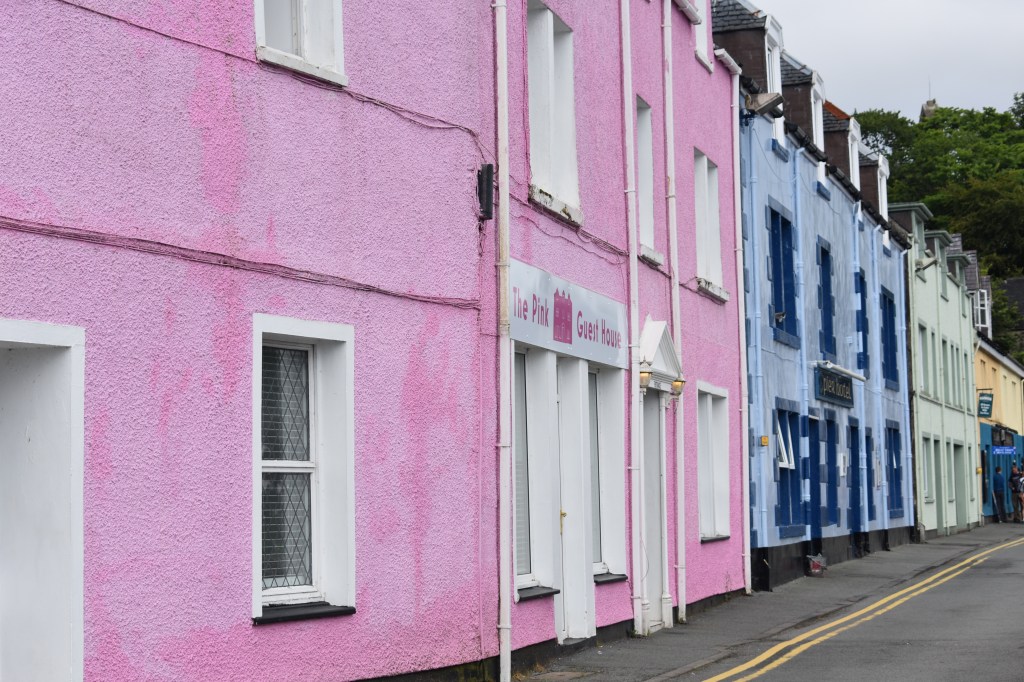
Portree is a small, but busy little town situated halfway along the eastern coastline of the island. Portree’s central location makes it a great centre to tour the island from. We were happy to stay in lovely B&B which had the option of delicious pancakes or a full Scottish breakfast. After 2 weeks of touring the Western Isles and having a full Scottish breakfast every day the pancakes were a real treat as were the fresh home-made scones baked daily. We can highly recommend a stay at Gleann an Ronnaich
Skye is a deceptively large island. It’s over 100 kilometres in length with a land area greater than 1,500 square kilometres. Even from Portree it may take over an hour and a half to drive to some of the popular tourist sites on the far north and south of the island. You have to spend at least a few days on Skye to appreciate all that the island can offer.
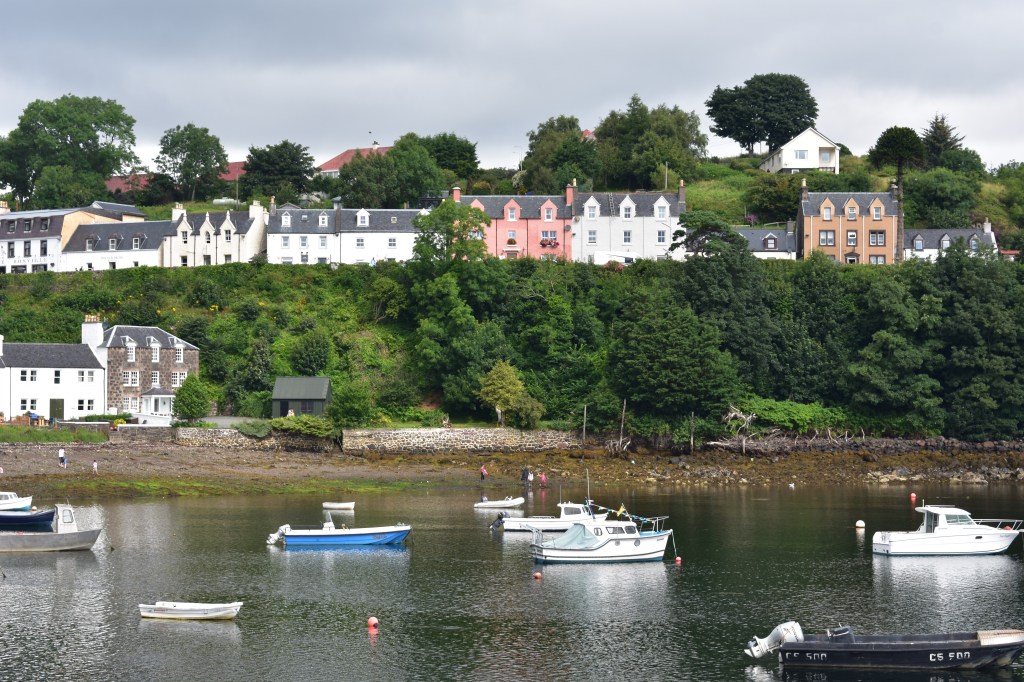
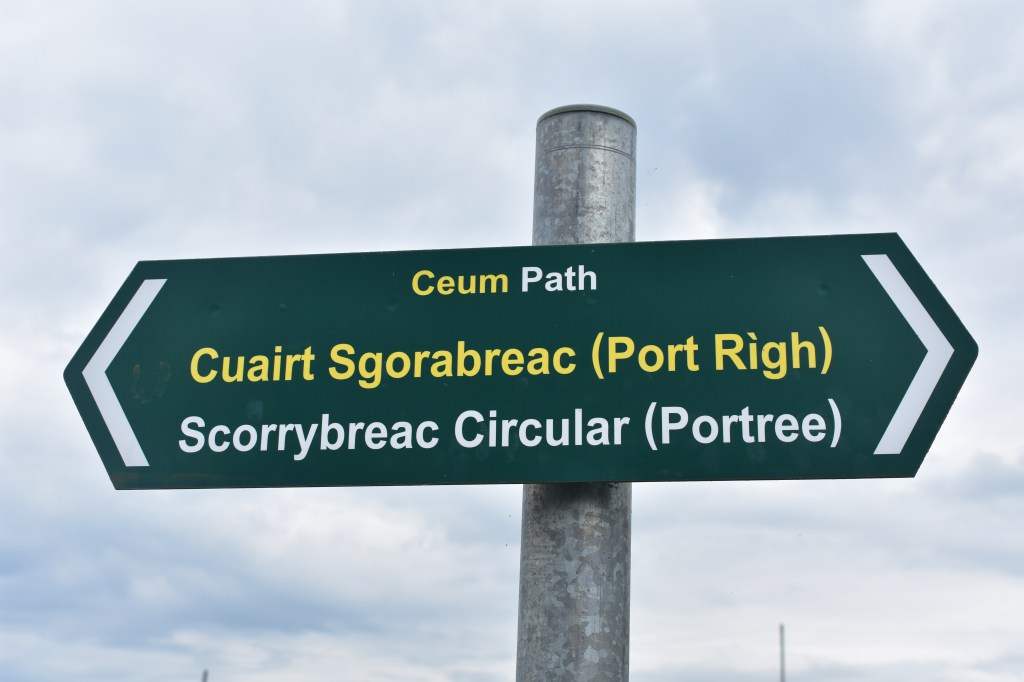
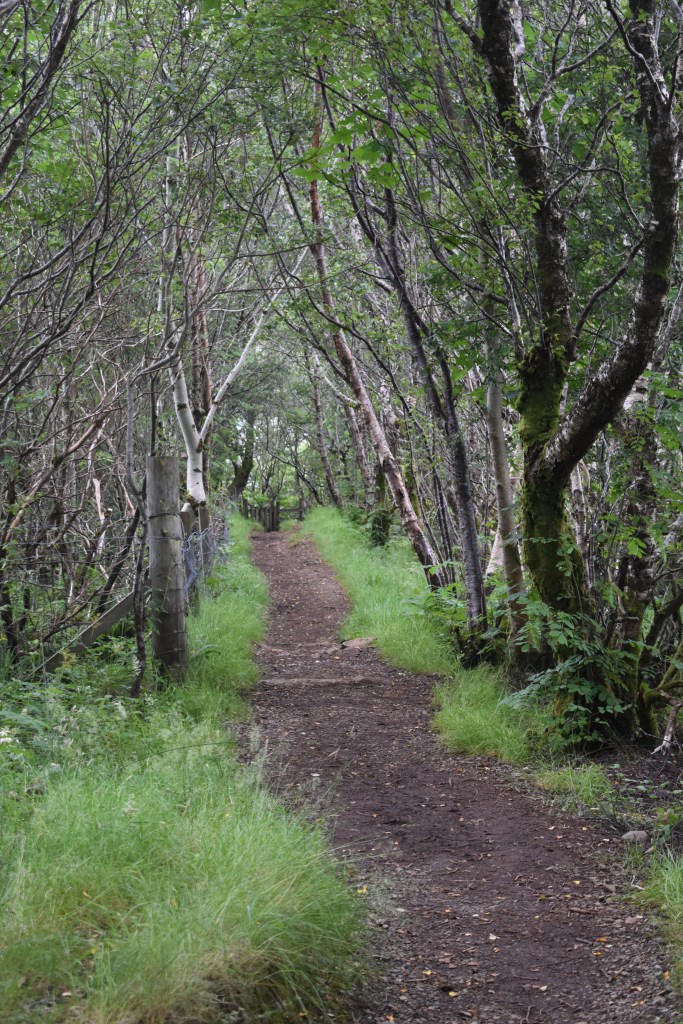
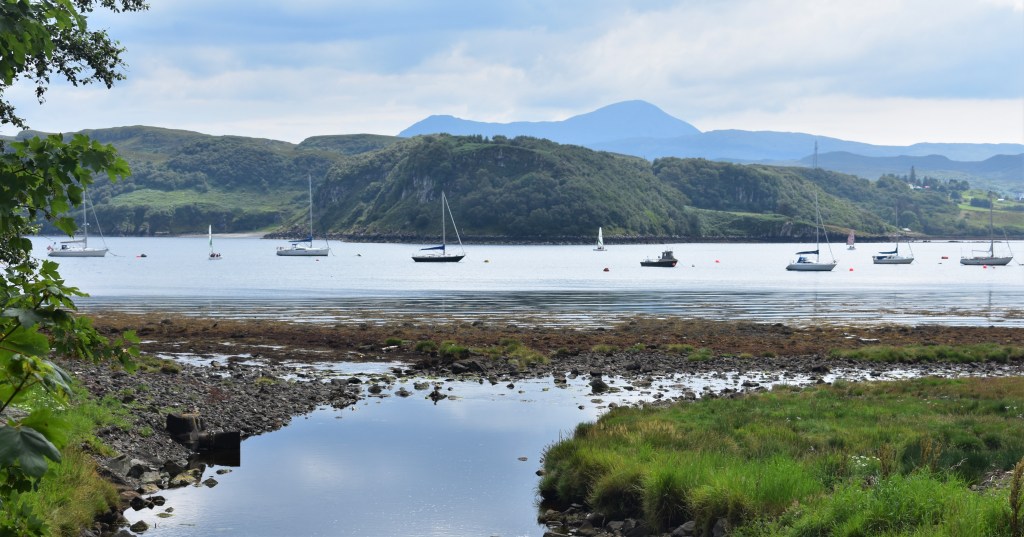
We enjoyed Portree itself. There is a scenic circular walk that starts by the harbour in the centre of the town. It provides great coastal views all the way across the sea to the nearby island of Raasay. The walk took us about 90 minutes and at its end we were ready for a cup of coffee and a cake. Portree has lots of bars and cafes to choose from.
Some views on the walk around Portree
Skye can get very busy during the peak summer months though we personally had no difficulties in finding a table when we wanted to eat and we were there in July. However, if you want to eat somewhere extra special and would like some fine dining in places like the Three Chimneys in Colbost, then you must book in advance, even outside of the summer months.
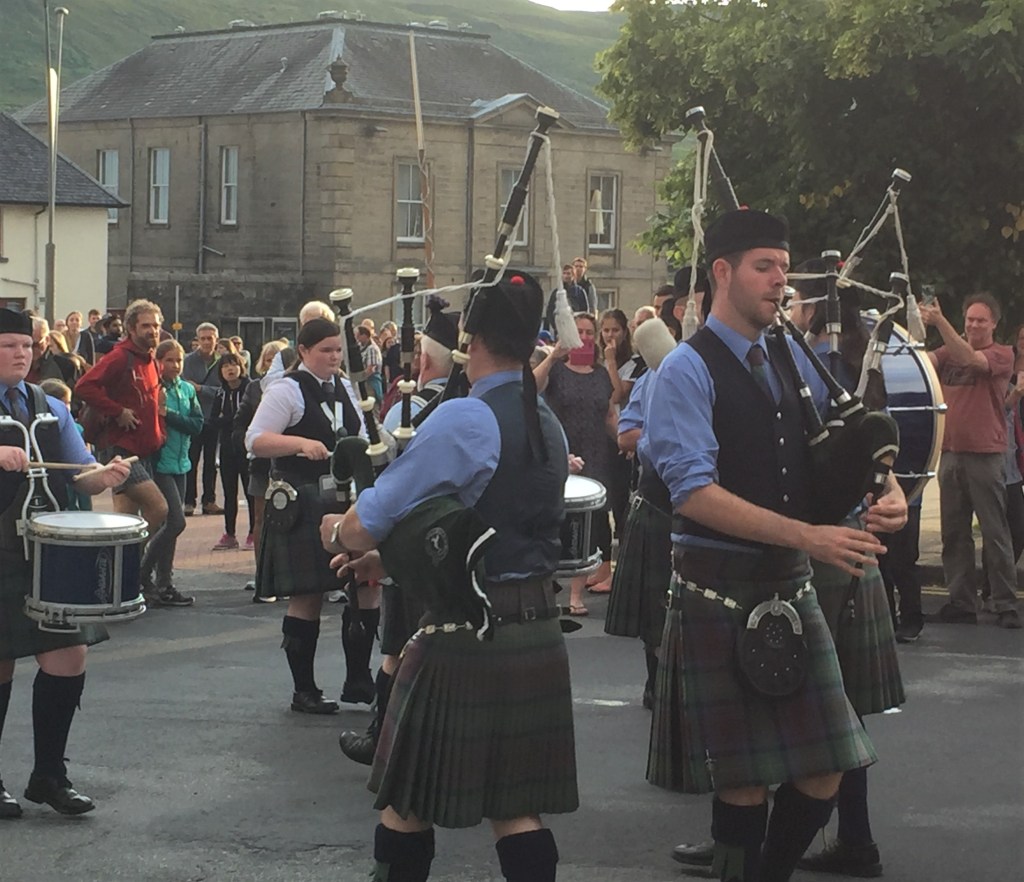
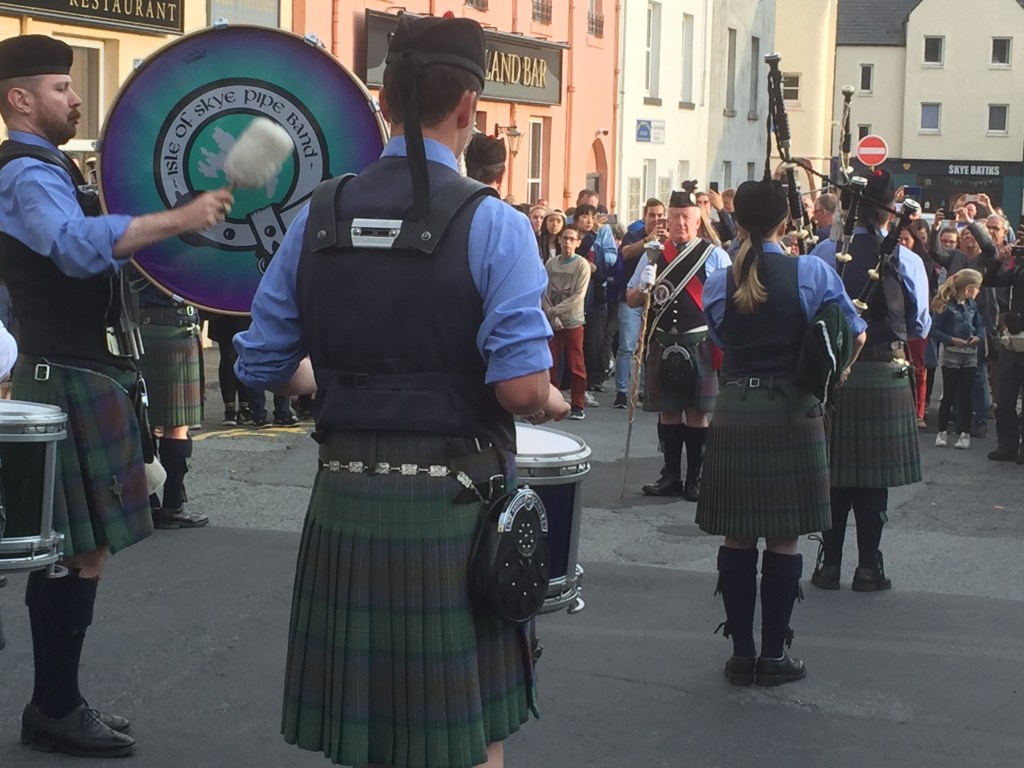
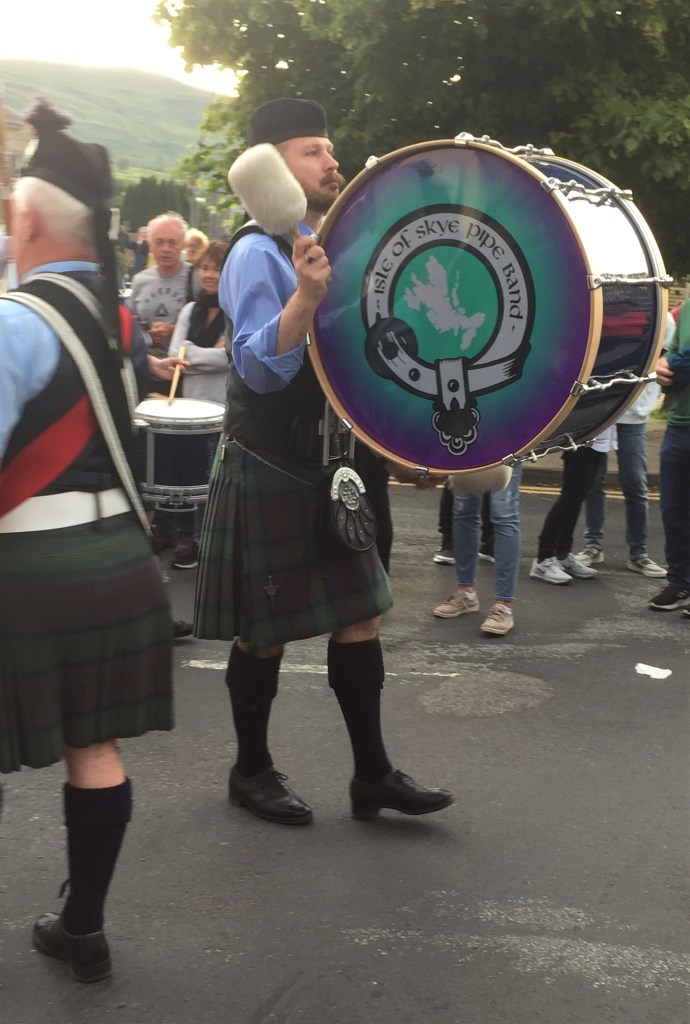
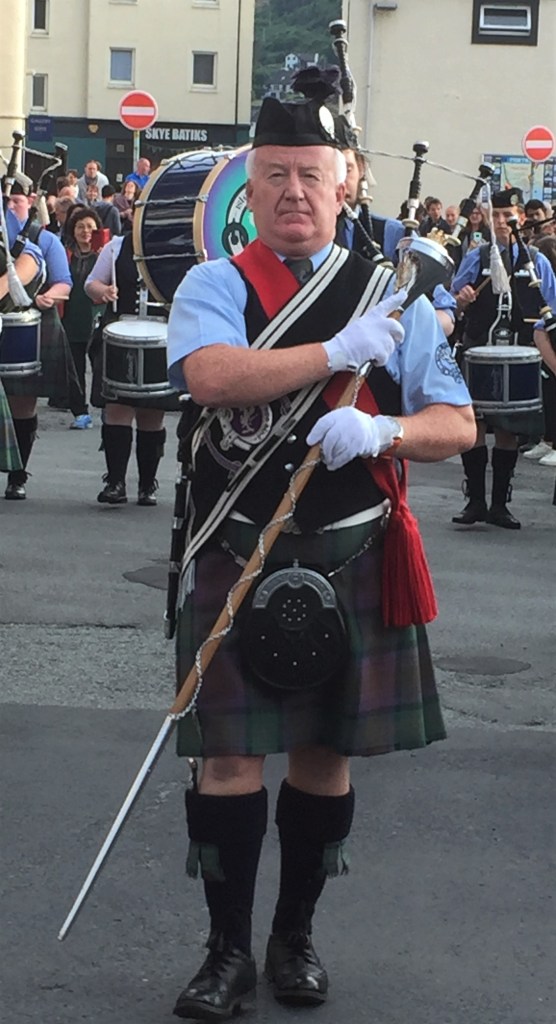
Peak congestion is when a stream of coaches disembark their passengers in the town all at the same time. Then, Portree can seem very busy indeed! Again, though some restaurants required pre-booking for an evening meal, we had no problem finding a free table when we ate out. We tend to eat our evening meal between 5-6 pm. Had we eaten later, finding a table may have been more problematic. Eating early has the additional advantage that you may finish your meal just in time to see and hear the Isle of Skye Pipe Band which regularly parades through the town centre. We enjoyed a rousing performance from the band with the Pipe major being particularly impressive marching up and down in full Highland regalia. The Band’s parades in the town are advertised locally and we would strongly recommend you see the Band if you are in Portree.
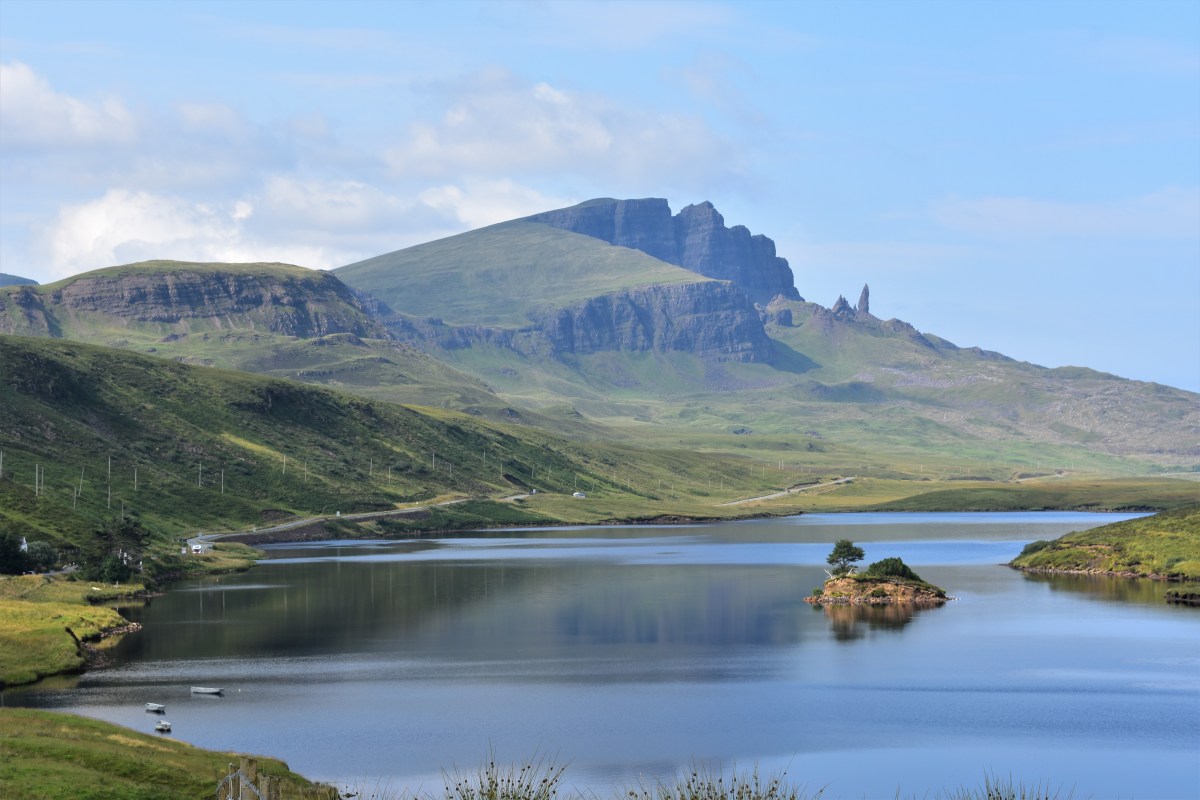
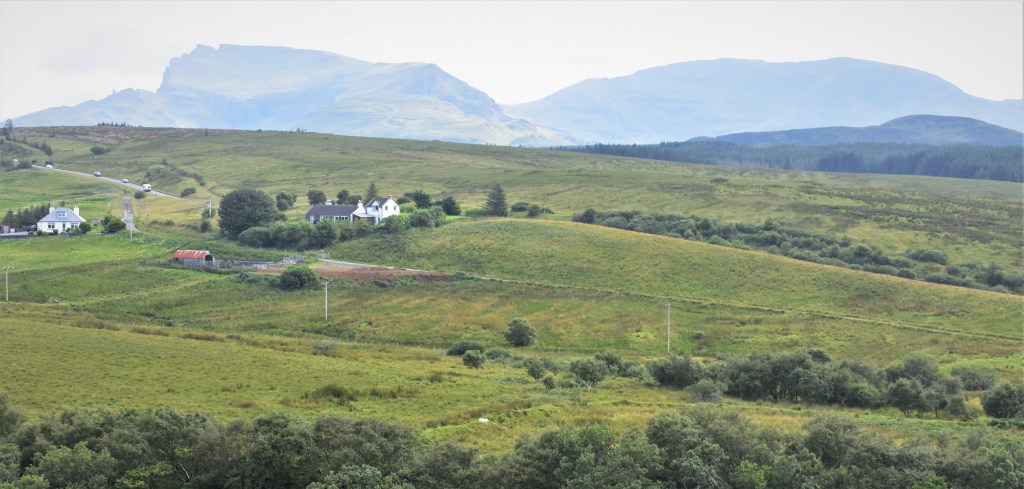
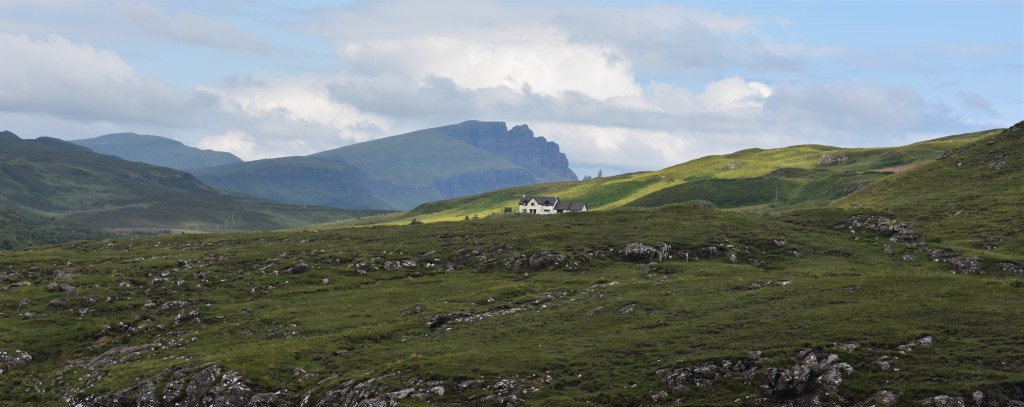
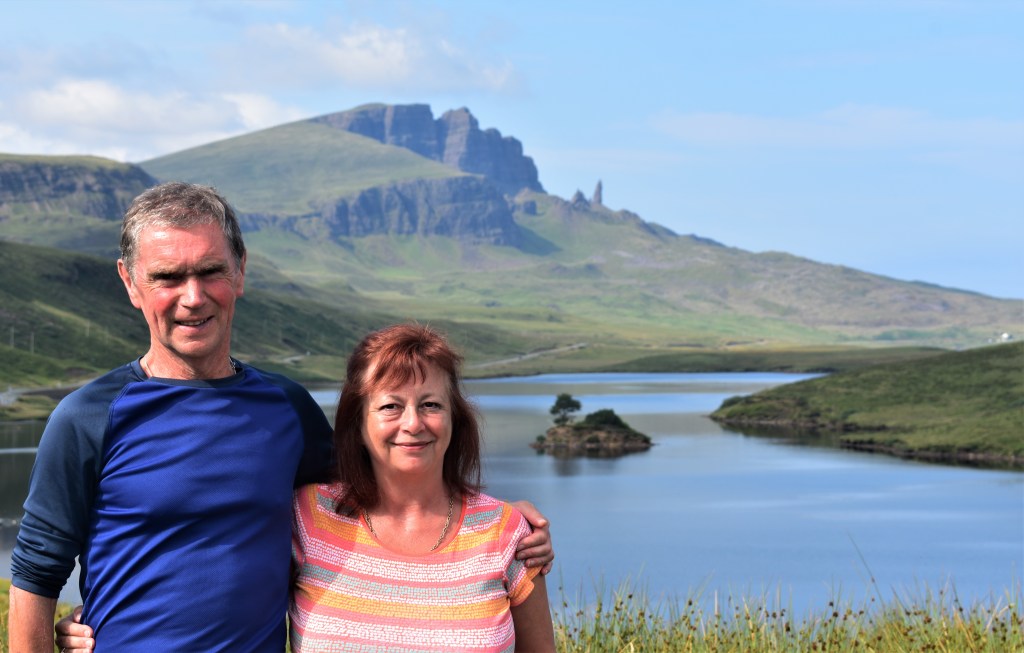
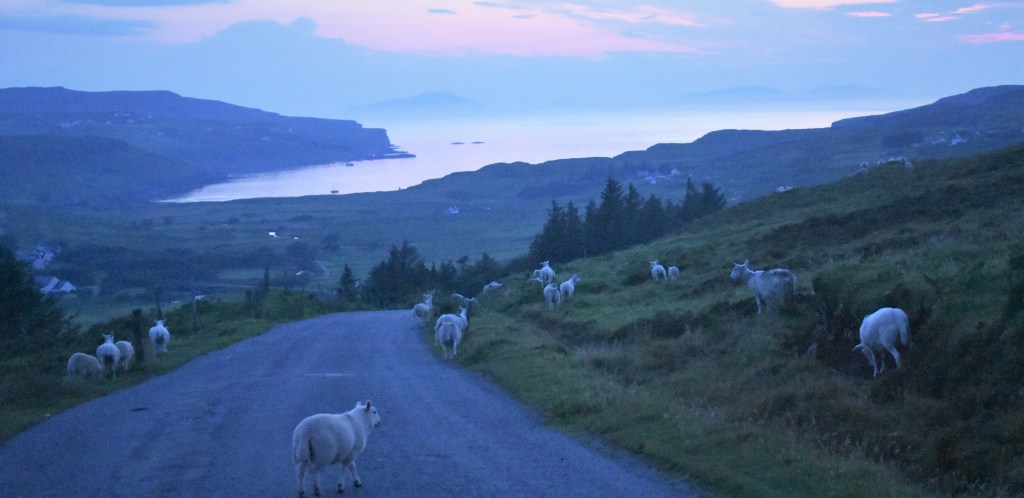
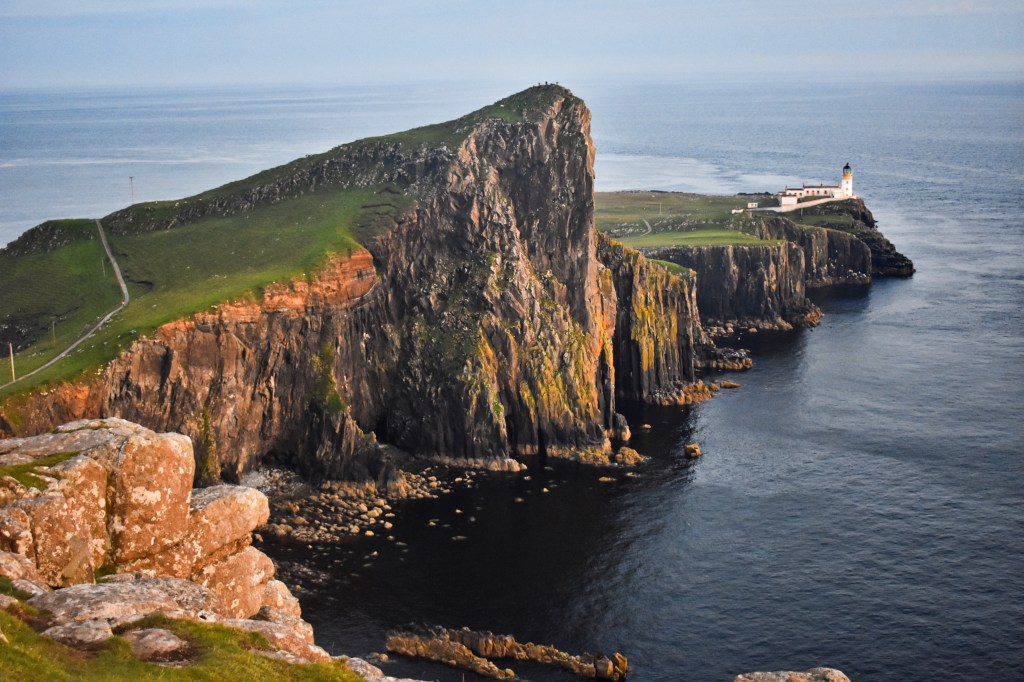
Skye is one of those rare holiday destinations where the reality of being there is better than what brochures advertise. From the Old Man of Storr to the Neist Point Lighthouse, none of the island’s fabled attractions disappoint. We hired a car in Skye and simply travelling across the island was a wonderful experience with breathtaking views around every corner. Our journey times were much longer than planned because we kept stopping to take photos of the wonderful landscapes we kept on meeting. Skye really is a beautiful island. This is our favourite photograph of our stay, the view just stopped us in our tracks!
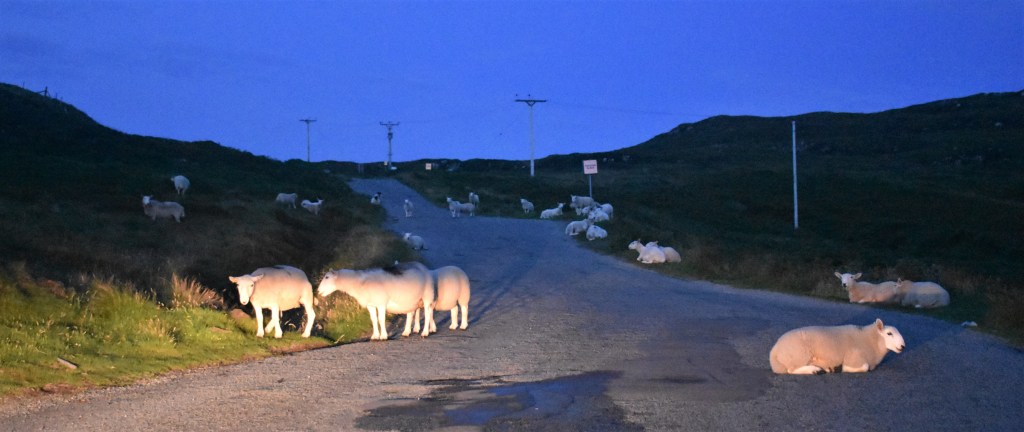
There is a caveat to touring Scotland’s most famous island. The whole world has now heard of Skye’s natural beauty and and at times it may seem the whole world is queuing up to see it. The traditional tourists from North America and England are now accompanied by tourists from Europe, China and South America. There can be traffic congestion near the most popular spots and you may find yourself amongst a small crowd of people when trying to get that perfect photo. Skye is still worth visiting despite the increased number of visitors. And to put Skye in perspective, it is much less crowded than Devon, Cornwall or the Lake District during the peak holiday season. We would recommend visiting the most popular sites early in the morning or late evening when day-trippers and coach parties are not there. Take advantage of the long daylight hours that are past 11.00 pm in the summer months. Travelling around Skye in the early evening is much quieter than during the day. It is the time when the local sheep population take over the roads and we got some great pictures of sheep on our way back after an evening sunset. The sheep weren’t bothered by the crowds!
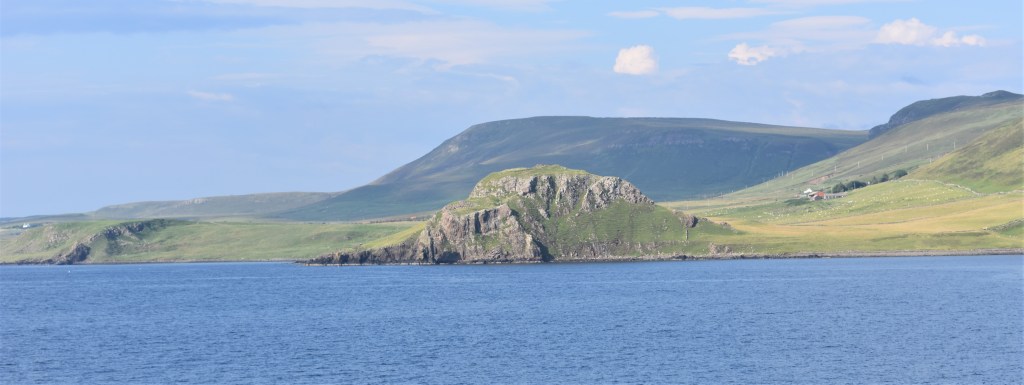
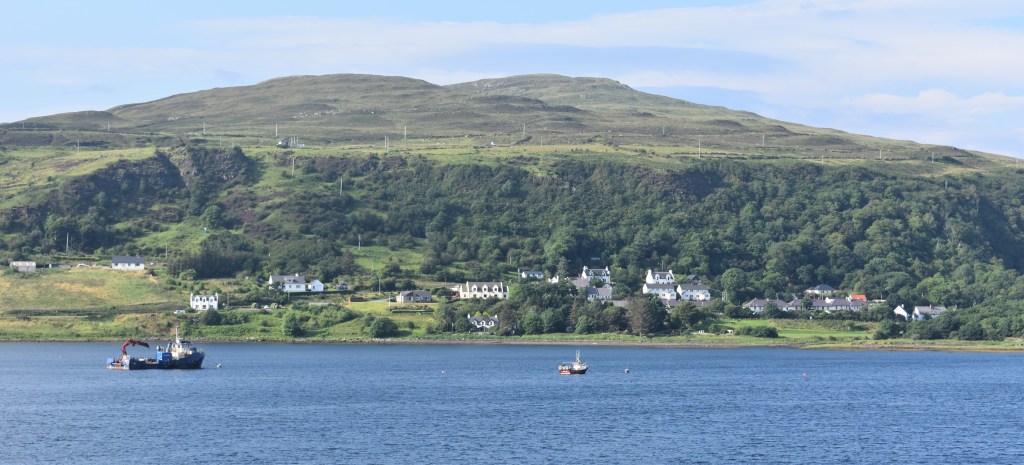
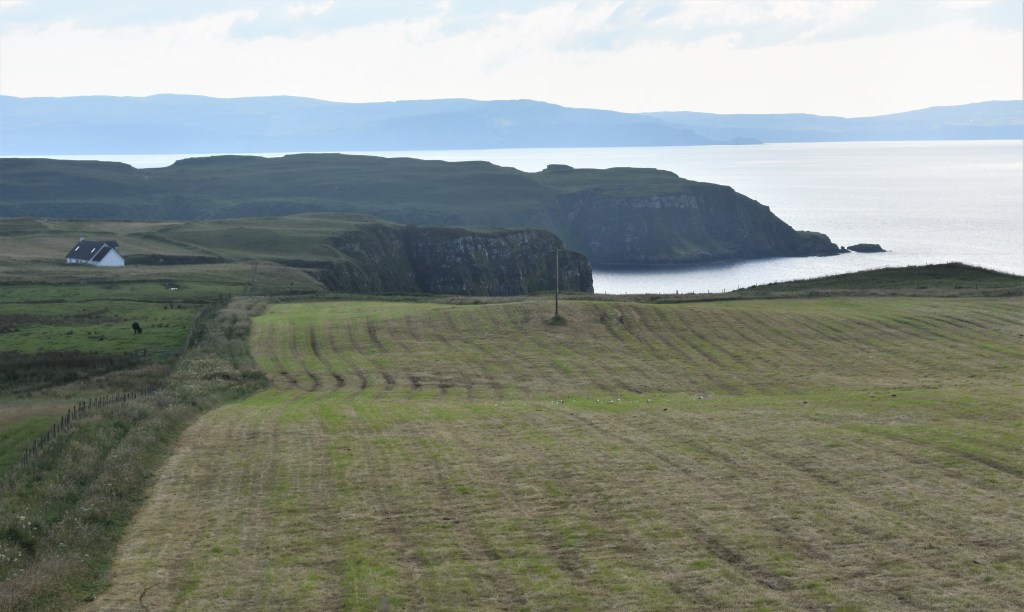
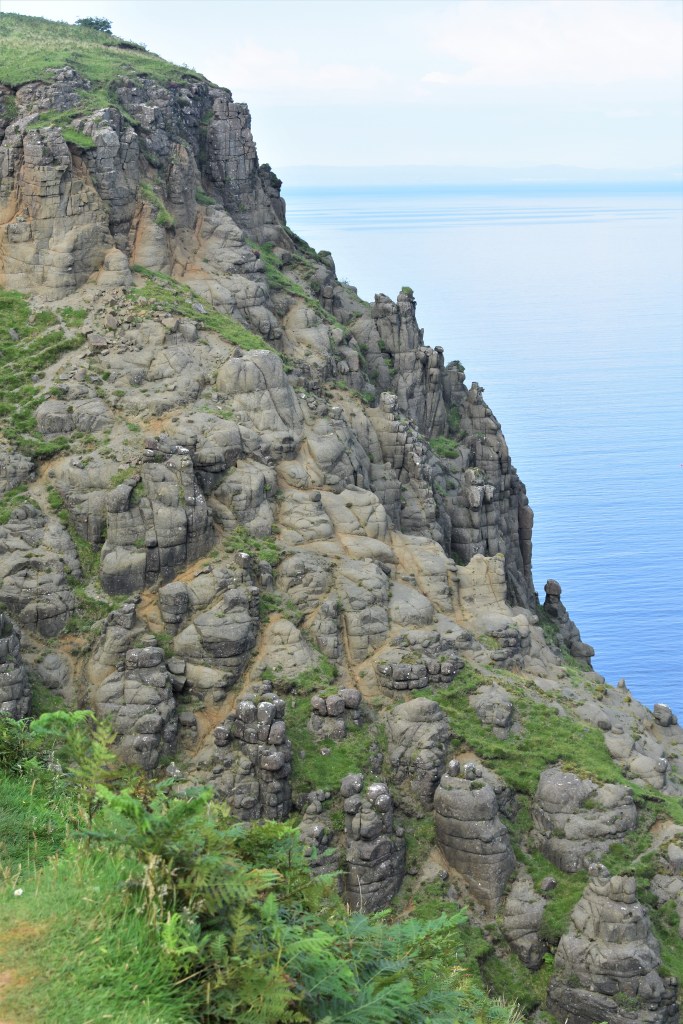
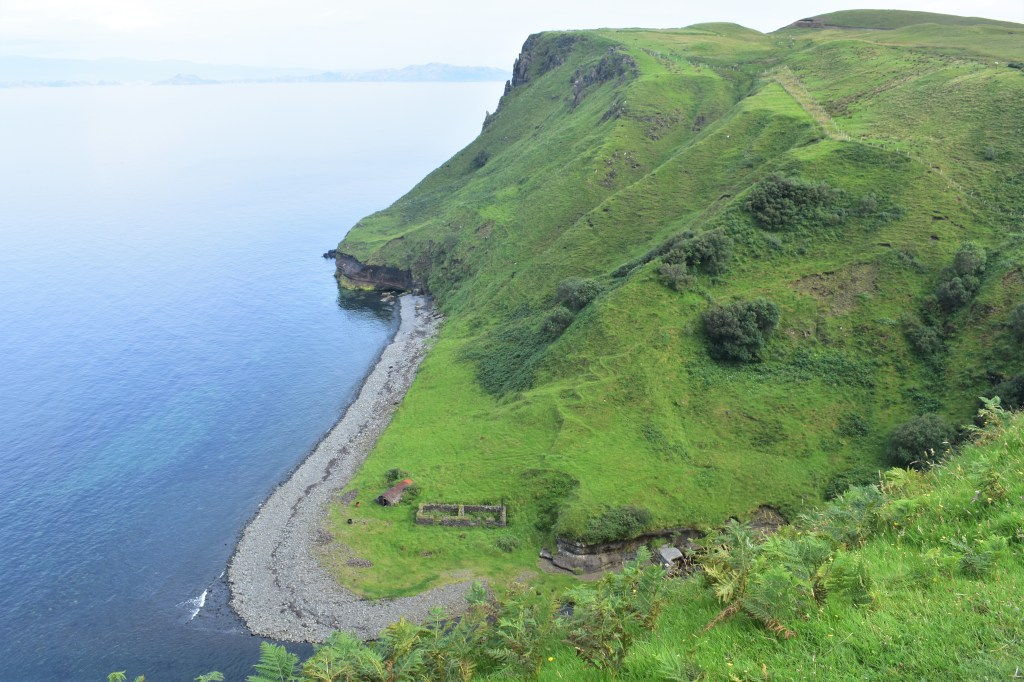
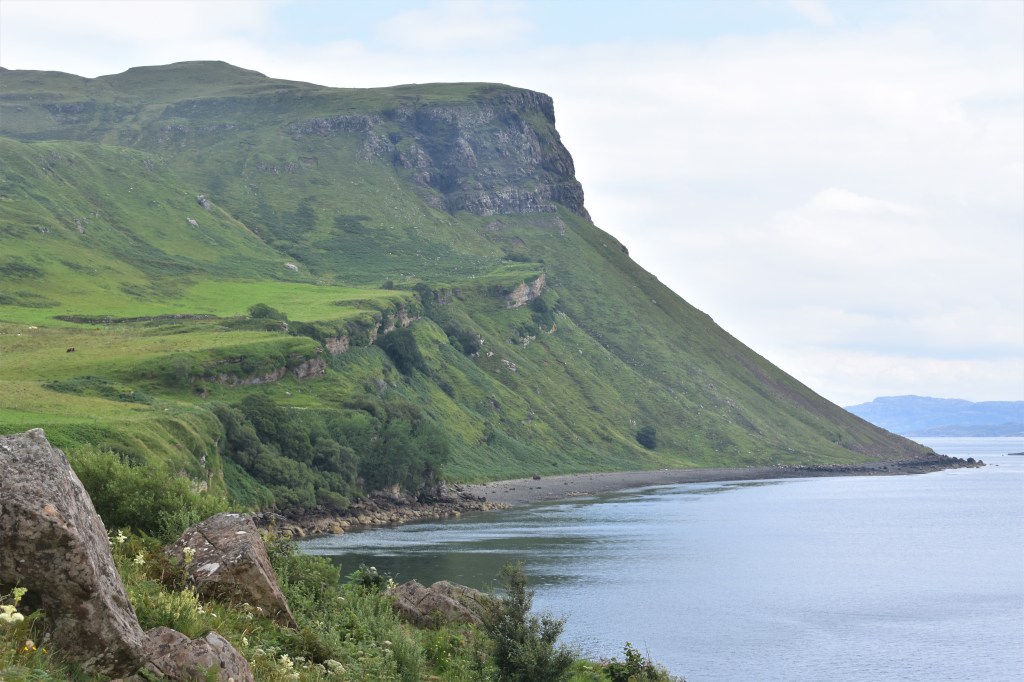
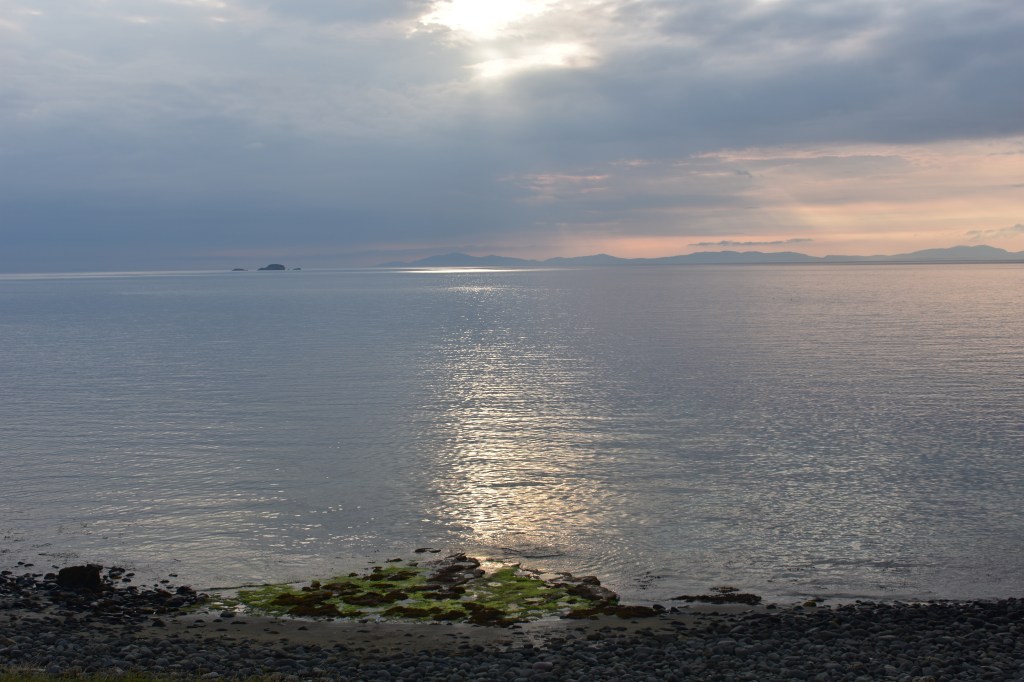
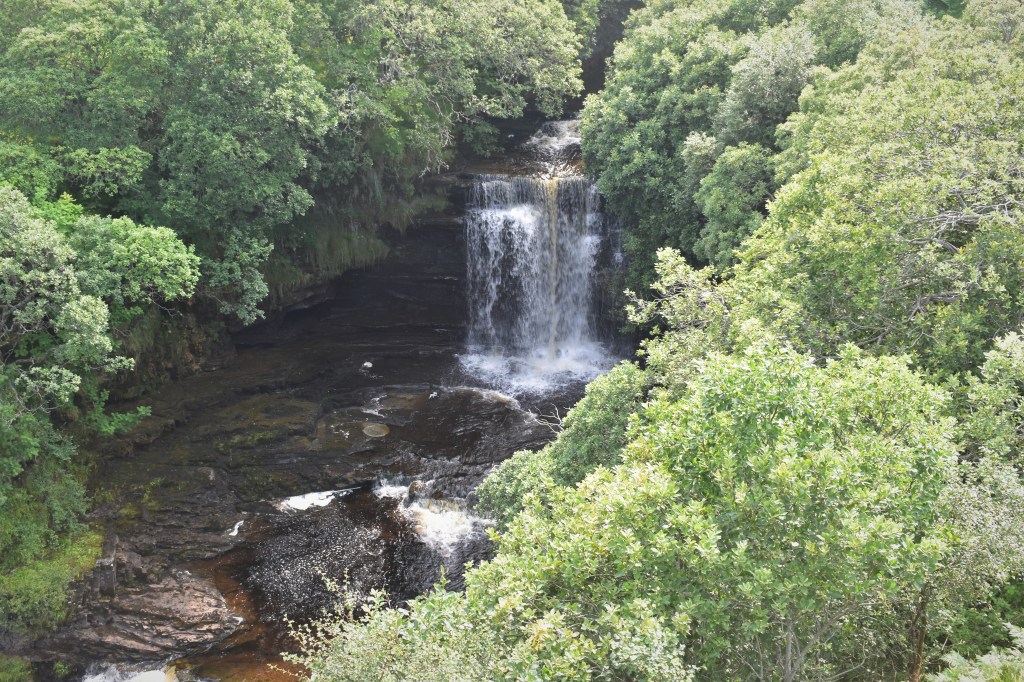
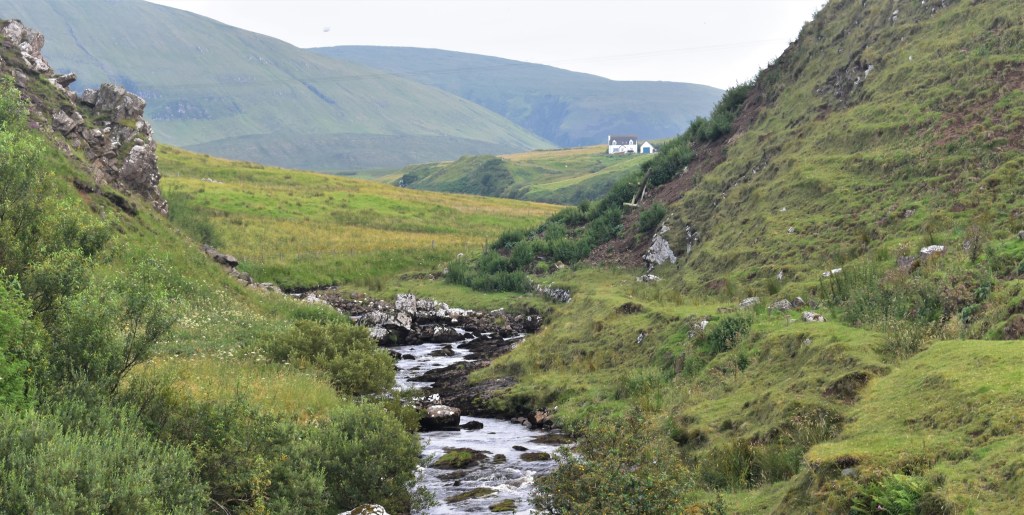
Here are a few samples of the beautiful places we saw in Skye, There were so many places we were not able to see, we will have to visit Skye again.
Neist Point
Kilt Rock
Flora MacDonald and Skye
Skye has had a long and often turbulent history. Its role in the 1745 Jacobite Rebellion has been immortalised in the song: Over the Sea to Skye. The song commemorates how Flora MacDonald helped the rebel leader Bonnie Prince Charlie escape chasing Hanoverian troops. The Prince had been hiding on the neighbouring Hebridean island of South Uist. Flora MacDonald disguised the Prince as her maid. She and the Prince first travelled to the Isle of Benbecula where they boarded a boat which, as the song says, went over the sea to Skye. From Skye, the Prince was taken on another short boat journey to Raasay, where he boarded a vessel which eventually took him to safety in France.
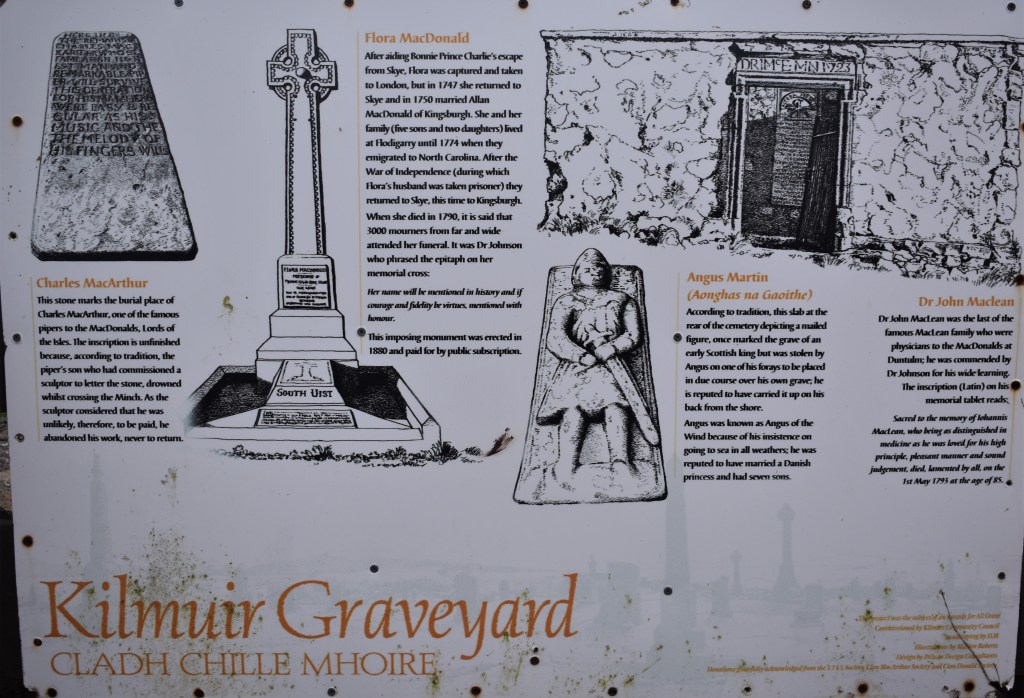
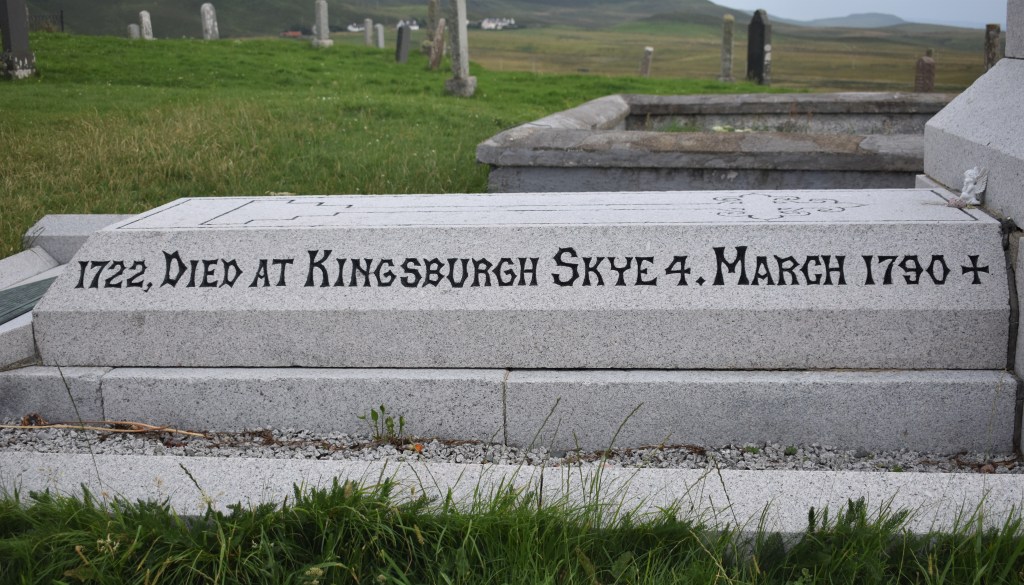
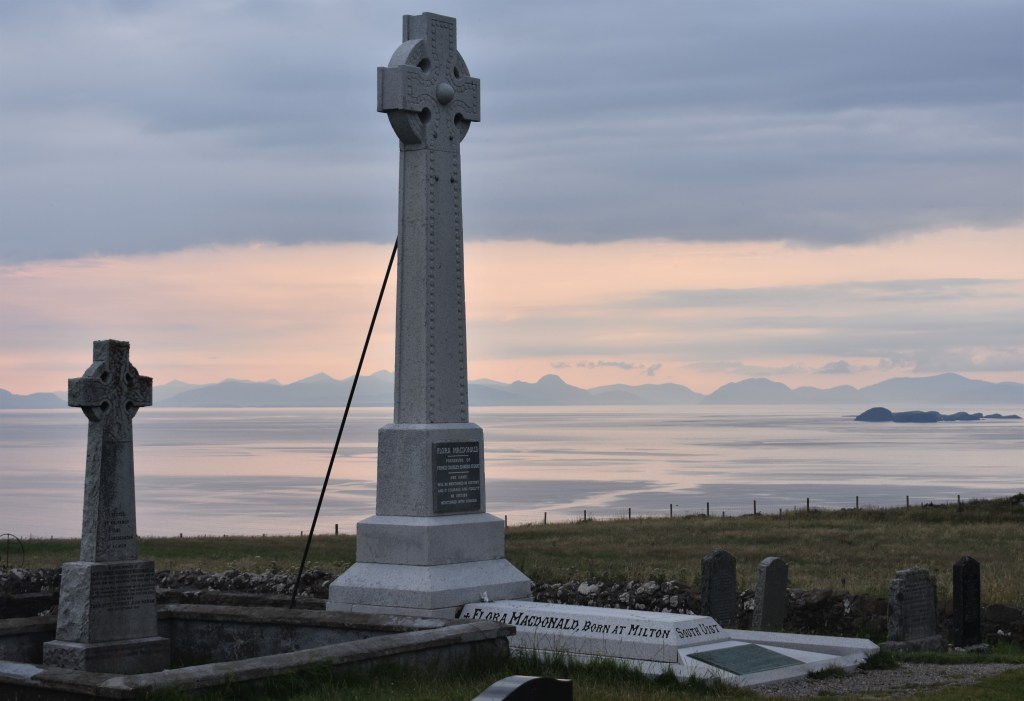
Flora MacDonald was imprisoned for over a year for her part in the Prince’s daring escape. The irony is that a number of Flora’s family were supporters of the Hanoverian cause! She and her family later emigrated to America where she became involved in that country’s rebellion against the British. Sadly, the family lost its lands in that rebellion and so she had to return to Skye. Her burial place at Kilmuir has a fitting memorial to this remarkable woman. It is well worth a visit.
Flora MacDonald graveyard
Over the Bridge to Skye
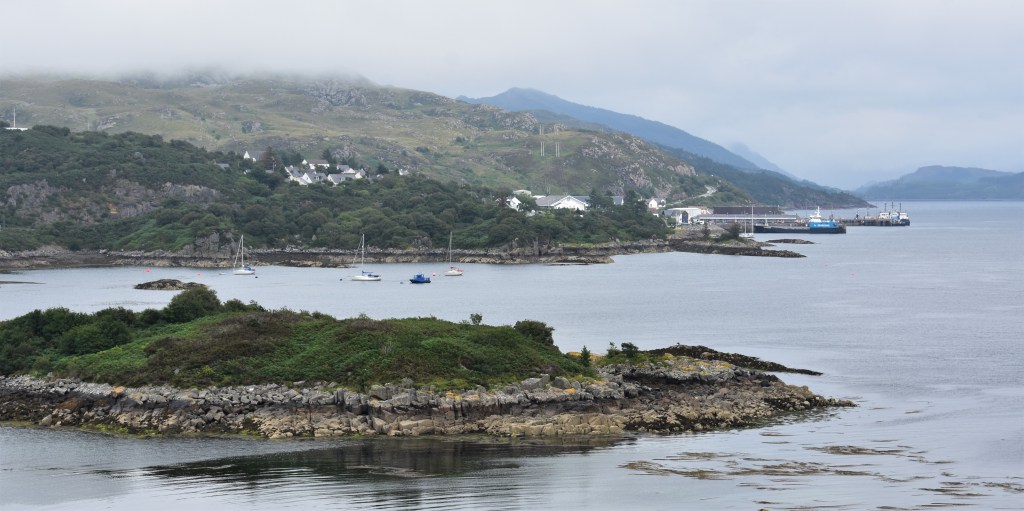
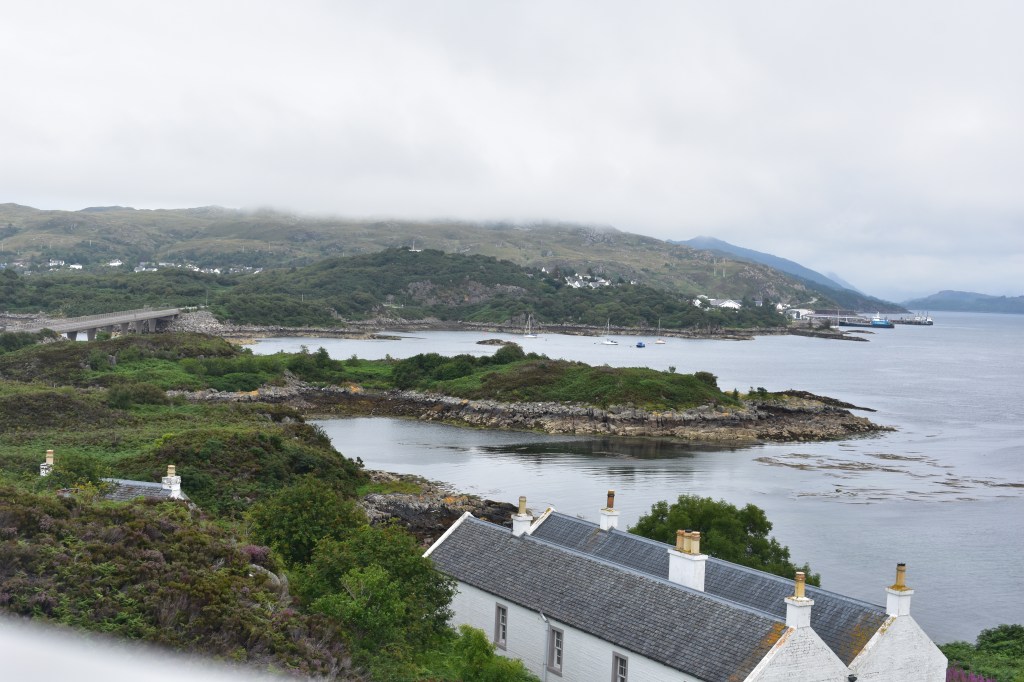
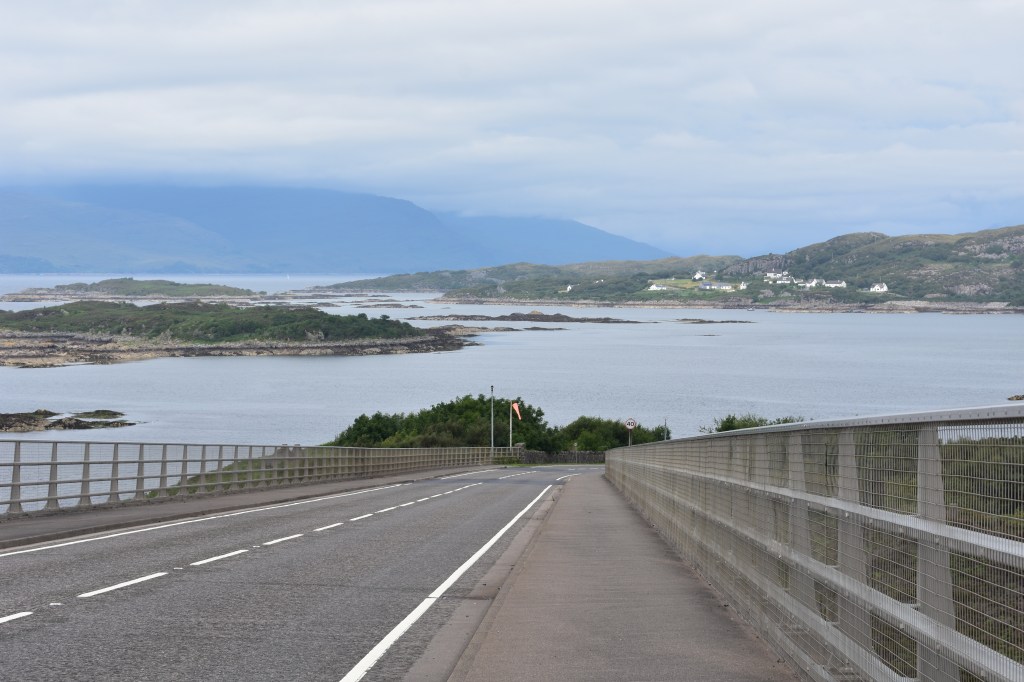
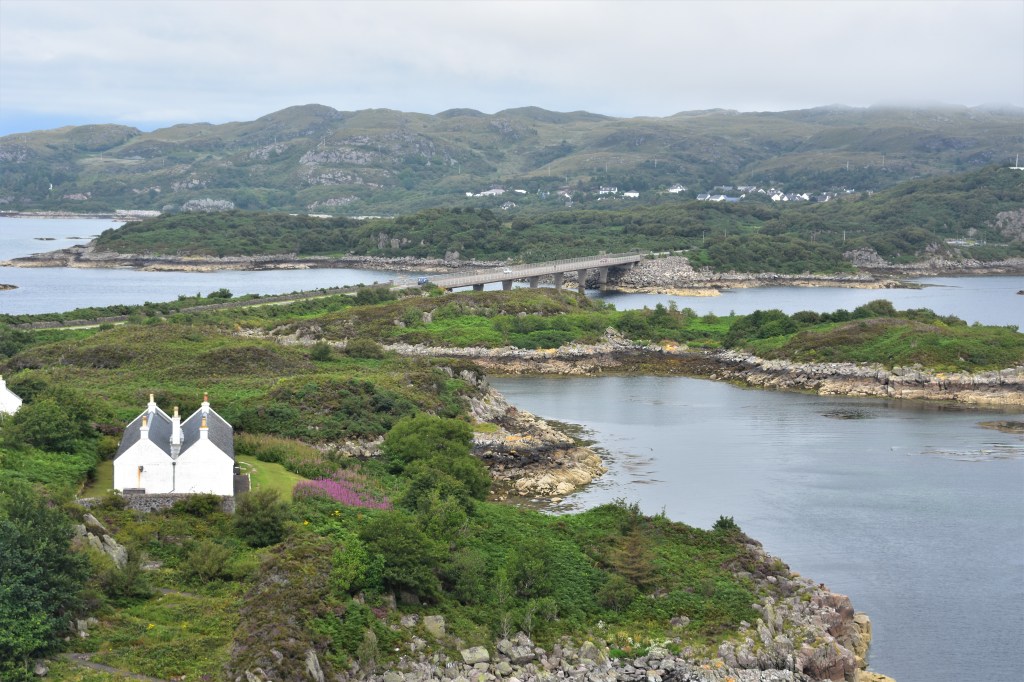
Built in 1995 the Skye road bridge has transformed the economy of Skye with day-trippers now visiting the island from as far away is Edinburgh. Prior to the bridge being built visitors would have to catch the ferry which made the short sea crossing from the mainland port at the Kyle of Lochalsh. Though only a few hundred metres in length, the bridge is a feat of engineering skill and well worth taking the time to explore.
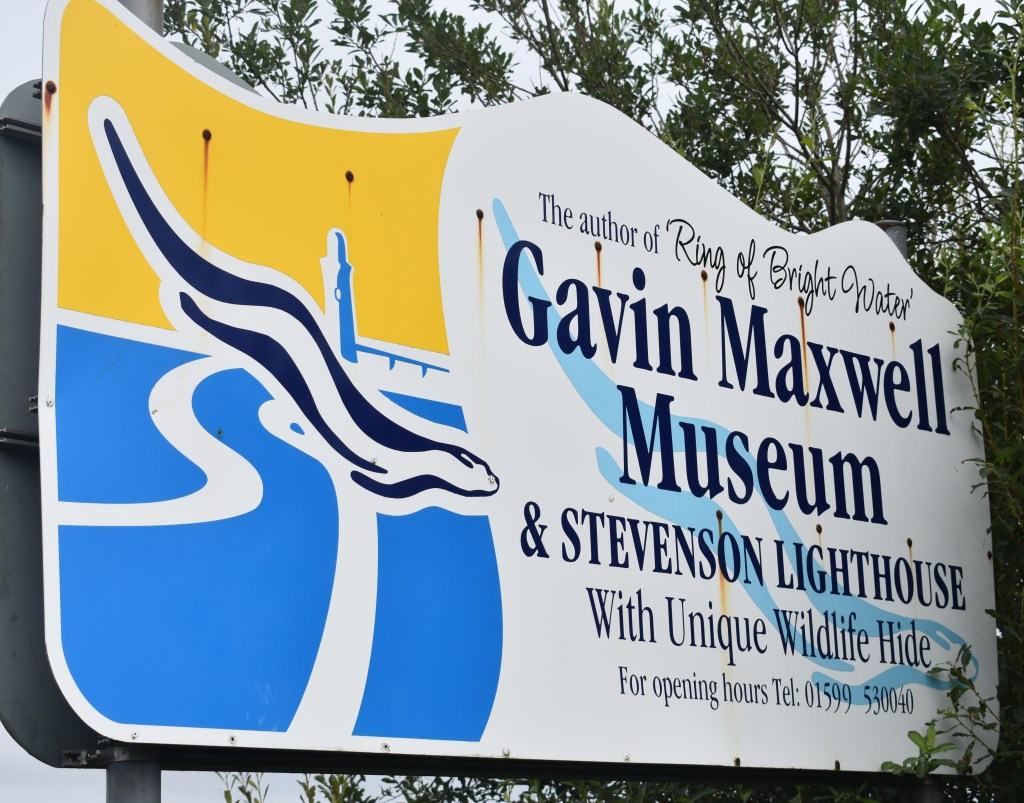
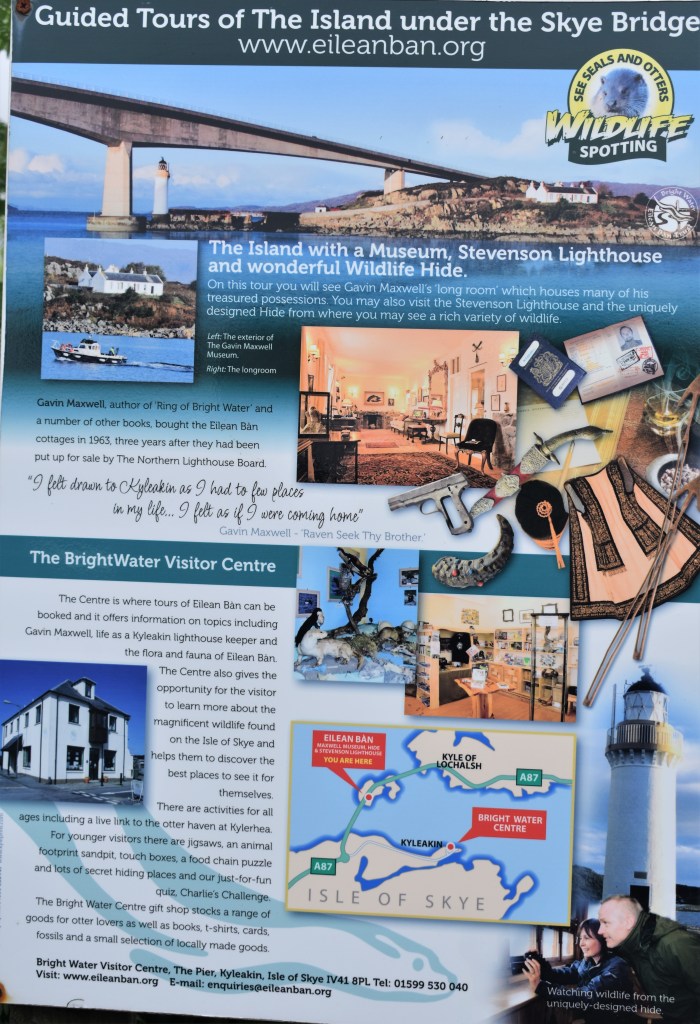
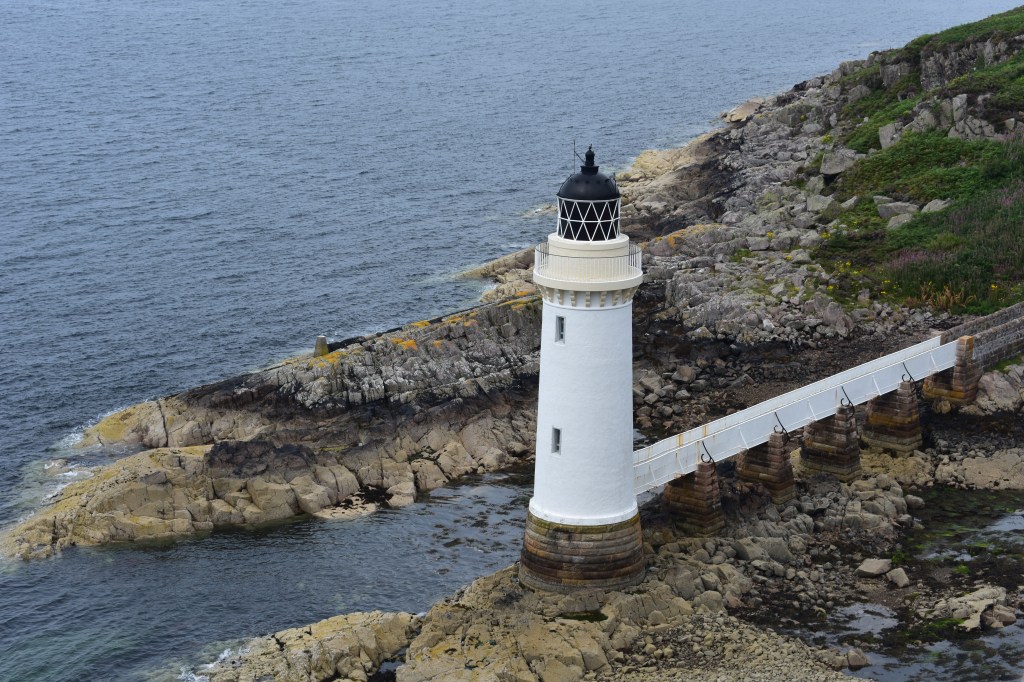
The bridge spans the small island of Eilean Ban which is home to a lighthouse and a nature reserve run by Ring of Bright Water author, Gavin Maxwell. It is worth parking your car and walking across the bridge to see the lighthouse and the spectacular views the bridge provides. Tours are available around Eilean Ban’s nature reserve on request.
Eilean Donan Castle
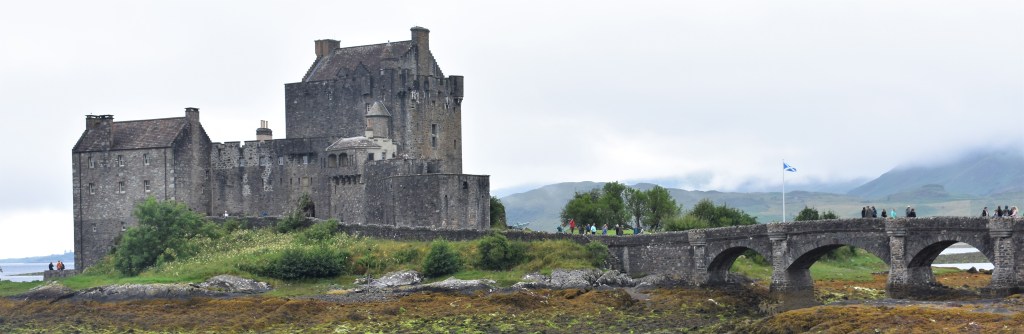
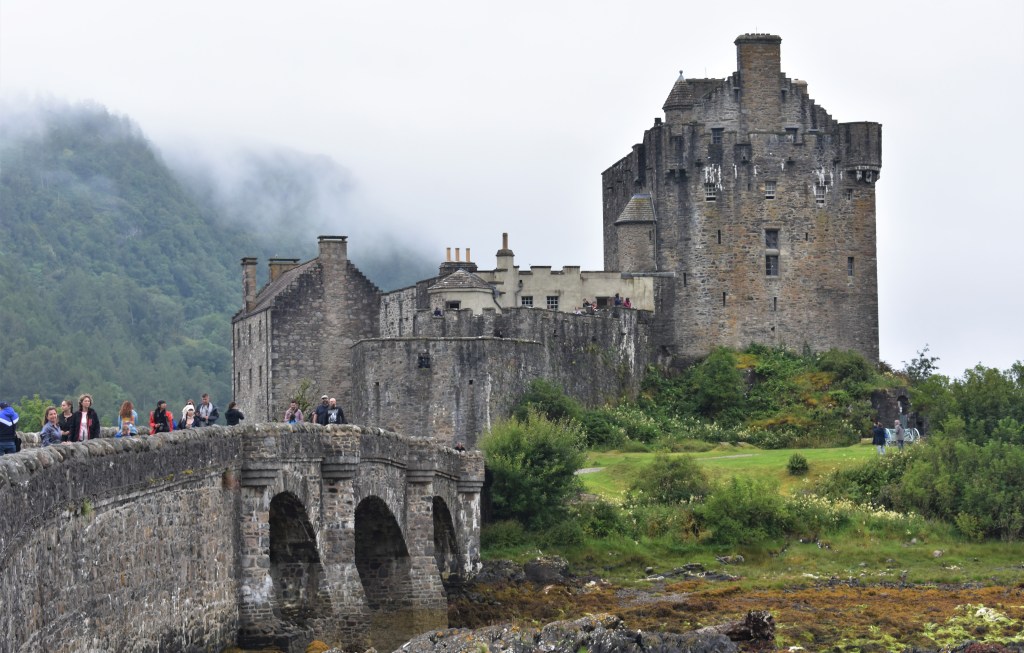
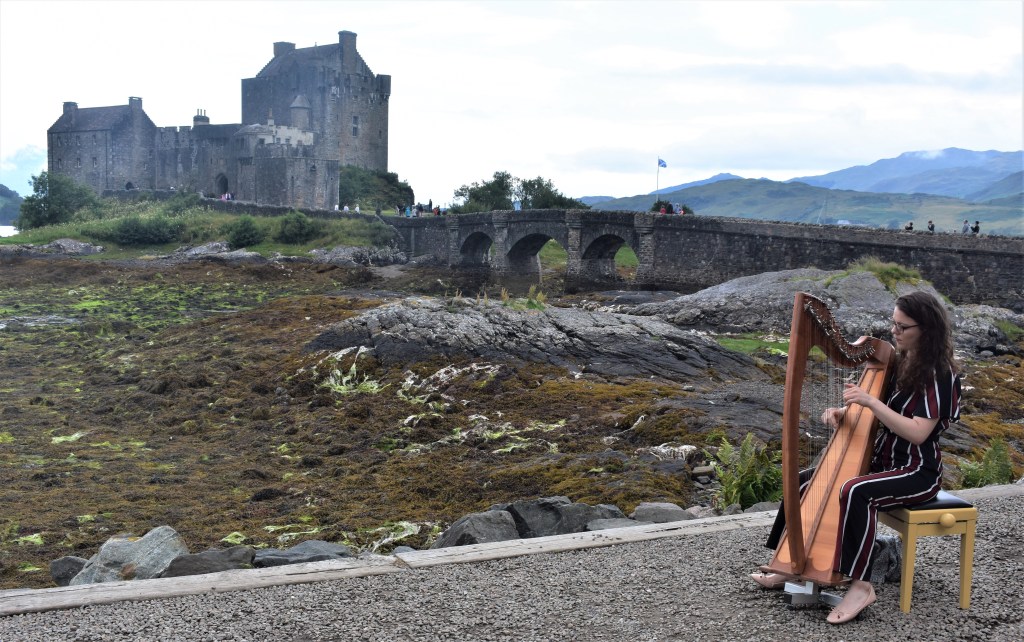
About 2 miles along the road from the bridge is one of Scotland’s most impressive castles, Eileen Donan castle. The castle has a long history and it played a pivotal role in the 1719 rebellion when a garrison of Spanish troops defended the castle against British soldiers. If you are travelling by car to Skye then take the time to visit it. In recent years it has been used as a film location for lots of films including Highlander (1986), Loch Ness (1996) and James Bond – The World is Not Enough (1999)
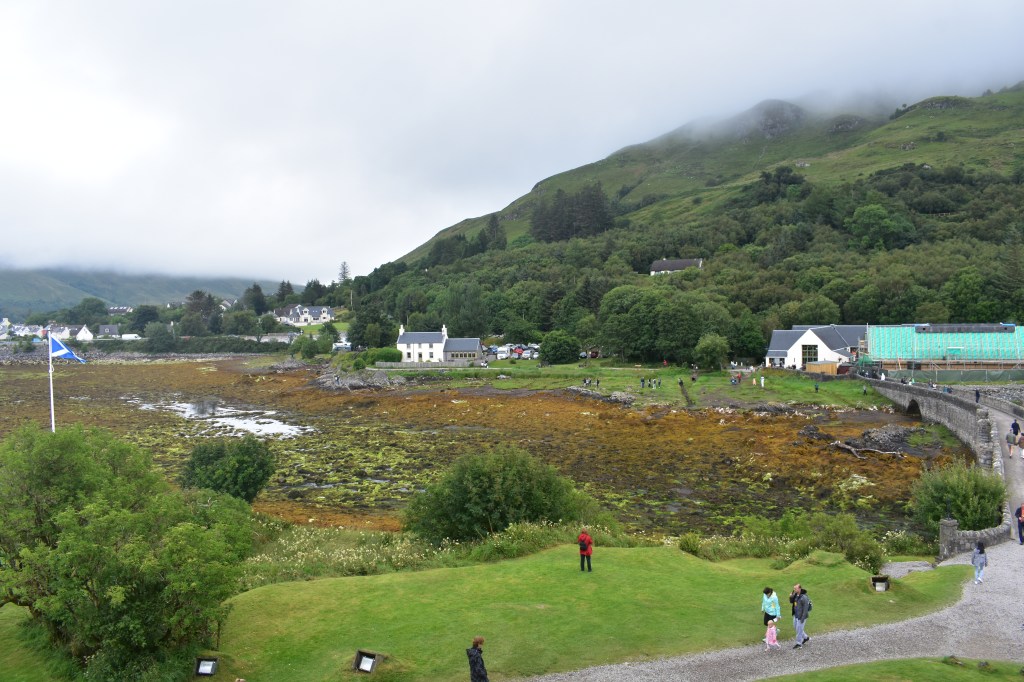
The views looking out from the castle are pretty special too.
Isle of Skye Running
One of the best ways to see Skye is to take part in the island’s annual half-marathon race which is held in early June. Details can be found here: Skye half marathon
Though the island does not have a parkrun, it has an established athletics club and members meet in Portree on Wednesday evenings for a club run. Perhaps you could join them when you visit the island? Details of Skye running can be found on the club website: Skye and Lochalsh RC
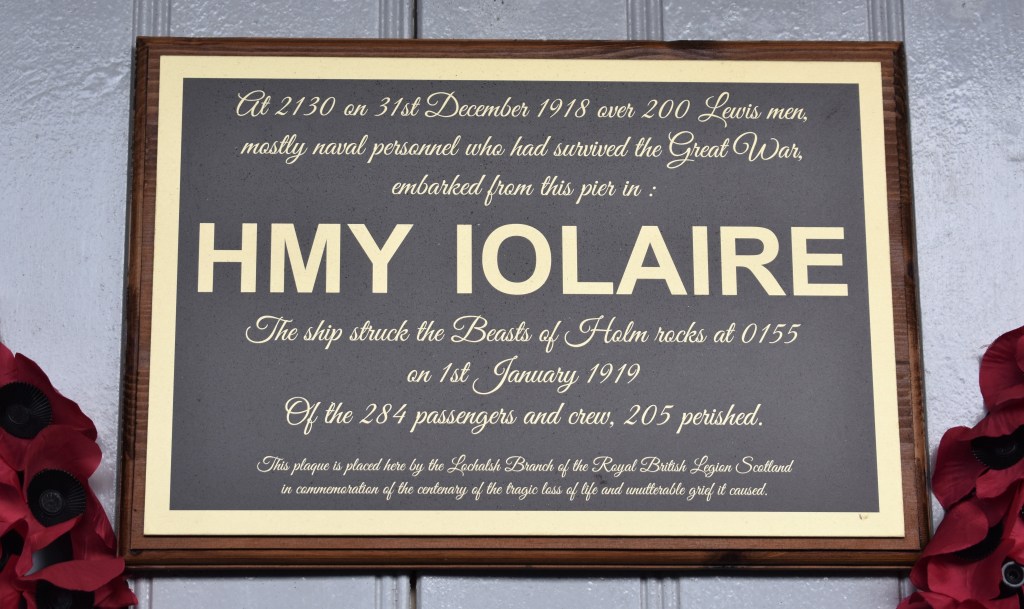
We left our hire car at the Kyle of Lochalsh railway station as we said goodbye to Skye. There was a plaque here to commemorate the 1919 Iolaire disaster (see our blog on the Isle of lewis for more details). We then took another scenic train journey, this time to Inverness where our trip ended with a flight home. It was a fantastic trip all through the Outer Hebrides and Skye. It left us wanting to see and explore more Scottish islands. Keep a look-out on our blog for where our adventures will take us next.
We would love to hear your thoughts in the comments section below. Please follow and share with anyone you think may be interested. See you again soon!
The Isle of Lewis is the northern part of the Hebridean island commonly referred to as Lewis and Harris. The reasons for the split between the Isles of Lewis and the Isles of Harris are now lost in history but may be due to rivalry within the dominant local clan, the Macleod clan. Even as recent as 1975, Lewis was a separate administrative region, a part of the mainland county of Ross and Cromarty. Harris was an administrative region of Inverness Shire. Now, both Harris and Lewis are a part of the Western Isles Council.
We took the short ferry crossing from Berneray and arrived at Tarbert on the Isle of Harris. Calmac Ferries have a great value passenger ticket called the Hopscotch 23. We used this ticket for all our ferry journeys between the islands and we would recommend it.
Harris and Lewis are connected by a short isthmus just north of Tarbert. The official boundary between the two isles is a few miles north of Tarbert and crosses the rugged terrain of Harris. There is a scenic walk that follows the boundary. We never did the walk but details can be found at this website for anyone who wishes to enjoy the challenge of doing it. https://marccalhoun.blogspot.com/2018/03/lewisharris-border.html
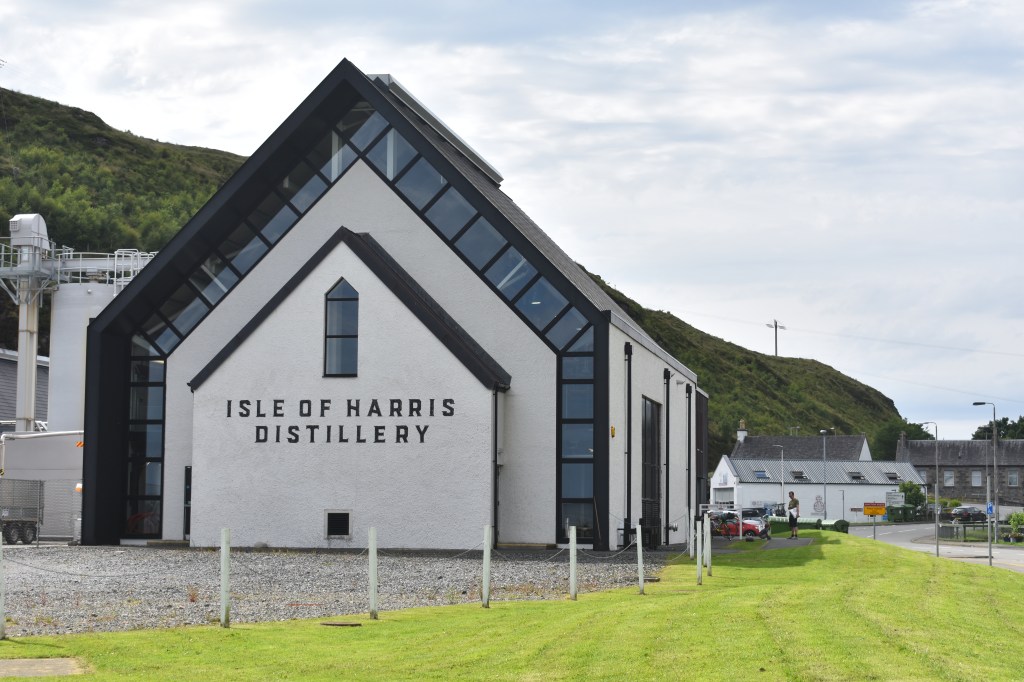
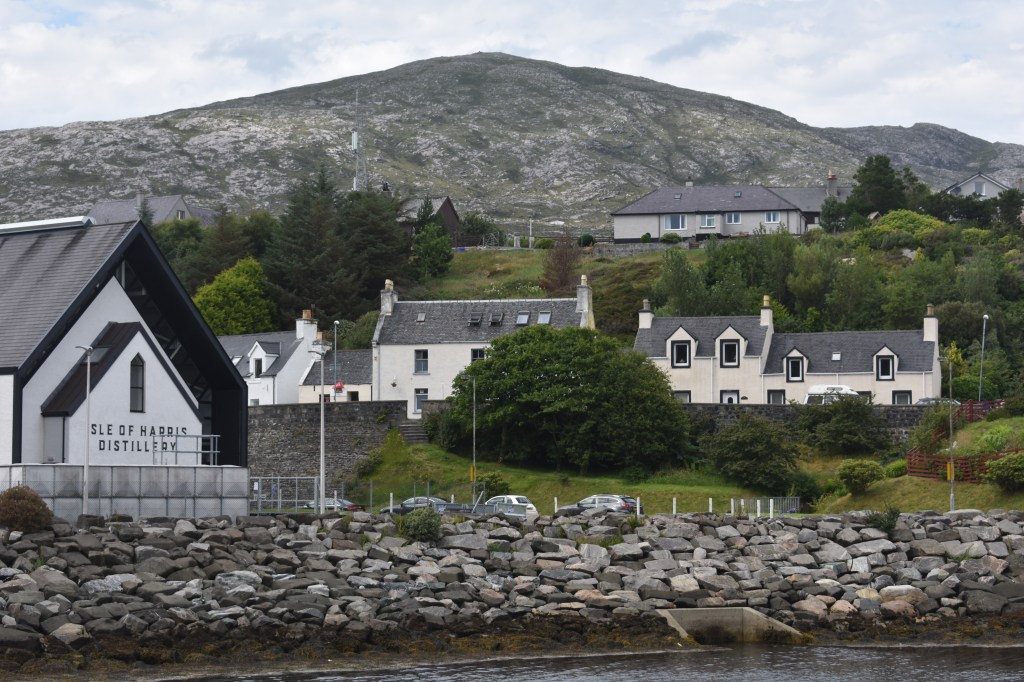
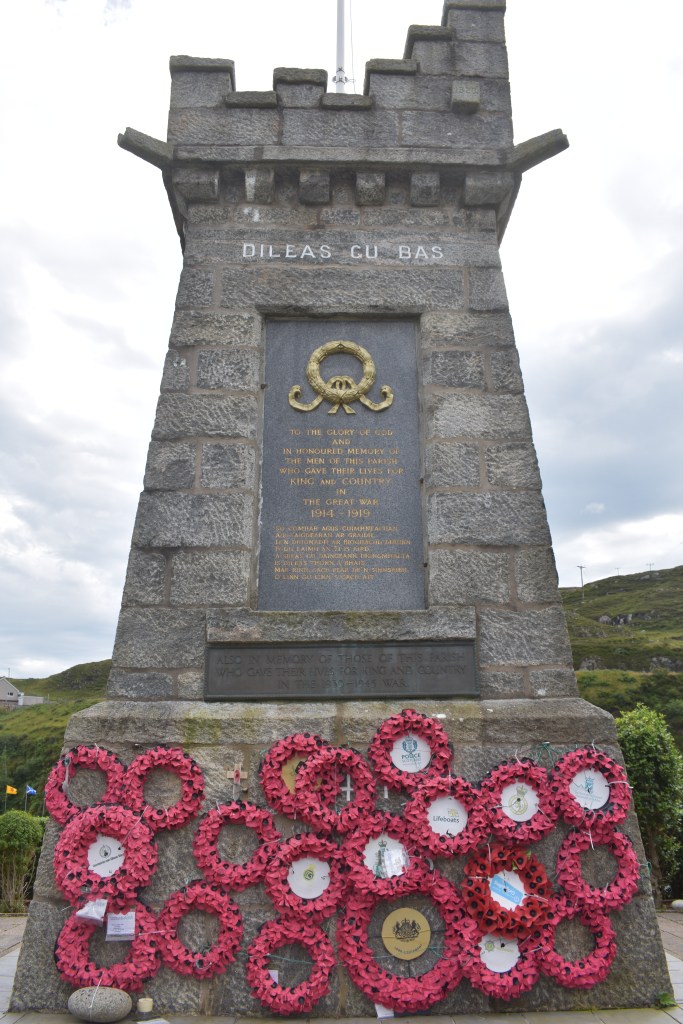
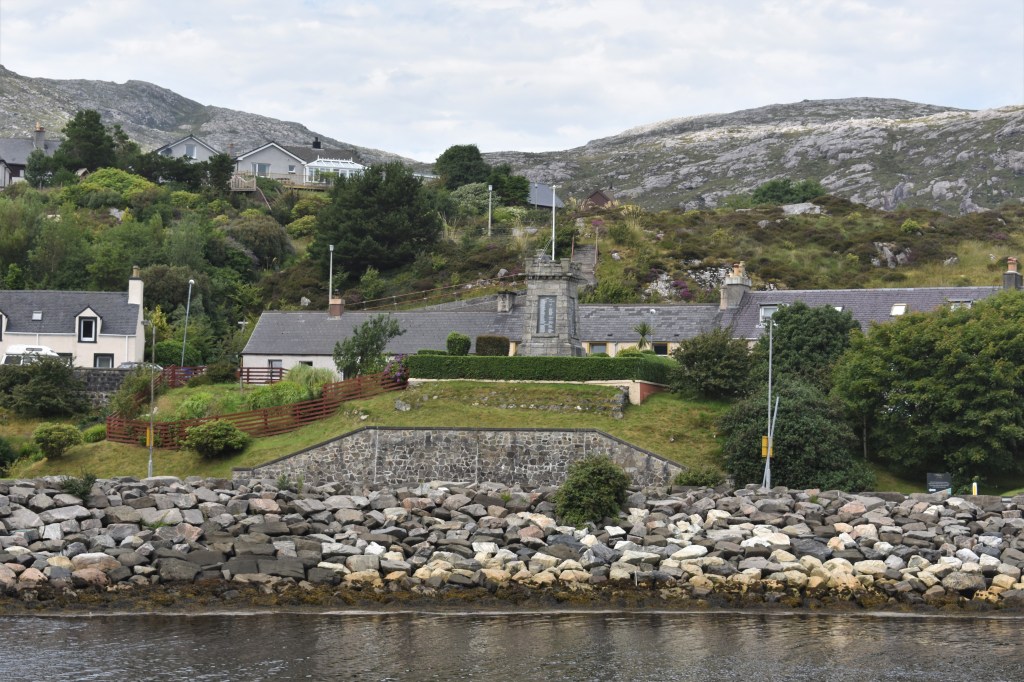
Though only a small town of less than a thousand people, Tarbert boasts its own Harris Distillery, set in a modern building. The distillery has a wide selection of both whiskeys and gins to be sampled. It is definitely worth a visit. Tarbert also boast an impressive War Memorial which has pride of place in the centre of the town. Again, worth a visit.
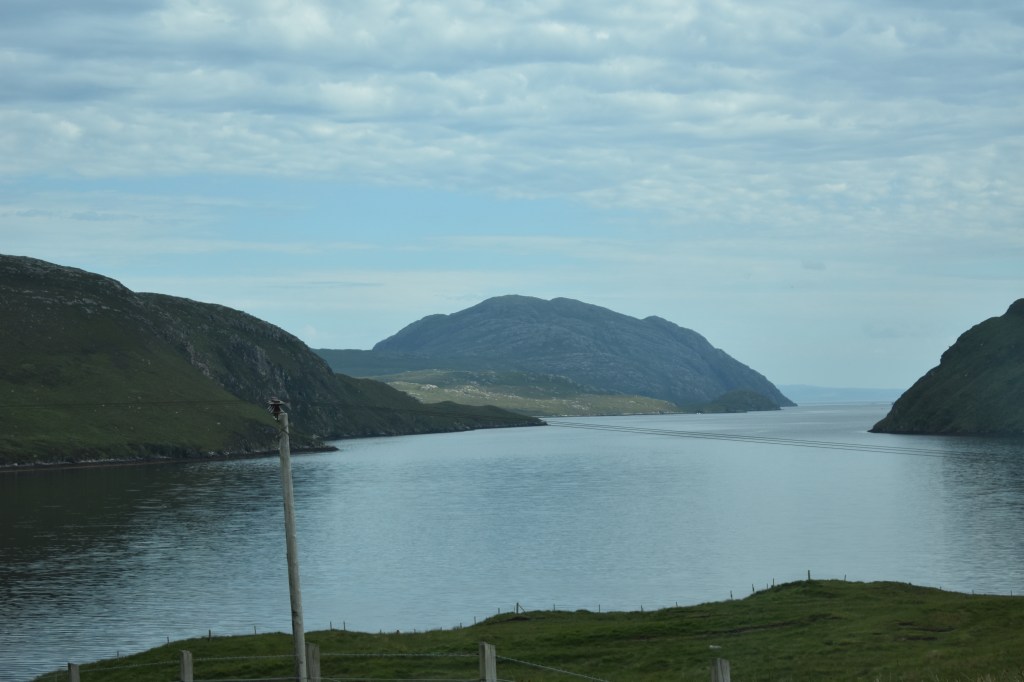
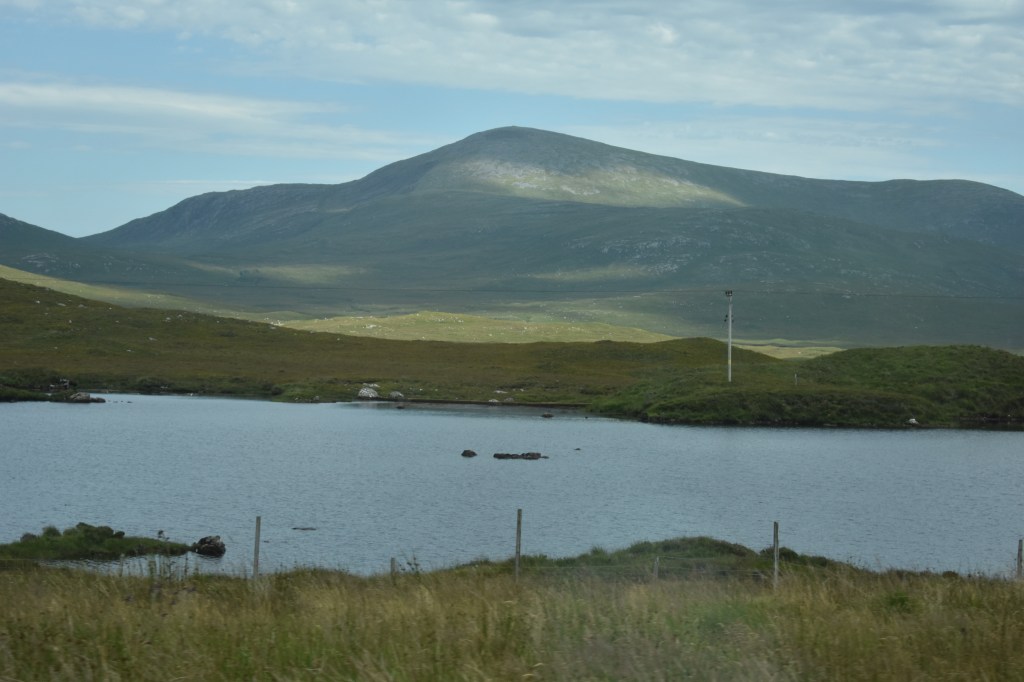
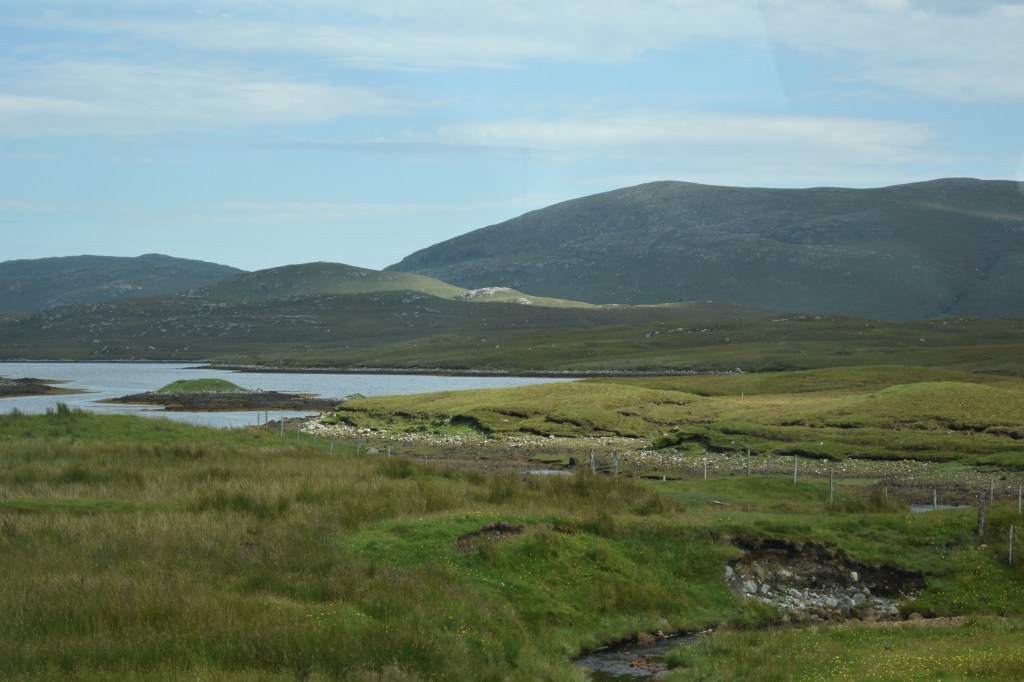
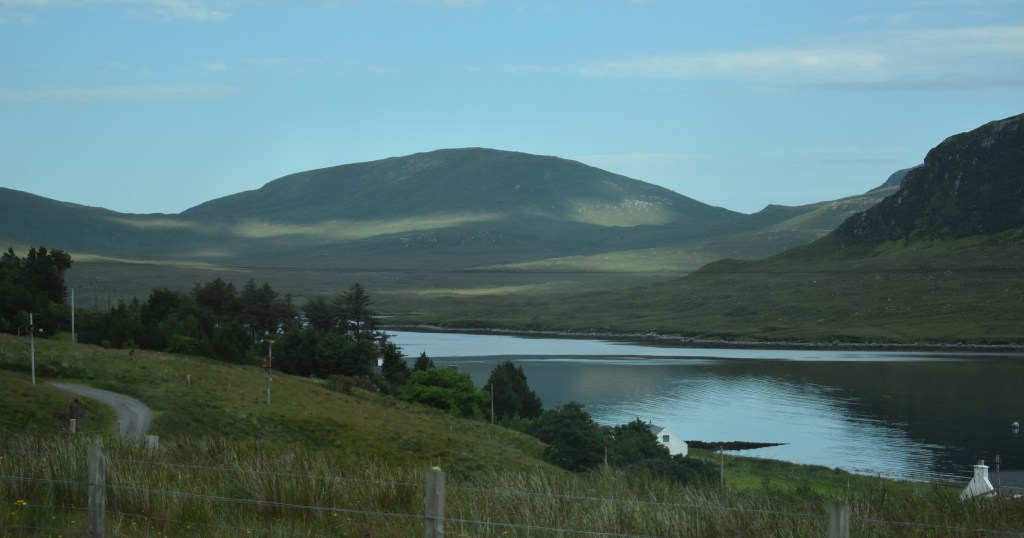
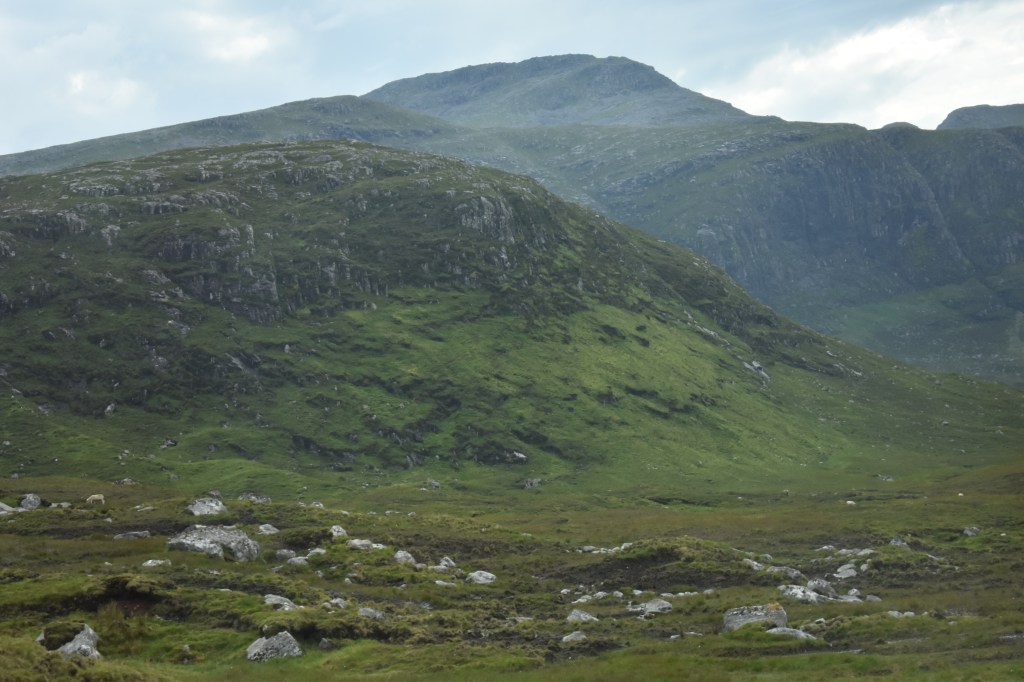
Our time in Tarbert was too short. When our bus arrived we set off on the next part of our journey, across the island to arrive in Stornoway, on the north east side of Lewis. The scenery was quite brilliant and we took scores of pictures through the bus window as we travelled through Harris on our way up to Lewis. Some of the beaches we passed were just stunning. When we come again, we will have to spend more time in Harris.
Stornoway
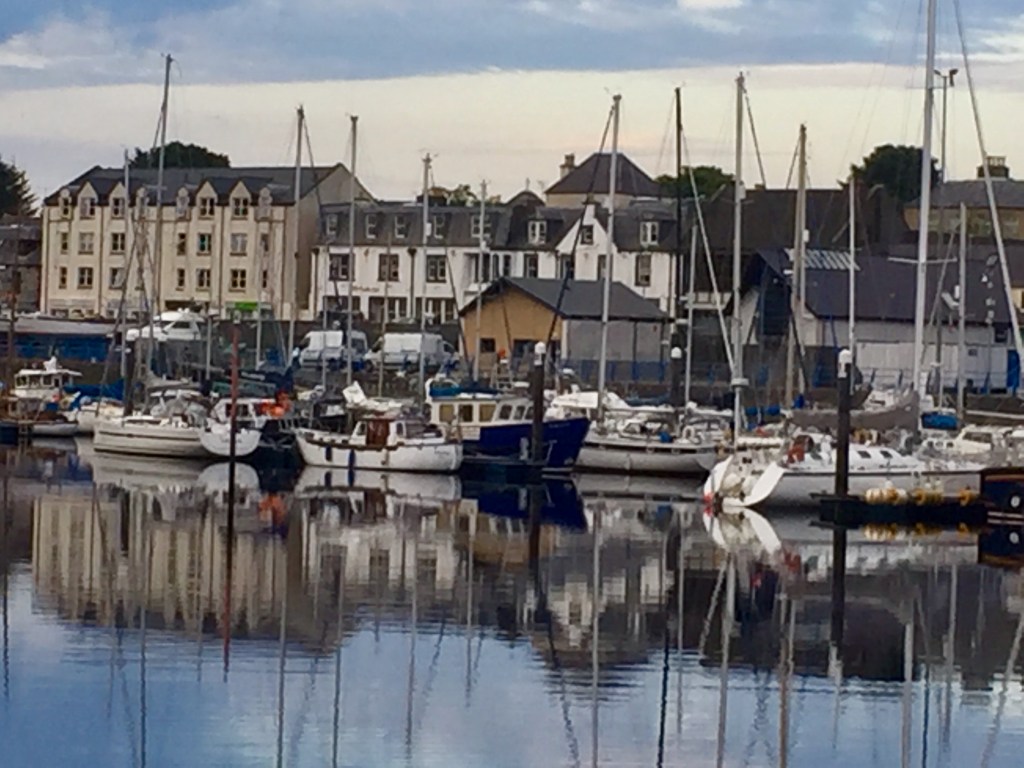
Though Stornoway has a population of less than 10,000, it has a big town feel with plenty of shops, restaurants and pubs. The town is successful and has ambitious plans for the future. Tourists now come to visit the town from all over Britain and beyond. When a cruise ship pulls into the harbour, a thousand or more people can disembark crowding the shops in their quest for souvenirs. Tasty food treats can be found in Stornoway. You can buy Hebridean mustard, smoked fish from the Stornoway Smokehouse or try one of the many flavoured teas from the Hebridean tea store in the town centre. Non food gifts and treats can also be found. Looking through the shop windows may tempt you to buy some beautiful local pottery, paintings, wooden toys or Harris tweed. At weekends, visitors fly in from Glasgow and Edinburgh to enjoy a stay on yachts which are moored in the harbour. A new marina is being constructed to cater for this growing luxury market.
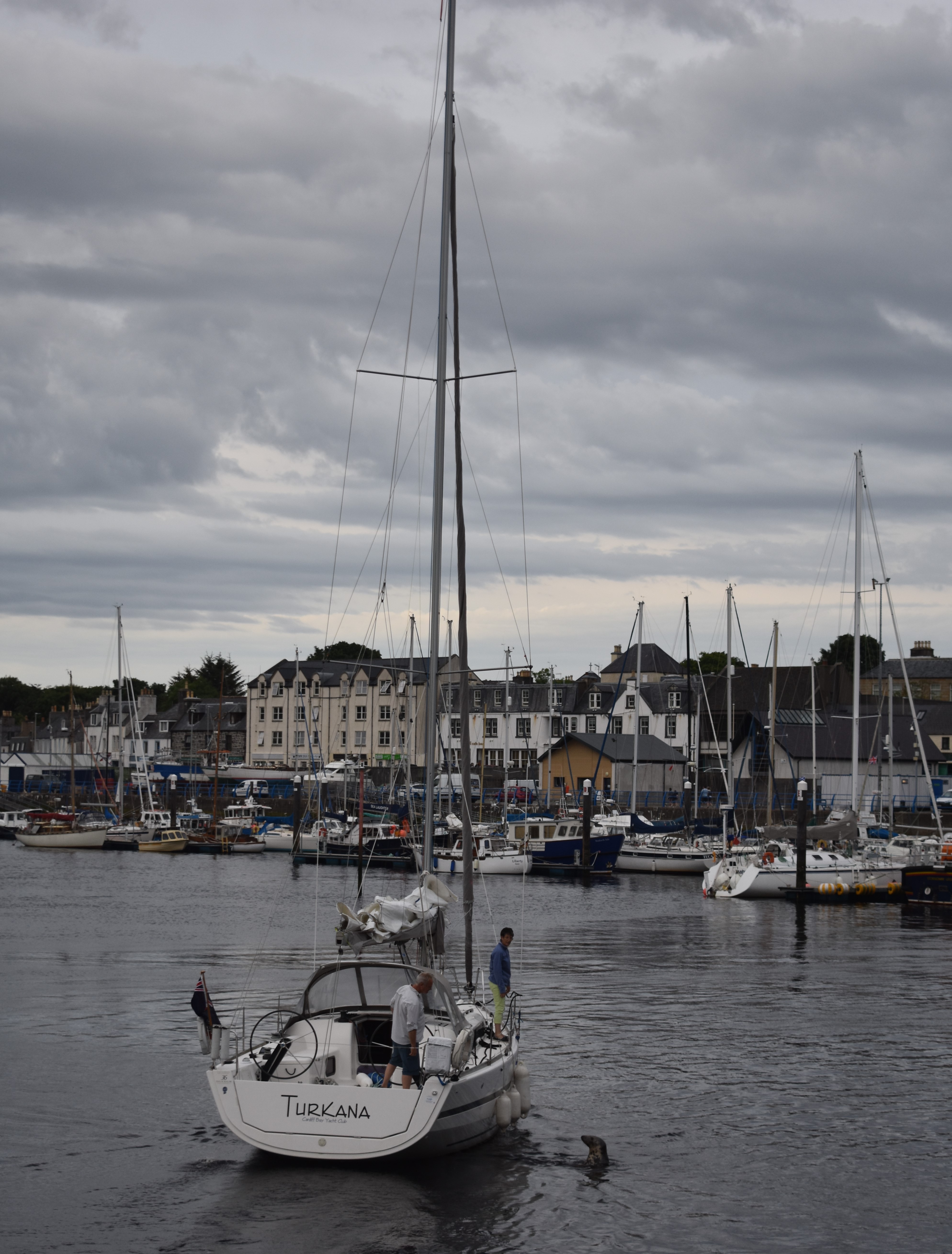
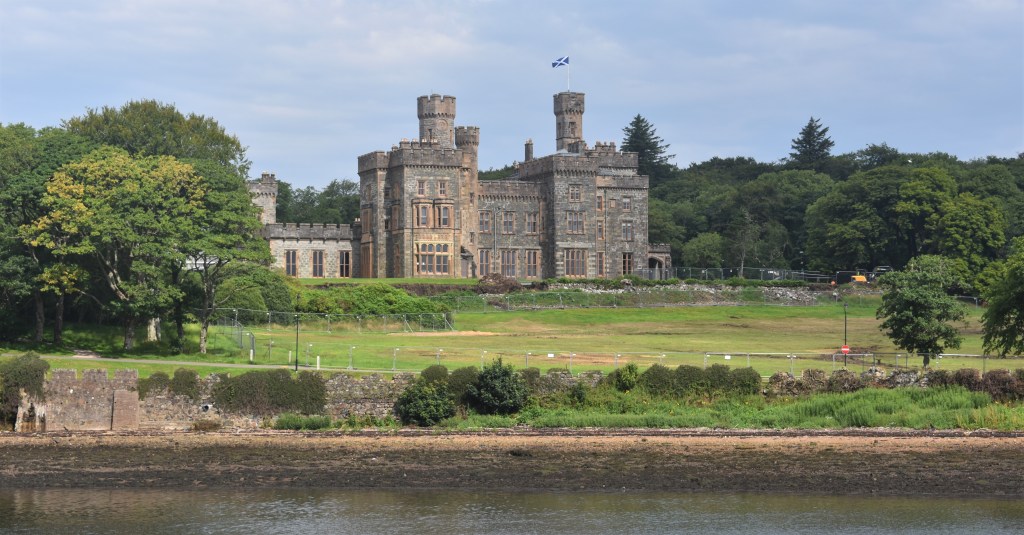
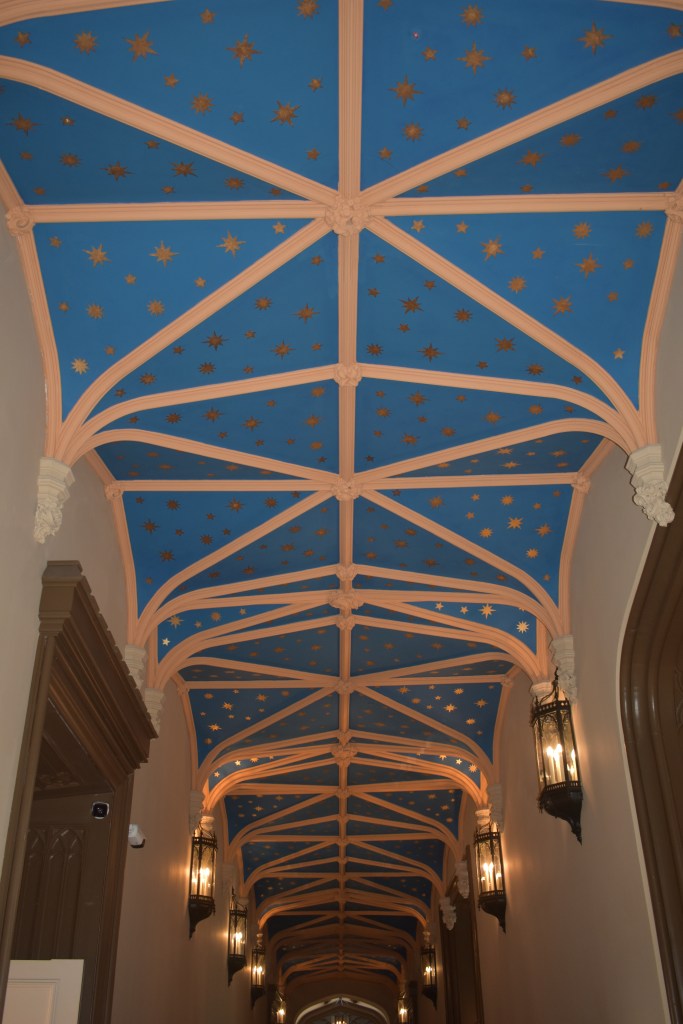
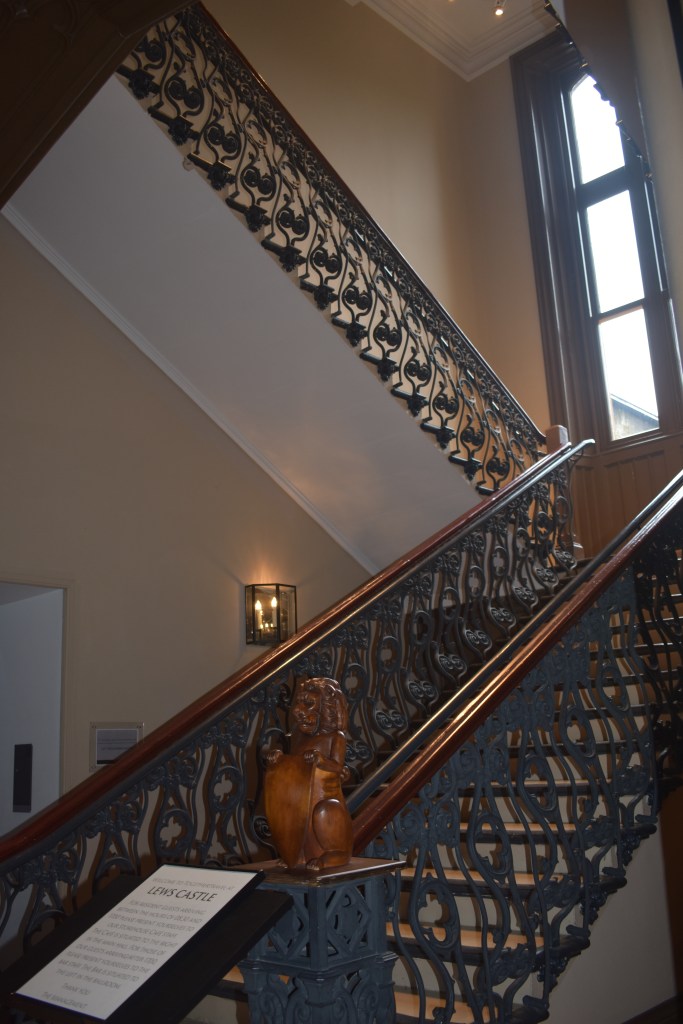
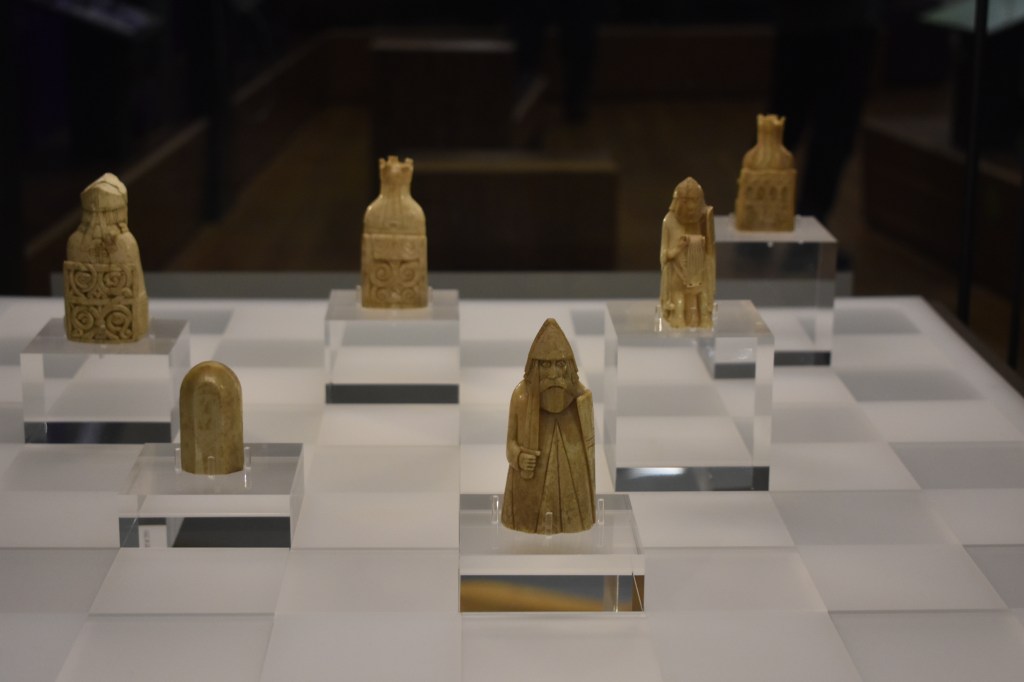
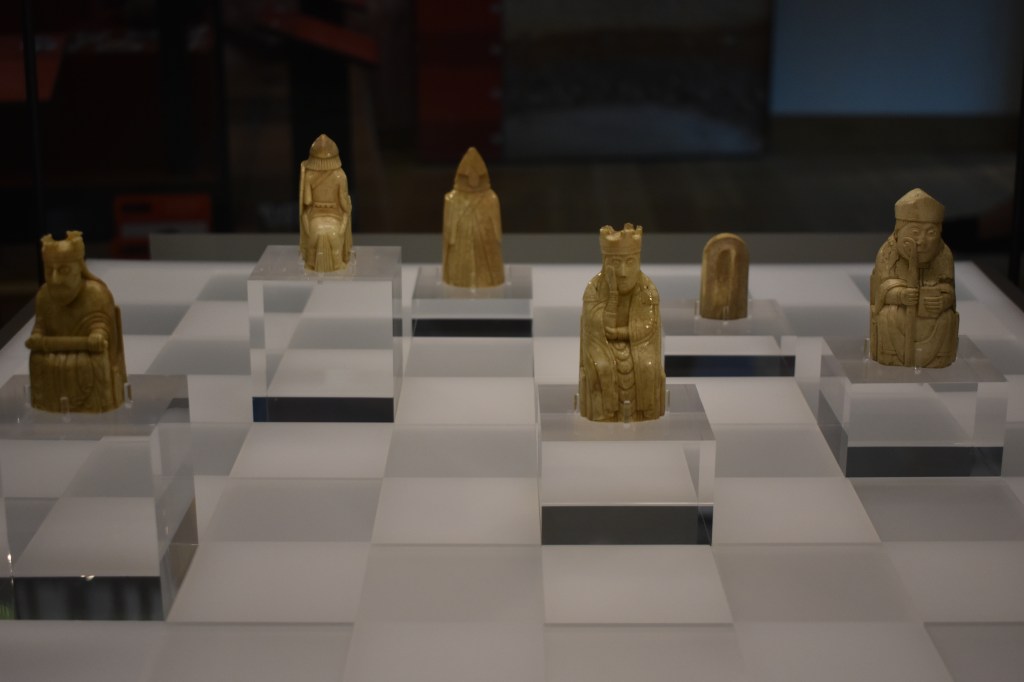
Yet despite this bustle, Stornoway is still a remarkably relaxed town which holds onto its traditions fiercely. In accordance with its strict Protestant outlook, Sunday in Stornoway remains the Sabbath day and many shops are closed as a mark of respect. Buses do not run on Sunday. Sunday in Stornoway is a day of quiet relaxation. It is a day to walk down to the harbour and watch the resident seals as they play in the water. It is the day to stroll through the manicured gardens of the splendid Lews castle. The castle is home to 6 of the famous Lewis Chessmen. The castle is worth a visit just to see these exquisitely crafted works of art.
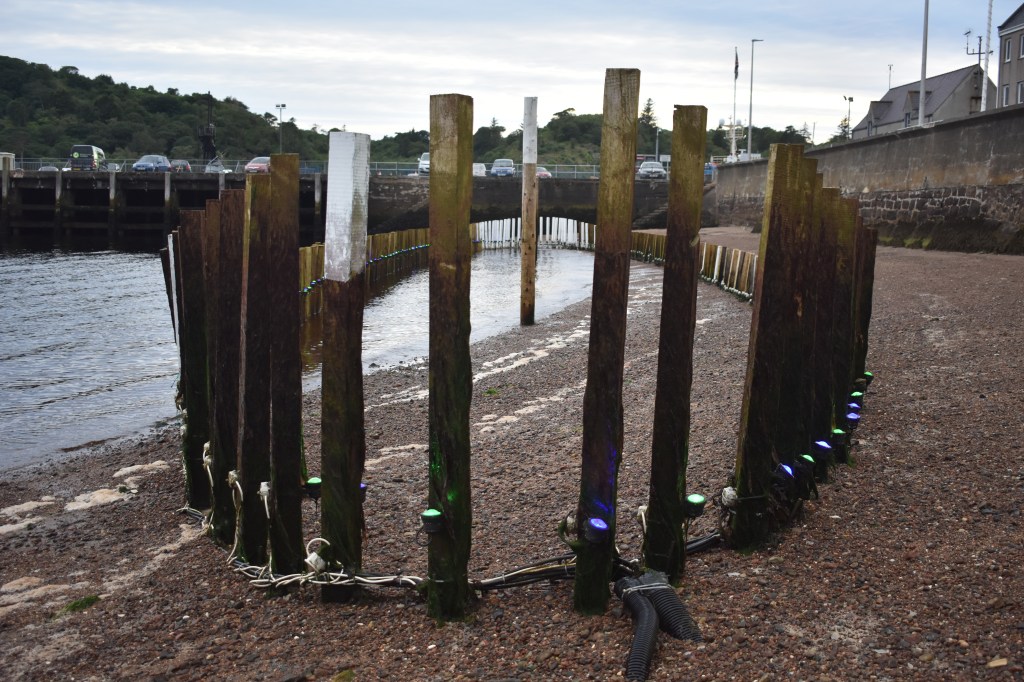
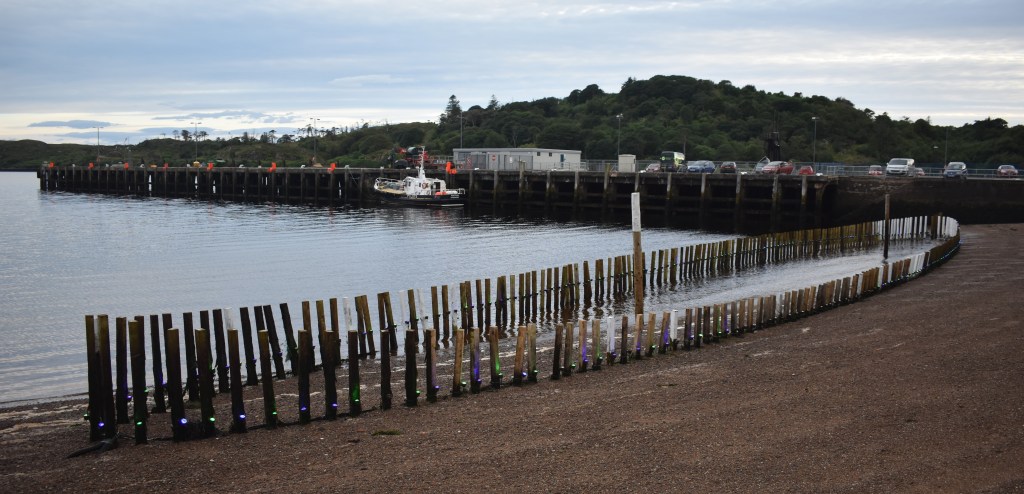
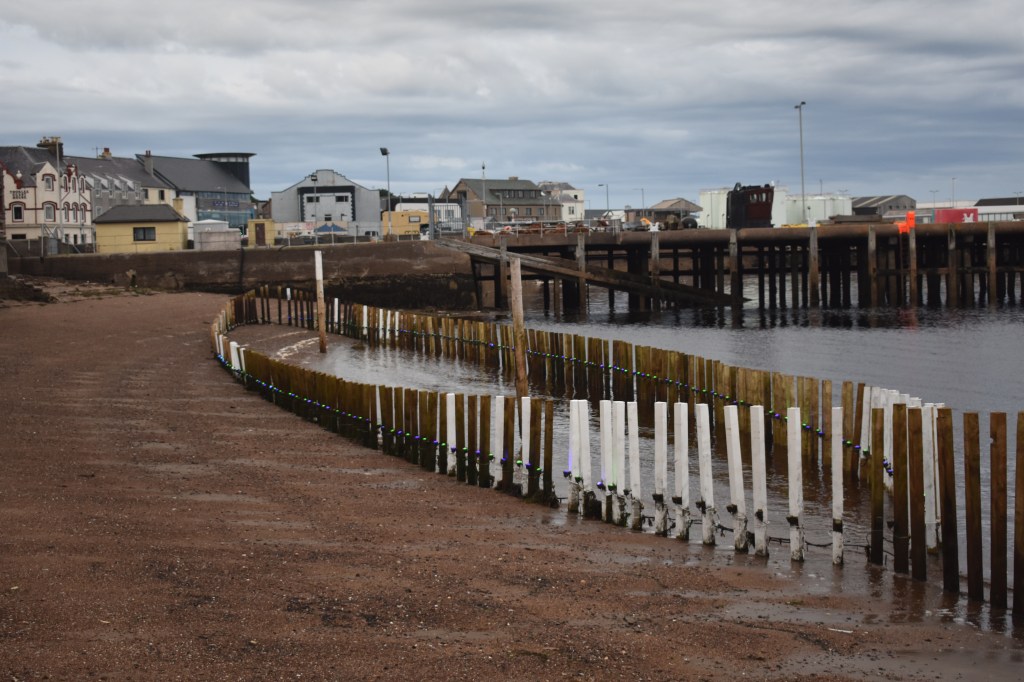
Sunday is the day to contemplate the Iolaire memorial which now rests in the harbour shore. On 1 January 1919, the SS Iolaire hit rocks just a few hundred metres from the safety of Stornoway harbour. Two hundred and five servicemen were drowned on that cruel New Year day. They had survived the Great War only to have life taken from them when so close to home. The tragedy of that day is still remembered in Stornoway and a wooden outline of the ship has been constructed in the harbour as the new memorial. Every wooden post represents a life lost. At night the outline is lit-up. It is a poignant and dignified tribute to the servicemen that died that day so close to home. A stay in Stornoway is not complete without visiting it.
Iolaire Memorial
About a mile outside the town on the headland is a more traditional stone memorial to the SS Iolaire. Looking over the sea and the rocks where the disaster struck, this memorial is also worth a visit.
Herring Fishing and Stornoway
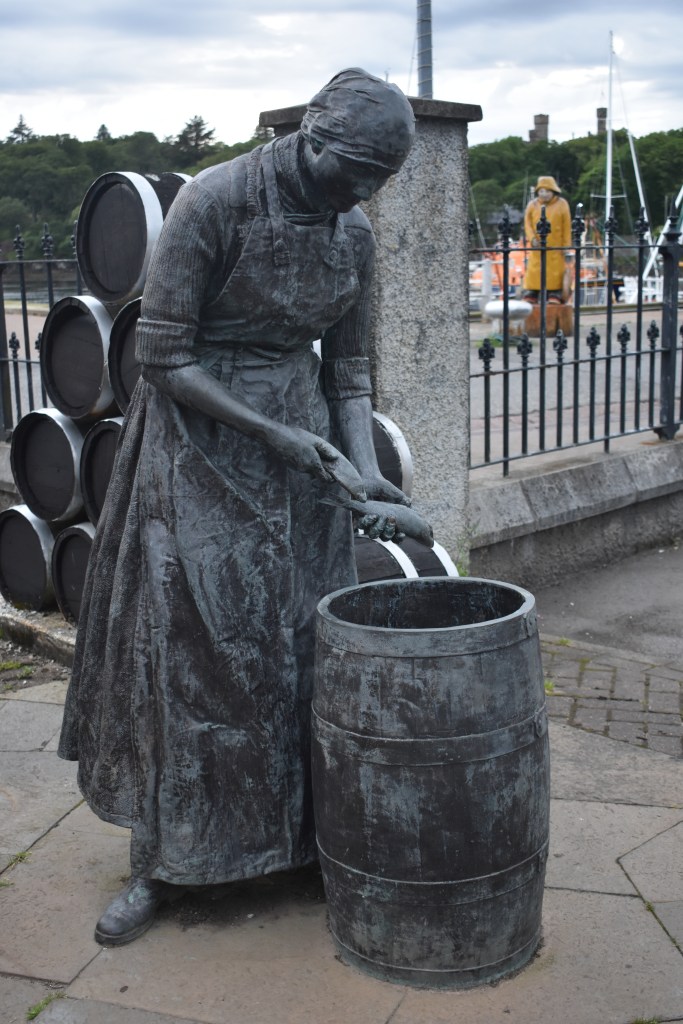
Herring fishing was the main industry of Stornoway up to the First World War. Fishing boats still operate out of the harbour but the modern industry is a shadow of its past when it was claimed you could run from one side of the harbour to the other going from fishing boat to fishing boat. Sadly, the Herring fishing industry collapsed in the post war depression. Throughout the town you can see statues which commemorate the Herring Girls who played a vital part in the industry, gutting and boxing the fish when they were landed. Local historian Donald Murray has written an excellent account of the Herring industry in his book: Herring Tales. If you want to understand the character of Stornoway you must understand the important role that Herring fishing played in developing that character. I’d recommend Murray’s book as a good read.
Lewis’s Bus Service, the Callanish Stones and other Attractions
Stornoway is a great base to discover the many attractions on the Isle of Lewis. Sunday apart, there are good, regular bus services to the major tourist destinations on the island. Travelling by bus is also a relaxed way to see the island, and a great way to meet local people. The bus service doubles up as a local courier service delivering and collecting parcels from outlying settlements. Travelling by bus makes you feel a part of the island community and we enjoyed it so much that we’d recommend leaving the car at home and going by bus.
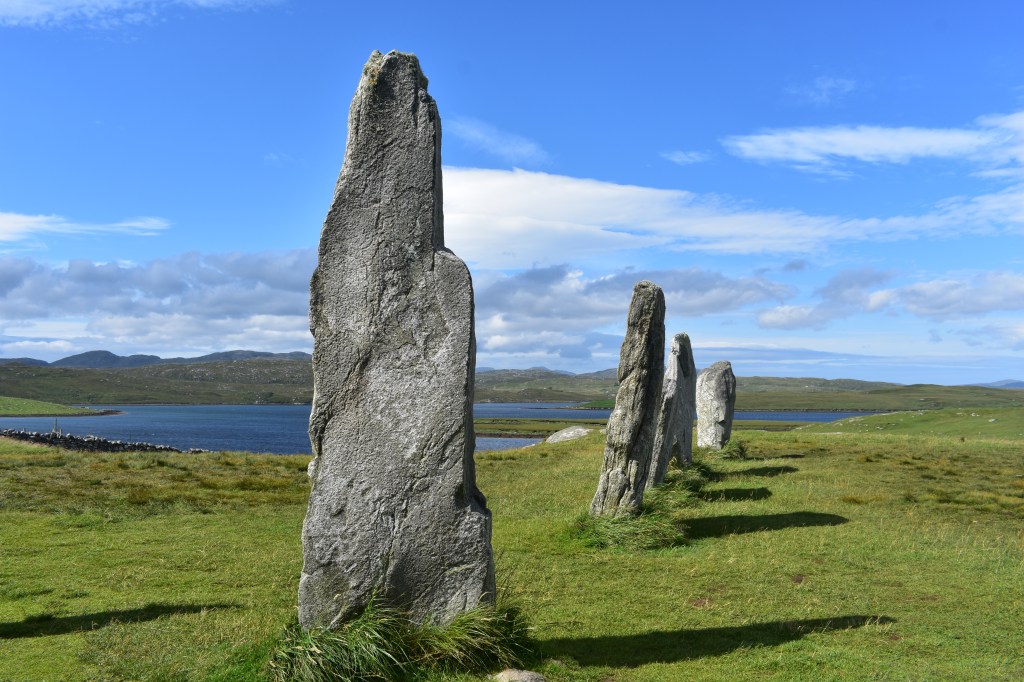
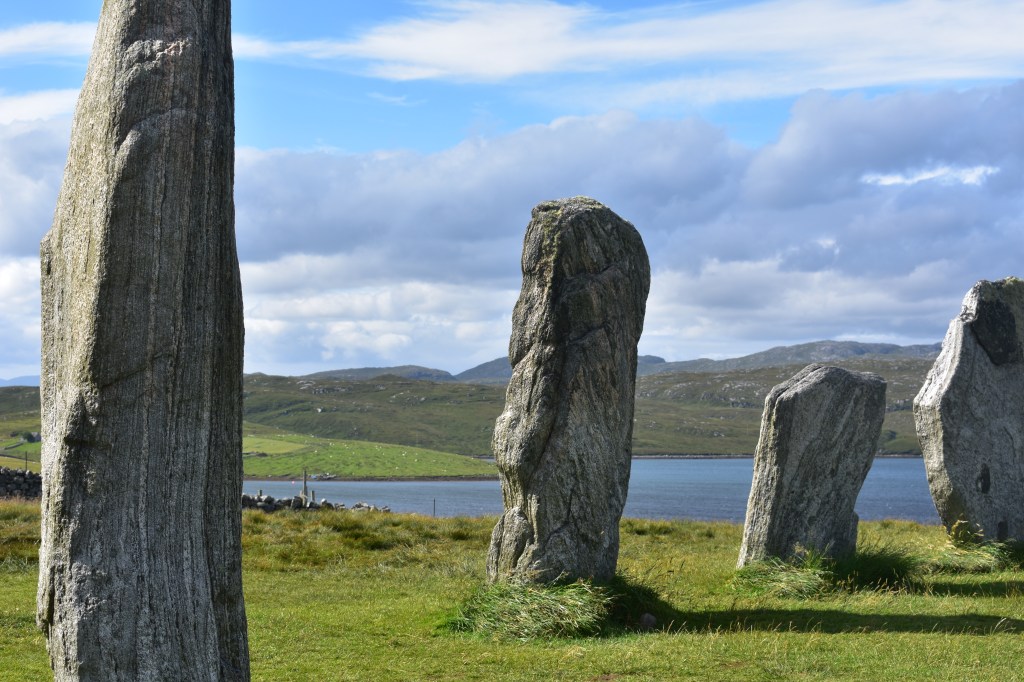
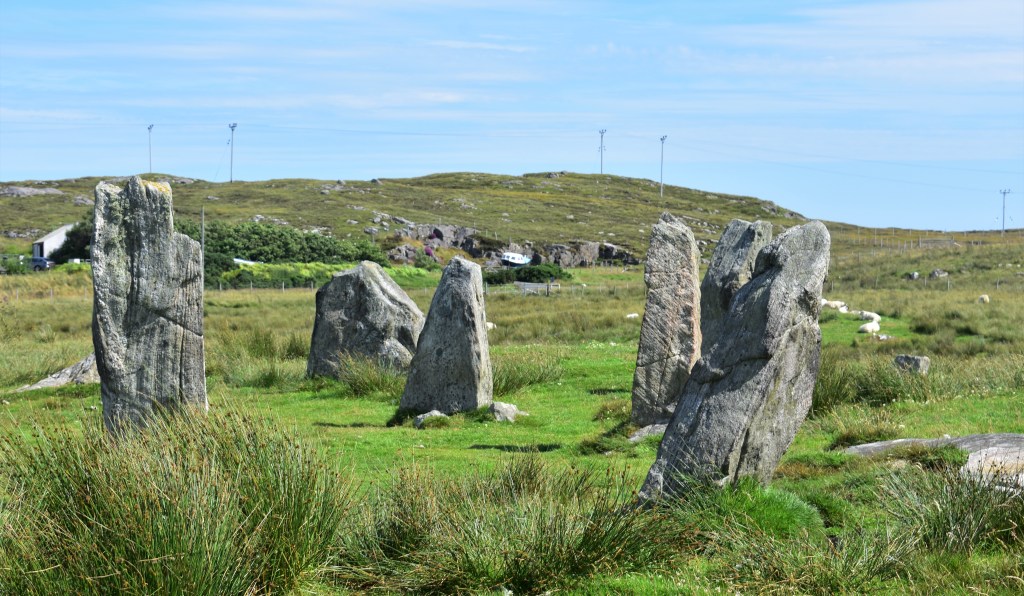
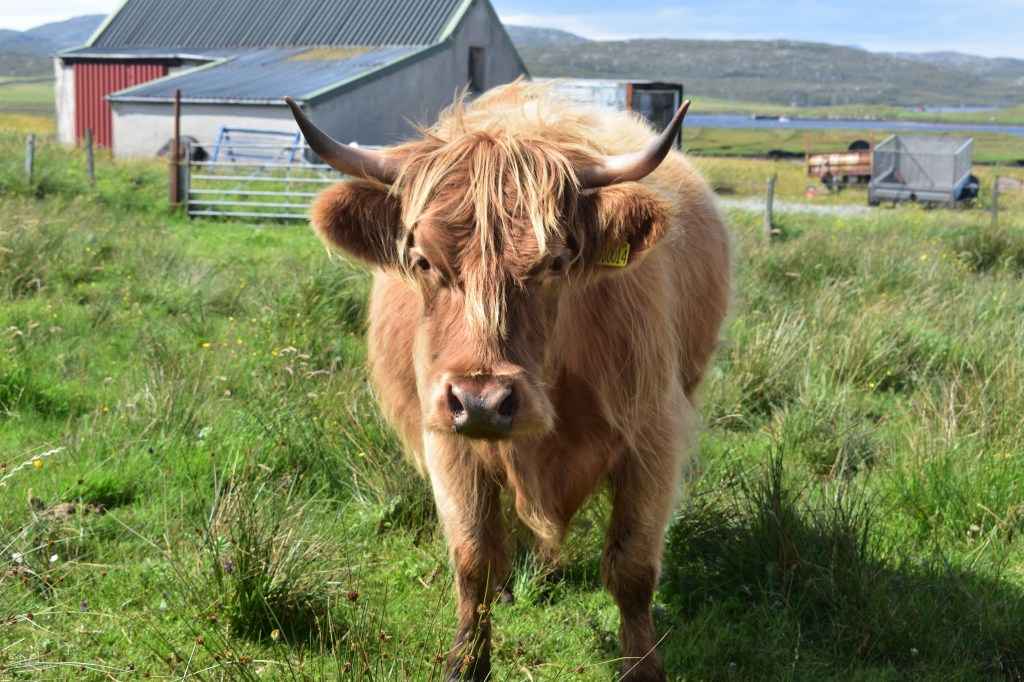
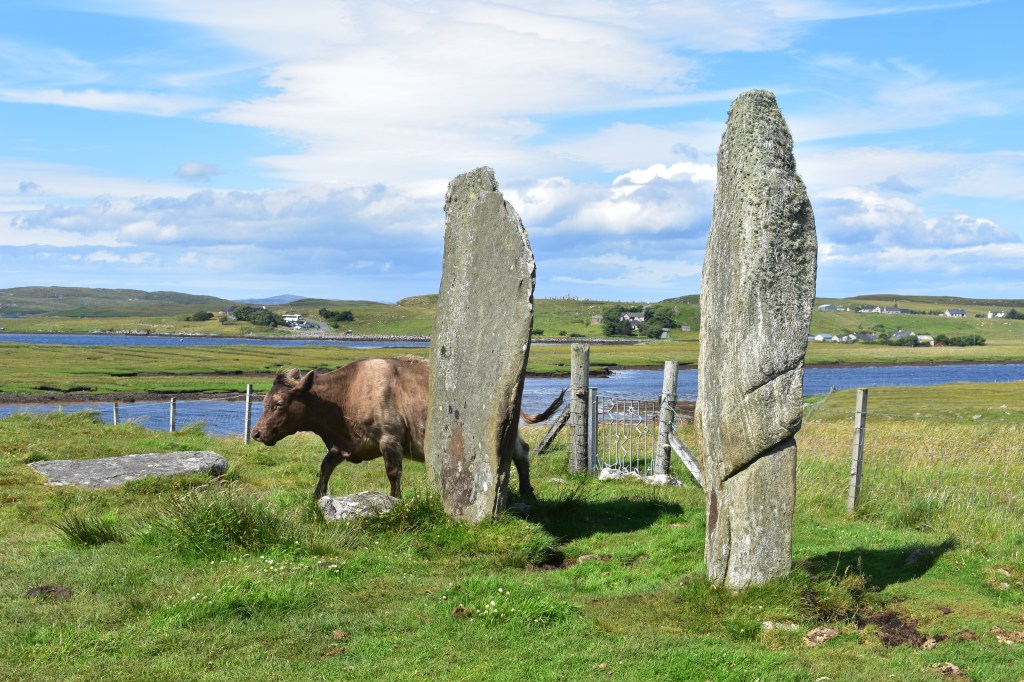
We were blessed with dry, warm weather when we took the bus to the Callanish Stones. Perhaps not as famous as Stonehenge, there are three neolithic stone circles that can be visited in the Callanish area. Unlike Stonehenge, they are easily accessible and there are not hordes of visitors queuing up to see the Stones. There is a visitor centre which includes a shop and cafe with lots of information on the site. You can walk from one of the stone sites to another and there is no cost for visiting them. We found it so funny seeing cows grazing on the grass by the standing stones. Cows have been grazing here for the 5000 years since the stones were first erected. I hope they continue to do so for the next 5000 years.
The Blackhouse Village
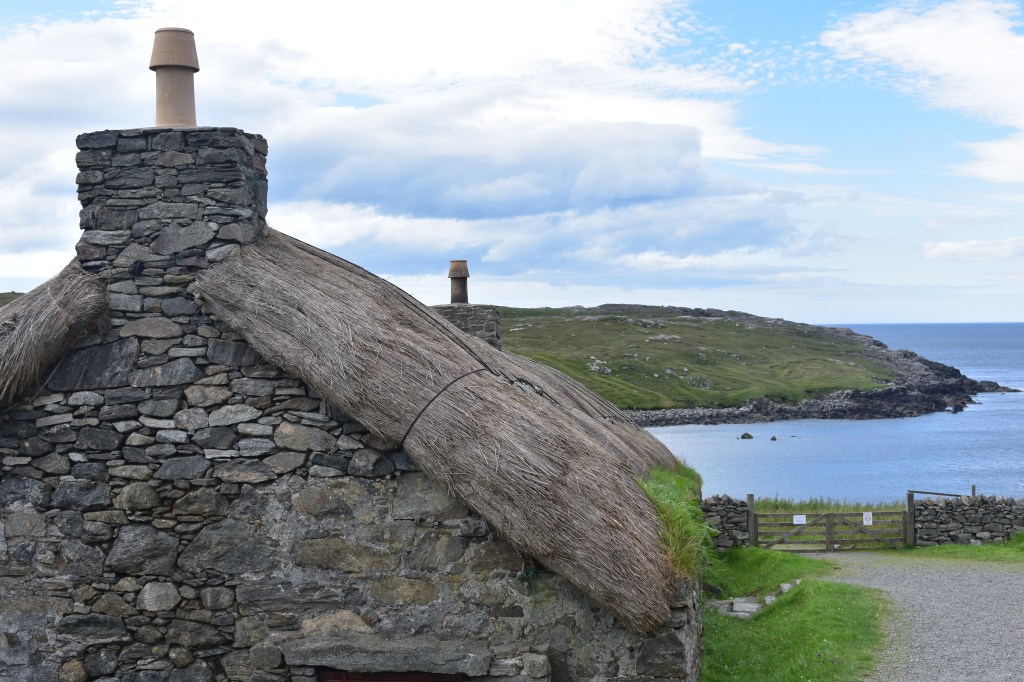
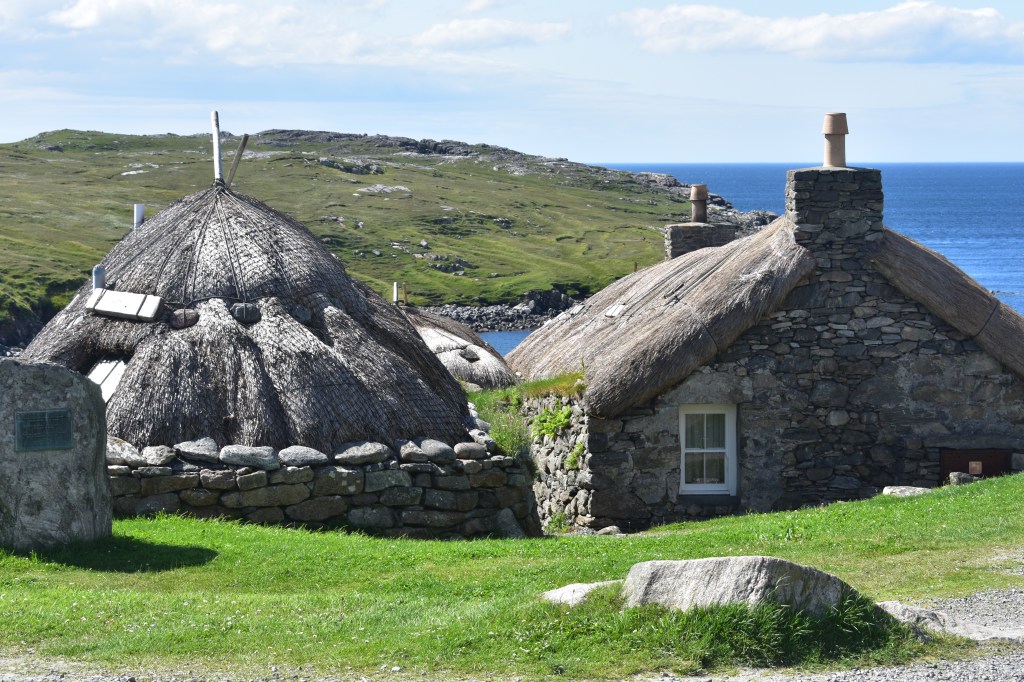
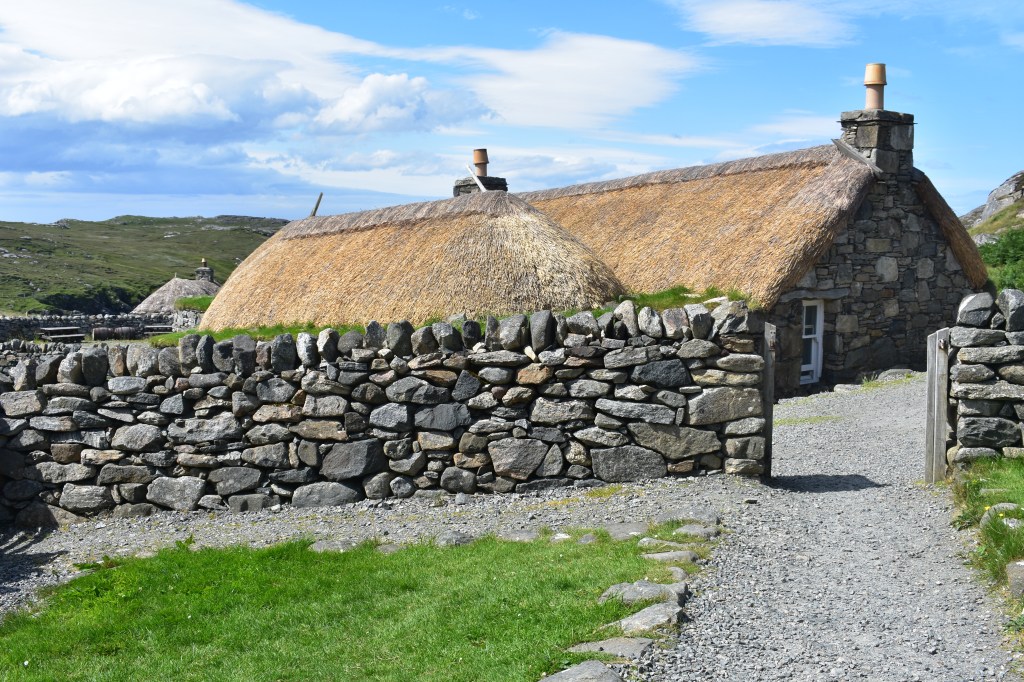
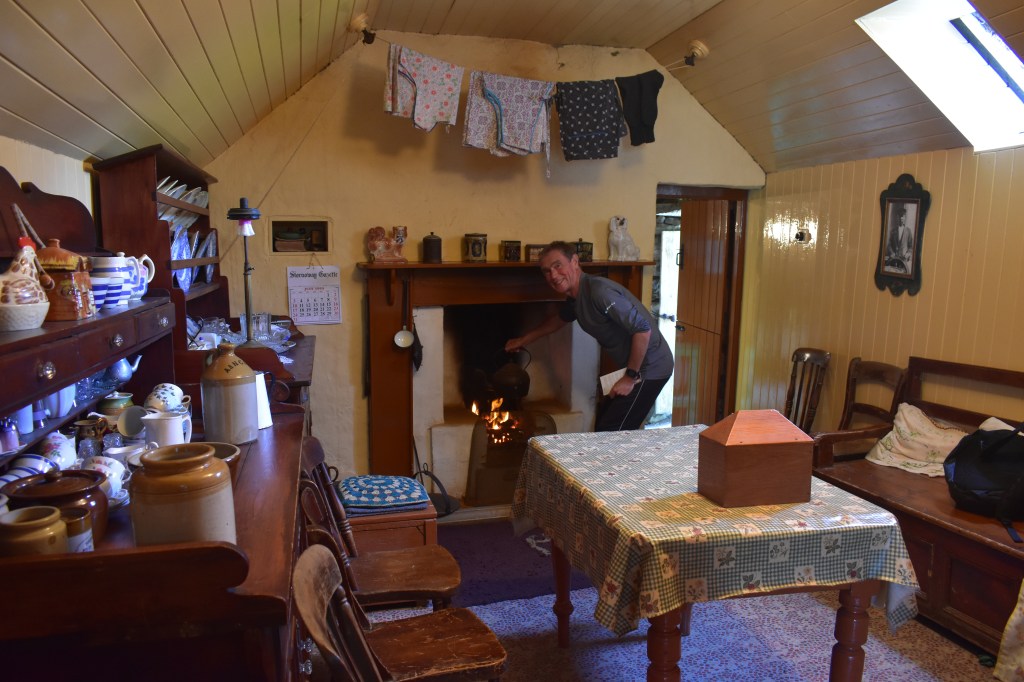
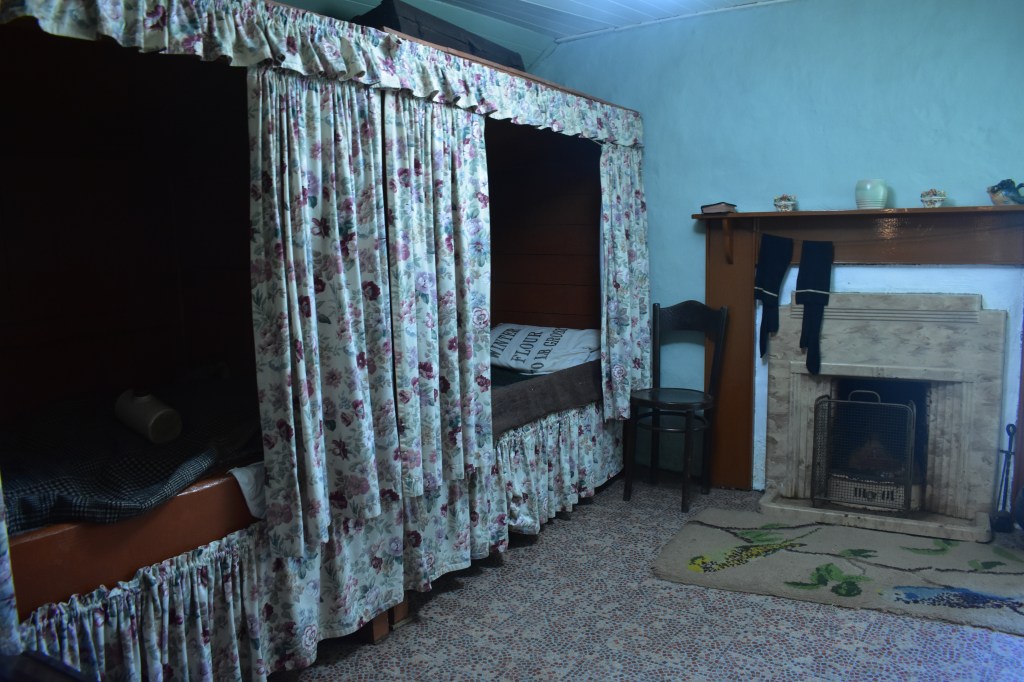
Our second stop on the bus was to visit the Blackhouse Village. The Village is a cluster of restored crofts and they represent the type of crofts islanders lived in from the 17th century to the 1970’s. There is a small fee to enter the village which is manned by volunteers who explain how local people lived and worked in these crofts. I did enjoy the scent of peat burning on the range. Some of the crofts can now be rented out for short stay visits though I was told you may have to book long in advance to get a letting in the popular Summer months. The village has majestic views over the sea and the coast paths provide great walking trails nearby.
A visit to the Blackhouse Village is a great day out and we recommend it.
Shawbost Norse Mill and Kiln
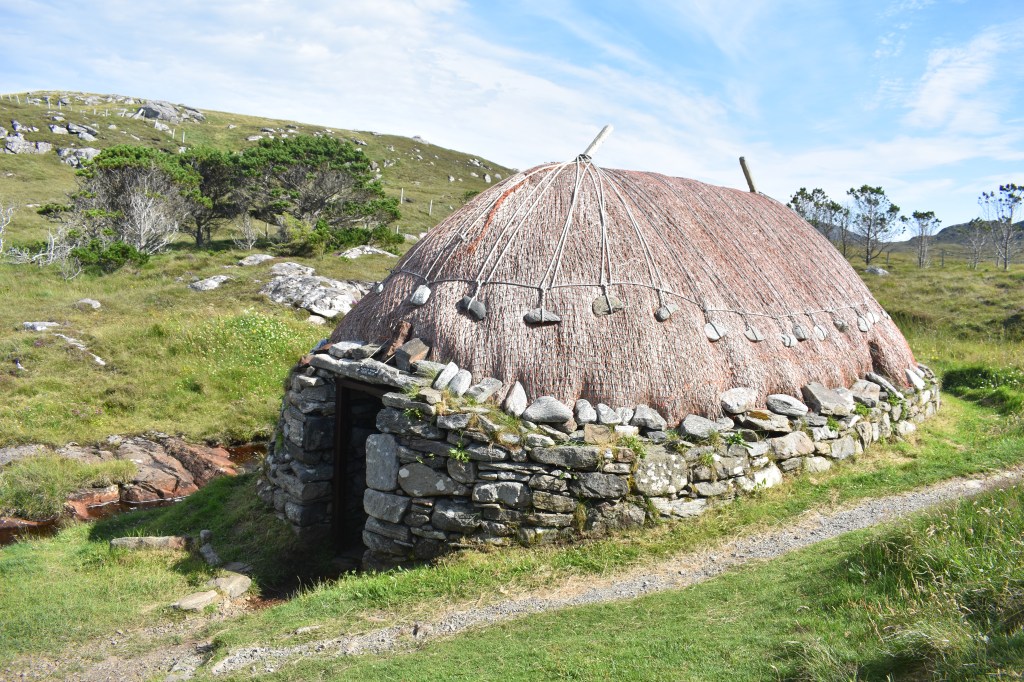
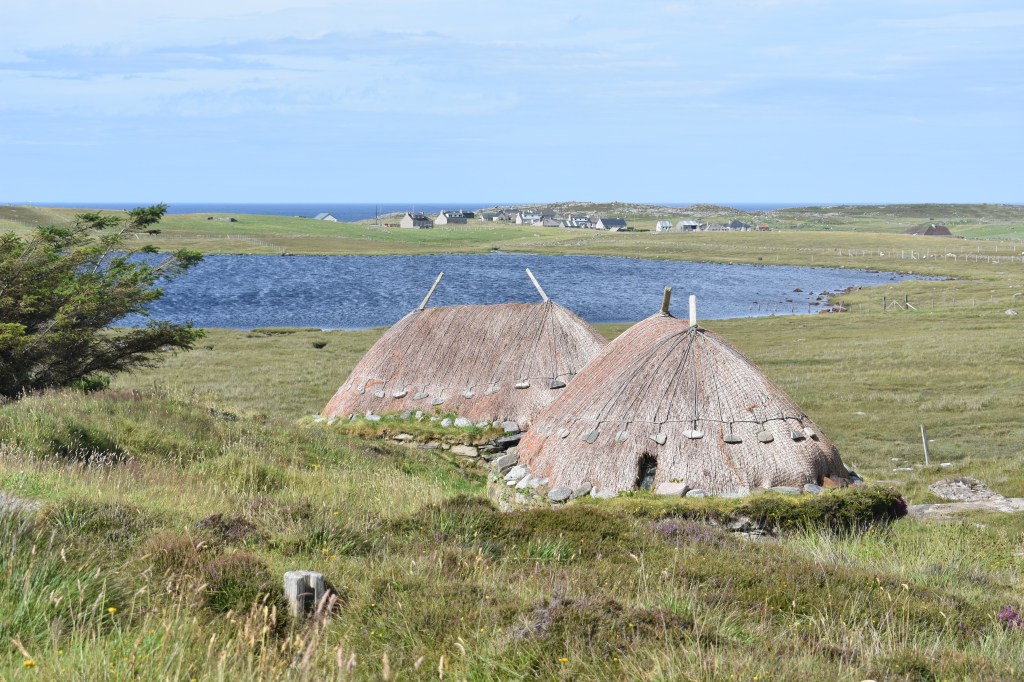
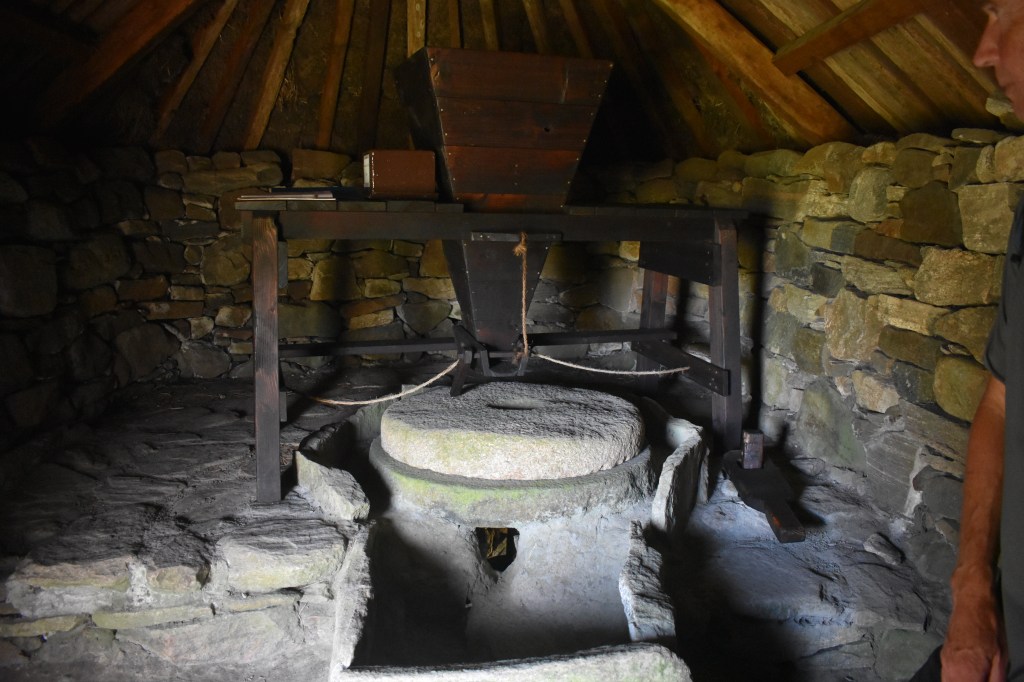
Our third stop on the bus tour was to another historic site worth a visit: the Norse Mill and Kiln. This is the remains of a long past mill and kiln which is open to the public. The mill is accessible via a short, though occasionally boggy walk from the road. A notice board gives a short explanation of the history and how the mill and kiln operated. Though not the most spectacular of Lewis’s attractions, the mill is worth a visit, particularly if you have an interest in history.
Running in Stornoway and Lewis
The quiet roads of Lewis offer ample opportunity for training runs. We stayed in Stornoway and I enjoyed running out of the town towards the Iolaire Memorial. It was peaceful, safe running and a great way to see the coastal views.
The grounds of Lews Castle also offer great running routes and local runners can often be seen on the paths around the castle. At the time of writing there is no Parkrun in Stornoway. I was told by local runners that plans are being made to stage a parkrun in the grounds of Lews Castle. Watch this space …
Half-Marathon and 10K
The Stornoway Running and Athletics club organise a Half-Marathon and 10K race usually in the late Spring. Details can be found here: https://srac.org.uk/half/
History of the Isle of Lewis
The island has had a long tumultuous history which has seen Irish, Norse and Lowland Scottish families dominate the politics of the island. The island was a part of the kingdom of Norway until 1266 when it became the possession of the Scottish crown in Edinburgh. The clan MacLeod dominated local politics till the early years of the Stuarts when the MacKenzies clan took control of the island. In 1844 the MacKenzies sold the island to Sir James Matheson who had made his fortune trading in China. It was he who co-founded the Jardine-Matheson conglomerate.
Matheson’s ownership of the island is one of the most controversial periods of the island’s history. Many crofters were dispossessed of their lands to make way for sheep farming and hunting. Poverty and emigration gripped the island. There were land riots in the 1880s. Though conditions improved towards the end of the century the bitterness between the Mathesons and the islanders remained.
In 1918 the industrialist Lord Leverhulme bought the island with the intention of re-industrialising the Herring industry in the Stornoway area. A large part of the population did not trust Leverhulme or his plans for new industry. Land ownership rights again became a fractious political issue amongst islanders. Some returning servicemen from the Great War took matters into their own hands and organised “Land Raids”. Leverhulme saw his plans would not work and faced with failure he gave Stornoway back to its people in 1923. The Stornoway Trust now administers the town on behalf of its people. This political arrangement may be unique in the UK.
Lews Castle regularly has exhibitions on the Isle of Lewis and Stornoway’s fascinating history. You may be lucky and be able to visit such an exhibition whilst on your stay on the island.
We travelled back to Tarbert in Harris after our short stay in Lewis. We then caught the ferry on our Hopscotch 23 route over the sea to the Isle of Skye.
We would love to hear your thoughts in the comments section below. Please follow and share with anyone you think may be interested. See you again soon!
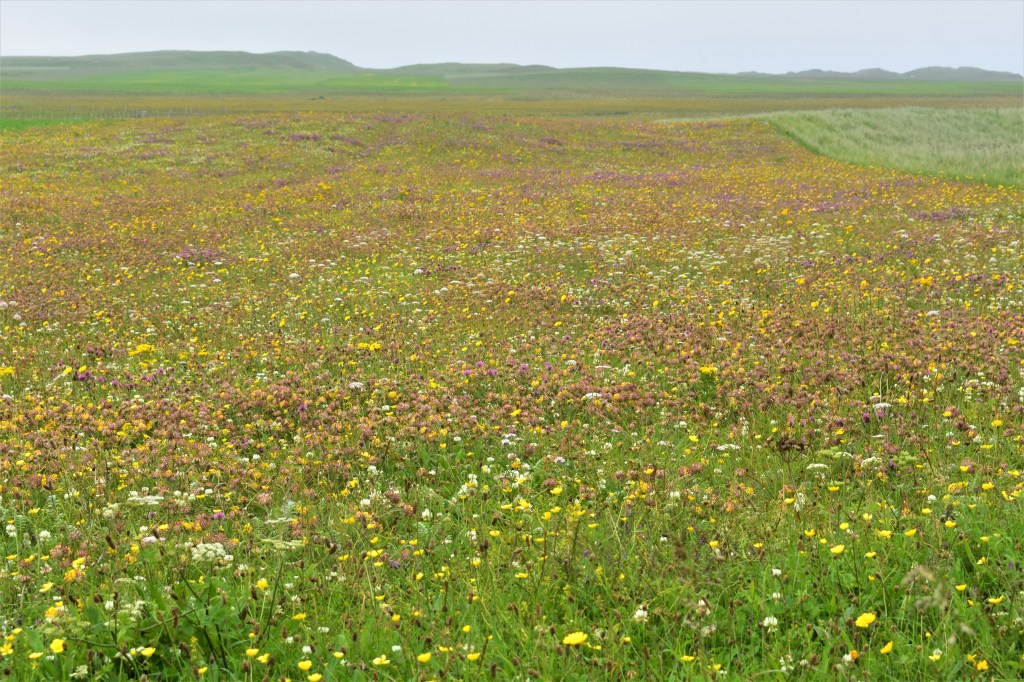
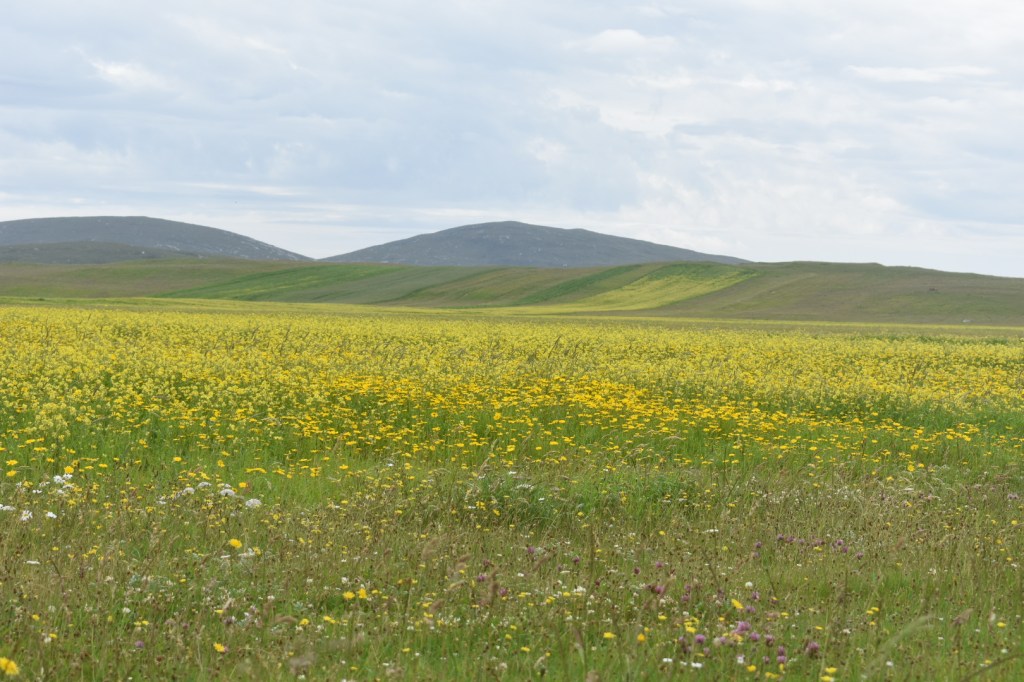
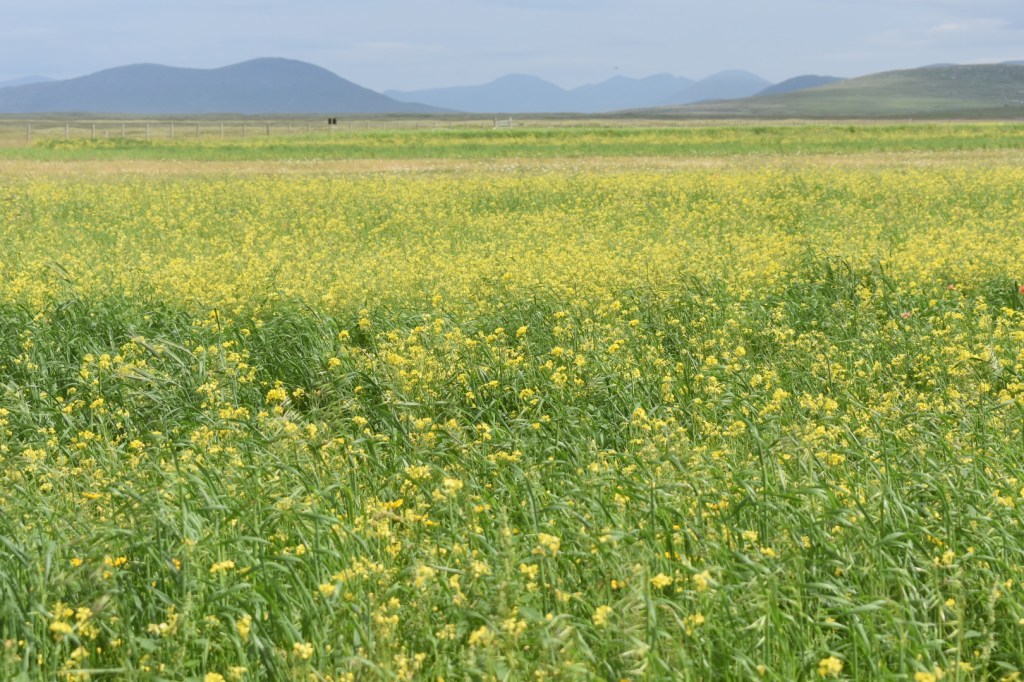
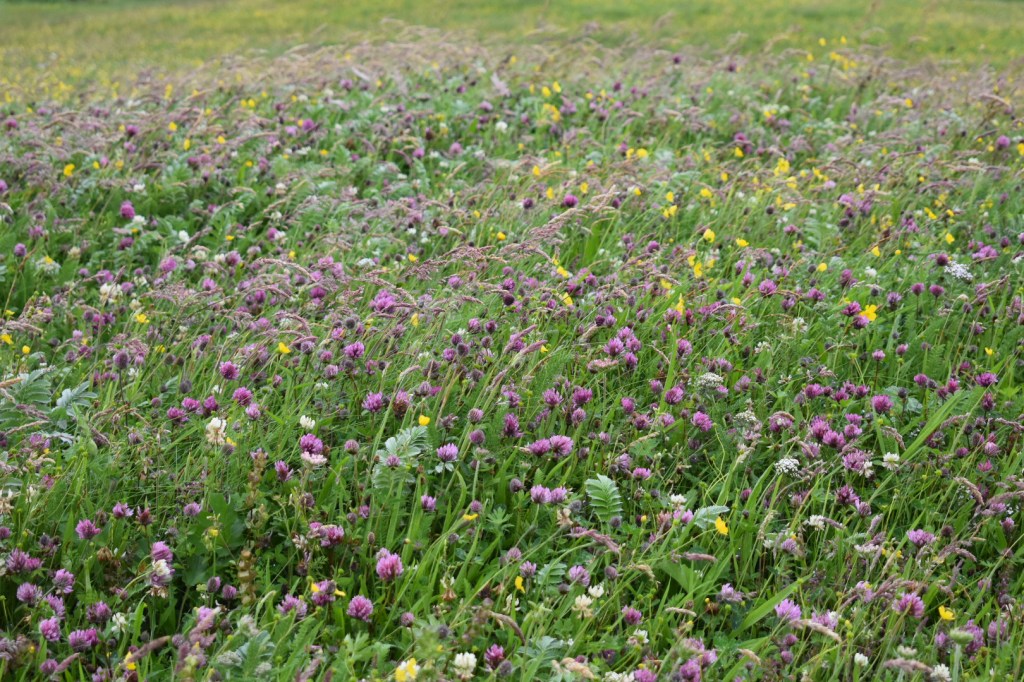
North Uist is one of the main islands in the Outer Hebrides. The eastern and central part of the island has a flat, peatland landscape, interspersed by up to 800 fresh and salt water lochs. This makes it a paradise for anglers and bird watchers. The western coastal region is more fertile than the east and arable farming is a feature of the area. The rich fertile soil has also allowed a unique display of flora to thrive. Driving along the coast road visitors can see a beautiful carpet of flowers known as the machair which stretches for miles. The beauty of the machair is one of the Outer Hebrides best kept secrets.
Machair, Hougharry, North Uist
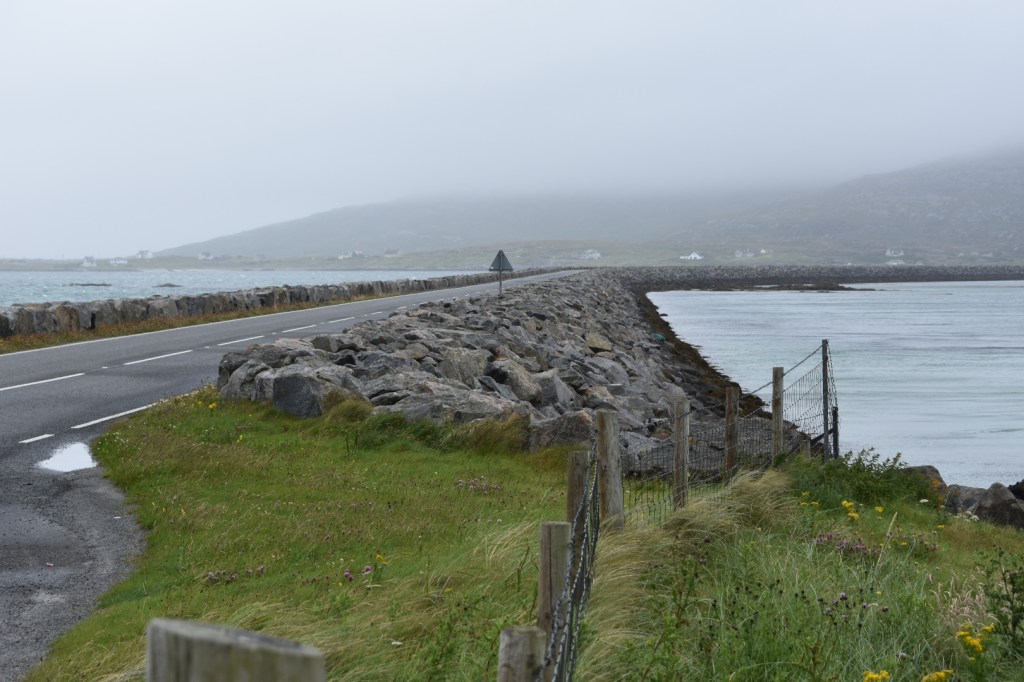
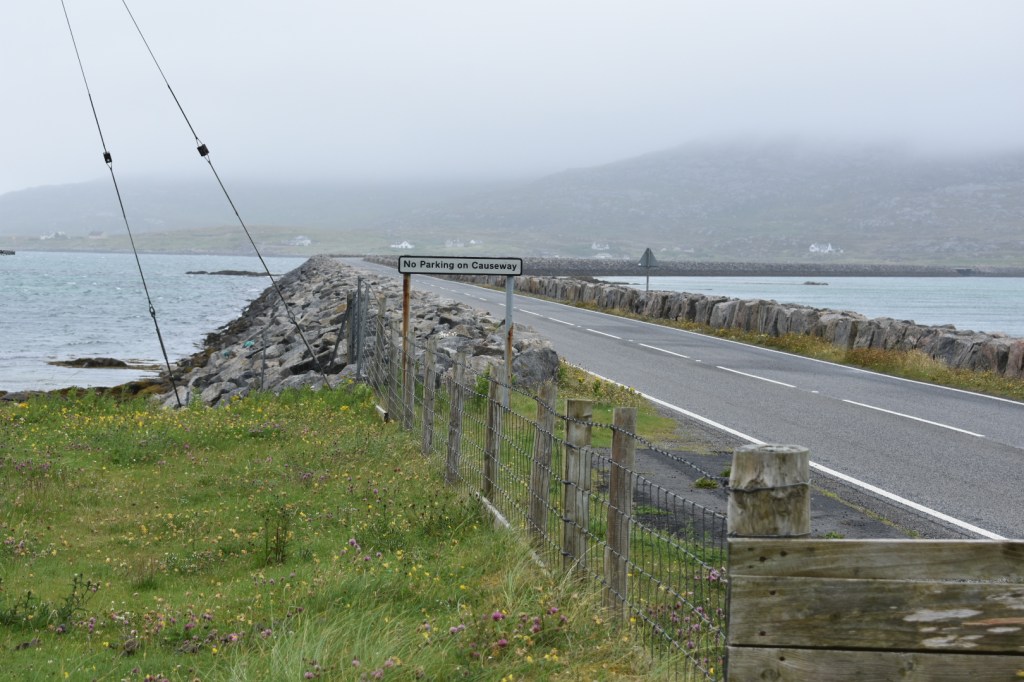
We visited North Uist whilst we were staying on the island of Benbecula. The islands of Eriskay, South Uist, Benbecula, North Uist and Berneray are now connected by causeways but prior to the causeways, individual islands could only reached by boat. Driving across the islands today is so easy but just thirty years ago, our journey could have taken up to a day. Despite the causeways, life on North Uist still moves at a slow pace and there is little of the congestion that is sometimes found on the more northern islands. Perhaps it is this peacefulness that makes North Uist so attractive to walkers.
RSPB Balranald nature reserve walk
One of the most scenic walks on North Uist is the walk around the Balranald RSPB nature reserve. Situated in the north west of the island, we would recommend a trip to the reserve to all visitors. We enjoyed a gentle 90 minutes stroll around the reserve when the machair was in full bloom. It was quite stunning. As we walked, we were entertained by birds singing their particular tunes, and though we could not identify them all, we definitely heard the distinctive cries of the Corncrake.
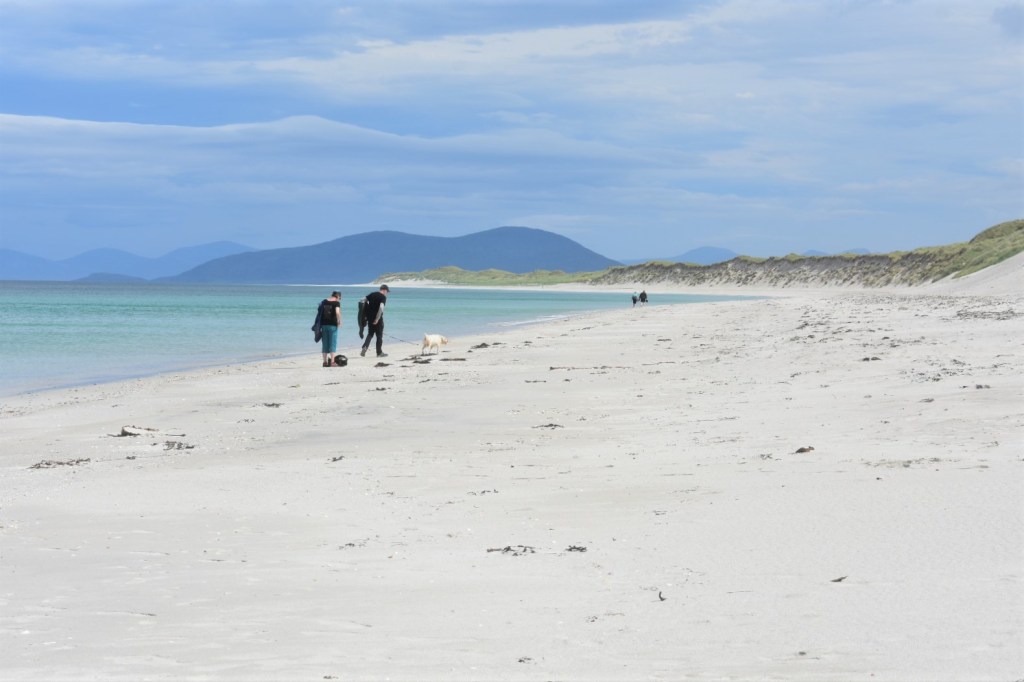
The reserve is bordered by some fantastic bays and beaches. The white sands literally dazzle the eyes with its brightness. We wore sunglasses to protect our eyes from the glare and it is easy to imagine you are walking on a beach on a South Pacific atoll and not on a beach on the North Uist island.
Barpa Langais – Burial Chamber
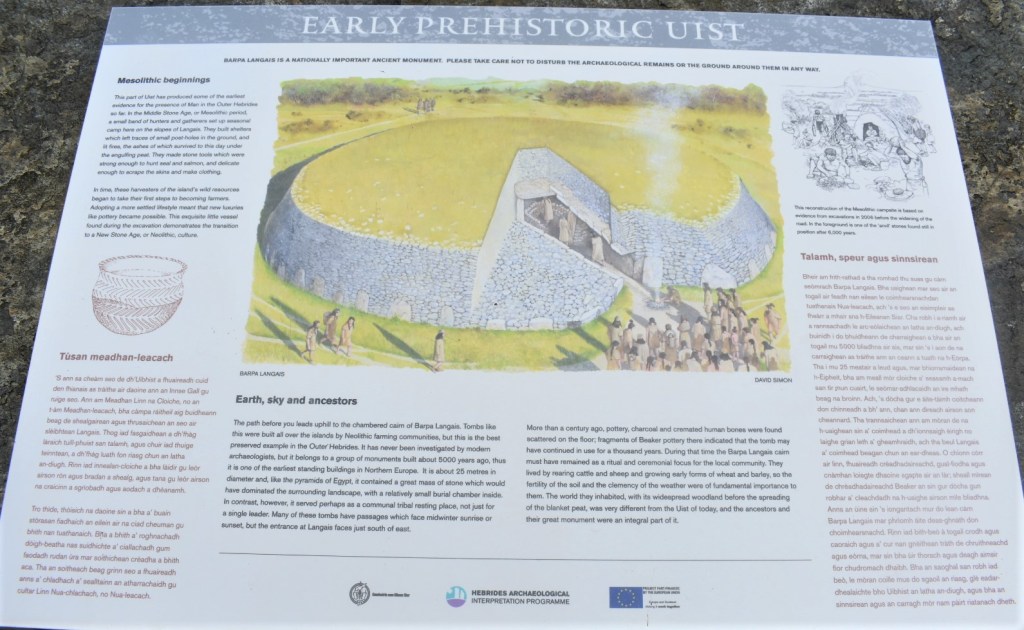
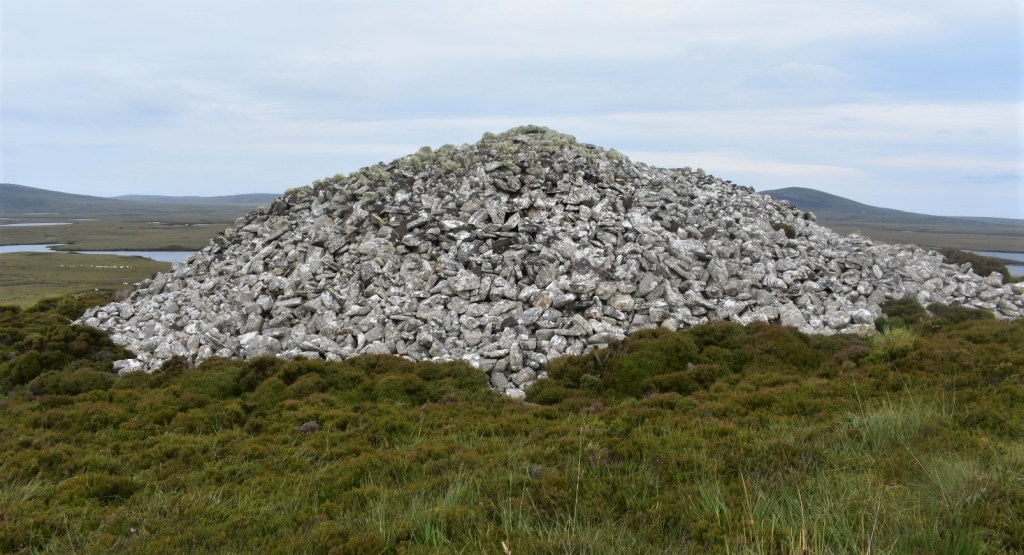
Though North Uist has only one major Neolithic site, the spectacular chambered cairn and stone circle at Barpa Langais are well worth a visit. The chamber is visible from the A867 road in the east of the island just north of Langass Lodge. We made the short boggy walk from the car park up the hill to the cairn. It is quite humbling when you realise that this monument was built by our ancestors, with no machinery to help them, over 5000 years ago. There is an explanatory notice board at the site which gives a history of the monument and its builders.
You can continue up the the Eavel hill to visit North Uist’s only stone circle and enjoy the view of the wetlands below. We decided to retrace our tracks down the hill to our car as we were short of time. Next time we visit North Uist, we will have to stay longer!
The Beautiful Isle of Berneray
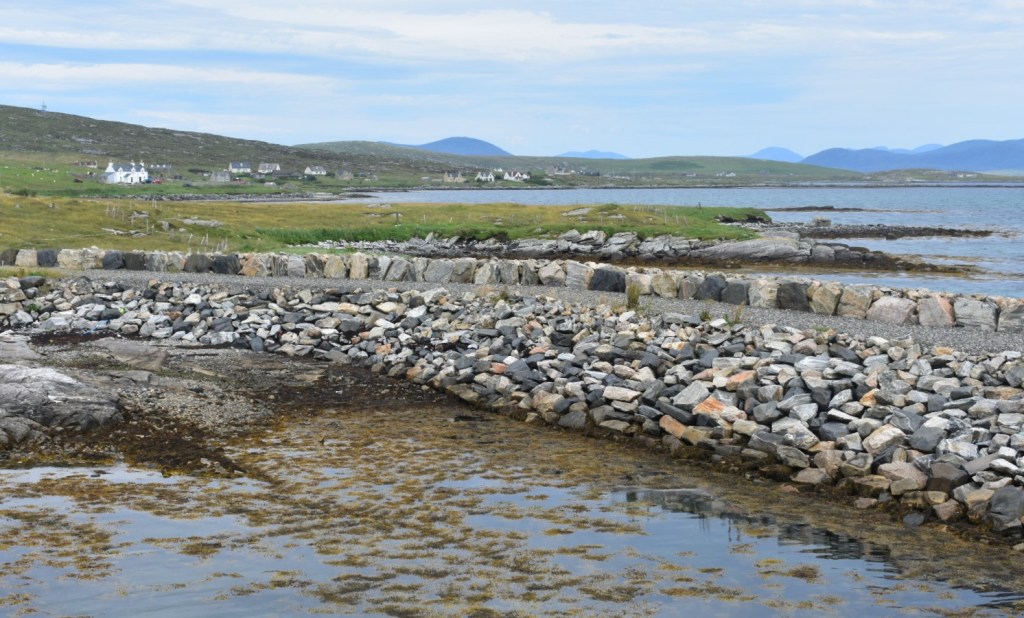
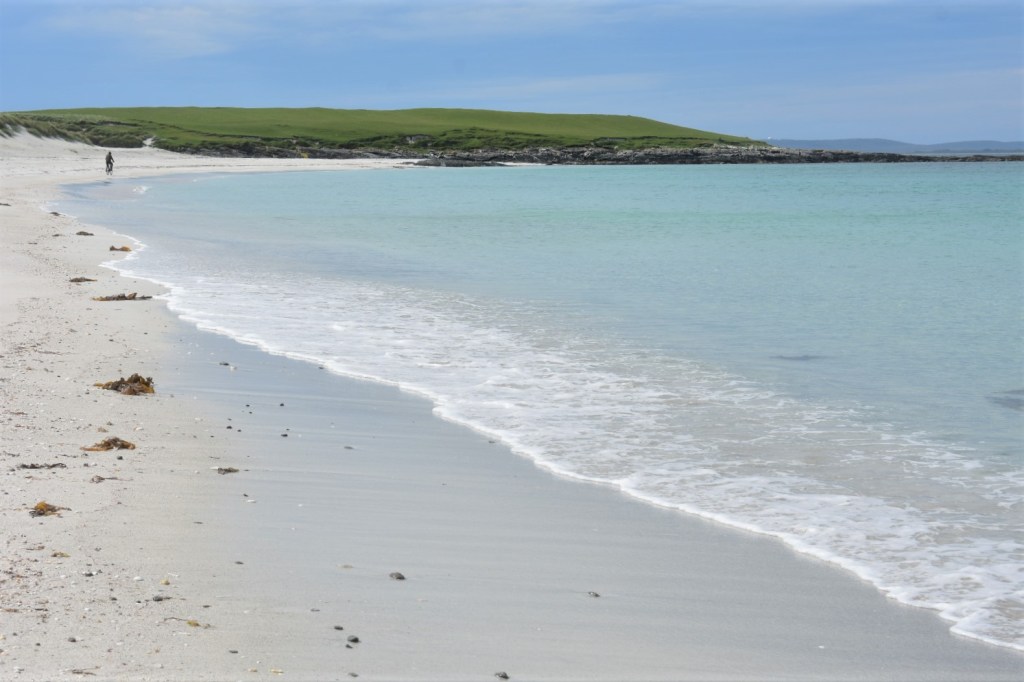
Berneray is a small island now connected by a short causeway to the island of North Uist. Berneray is where travellers can catch the ferry to the Isle of Harris just a few miles across the sea. We were lucky enough to have some time to explore the island before we took the ferry to Harris. The machair and beaches of Berneray are perhaps the most spectacular of all the Western isles. Words can not really do the island justice. Please enjoy a few of the pictures we took whilst we were on a short walk near the ferry port.
Machair – A note of warning beware of midges here!
Beautiful beach in Berneray – no midges here!
Berneray beach
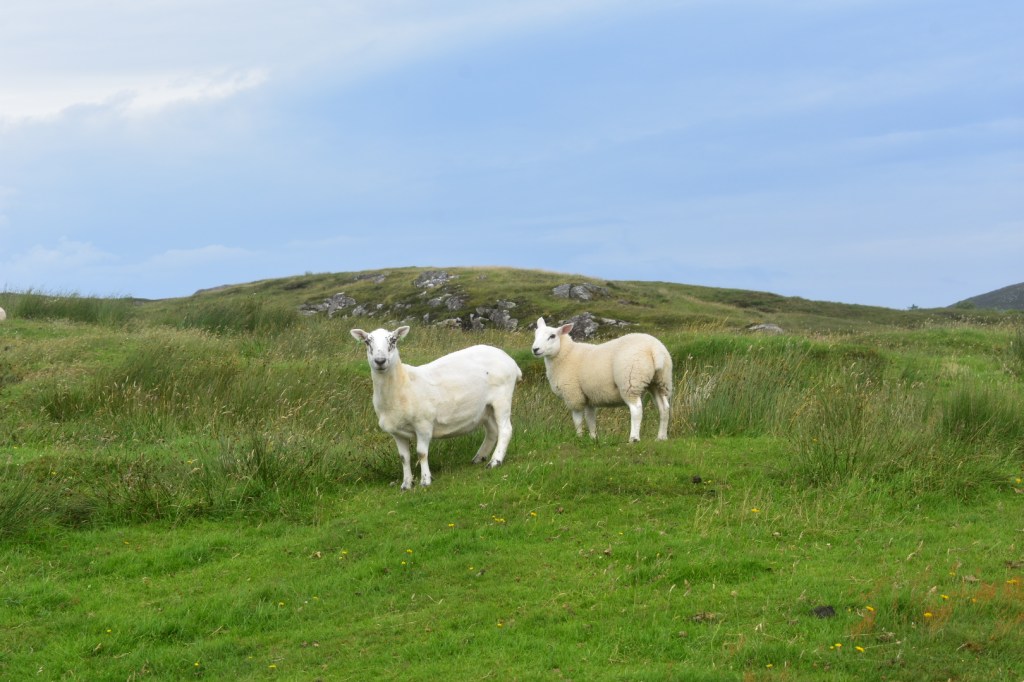
We left our hire car in the car park at the Berneray ferry terminal. We never met a representative from the car hire company – no hard selling for extra insurance or more charges for unused petrol – what a welcome change this was from dealings with car hire companies we have had in the past. Some sheep came down to the ferry to wave us off as we set off on our short voyage to Harris. It was so funny looking at the sheep, as they looked at us, as our boat sailed away. It made us smile as we said goodbye to Berneray. Now onto Harris and the rest of our adventure.
We would love to hear your thoughts in the comments section below. Please follow and share with anyone you think may be interested. See you again soon!
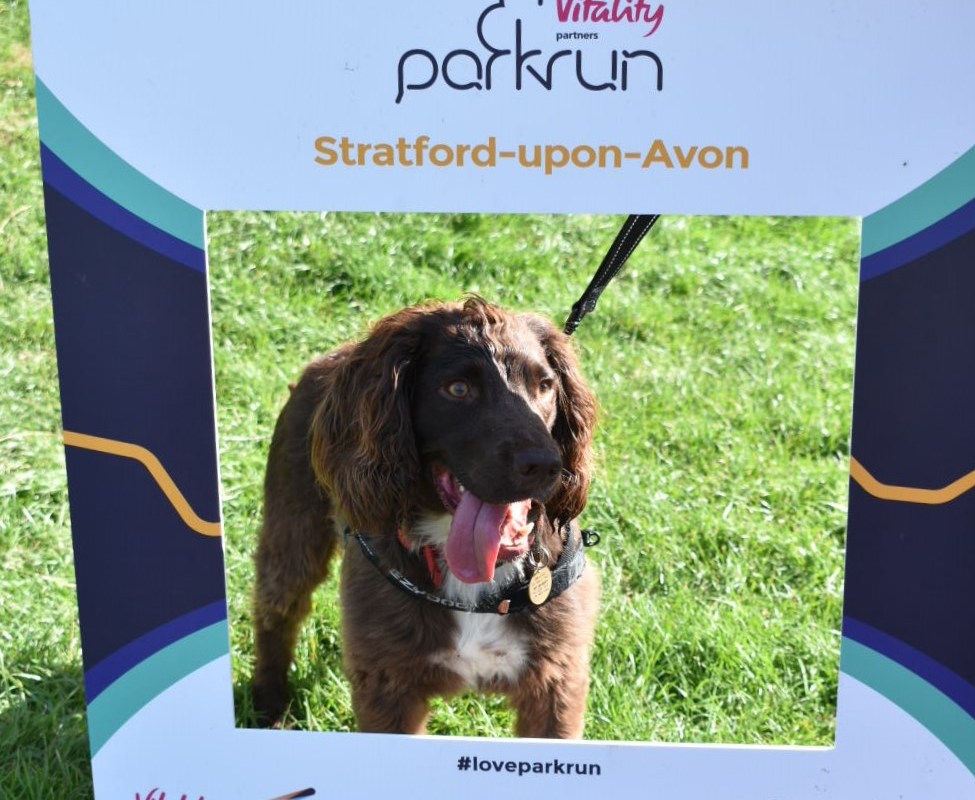
If you want to run a fast, well organised, and genuinely friendly park run, then the Stratford-upon-Avon parkrun is hard to beat. If you are a parkrun tourist and want your parkrun to be the start of a day out, or even better, the start of a weekend break, then Stratford offers something for everyone and is amongst the best.
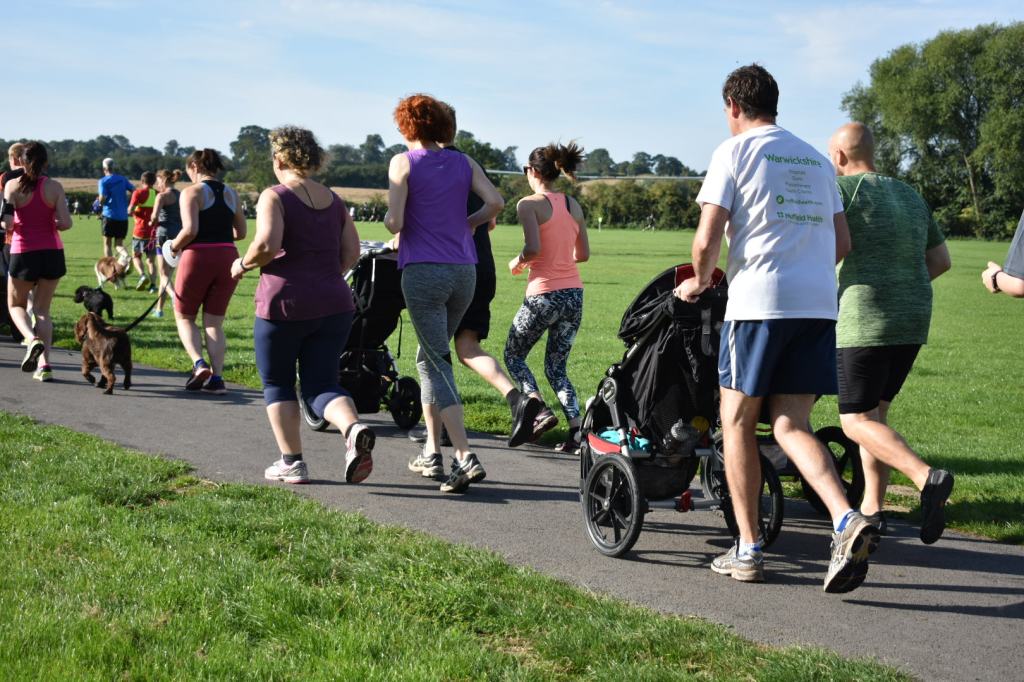
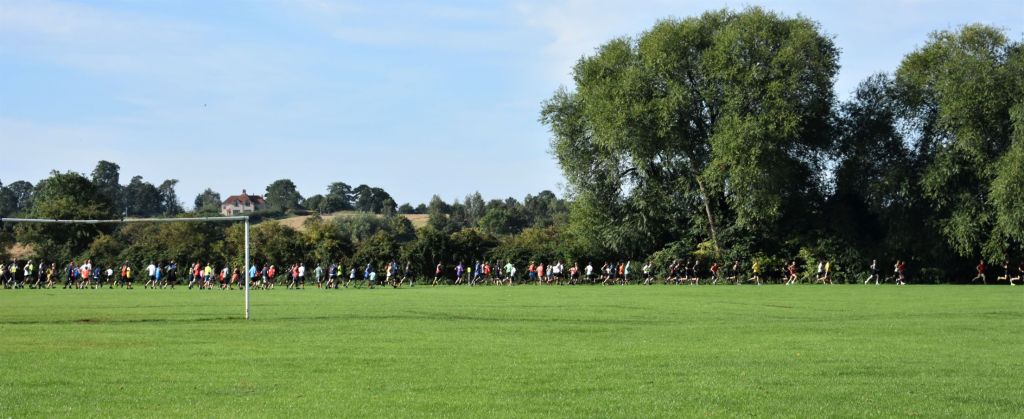
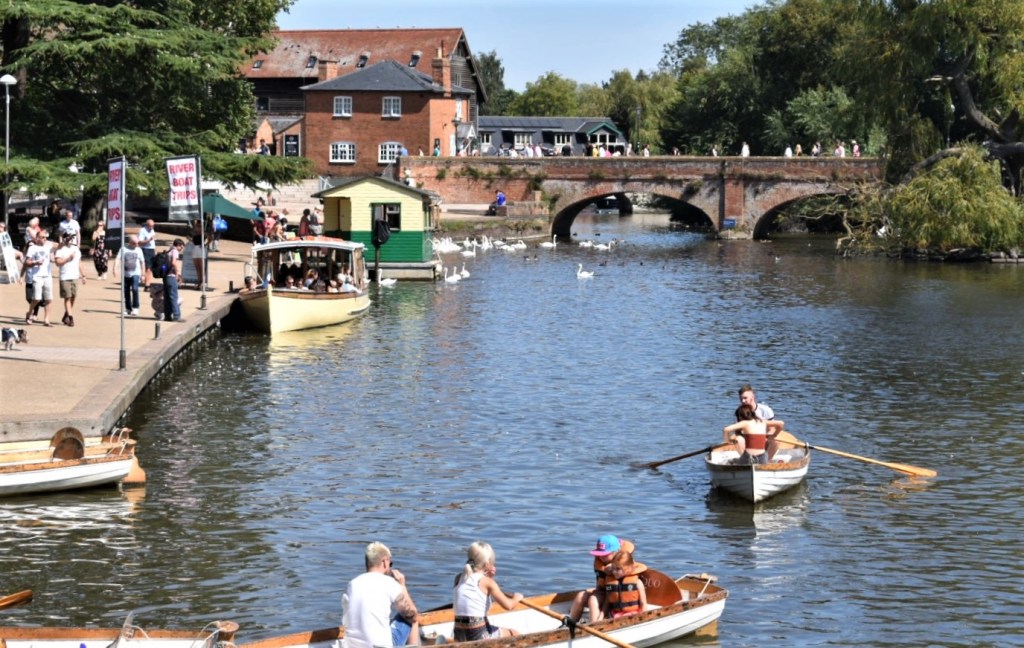
Stratford’s free parkrun is a three lap course ran within the town’s Recreation Ground. The course is a scenic route using tarmac paths and some grass ways. You will see swans on the Avon, Shakespeare’s theatre and the beautiful flower arrangements of the town’s premier park area. A full description of the course can be found on the website here: https://www.parkrun.org.uk/stratforduponavon/course/
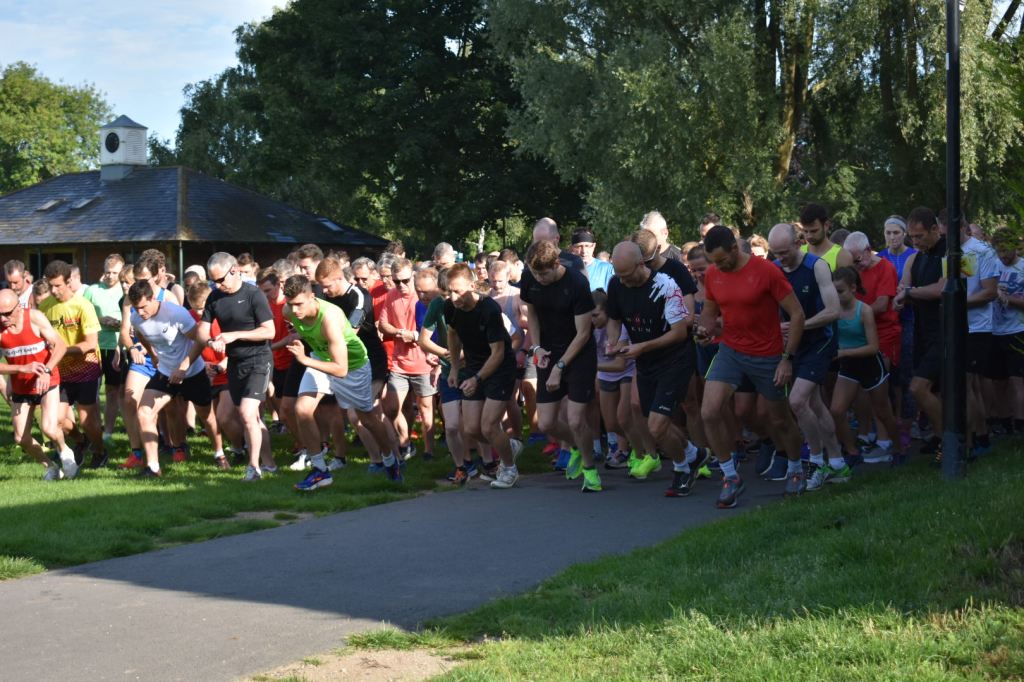
Part of the course follows the river so it can be wet if the river is running high. Similarly, the grass section may be slippery so care should be taken when running here. Stratford attracts up to 400 runners so the start can be a little congested. However, most of the course follows a good, flat, tarmac surface so the course provides PB possibilities.
If there is an event being held on the river, such as a boating regatta, an alternative 4 lap course is used. This course removes the river bank section so the 4 shorter laps are run to make up the 5K distance.
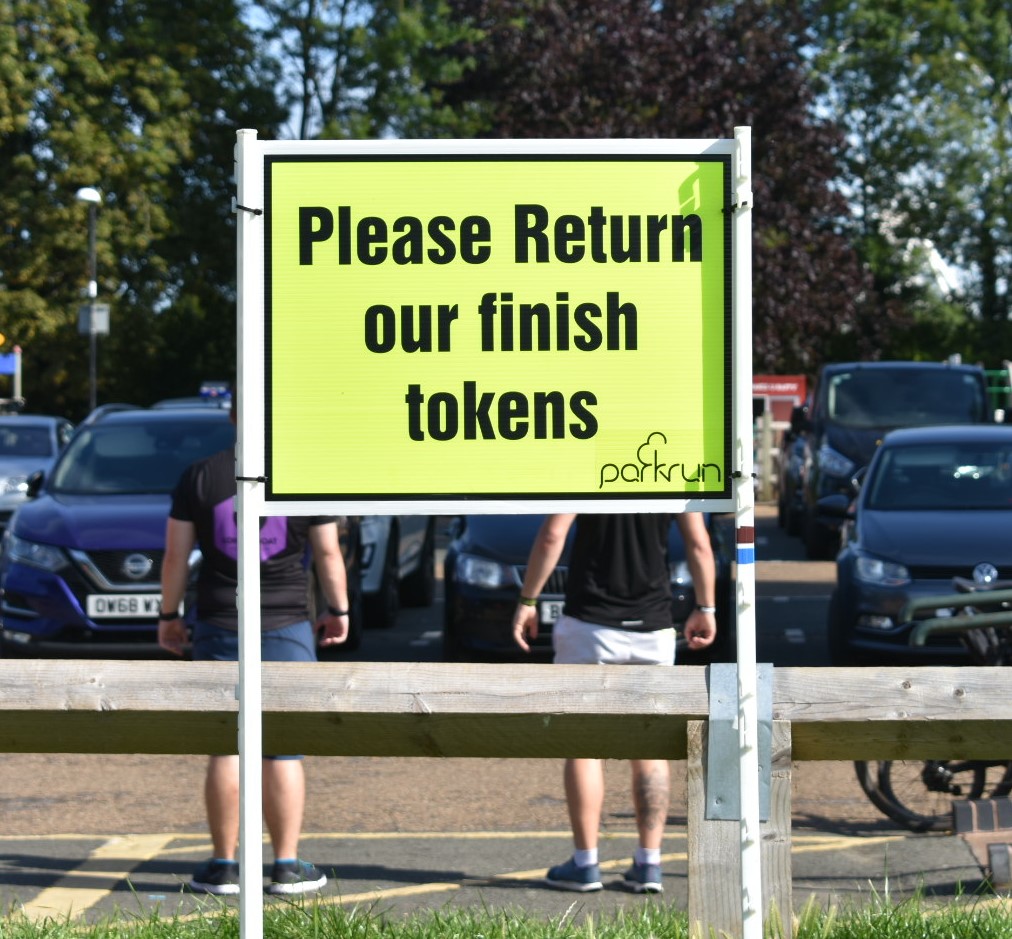
Remember to hand in your tokens at the end.
Post Run Refreshments
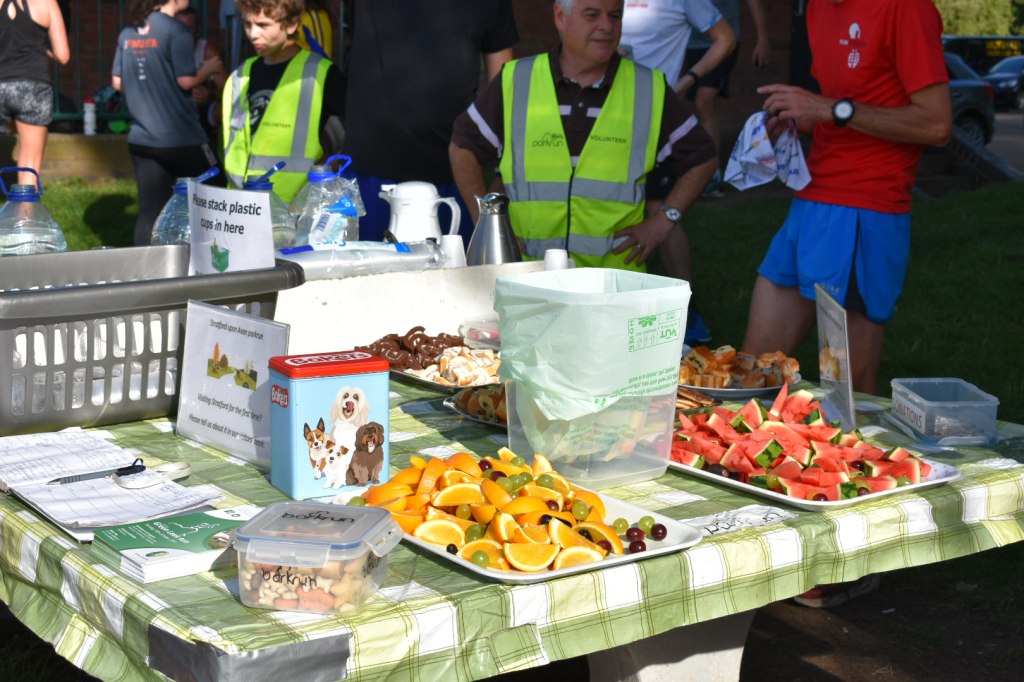
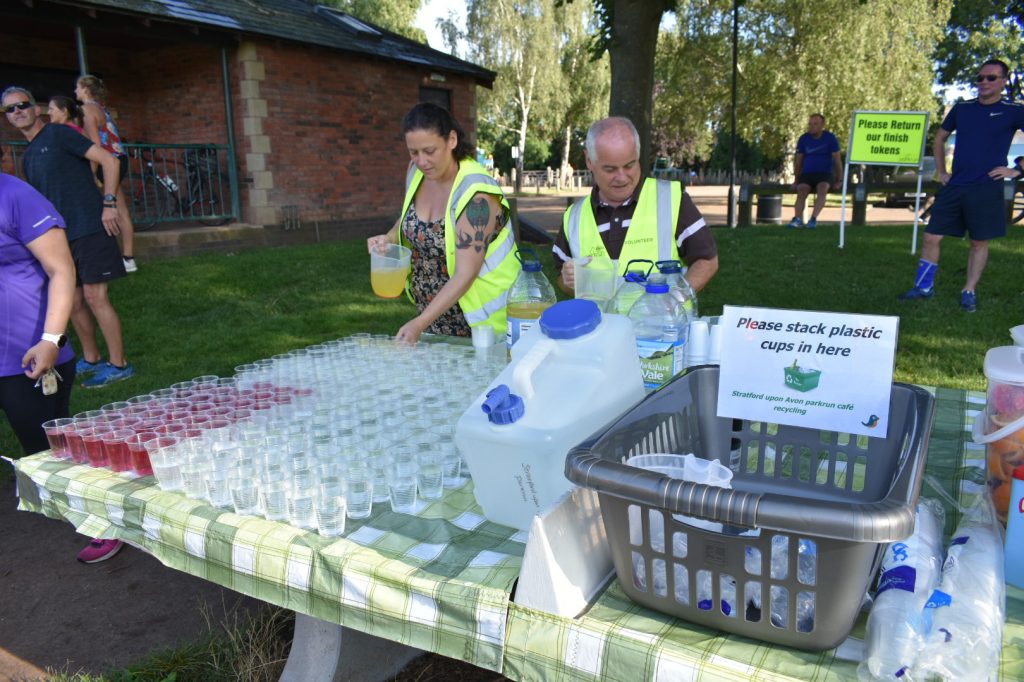
Stratford volunteers provide an excellent refreshment table for runners at the end of the race. A wide variety of cold refreshing drinks are available as well as hot teas and coffees. A great selection of fruits are there to be sampled and for those with a sweeter tooth, home-made cakes and other sweets are on display tempting you to taste them. Even dogs are catered for with a special dog biscuit area!
A small voluntary donation is all that is asked. The post race refreshments adds to the friendly ambience of the Stratford parkrun giving it a quality that makes it so special.
Tip: Stratford are trying to improve the environment by phasing out plastic cups. Please bring your own cup for drinks and so help reduce plastic consumption. Thank you.
Parking
There is ample parking available in the Recreation Ground car park which is literally by the start and finish of the run. Car parking fees are on a pay and display system and are quite reasonable.
Post Race Shower/Swim
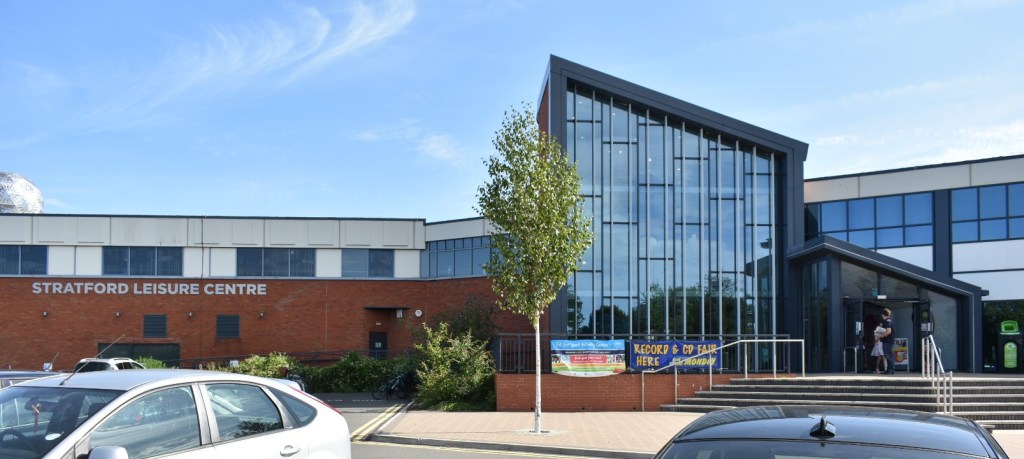
Stratford Leisure centre is located at about a 600 metre walk from the start of the race, A post race shower can be had here for £1.50 at present prices. The centre has a superb swimming pool so runners can enjoy a post run swim if they are feeling more energetic!
The Recreation Ground car park ticket is not valid for the Leisure Centre’s car park.
For more general information on parkrun including details of where they are held see the Parkrun website: https://www.parkrun.org.uk/
Other Running in Stratford
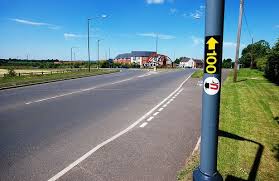
For those who want to run more than just the park run, then Stratford is a great location for general training. Stratford’s Greenway provides a 5.5 mile traffic free tarmac route from Stratford to Long Marston for general training. The Greenway is easily accessible by running from the Recreation Ground. There are small car parks along the Greenway if you wish to drive to a different start. More information about the Greenway can be found on its website here: Stratford Greenway
The town hosts a number of prestigious races throughout the year, including the Shakespeare Marathon to commemorate the Bard’s birthday in April. Stratford is a top rated marathon and a great alternative for anyone disappointed in not being able to run the London race. A half-marathon can be ran for those who would prefer to run the shorter distance. Details are available here: Shakespeare Marathon
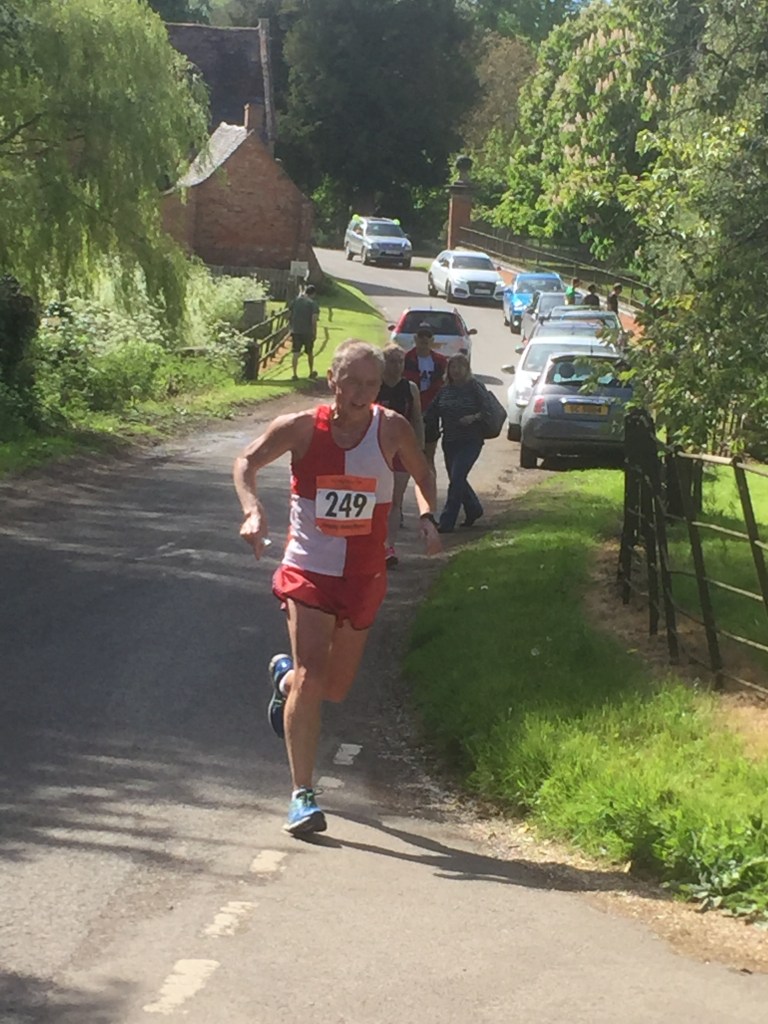
Stratford is the venue for various 10K and other races during the year. Stratford is also the start and finish of one of England’s best long distance relay races: The Cotswold Hilly 100. This is a 100 mile 10 person relay race for athletic club teams. The route traverses the beautiful hills of the nearby Cotswolds. The race is held on one of the May bank holiday Sundays, Details of this, and other Stratford races, can be found on the Stratford AC website: Stratford AC
What to do after your run?
You have just got your PB for the year at Stratford: what do you do now? There is so much to do it is almost an impossible question. Take a stroll through the park, visit Holy Trinity church, attend an afternoon play at one of the two theatres or see a movie in the delightful Stratford Picturehouse. Stratford has so much to offer the visitor. We will give you more ideas of what to do in Stratford in a later blog on this site.
You may be interested in our blog on the Forest of Dean parkrun and also our Oban blog which has details of the Ganavan Sands parkrun.
We would love to hear your thoughts in the comments section below. Please follow and share with anyone you think may be interested. See you again soon!
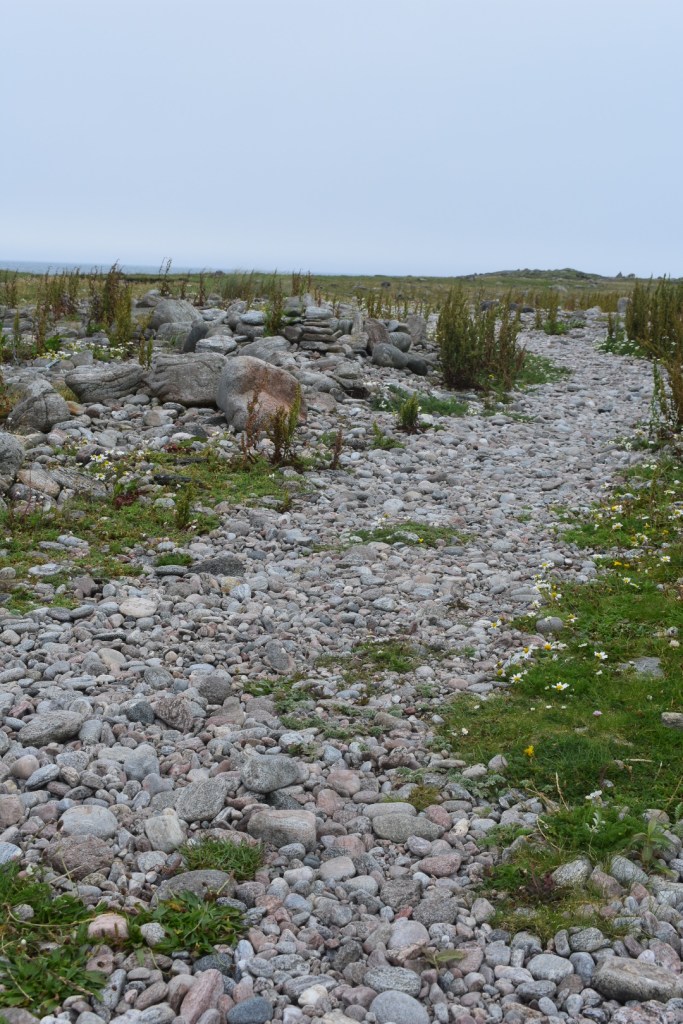
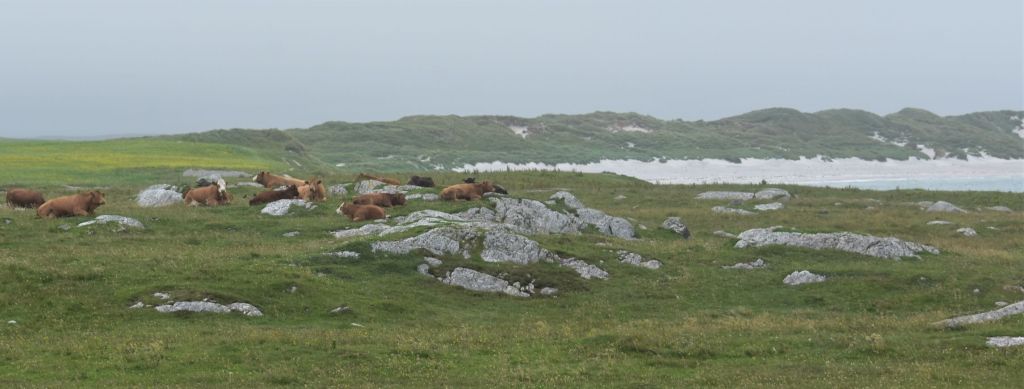
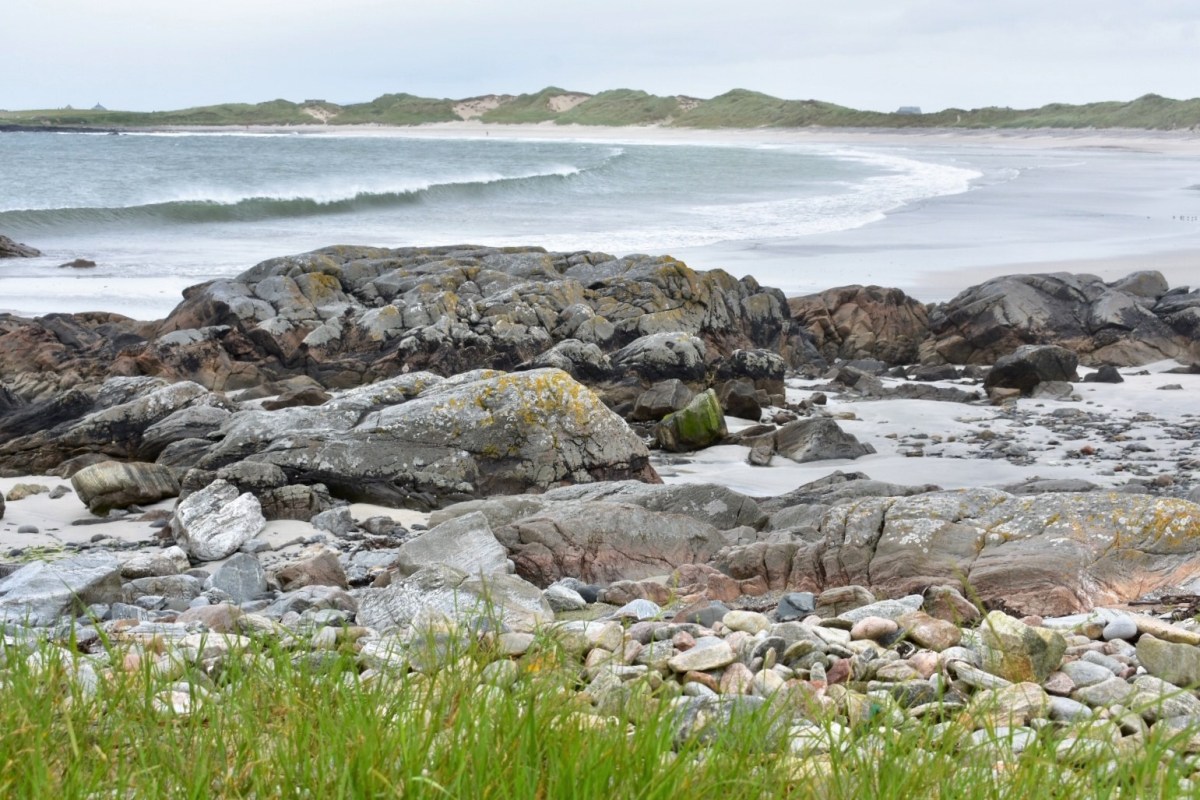
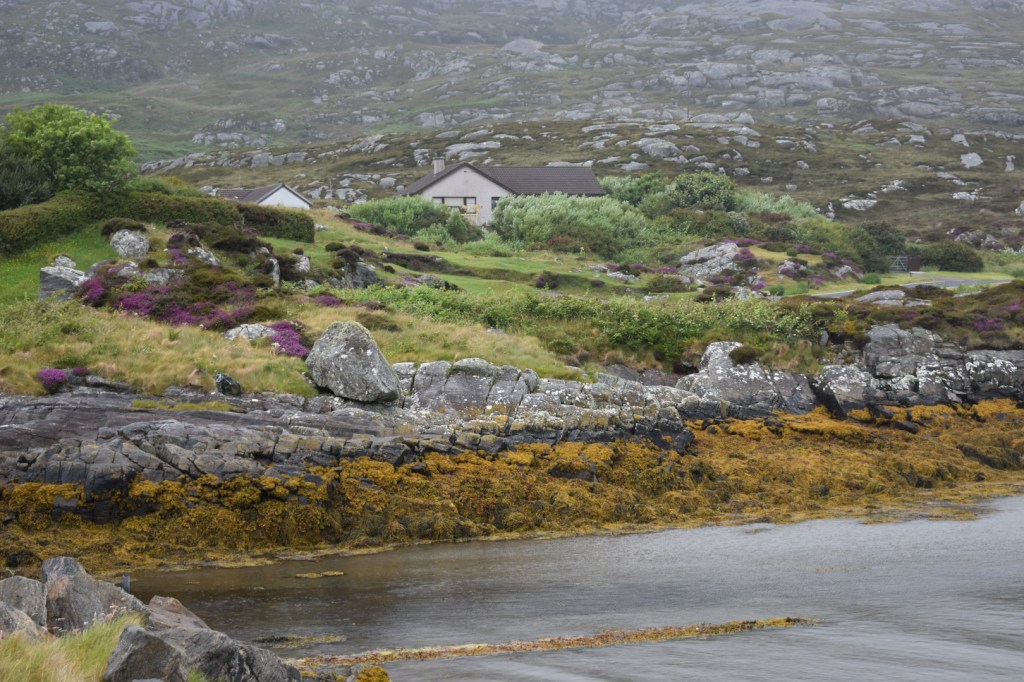
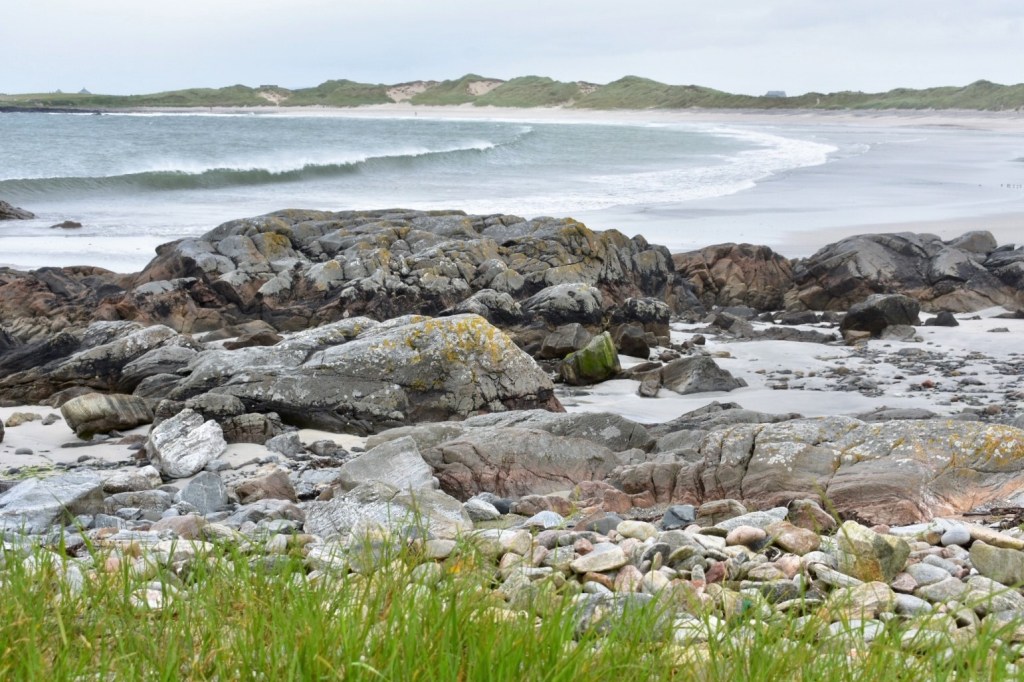
After our short visit to Eriskay (see previous blog), we drove over the next causeway to South Uist. I loved the rocky landscape that greeted us here. We just had to stop and take some photos.
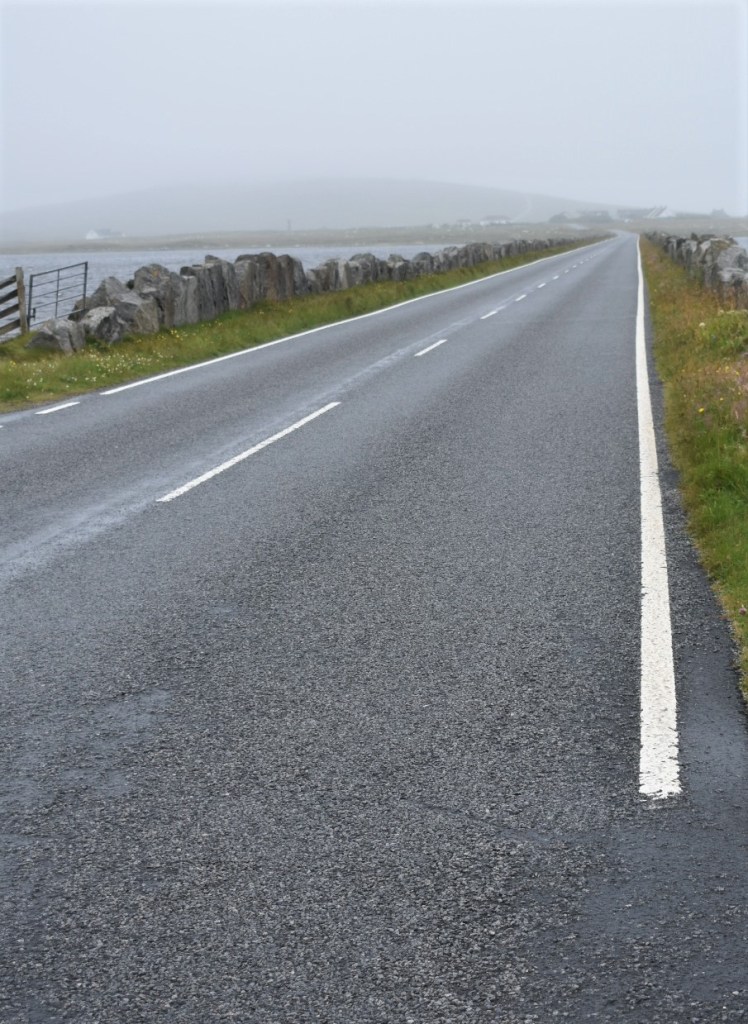
As it was raining and as the visibility was poor we decided to continue on to find our accommodation in Benbecula and not to stop along the way. This meant following the main road and travelling over more causeways. We stayed in a beautiful B&B on a croft. We were welcomed with tea and cake which was just what we needed after our journey.
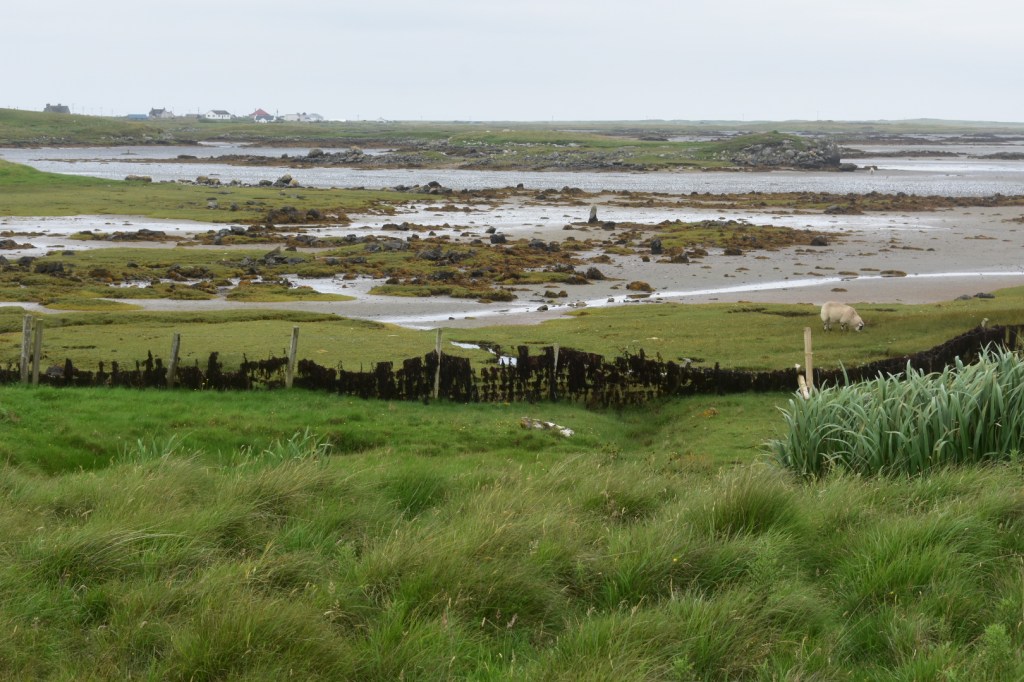
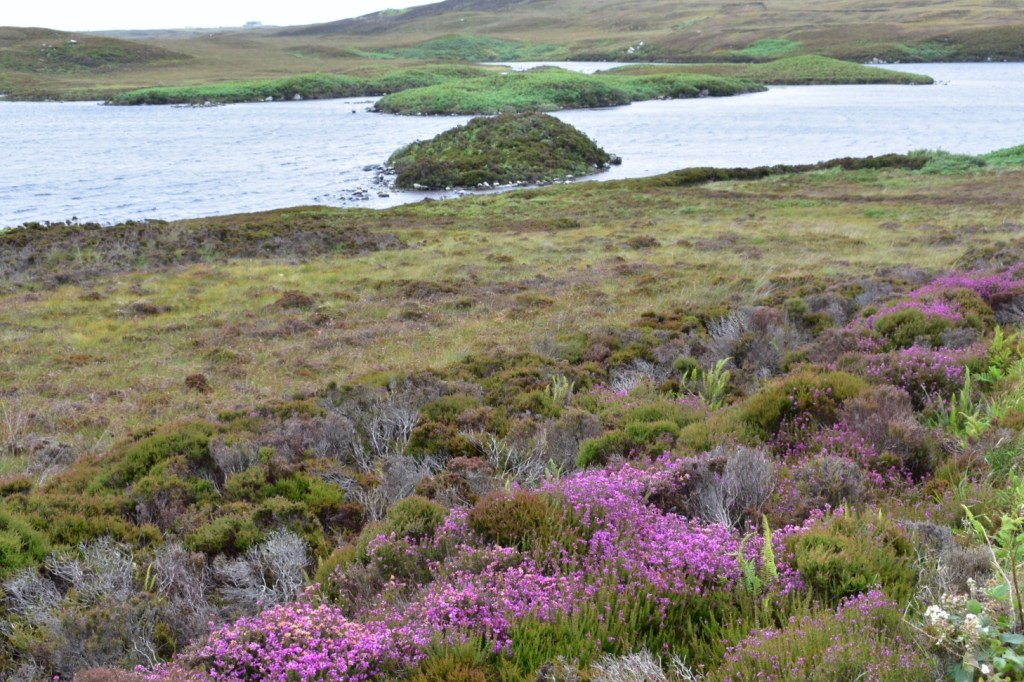
The landscape of Benbecula was very different to the landscape we had encountered in the other islands of the Western Isles. It was flat and reminded us somewhat of East Anglia in England. On a clear day you can see for miles in every direction, though when we arrived, low clouds reduced visibility to about 50 metres!
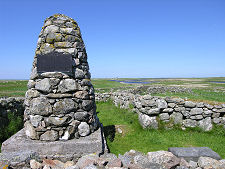
South Uist is the birthplace of Flora Macdonald who famously helped Bonnie Prince Charlie escape capture after the failed rebellion of 1745/6. We had planned a short stop at the Flora MacDonald memorial which was on the route to our B&B. However, visibility was so poor we missed the signs for the memorial and later almost missed the turn off for our accommodation!
Travelling in Benbecula
There is a small airport in Benbecula. Scotland’s airline, Loganair, operate flights to Stornoway, Inverness, Glasgow and Edinburgh. There’s a little cafe here that is popular with locals as well as travellers. The only other way to get to Benbecula is by road via South or North Uist. There is a bus service, but if you are used to the busy, frequent service of a big city, you’ll be disappointed. Buses do not operate on Sundays. Benebecula still respects Presbyterian traditional values. Keeping the Sabbath holy and bus free is one of them. It is worth knowing if you are here for a weekend and wish to use public transport. We were glad that we had chosen to a hire car for this part of our trip!
Walking in Benbecula
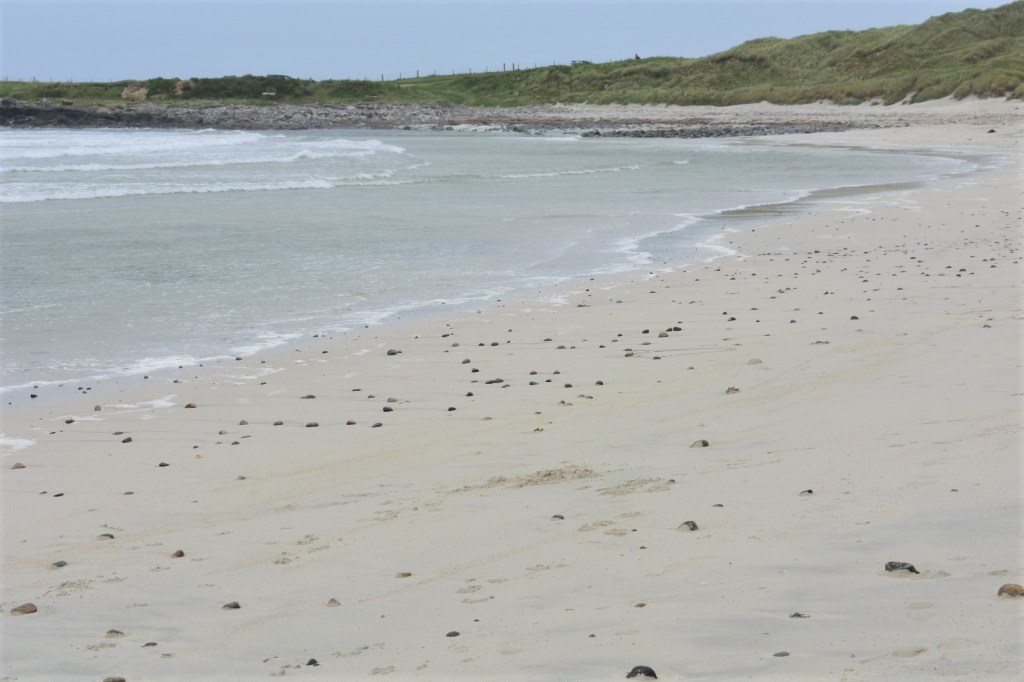
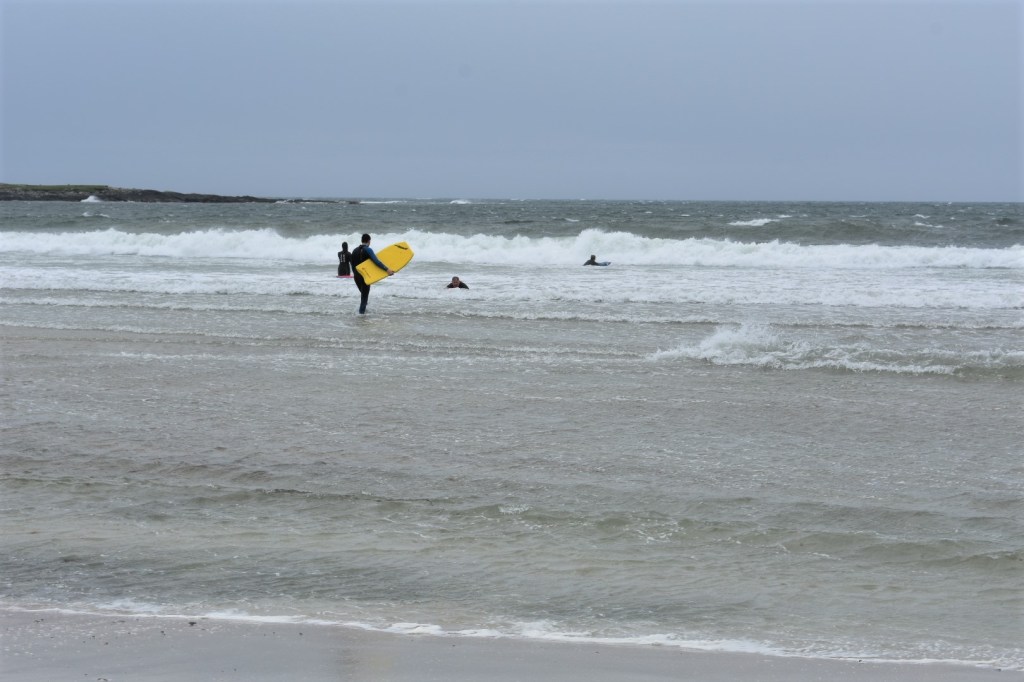
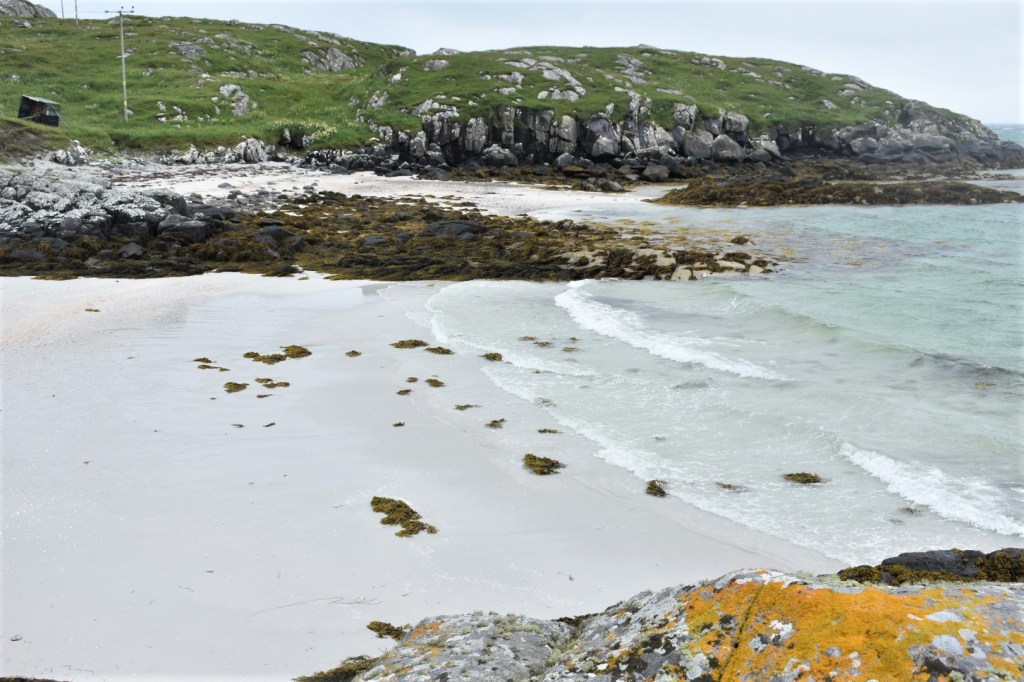
There are many scenic walks along the beautiful coastline around the island. We discovered a lovely beach with sand dunes and white sand: it was Cula Bay. The bay is popular with surfers and it was only a short distance from where we stayed. It was remarkable to see surfers braving the Atlantic waves so far north, but the Gulf Stream makes the sea temperature quite mild. For experienced surfers, the Atlantic breakers of Benbecula make the island’s surfing amongst the best in Britain, if not the world!
On a very windy day we decided to climb the Rueval, the highest point in the island. At 124m high, it rises from sea level to give extraordinary views up and down the Outer Hebrides. We drove to Market Stance and took the path to the summit. It is claimed, that the cave where Bonnie Prince Charlie is said to have hidden whilst waiting for Flora MacDonald to arrange his escape, is on this walk. We met a few walkers on the way including an 84 year old lady who did the walk every day. She was a hardy type, born and bred Benbecula, and no amount of wind or rain was going to stop her!
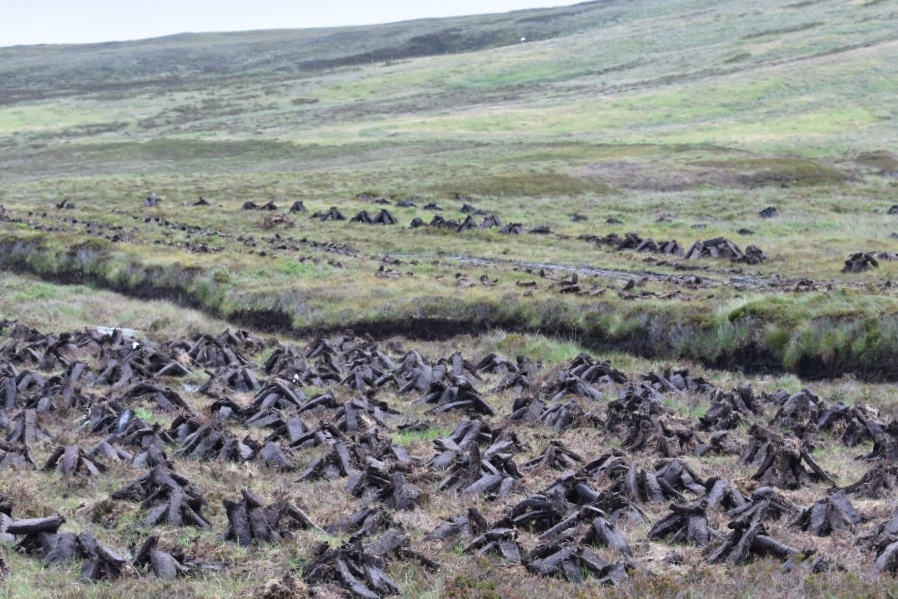
Peat is still gathered for fuel on the island. It was fascinating to see it cut up and drying out at the side of our path along the walk.
Eating Out
Benebecula was the quietest island of the islands we visited on our holiday. As such, there was only a limited choice of places where to eat. We stayed in the Balivanich area, near the airport. Here, there are two restaurants to choose from, The Stepping Stones and Charlie’s Bistro. A little further south was the Dark Island hotel where you could go for a meal or a drink in the bar. All three places were good and not too expensive but you may have to book a table in The Stepping Stones and Charlie’s Bistro in the busier summer months.
We didn’t find any pubs on the island, though we were told one bar opens up at weekends in the town of Balivanich. Lunch time you could try the airport cafe or the nearby riding school which provide teas, coffees and sandwiches at reasonable prices.
The Military Presence in Benbecula
The more observant traveller to Benbecula will soon become aware of the island’s military connections. The island is a key centre of the North Atlantic, NATO communication system. Though discreetly hidden away, the island is the home for military radar stations, NATO personnel from various countries often visit the island for combined operational exercises. So it is quite possible some of those Canadian, Dutch or Italian “tourists” you meet, are in reality military communication experts having a quiet break from an intense military operation!
History – Nunton Land Raids
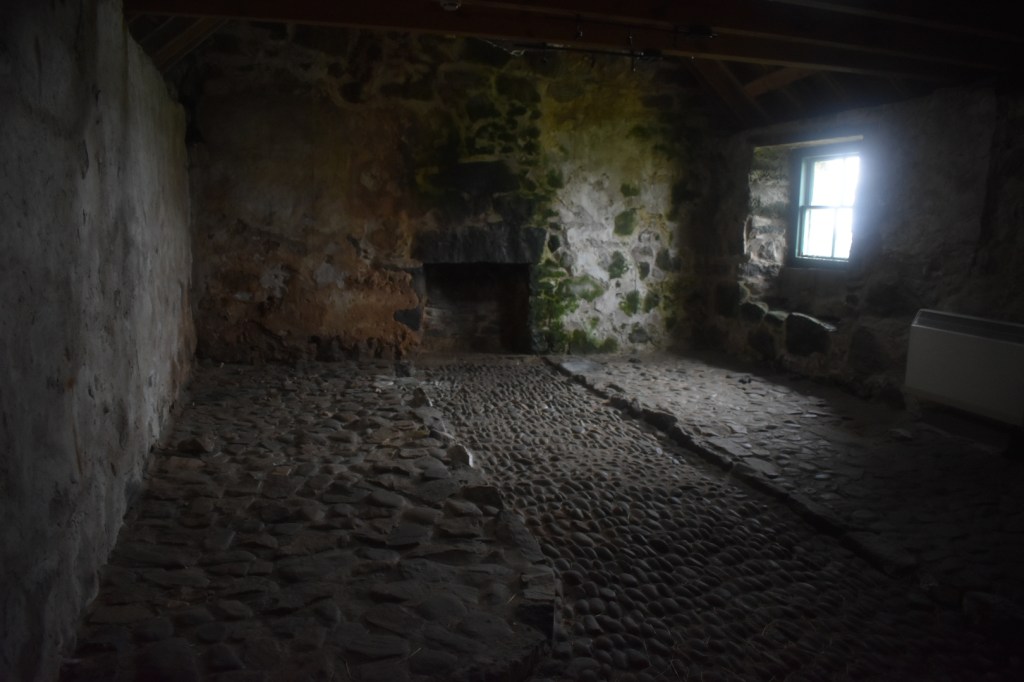
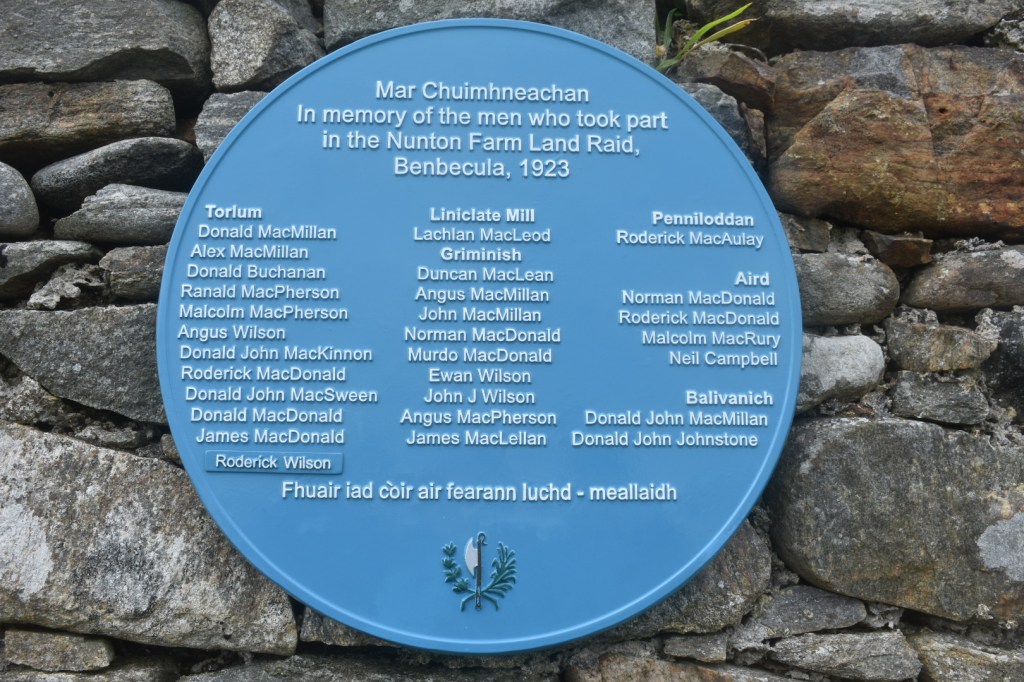
The Highland Clearances were one of the saddest episodes of 18th and early 19th century Scottish history. Landlords removed crofting families from their estates to make way for more profitable sheep farming. Government legislation in the mid-19th century stopped the worst excesses of the Clearances but land ownership remained a bitterly contested subject into the 20th century. Some soldiers returning from the First World War took matters into their own hands and occupied crofts that they believed to be rightfully their property. Such actions were called “Land Raids” and one of the most famous land raids was the “Nunton Farm Land Raid” of 1923. There is a plaque on an old building near our B&B commemorating this event. Even today, the subject of crofting rights brings back bitter memories of past injustices to islanders.
Running in Benbecula
There is no parkrun in either South/North Uist or Benbecula as the islands have such small populations. On the positive side, the low population means that the quiet roads provide an excellent training ground. The flat terrain is an added bonus for those used to the strain of constantly running up hills!
There is an annual half marathon race in June and a 10K race in the Spring. Both races get booked up quickly so enter early if you are thinking of taking part. The half-marathon is one of the 5 Western Isles half-marathons. If you run 3 of these half-marathons you will qualify for the prestigious HEB3 award. What a fantastic way to spend a summer: running the Hebridean islands! Click here for more details.
We would love to hear your thoughts in the comments section below. Please share with anyone you think may be interested. See you again soon!
About 4 square miles in total, Eriskay is one of the smaller islands of the Outer Hebrides. Though the island has been connected to its larger neighbour South Uist by a causeway since 2001, the island still maintains its independent character. Our second ferry journey on the Calmac Hopscotch 23 route was a short 40 minute ferry voyage from Barra to Eriskay. It was another opportunity to meet and talk with fellow travellers and another opportunity to scan the seas for passing sharks and seals. Travelling on a Hebrides ferry is a real pleasure.
We decided to hire a car for this part of our travels through the Outer Hebrides. We picked up the hire car at the ferry port and arranged to leave it at the ferry port in Berneray a few days later. Our plan on arriving was to set off on a 1.5 mile circular walk which started at the ferry terminal. The walk would have taken us along Prince’s Beach where Bonny Prince Charlie landed in 1745 at the start of his forlorn adventure to regain the British throne for the Stuart family. The walk would have taken us past Eriskay’s remarkable Catholic church, built by local people using local materials towards the end of the 19th century. The church contains remains from both the first world and second world war within its structure. The altar sits on top of a lifeboat from the WW11 aircraft carrier, the HMS Hermes and the bell comes from the German battle cruiser, the Derfflinger which was scuttled in 1918.
The route of our planned walk can be found in Paul and Helen Webster’s book: The Outer Hebrides: 40 Coast and Country Walks
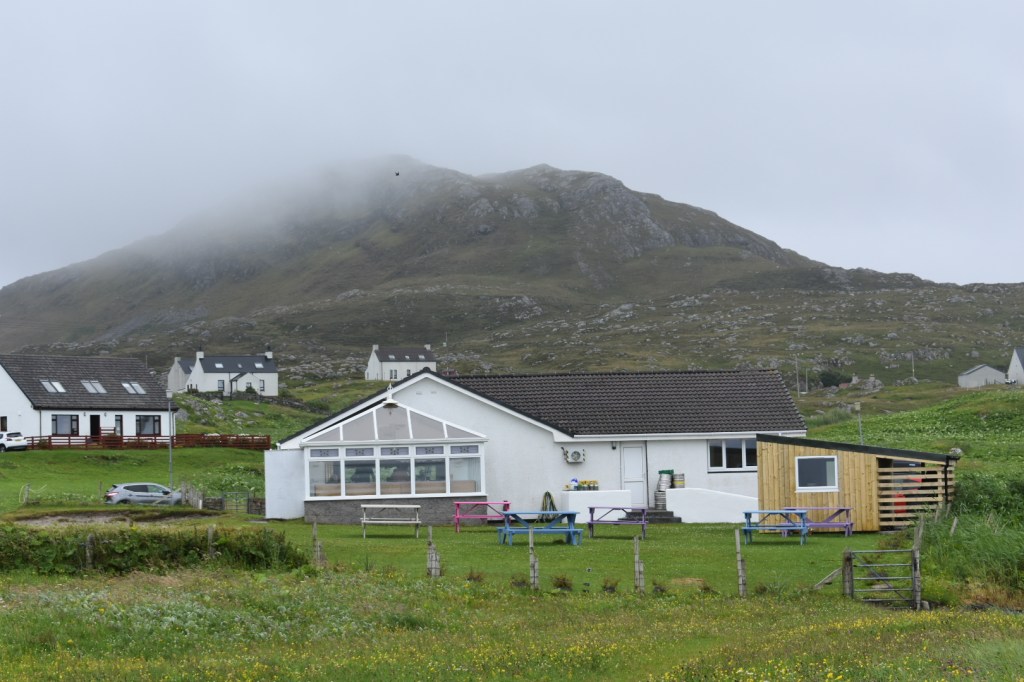
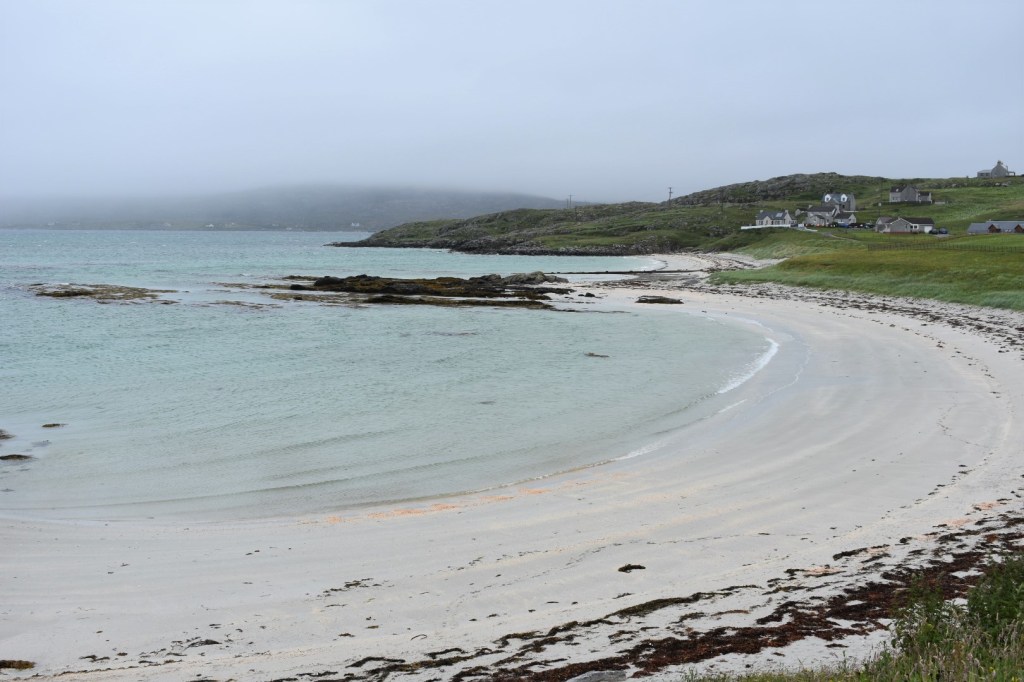
Unfortunately, the weather turned shortly after we disembarked and it began to rain quite heavily. We sadly decided not to venture on our walk and instead headed for the comfort of the modern Politician pub. The pub is named in honour of a ship that was wrecked on local rocks. This shipwreck gave birth to the story for which the island is now most famous The following is a short account of that story.
Politician pub
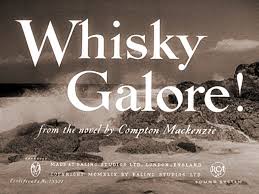
The SS Politician floundered on rocks in the Sound of Eriskay whilst sailing to America from Liverpool during the wartime Britain of 1941. It was loaded with 264,000 bottles of Scotch whisky. Of course, the good folk of Eriskay were very happy to have crates of their favourite drink wash up on their shores. Unfortunately, the tax man was not so happy so the next few months saw a game of cat and mouse between Government officials and islanders who were intent on protecting their illegal liquid treasure. The 1949 film ‘Whisky Galore!” was based on this incident. However, the filming took place on the nearby island of Barra, not on Eriskay itself. Here is a link to our blog on the island of Barra: Barra-Southern-Gem
Perhaps of equal interest, but less well known, is that the SS Politician was also carrying 290,000 ten-shilling bank notes destined for the banks of Jamaica. These bank notes would be worth several million pounds in today’s valuation. Within a few months of the shipwreck, these notes began appearing in mainland British banks. Evidently, they did not all sink with the ship! The question is: what happened to all those ten-shilling notes?
We may never know: perhaps they should make a film about this too?
In preparation for our trip we thought we should watch the film. If you are in the UK you may still be able to watch the black and white 1949 film Whisky Galore! on BBC iplayer. It made us chuckle and we would recommend you watch it.
There was a remake of the film in 2017 starring Eddie Izzard. We watched this too, but must admit to liking the black and white 1949 version best.
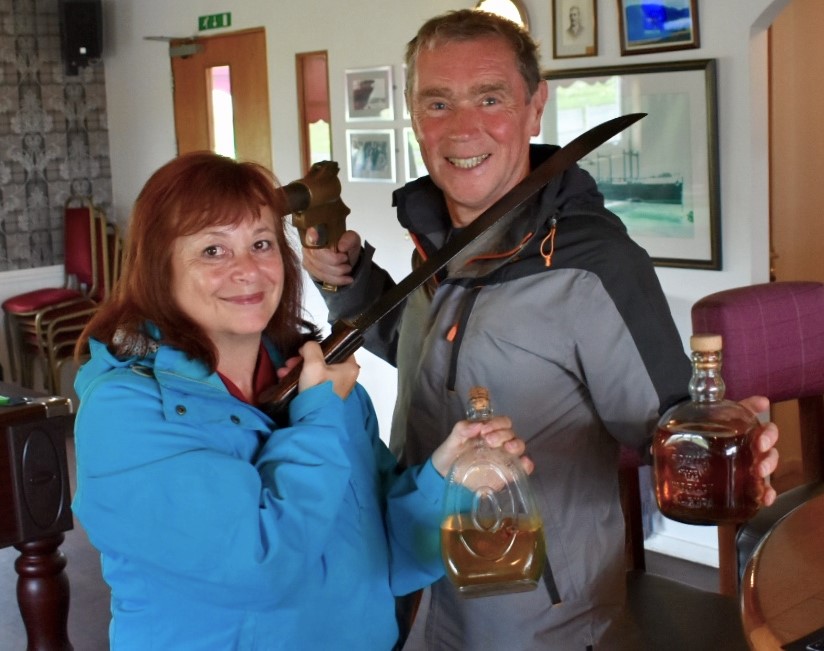
We had lunch in the Politician pub. The barman allowed us to hold some of the artifacts from the grounded ship. The locals had fun with us suggesting we hold the sword and gun to each other’s heads whilst holding the whisky!
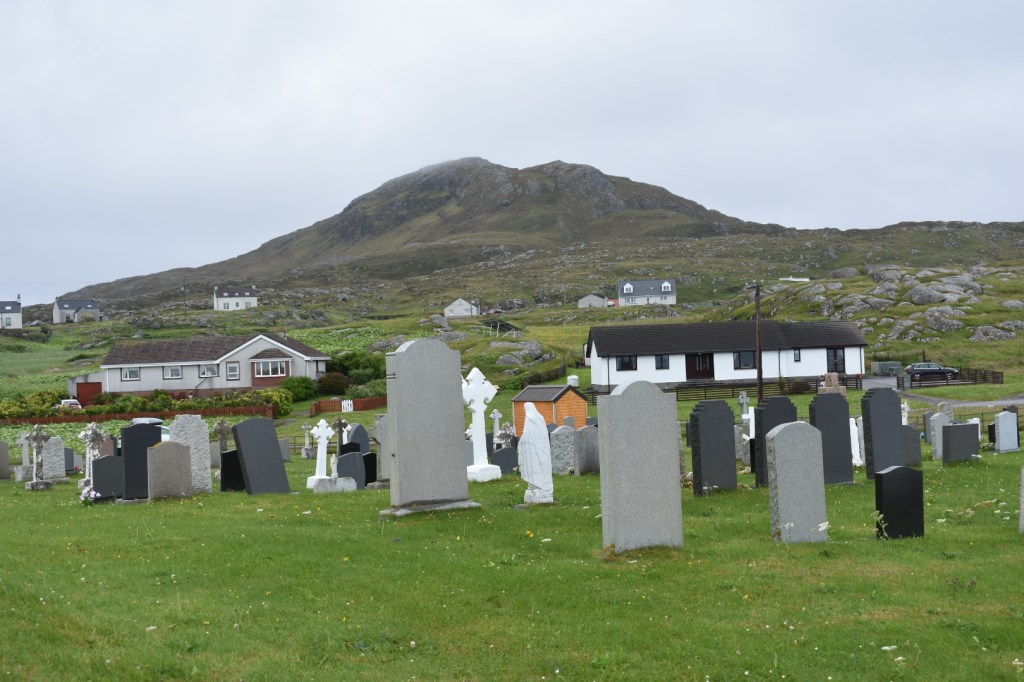
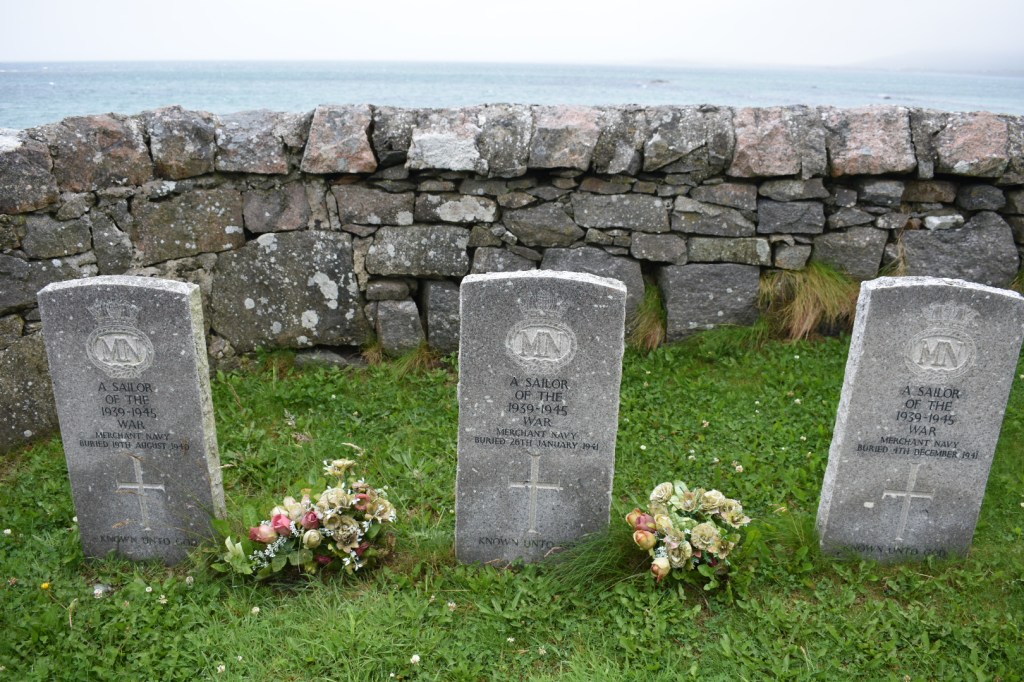
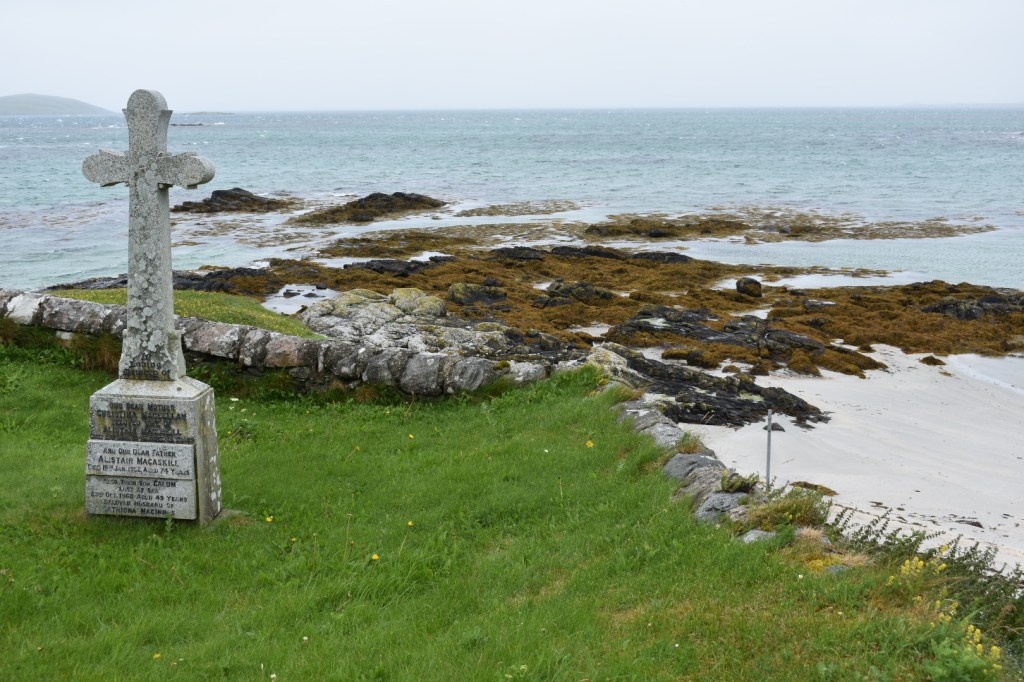
We also made a visit to the local cemetery. Like so many Hebridean cemeteries, Eriskay’s cemetery contains the graves of sailors lost at sea during the world wars. Such graves are poignant reminders of how much we owe to the brave people of the past for the freedom we enjoy today. The graves are immaculately kept and such cemeteries are worth visiting for their manicured beauty alone. They also offer moments of tranquil meditation and reflection.
After our short tour of the island, we drove across the causeway to South Uist and the next stage in our journey. You can read about this in our next blog.
We would love to hear your thoughts in the comments section below. Please share with anyone you think may be interested. See you again soon!












 Godiva Travellers